Artwork
Pamela and Mr B. in the summer house
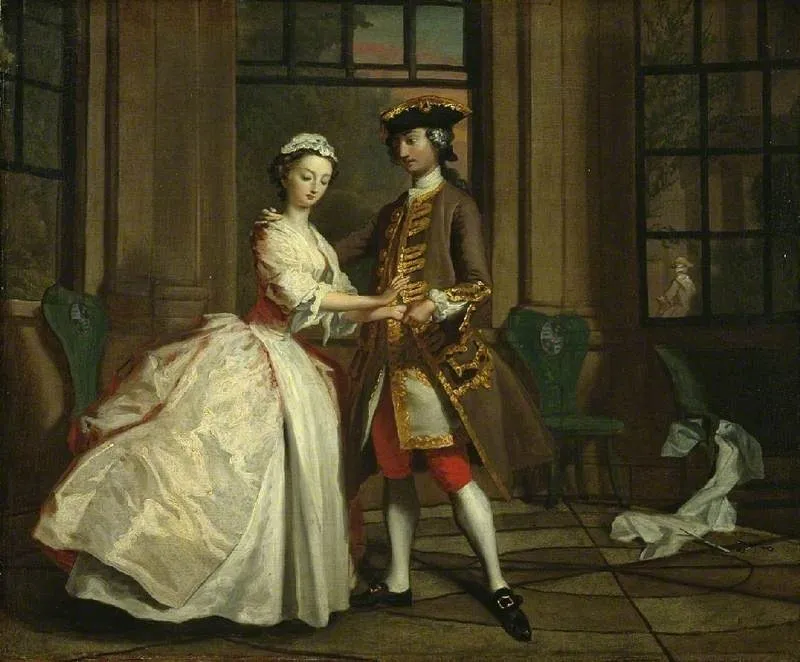
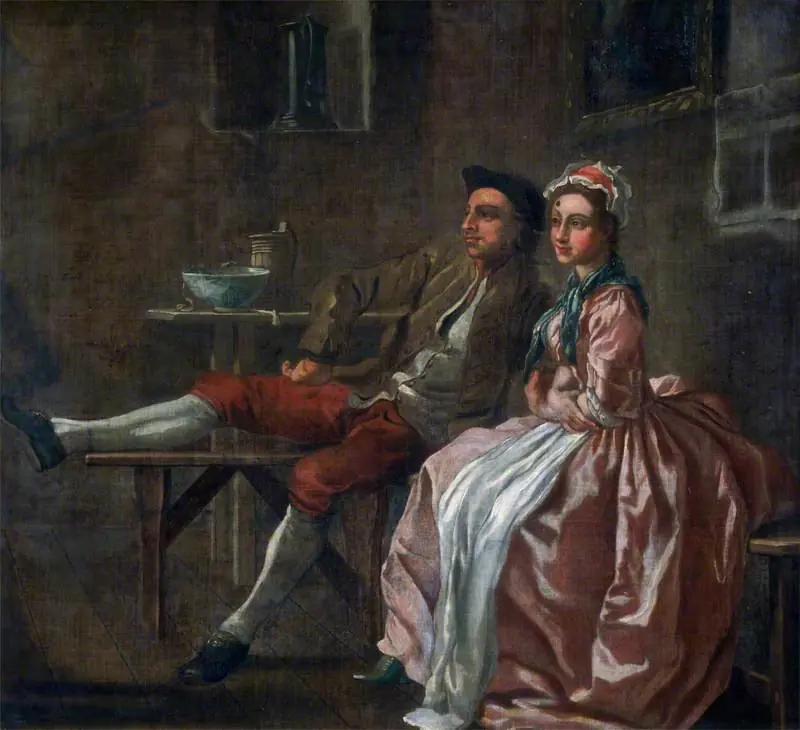
Pamela and Mr B. in the summer house is an oil painting by Joseph Highmore. It dates from 1744 and is held in the collection of the Fitzwilliam Museum.
About this work
Overview
It depicts a quiet, intimate moment between two figures in a garden pavilion, rendered with careful attention to texture and spatial depth.
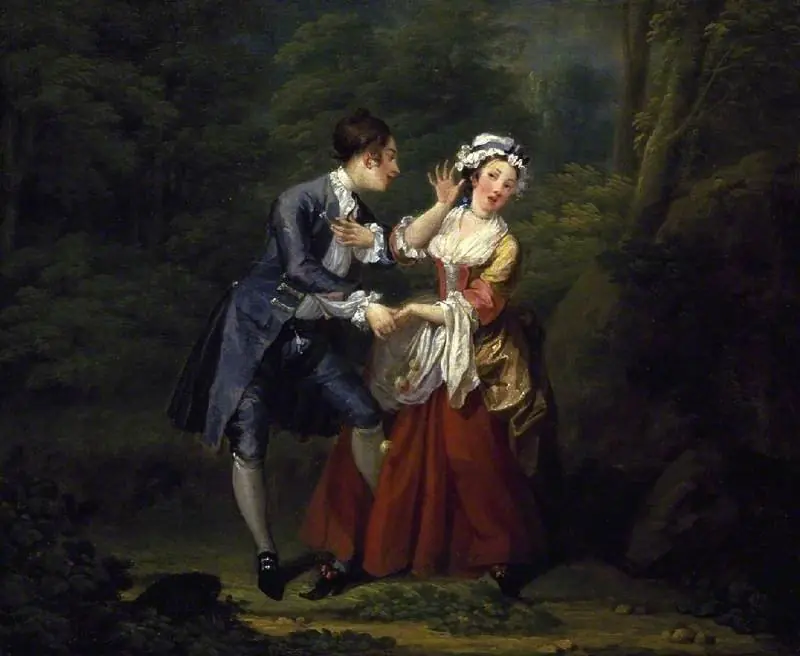
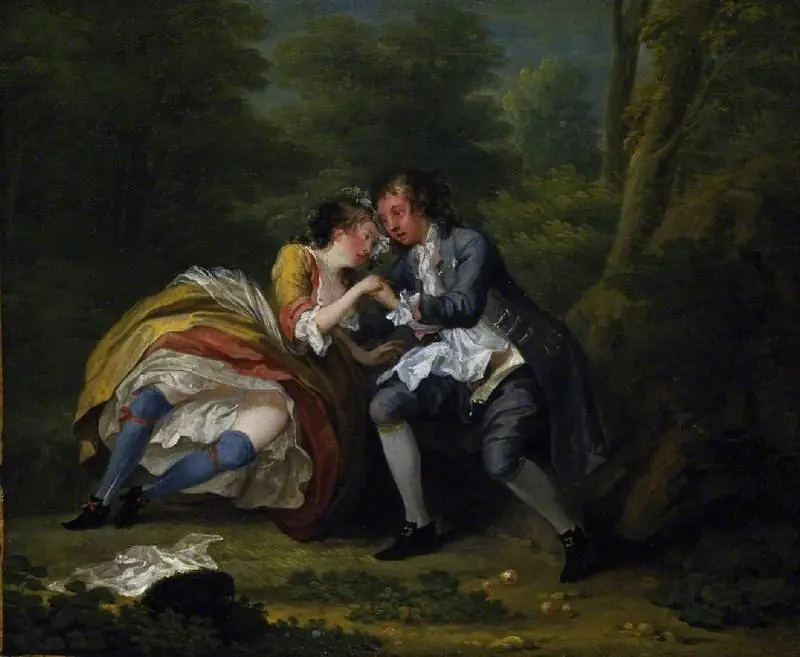
Joseph Highmore painted Pamela and Mr B. in the summer house in 1744 using oil on canvas. The work is part of the Fitzwilliam Museum’s collection in Cambridge. It depicts a quiet, intimate moment between two figures in a garden pavilion, rendered with careful attention to texture and spatial depth. The scene avoids theatricality, favoring a subdued, domestic tone that reflects the novelistic origins of its subject.
Subject & Meaning
The painting illustrates a scene from Samuel Richardson’s novel Pamela; or, Virtue Rewarded, showing the titular servant and her master in a moment of informal intimacy. Their dance suggests a shift in their social relationship, hinting at emotional closeness without overt romance. The setting—a summer house—symbolizes a space removed from societal constraints, where personal bonds may form beyond class boundaries.
Technique & Style
Highmore employed fine brushwork to render the textures of fabric, tile, and foliage with precision. Light falls gently across the figures, modeling their forms without dramatic contrast. The composition is balanced yet relaxed, with diagonal lines from the dancers’ posture guiding the eye toward the open window. Background elements are softly rendered, preserving focus on the central interaction.
History & Provenance
Created in 1744, the painting was one of fifteen illustrations Highmore produced for Richardson’s novel. It remained in private hands until entering the Fitzwilliam Museum’s collection in the 19th century. Its survival as part of a narrative series is rare; most companion pieces were dispersed or lost. The painting’s provenance reflects its initial role as literary illustration rather than standalone art.
Context
Highmore’s work emerged during a period when illustrated novels gained popularity among the British middle class. His images helped visualize fictional characters for readers, blurring lines between literature and visual art. The summer house setting reflects contemporary ideals of rustic leisure, while the depicted intimacy subtly challenged rigid class hierarchies in Georgian society.
Legacy
Though not widely exhibited today, the painting remains a key example of 18th-century narrative painting tied to literature. It illustrates how visual art functioned as an extension of print culture, offering audiences a tangible interpretation of fictional moments. Highmore’s restrained style influenced later artists seeking to depict psychological nuance within domestic scenes.
Artist & collection

Artist
Joseph Highmore (13 June 1692 – 3 March 1780) was an English painter of portraits, conversation pieces and history subjects, illustrator and writer.