Artwork
The Paranirvana of Buddha, Gal Vihara, Polonnaruva, Ceylon
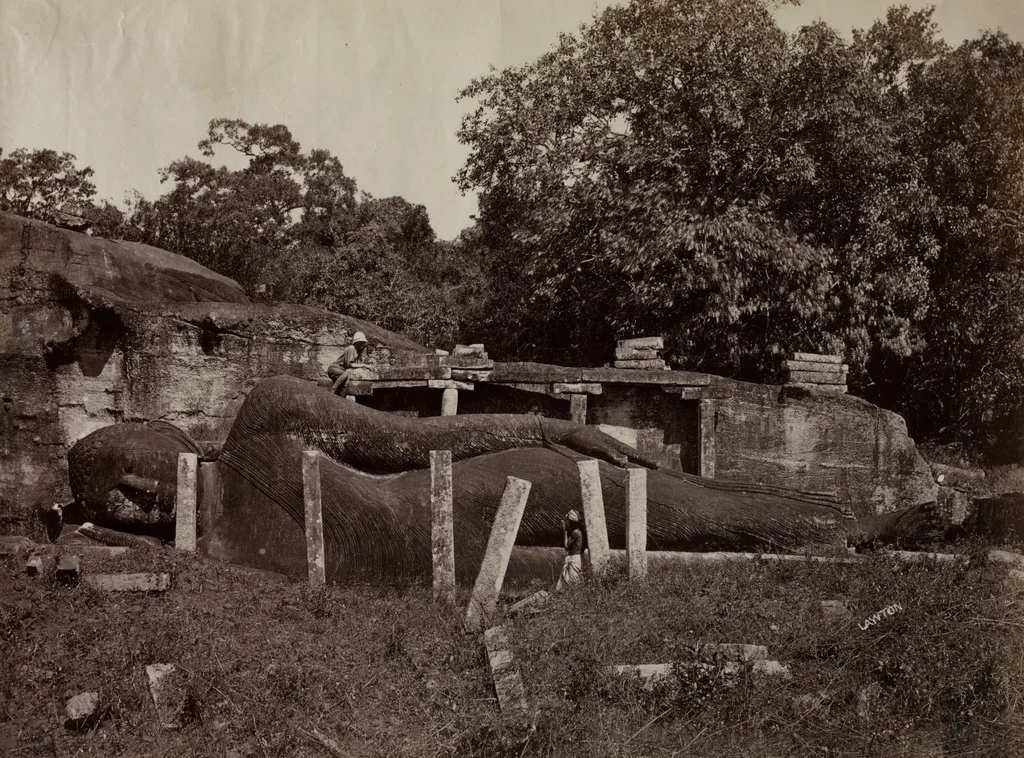
The Paranirvana of Buddha, Gal Vihara, Polonnaruva, Ceylon is a photography by the Impressionist artist Joseph Lawton. It dates from 1870 and is held in the collection of the Cleveland Museum of Art. This photograph captures a twelfth-century rock-cut Buddha at Gal Vihara, Polonnaruva, during the late colonial era.
About this work
Overview
This photograph captures a twelfth-century rock-cut Buddha at Gal Vihara, Polonnaruva, during the late colonial era. The image juxtaposes the monumental sculpture—depicting the Buddha at the moment of Parinirvana—with two human figures, each embodying distinct cultural relationships to the site. The composition frames the ruins as both a sacred space and a colonial curiosity.
Subject & Meaning
By positioning a Sri Lankan man in quiet contemplation and a British visitor climbing over the sculpture, the photograph contrasts reverence with appropriation.
The reclining Buddha represents the final nirvana, a central theme in Theravāda Buddhist art. By positioning a Sri Lankan man in quiet contemplation and a British visitor climbing over the sculpture, the photograph contrasts reverence with appropriation. The scene underscores the tension between spiritual devotion and colonial exploration, revealing how heritage sites were experienced differently by local and foreign visitors.
Technique & Style
The photograph employs a straightforward documentary approach, using natural light to emphasize the scale of the sculpture and the ruin’s weathered surface. The framing draws attention to the figures’ contrasting postures—one seated in stillness, the other in motion—while the composition balances the monumental Buddha with the human presence, reinforcing the image’s narrative tension.
History & Provenance
Gal Vihara, part of a twelfth-century monastic complex, fell into disrepair after the decline of Polonnaruva as a political center. The photograph was likely taken during the British colonial period, when such sites were increasingly documented and visited. It entered the collection of the Cleveland Museum of Art, where it serves as a record of both the sculpture’s historical significance and colonial-era encounters with Sri Lankan heritage.
Context
During the colonial era, European travelers often viewed ancient ruins as objects of exploration rather than sacred spaces. This photograph reflects that dynamic, capturing a moment where local devotion and colonial curiosity intersect. The image also highlights the broader colonial practice of documenting and interpreting non-Western cultural sites, often through a lens that prioritized discovery over reverence.
Artist & collection

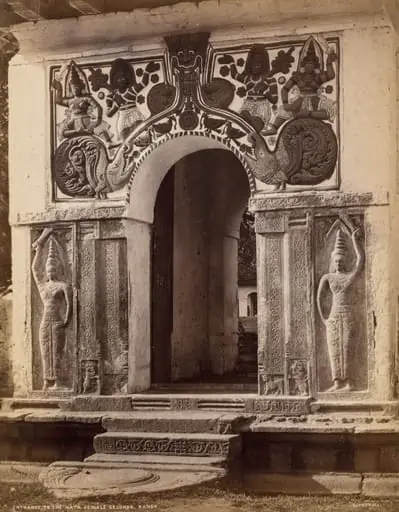 Entrance to the Nata Dewale Grounds, Kandy
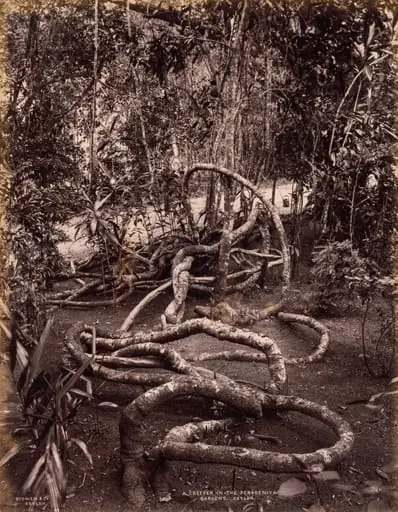 A Creeper in the Peradeniya Gardens, Ceylon
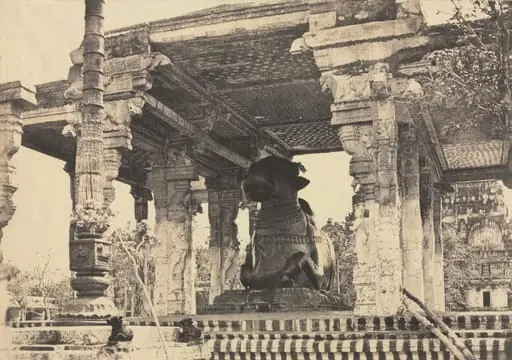 Great Pagoda, Great Bull, Front View, Tanjore, India (Rajarajeshvara Temple), plate 12 from Photographic Views of Tanjore and Trivady (Madras: Madras Presidency)
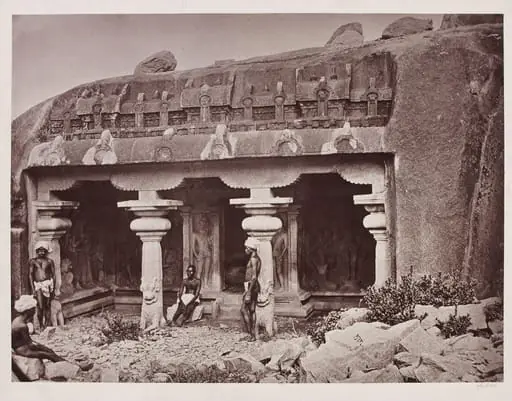 Cave sanctuary at Mahabalipuram
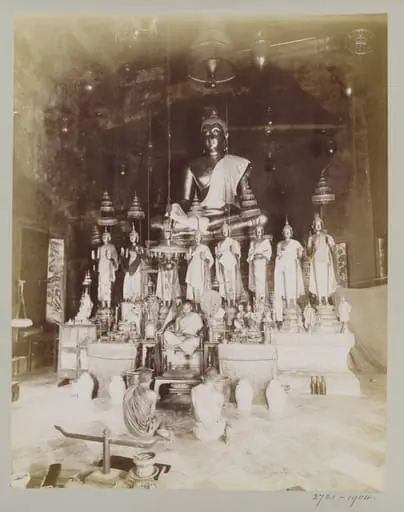 Buddha in Temple of Wat Mahan, Bangkok
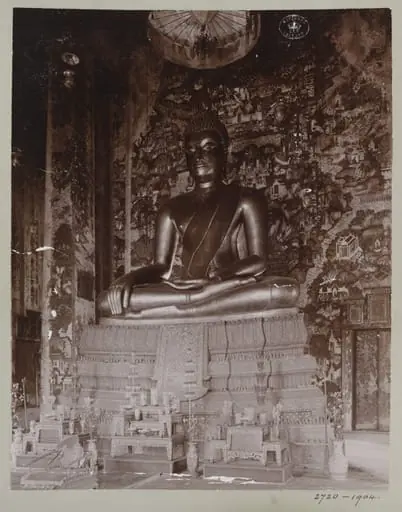 Buddha in Temple of Wat Leip, Bangkok
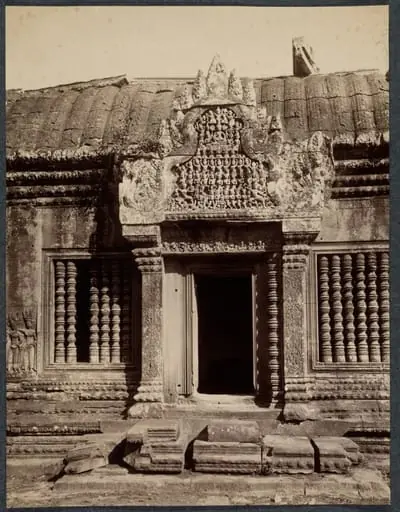 Doorway Through an Inner Enclosure, Angkor Wat, Cambodia
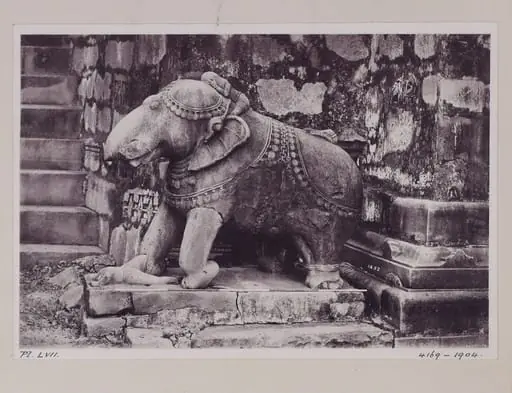 Untitled
 Kirwuttee, A Temple, India