Artwork
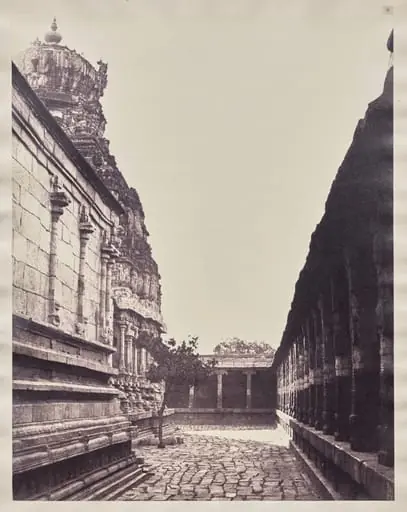
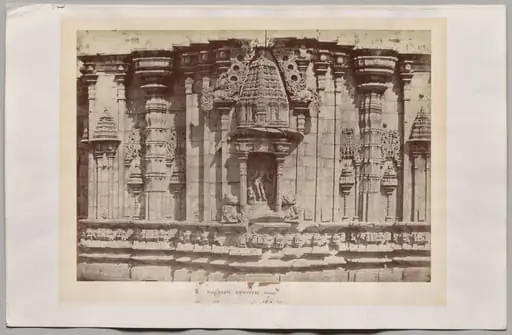
West and South Sides of the Vimana Walls, Great Temple (Brihadeshvara) at Tanjore (Thanjavur)
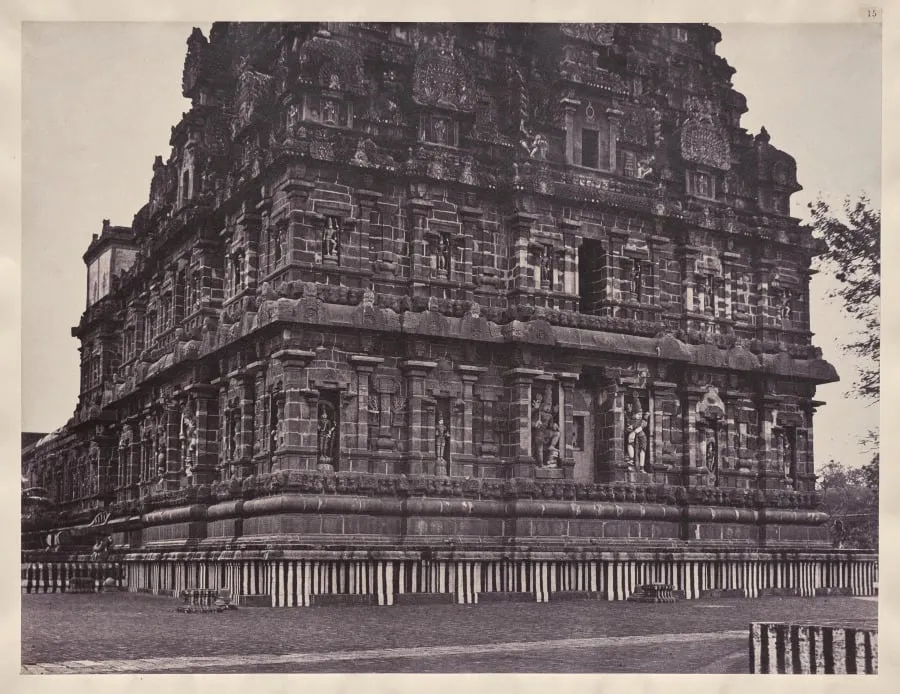
West and South Sides of the Vimana Walls, Great Temple (Brihadeshvara) at Tanjore (Thanjavur) is a photography by the Impressionist artist Captain Linnaeus Tripe. It dates from 1858 and is held in the collection of the Cleveland Museum of Art.
About this work
You see a tall stone temple wall, carved with small shrines and statues of Hindu gods.
This photo was taken in 1858 by a British officer who lugged his camera across India. Instead of glass plates, he used waxed paper—lighter, less likely to crack. The soft focus comes from that choice.
Look up *The Cleveland Museum of Art* to see more of his quiet, careful shots.
Overview
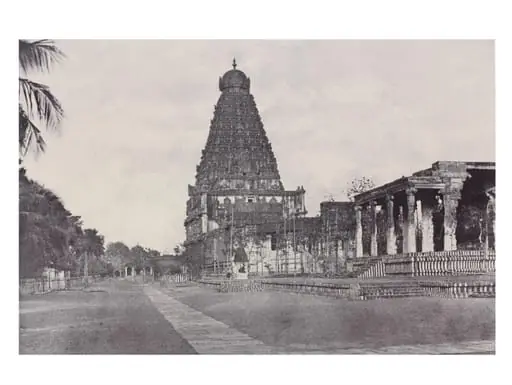
This photograph, taken in 1858 by a British military officer, captures the west and south sides of the vimana walls at the Brihadeshvara Temple in Thanjavur.
This photograph, taken in 1858 by a British military officer, captures the west and south sides of the vimana walls at the Brihadeshvara Temple in Thanjavur. The image documents the temple’s towering stone structure, notable for its scale and intricate carvings. The photographer employed waxed paper negatives instead of fragile glass plates, a practical choice for fieldwork in India’s climate and terrain. The resulting image has a soft, muted clarity characteristic of salt print techniques.
Subject & Meaning
The vimana walls are lined with niches housing sculpted figures of Hindu deities, reflecting the temple’s function as a sacred space dedicated to Shiva. At its core lies a monolithic linga, symbolizing the god’s presence. The photograph does not depict the inner sanctum but frames the outer architecture that encloses it, emphasizing the temple’s layered spiritual and architectural symbolism. The arrangement of divine figures along the walls reinforces the temple’s role as a microcosm of the cosmic order.
Technique & Style
The photographer used a salt print process, coating paper with a light-sensitive mixture of sodium chloride and silver nitrate, then placing the waxed paper negative directly on it for exposure. This method, though less sharp than glass negatives, produced a gentle tonal range suited to the temple’s textured stone surfaces. The soft focus and subtle gradations reflect both material limitations and a deliberate, contemplative approach to recording architectural detail.
History & Provenance
The photograph was made during the early years of photographic documentation in colonial India, when British officers often recorded monuments as part of administrative or antiquarian efforts. The use of waxed paper negatives suggests logistical awareness—avoiding the weight and fragility of glass in humid, remote conditions. The image now resides in the collection of the Cleveland Museum of Art, part of a broader archive of 19th-century Indian architectural studies.
Context
Constructed in the early 11th century under the Chola dynasty, the Brihadeshvara Temple was a political and religious statement of imperial power. By the mid-19th century, British colonial surveyors and photographers began systematically documenting such sites. This image reflects an era when Indian heritage was being cataloged through a Western technological lens, often detached from local religious practice but preserving visual records of enduring structures.
Legacy
The photograph stands as an early example of architectural documentation in South Asia using portable photographic methods. Its quiet composition and technical constraints reveal the challenges of early field photography. While not intended as art, it contributes to a historical record that continues to inform conservation, scholarship, and public understanding of South Indian temple architecture.
Artist & collection

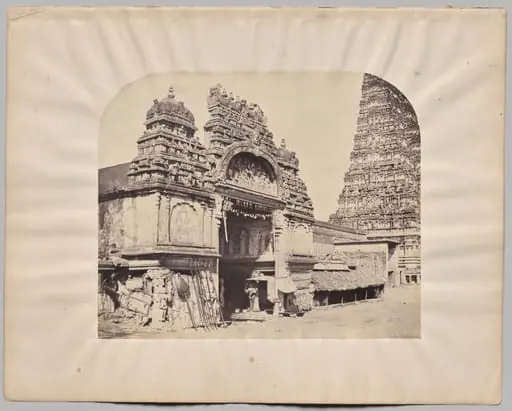 Entrance to the Minakshi Sundareshvara Temple, Madurai
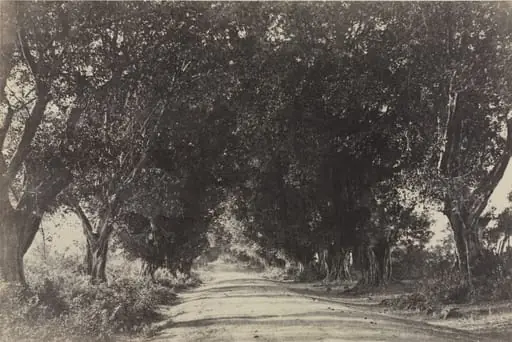 Avenue of the Banian Trees, Seringham, India
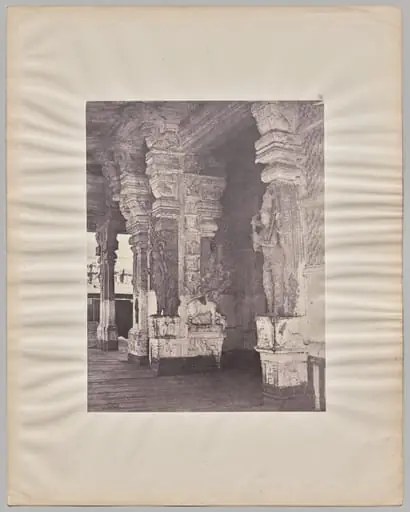 Pudhu Mandapa of Tirumal Nayak (r. 1623–59), Minakshi Sundareshvara Temple, Madurai
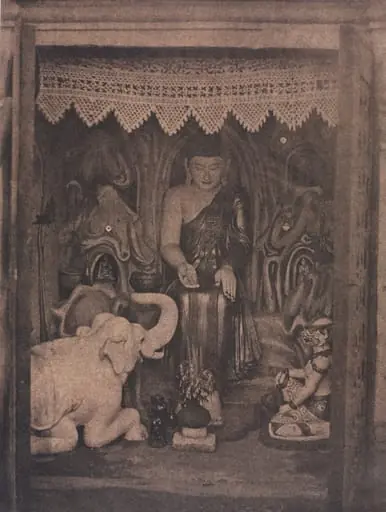 Amerapoora. Gautama's Shrine
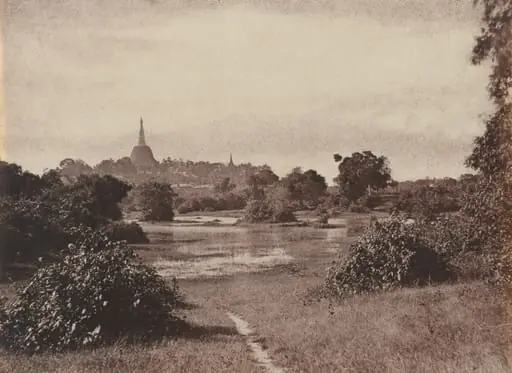 Rangoon. View Near the Lake
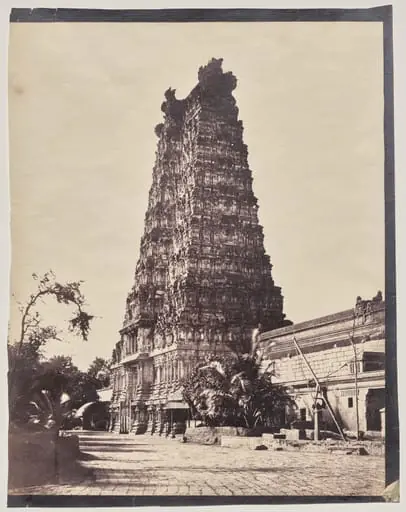 Western Gateway (Gopuram) of the Minakshi Sundareshvara Temple, Madurai
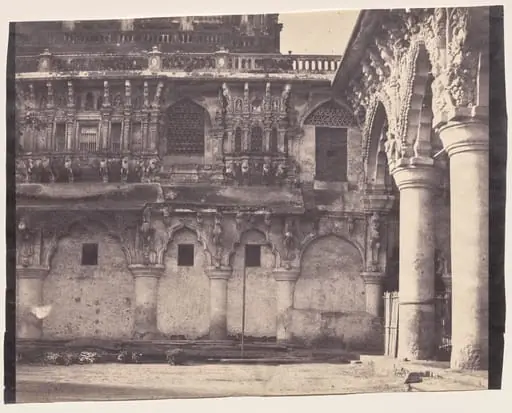 South Façade of the Quadrangle of the Nayak Darbar Hall, Thanjavur
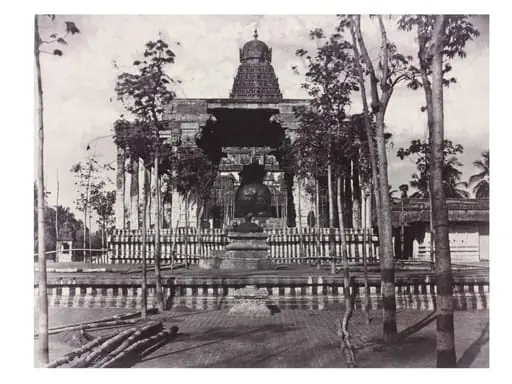
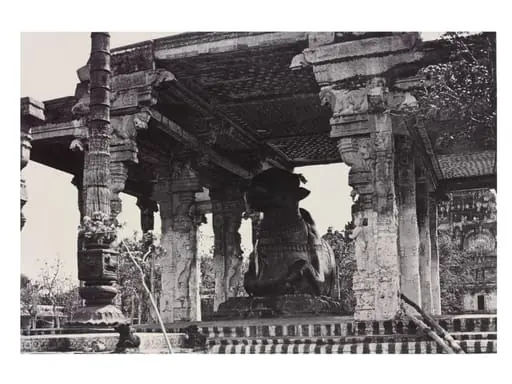
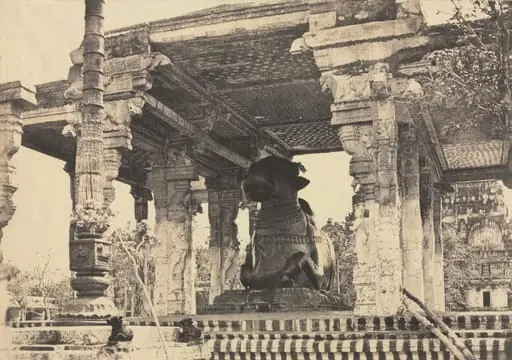 Great Pagoda, Great Bull, Front View, Tanjore, India (Rajarajeshvara Temple), plate 12 from Photographic Views of Tanjore and Trivady (Madras: Madras Presidency)