Artwork
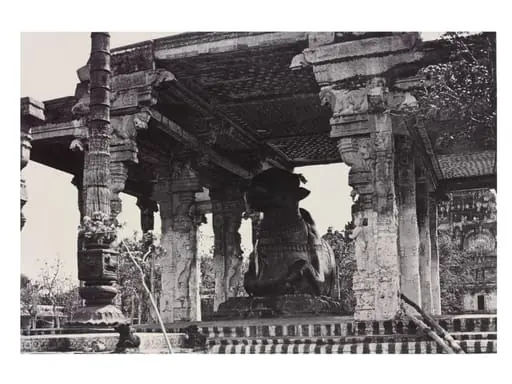
Great Pagoda, Great Bull, Front View, Tanjore, India (Rajarajeshvara Temple), plate 12 from Photographic Views of Tanjore and Trivady (Madras: Madras Presidency)
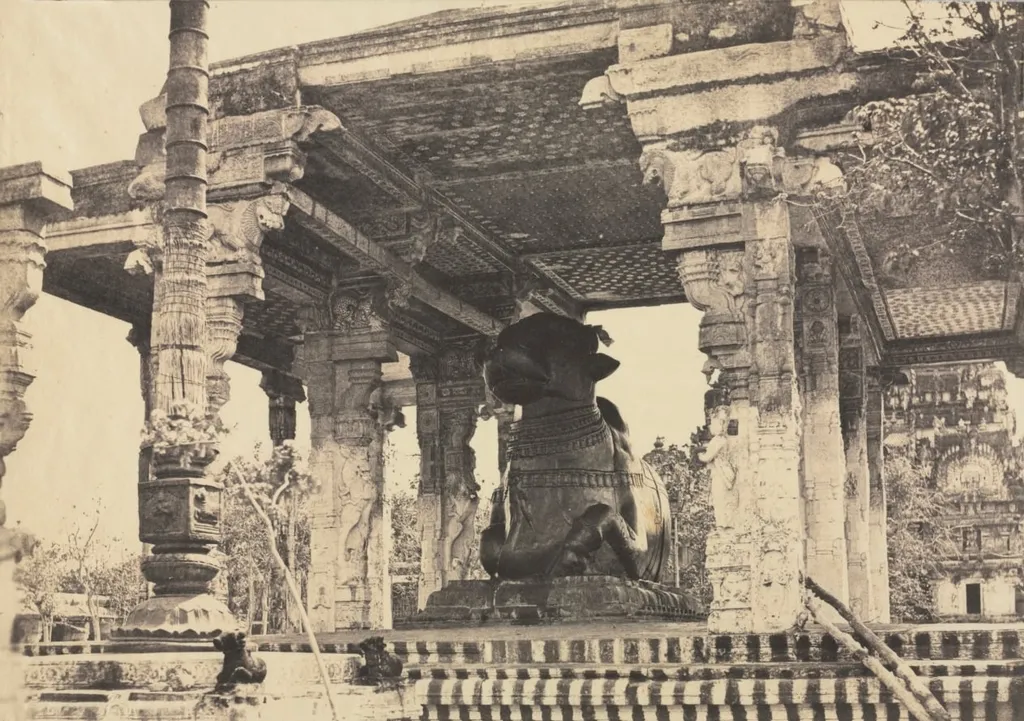
Great Pagoda, Great Bull, Front View, Tanjore, India (Rajarajeshvara Temple), plate 12 from Photographic Views of Tanjore and Trivady (Madras: Madras Presidency) is a photography by the Impressionist artist Captain Linnaeus Tripe. It dates from 1857 and is held in the collection of the Cleveland Museum of Art.
About this work
The bull sits on a painted base—red and white stripes—and faces the temple’s inner sanctum.
You see a giant stone bull inside a pillared pavilion. The bull sits on a painted base—red and white stripes—and faces the temple’s inner sanctum.
This photo was taken in 1857 by a British officer who documented Indian temples. Tripe left people out, focusing only on the architecture and sculpture. The quiet, empty space makes the bull feel even bigger.
Look up more photos of temple architecture like this at The Cleveland Museum of Art.
Overview
The image captures a massive stone representation of Nandi, the sacred bull associated with Shiva, positioned within a pillared hall (mandapa) of the Rajarajeshvara Temple in Tanjore. The sculpture faces the entrance to the inner sanctum, while the temple’s inner wall and a segment of its grand gateway appear behind it.
Subject & Meaning
Nandi, as Shiva’s vehicle, is traditionally placed facing the deity’s shrine, symbolizing devotion and vigilance. In this composition the bull’s forward gaze aligns with the temple’s sacred axis, reinforcing its ritual role within the Hindu worship space.
Technique & Style
The photograph, taken in 1857 by British officer Thomas B. Tripe, employs a clear, static framing that excludes any moving figures. By omitting people and animals, the photographer emphasizes the monumental scale of the stone sculpture and the architectural details of the mandapa.
History & Provenance
Tripe documented Indian temples during the mid‑nineteenth century, producing a series of images for the publication "Photographic Views of Tanjore and Trivadi." The picture originates from plate 12 of that work and reflects the colonial practice of recording Indian monuments for scholarly and administrative purposes.
Context
The mandapa’s base is painted in alternating red and white stripes, a customary decorative scheme for active temples in the region. This coloration, visible in the photograph, indicates the structure’s continued ritual use during the period of the image’s creation.
Artist & collection

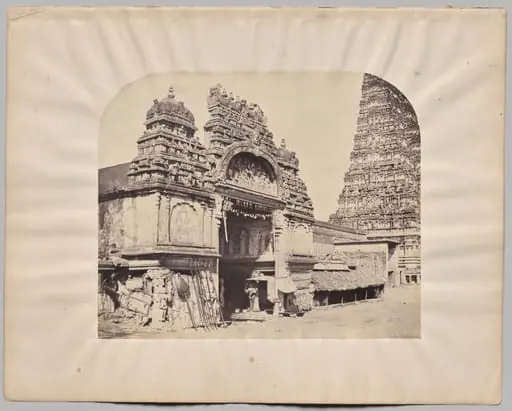 Entrance to the Minakshi Sundareshvara Temple, Madurai
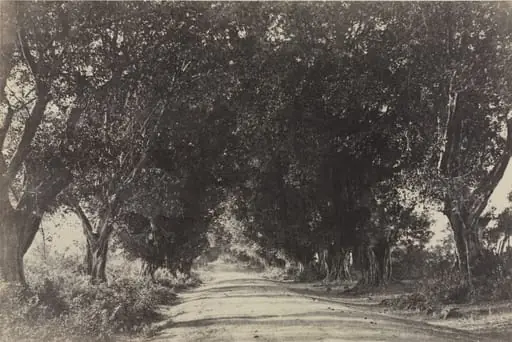 Avenue of the Banian Trees, Seringham, India
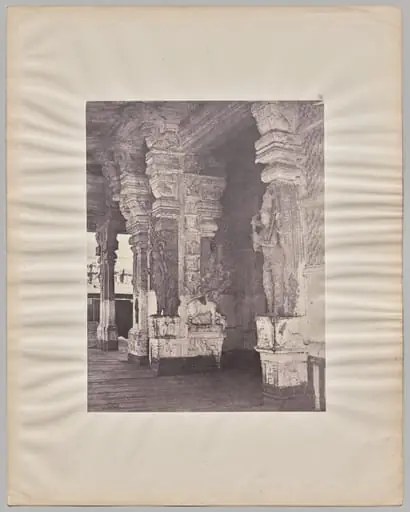 Pudhu Mandapa of Tirumal Nayak (r. 1623–59), Minakshi Sundareshvara Temple, Madurai
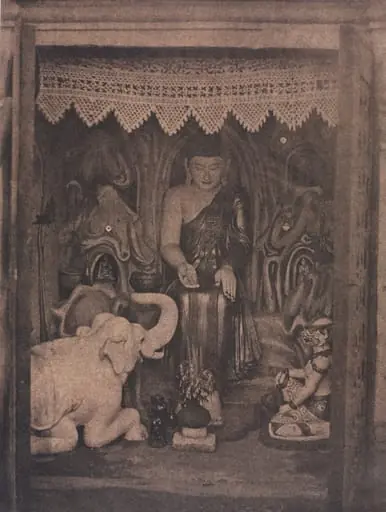 Amerapoora. Gautama's Shrine
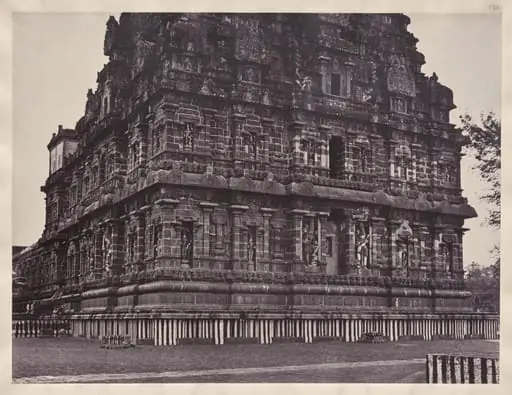 West and South Sides of the Vimana Walls, Great Temple (Brihadeshvara) at Tanjore (Thanjavur)
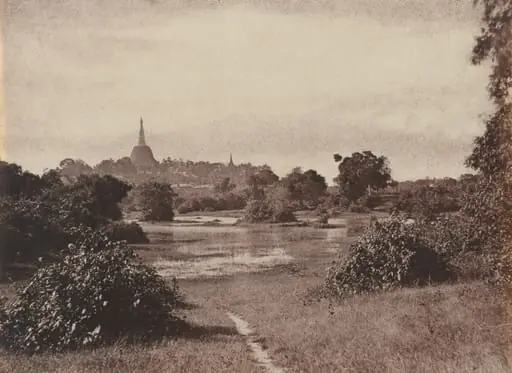 Rangoon. View Near the Lake
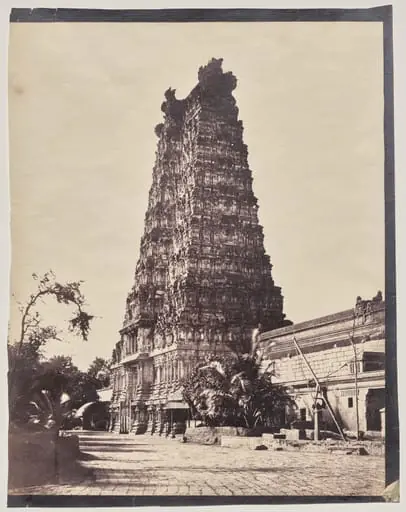 Western Gateway (Gopuram) of the Minakshi Sundareshvara Temple, Madurai
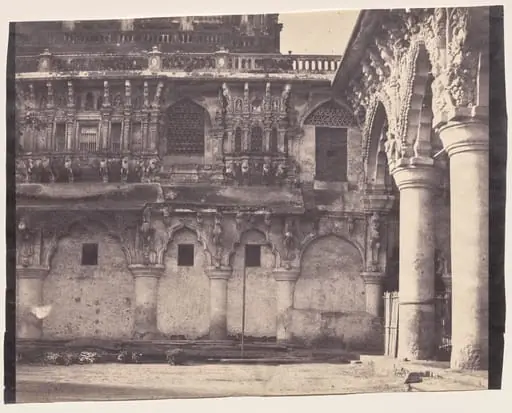 South Façade of the Quadrangle of the Nayak Darbar Hall, Thanjavur