Artwork
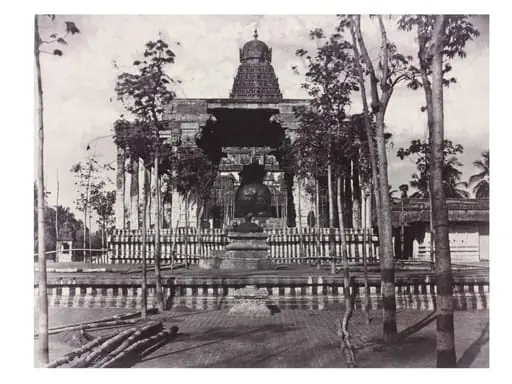
Kirwuttee, A Temple, India
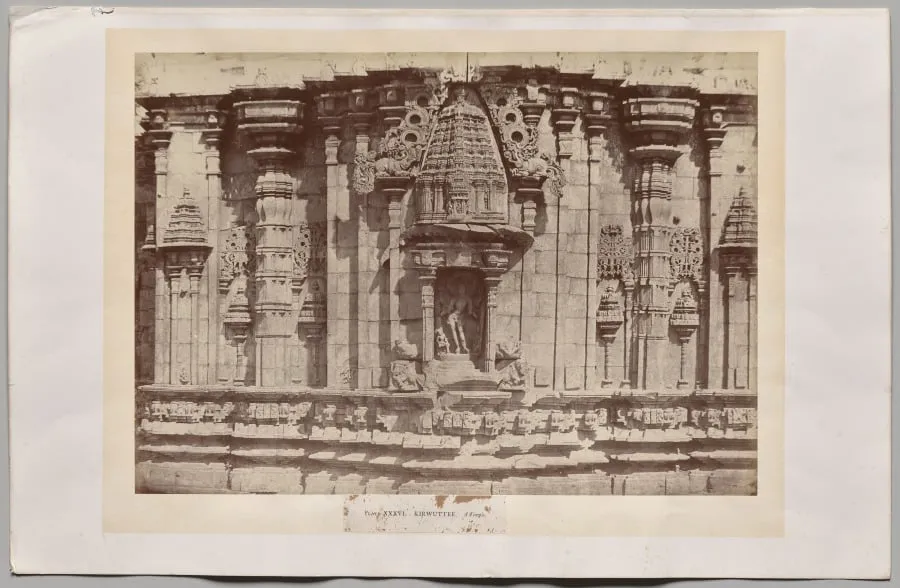
Kirwuttee, A Temple, India is a photography by the Impressionist artist William Henry Pigou. It dates from 1857 and is held in the collection of the Cleveland Museum of Art.
About this work
The temple’s carvings are unusual: most Indian temples have more figures, but this one is almost all little buildings.
You see a quiet stone temple covered in tiny carved models of other temples. The walls look like a miniature city of shrines.
This photo was taken in 1857, just two years after photography reached India. Pigou was a doctor, not a full-time artist—he took pictures for the British government to document old buildings. The temple’s carvings are unusual: most Indian temples have more figures, but this one is almost all little buildings.
For more photos like this, look up William Henry Pigou (British, 1818–1858).
Overview
Kirwuttee, A Temple, India is a photograph taken by William Henry Pigou in 1857, shortly after the introduction of photography to India. The image captures a stone temple at Kuruvatti, notable for its unique exterior ornamentation.
Subject & Meaning
The temple's walls are adorned with numerous miniature models of other temples, creating a dense, shrine-like appearance. Figural sculptures are relatively scarce, distinguishing it from many other Indian temples.
Technique & Style
Pigou, an amateur photographer and medical doctor, employed early photographic techniques to document the temple. His work was part of a broader effort by the British colonial government to record ancient Indian monuments.
History & Provenance
Pigou worked for the British colonial government from 1856 to 1857, during which time he took this photograph. His documentation efforts reflect the period's interest in preserving India's architectural heritage.
Artist & collection

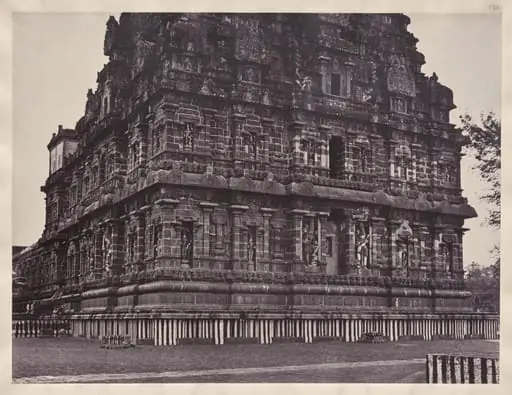 West and South Sides of the Vimana Walls, Great Temple (Brihadeshvara) at Tanjore (Thanjavur)
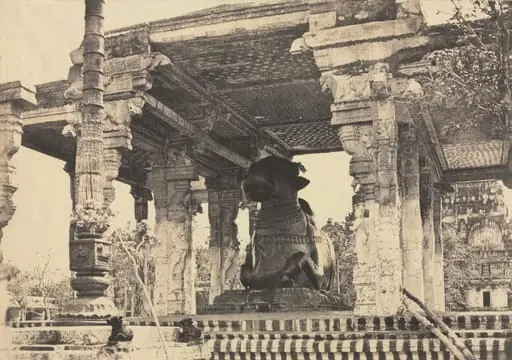 Great Pagoda, Great Bull, Front View, Tanjore, India (Rajarajeshvara Temple), plate 12 from Photographic Views of Tanjore and Trivady (Madras: Madras Presidency)
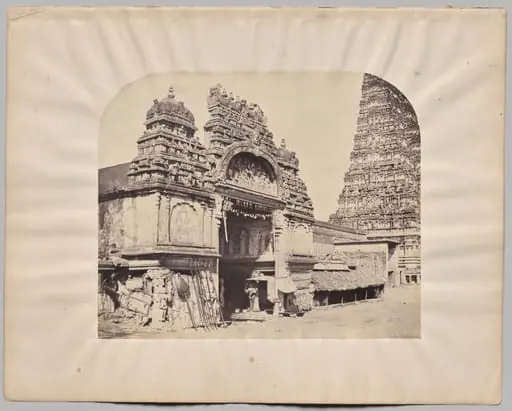 Entrance to the Minakshi Sundareshvara Temple, Madurai
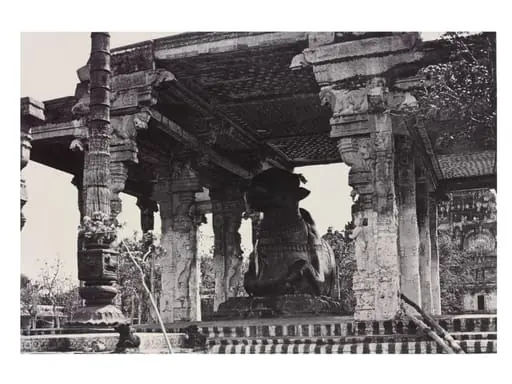 The Great Bull
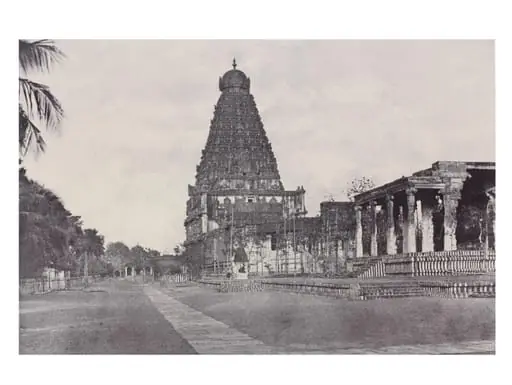 The Central Tower of the Great Pagoda
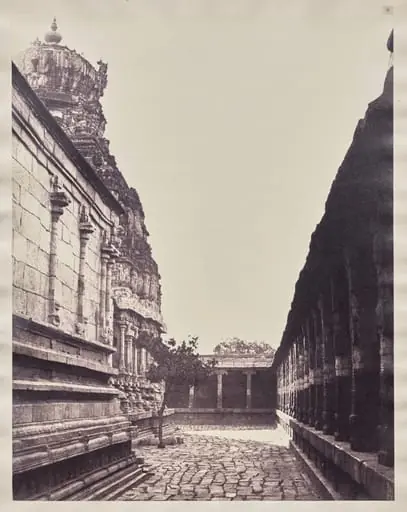 Perumal Temple Vimana from Corner of Court, Madurai
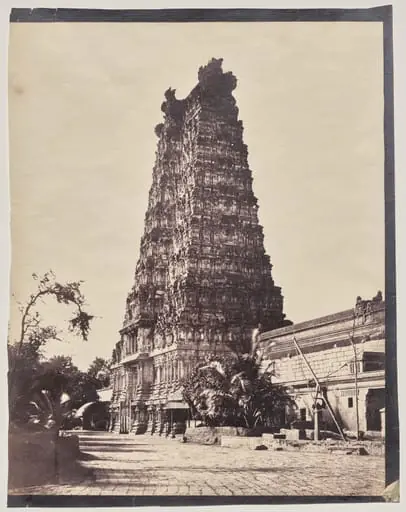 Western Gateway (Gopuram) of the Minakshi Sundareshvara Temple, Madurai
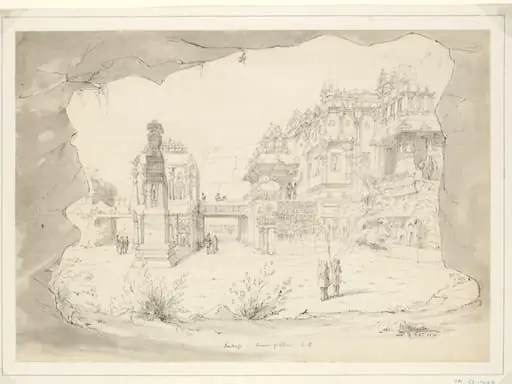 Kailasanatha Temple, Ellora
 The Great Bull from the Gateway