Artwork
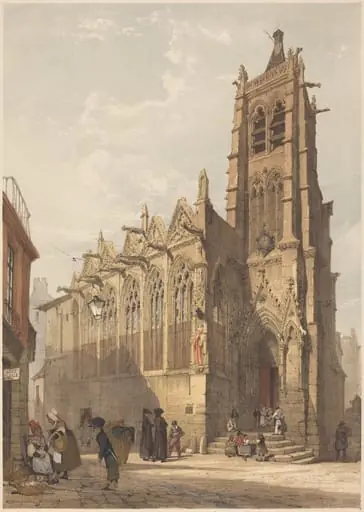
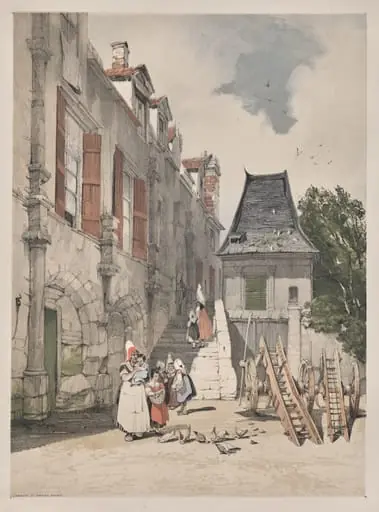
Picturesque Architecture in Paris, Ghent, Antwerp, Rouen: St. Laurent, Rouen, France
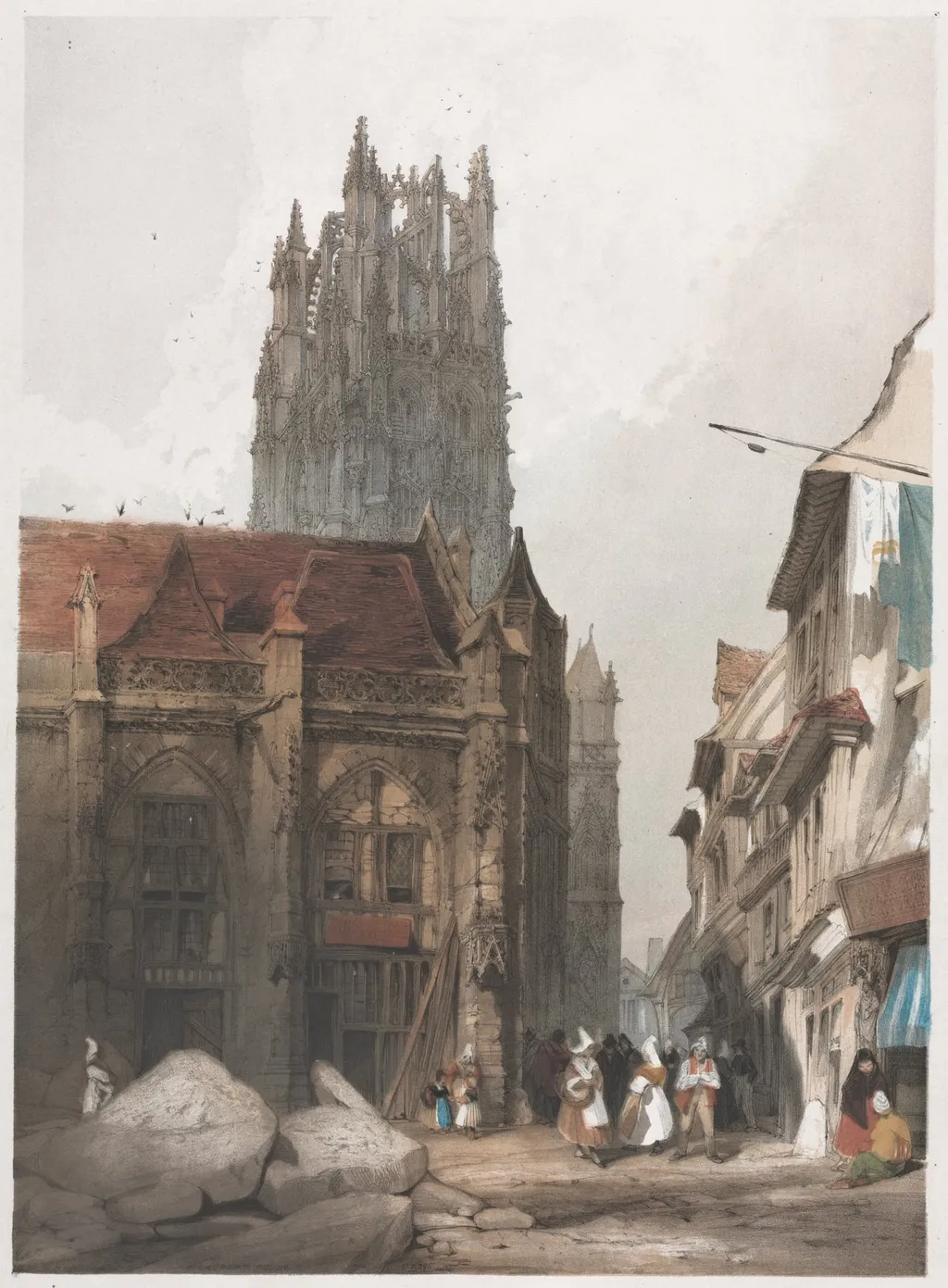
Picturesque Architecture in Paris, Ghent, Antwerp, Rouen: St. Laurent, Rouen, France is a work on paper by the Romanticist artist Thomas Shotter Boys. It dates from 1839 and is held in the collection of the Cleveland Museum of Art.
About this work
Overview
Thomas Shotter Boys, an English artist known for architectural subjects, created a lithographic print in 1839 depicting the Church of Saint-Laurent in Rouen.
Thomas Shotter Boys, an English artist known for architectural subjects, created a lithographic print in 1839 depicting the Church of Saint-Laurent in Rouen. Part of a larger portfolio showcasing urban scenes across northern France and the Low Countries, the work combines watercolor sensitivity with lithographic precision. It reflects Boys’ interest in documenting the built environment of historic European cities during a period of rapid change.
Subject & Meaning
The print centers on the Gothic façade of Saint-Laurent Church, framed by a bustling street lined with modest shops and pedestrians in period dress. The inclusion of everyday life—vendors, passersby, seated figures—grounds the architecture in human activity. Rather than idealizing the church, Boys presents it as an organic part of urban fabric, emphasizing its coexistence with commerce and daily routines of 19th-century Rouen.
Technique & Style
Boys employed watercolor washes over lithographic lines to achieve subtle tonal variations, capturing the play of natural light on stone and timber. The contrast between warm sunlit surfaces and cool shadows enhances spatial depth. Delicate detailing in windows, signage, and clothing adds realism without sentimentality. His method fused topographical accuracy with atmospheric effect, aligning with contemporary European trends in architectural illustration.
History & Provenance
Created as part of a published portfolio in 1839, the print was distributed to collectors and institutions interested in European architecture. The Cleveland Museum of Art acquired the work as part of its 19th-century graphic arts collection. Its preservation reflects early institutional interest in documenting architectural heritage through reproductive printmaking, a practice common among British artists of the period.
Context
In the 1830s, Romanticism influenced artists to value historical structures as vessels of cultural memory. Boys’ focus on Gothic churches in cities like Rouen responded to growing preservationist sentiment amid industrialization. His work aligned with broader European efforts to record vernacular architecture before it was altered or lost, contributing to a visual archive of pre-modern urban life.
Legacy
Boys’ prints served as reference materials for architects and historians, preserving the appearance of buildings before later restorations. While not widely known today, his portfolio contributed to the documentation of northern French and Flemish urban landscapes. His approach—attentive to light, texture, and human scale—remains a quiet example of how printmaking shaped public understanding of architectural heritage in the 19th century.
Artist & collection
Artist
Thomas Shotter Boys (1803–1874) was an English watercolour painter and lithographer, mostly producing cityscapes and images of buildings, although he produced some rural landscapes and marine subjects.

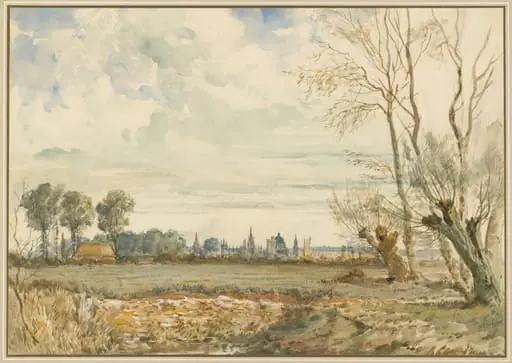
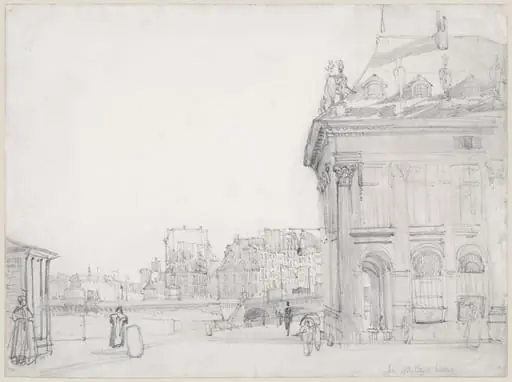
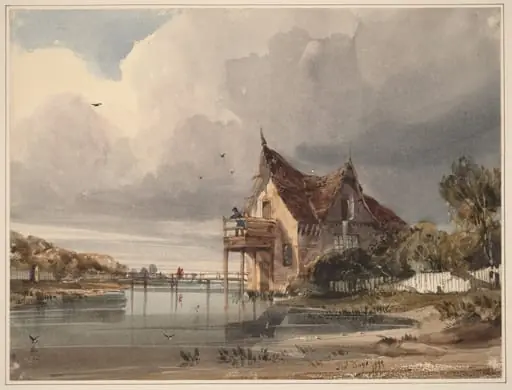
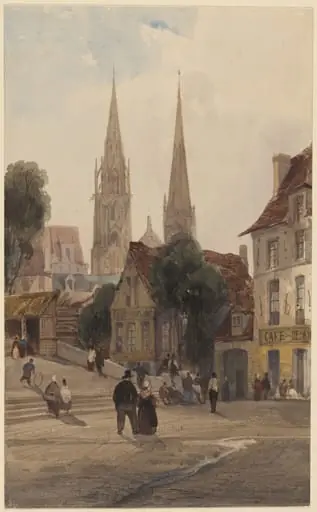
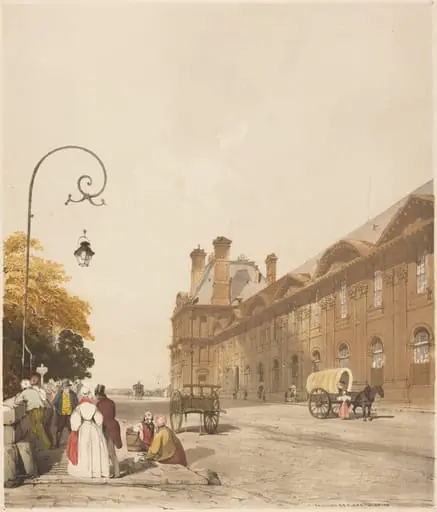
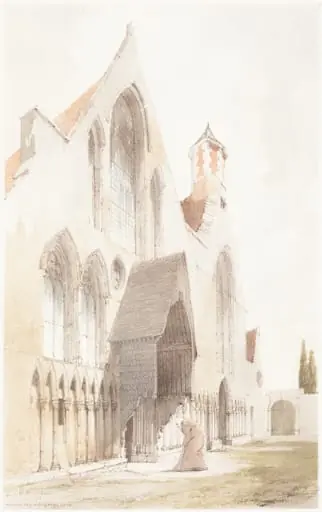
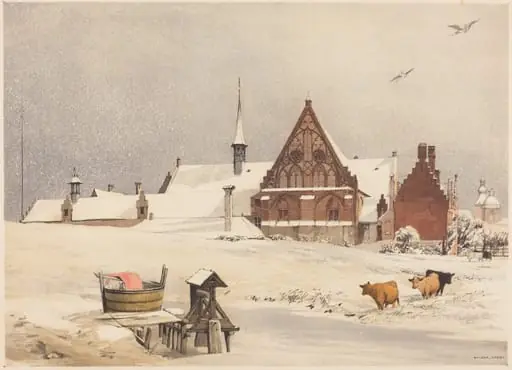
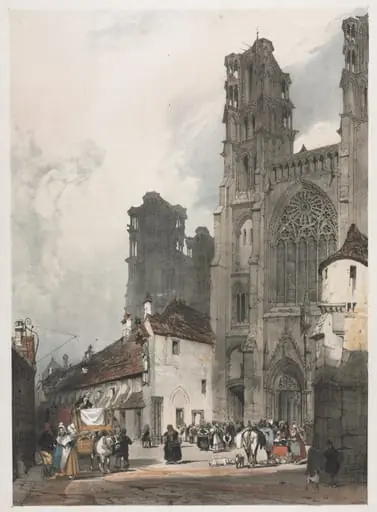 Picturesque Architecture in Paris, Ghent, Antwerp, Rouen: Laon, France
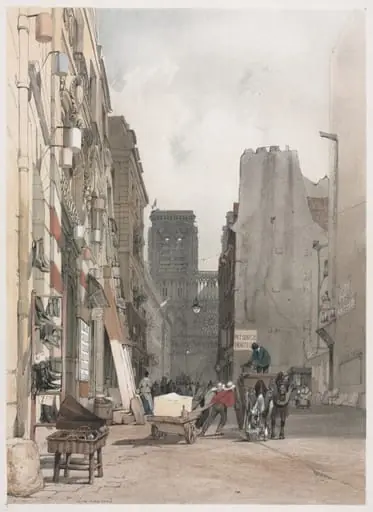 Picturesque Architecture in Paris, Ghent, Antwerp, Rouen: Nôtre Dame, Paris
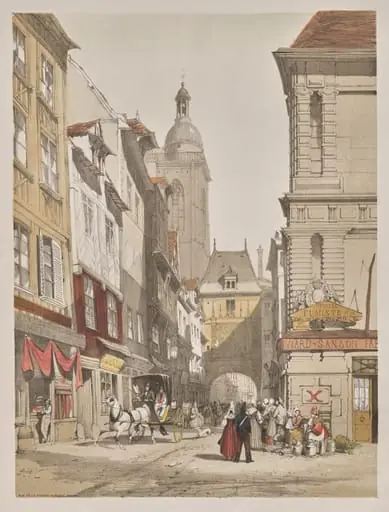 Picturesque Architecture in Paris, Ghent, Antwerp, Rouen: Rue de la Crosse Horlogue, Rouen, France
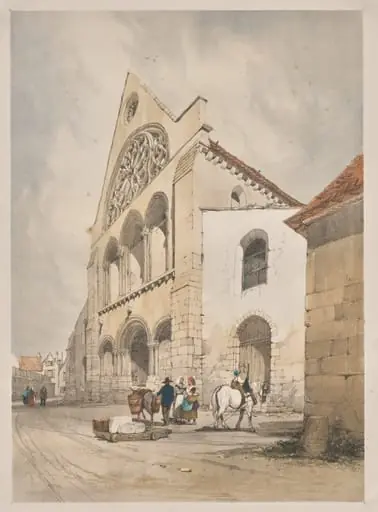 Picturesque Architecture in Paris, Ghent, Antwerp, Rouen: St. Andre, Chartres, France
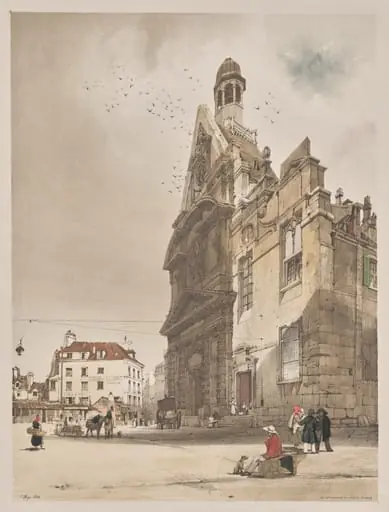 Picturesque Architecture in Paris, Ghent, Antwerp, Rouen: St. Etienne du Mont, Paris
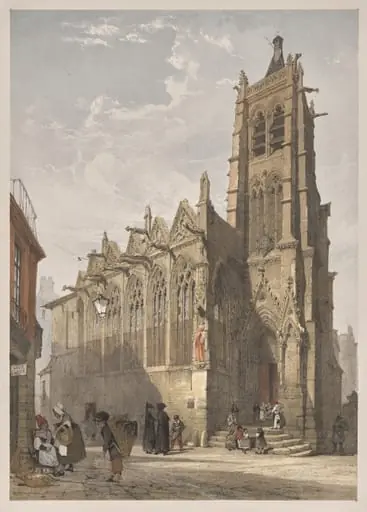 Picturesque Architecture in Paris, Ghent, Antwerp, Rouen: St. Severin, Paris
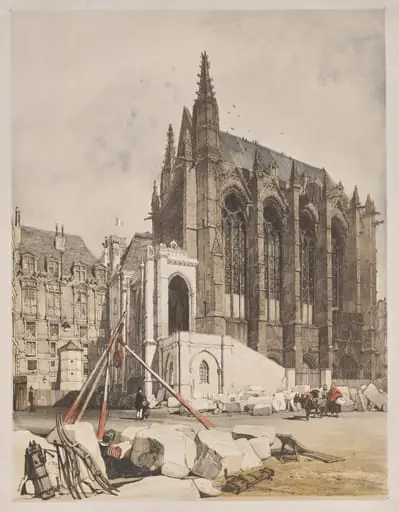 Picturesque Architecture in Paris, Ghent, Antwerp, Rouen: La. Ste Chapelle, Paris
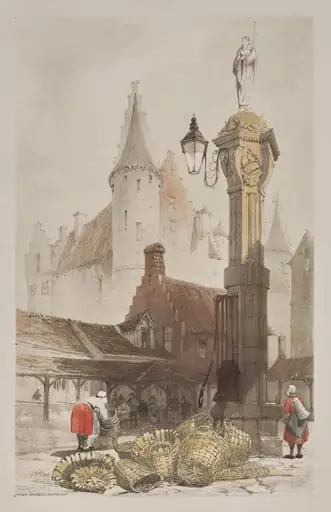 Picturesque Architecture in Paris, Ghent, Antwerp, Rouen: Fish Market, Antwerp, Belgium
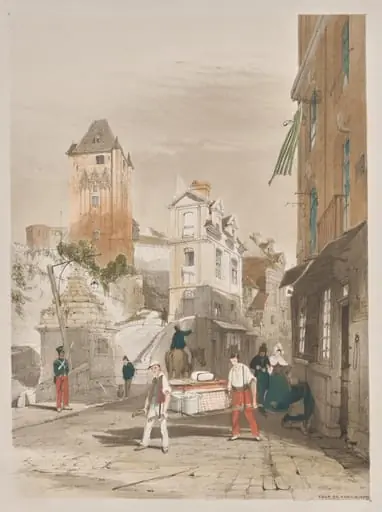 Picturesque Architecture in Paris, Ghent, Antwerp, Rouen: Tour de Remy, Dieppe, France
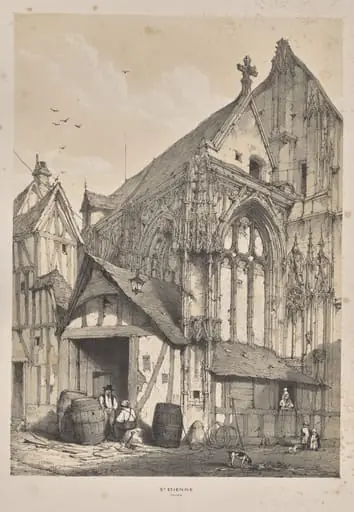 Architecture of the Middle Ages: St. Etienne, Rouen
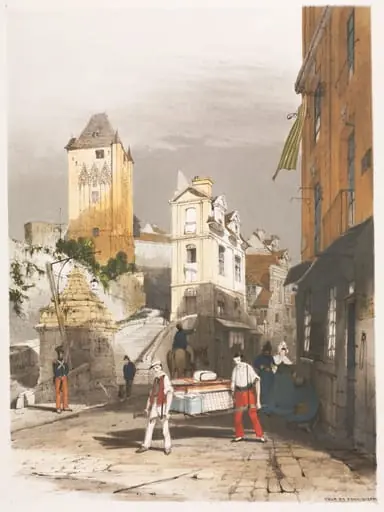 Picturesque Architecture in Paris, Ghent, Antwerp, Rouen, Etc.: Tour de Remy, Dieppe
 Picturesque Architecture in Paris, Ghent, Antwerp, Rouen: L'Abbaye St. Amand, Rouen, France