Artwork
The Immaculate Conception
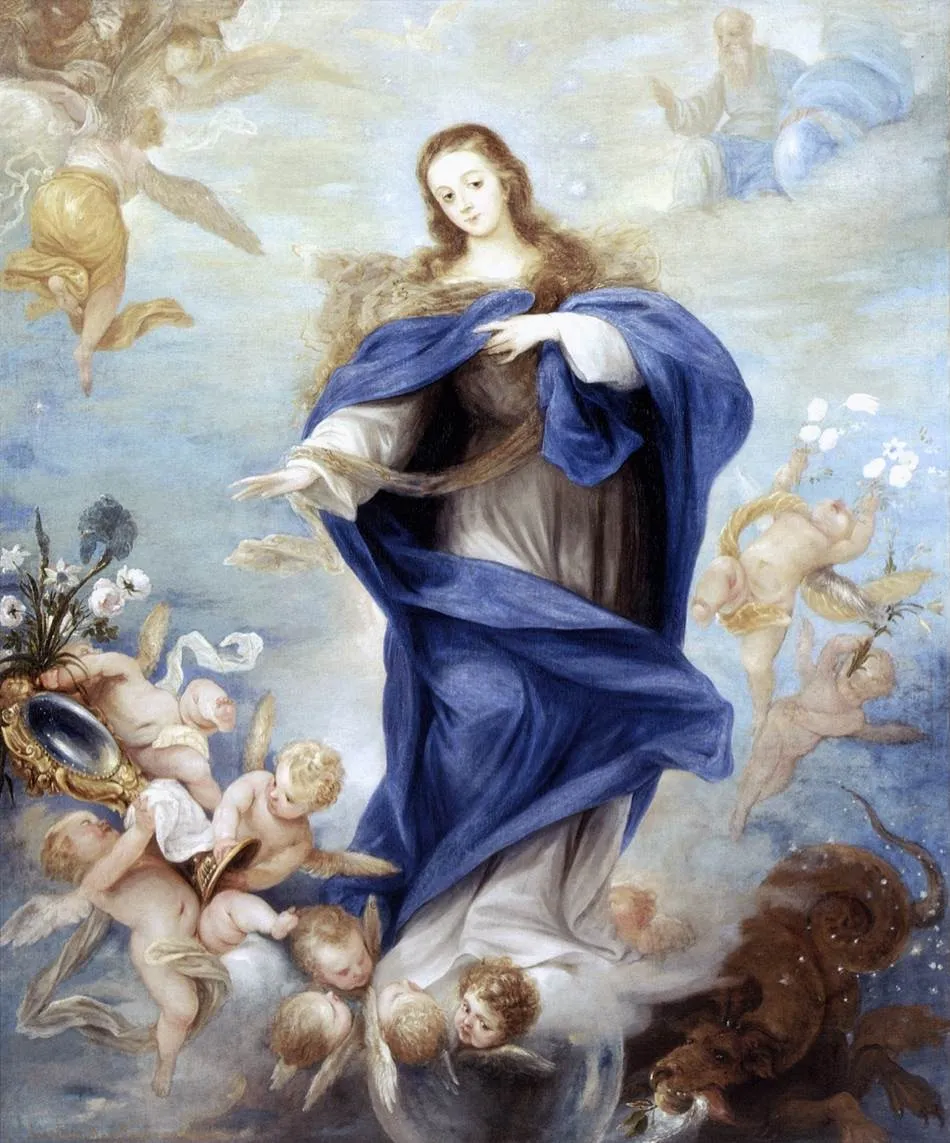
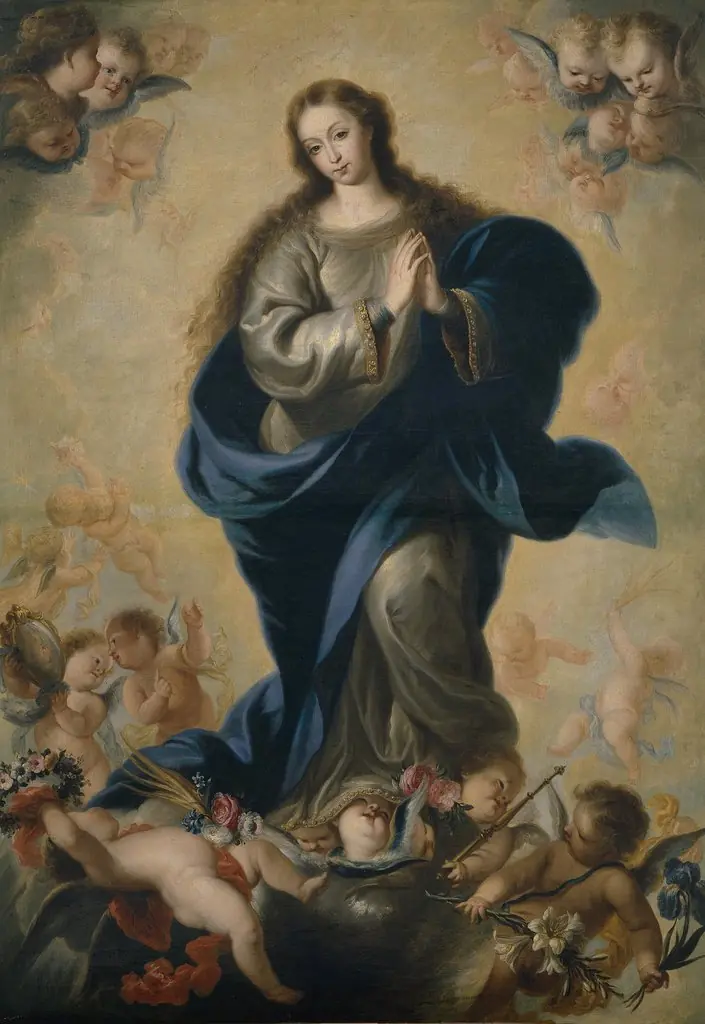
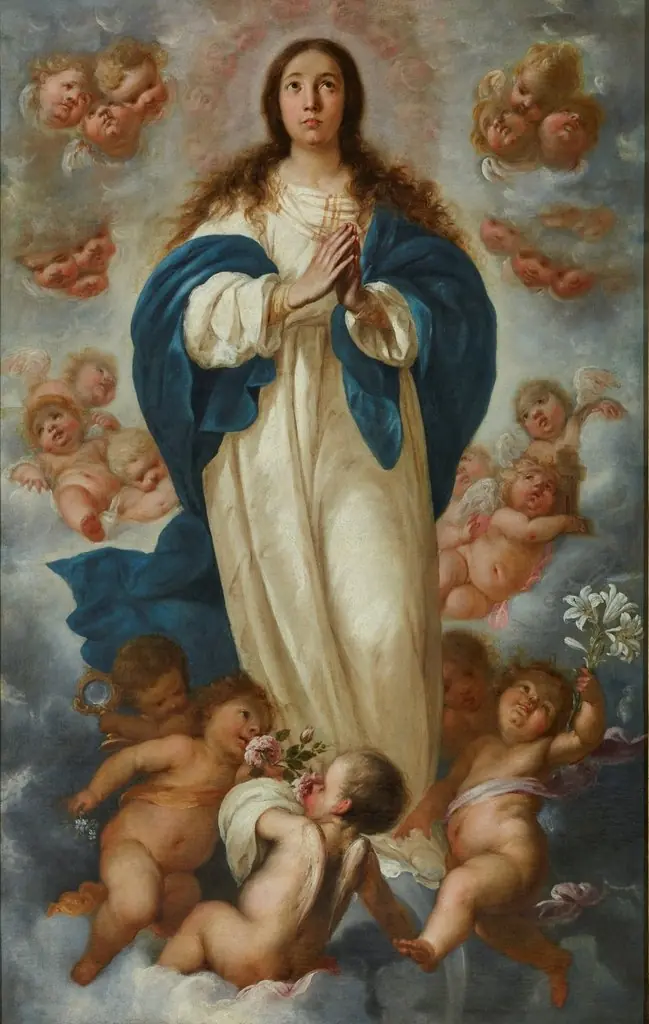
The Immaculate Conception is an oil painting by the Early Baroque Italian artist Juan Antonio de Frías y Escalante. It dates from 1663 and is held in the collection of the Museum of Fine Arts, Budapest.
About this work
Overview
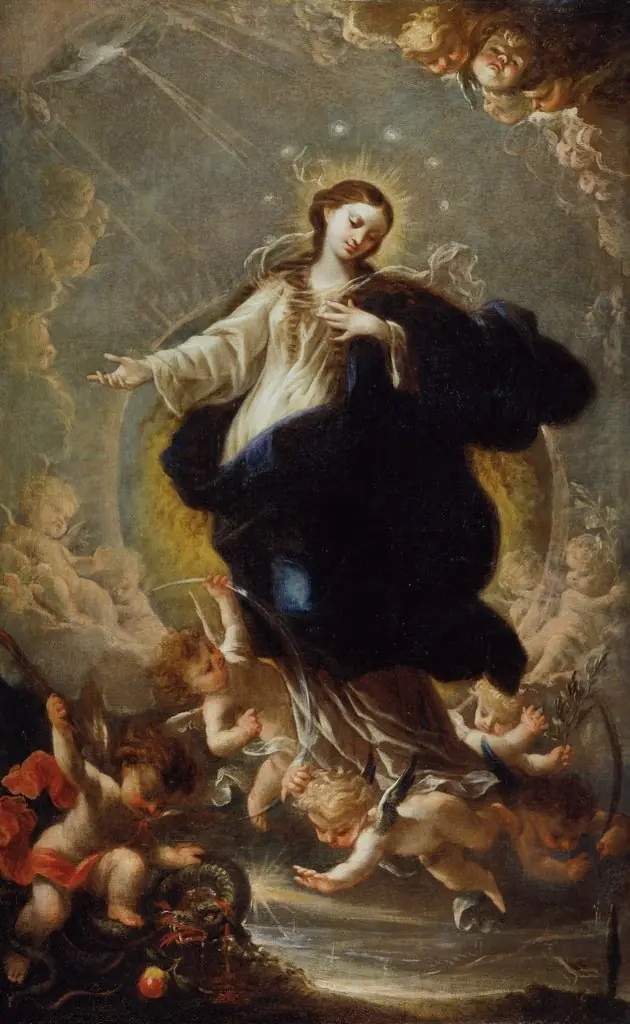
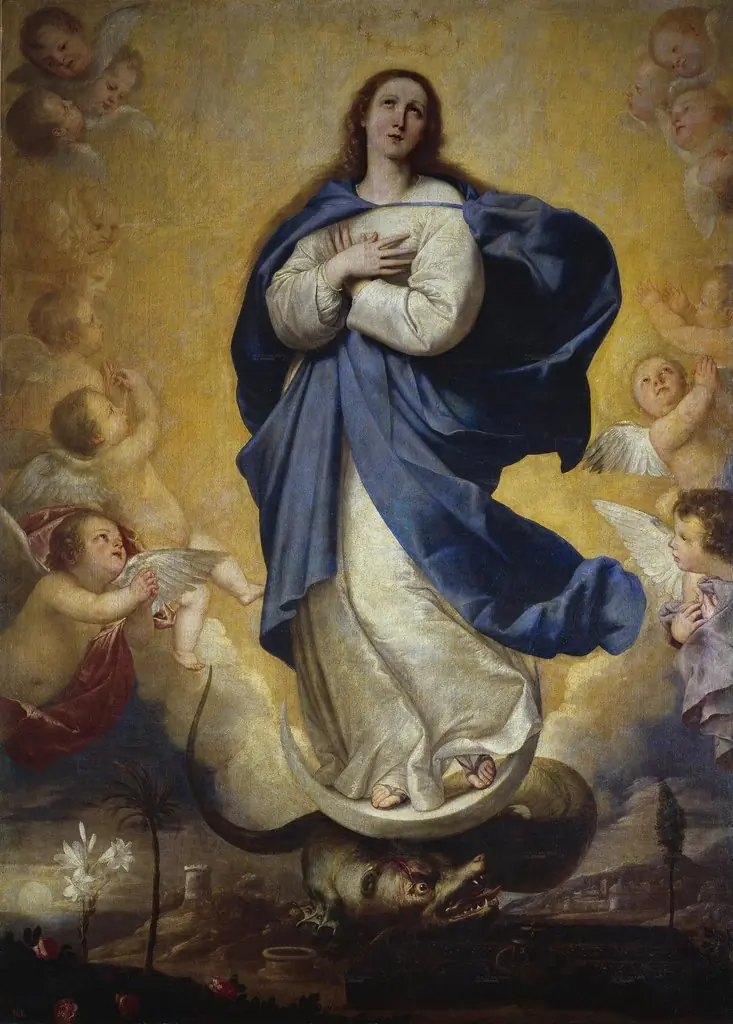
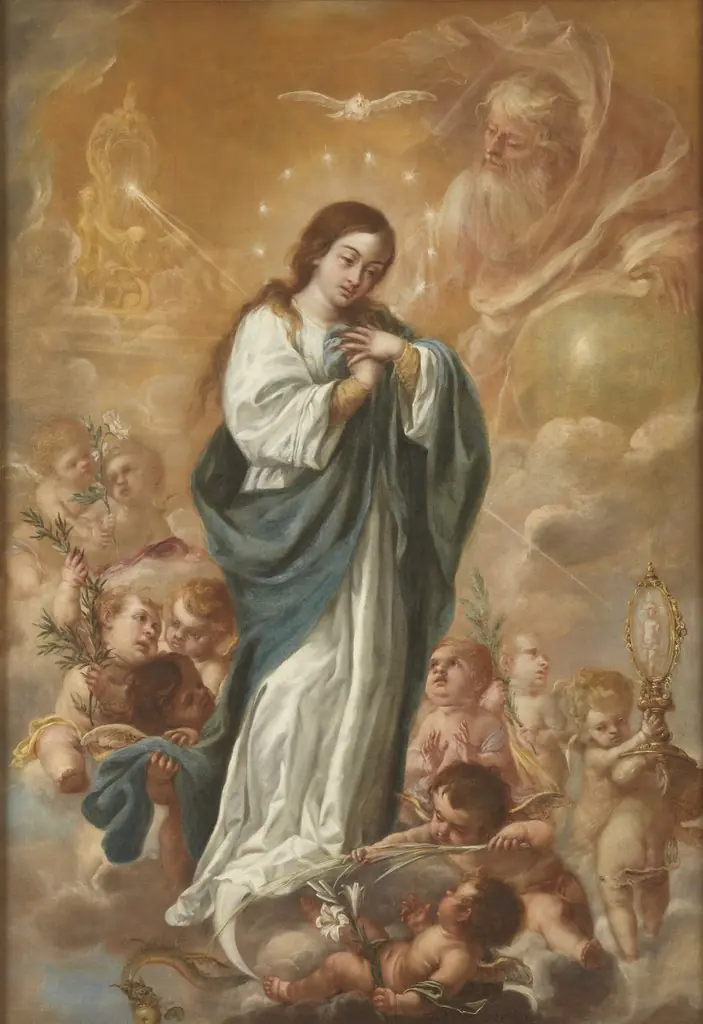
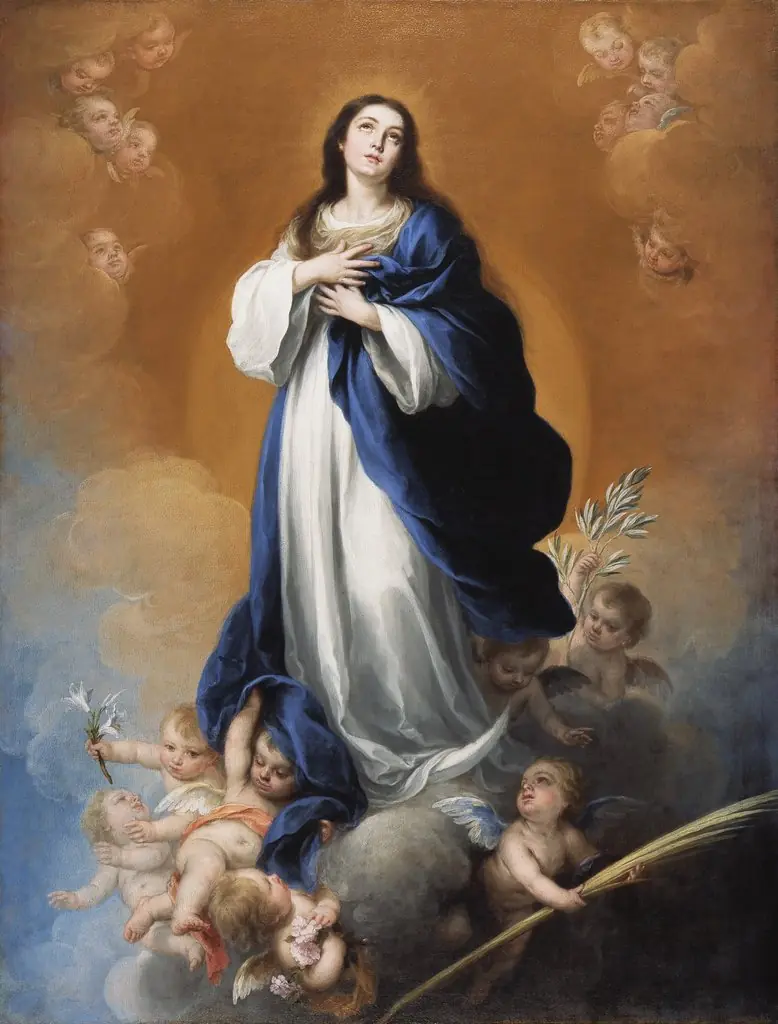
Created in 1663, this oil painting portrays the Virgin Mary in a celestial setting, surrounded by cherubs and angels amidst a luminous sky of clouds. The composition emphasizes a tranquil devotion, with Mary’s hands placed over her chest and her garments rendered in contrasting blue and white tones. Light and shadow are employed to enhance the spiritual atmosphere.
Subject & Meaning
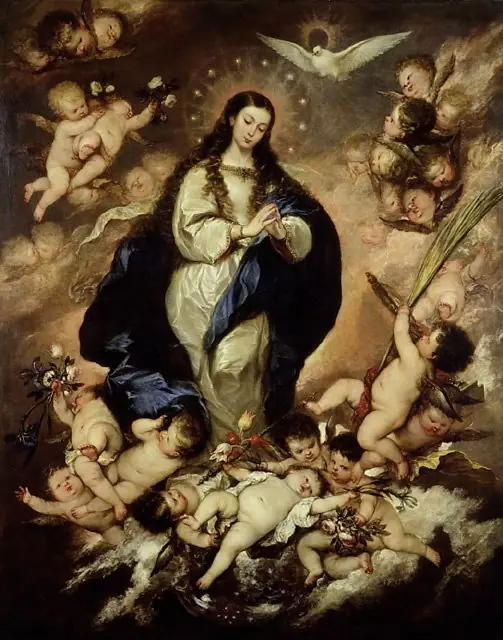
The work illustrates the Catholic doctrine of the Immaculate Conception, presenting Mary as pure and unblemished. The surrounding angels and cherubs, some bearing flowers, reinforce themes of heavenly intercession and divine grace, inviting contemplation of Mary's role as the sinless mother of Christ within Roman Catholic Marian tradition.
Technique & Style
Executed in oil on canvas, the painting reflects early Baroque influences from Italy, evident in its dynamic arrangement of figures and dramatic chiaroscuro. The artist manipulates light to model the figures, while the soft, cloud‑filled background creates depth. The delicate handling of drapery and the luminous palette contribute to the overall sense of serenity.
History & Provenance
Juan Antonio de Frías y Escalante, a Spanish Baroque painter born in Córdoba in 1633, produced the piece after training with Francisco Ricci in Madrid and serving the Spanish court. Following the artist’s early death in 1669, the painting entered the collection of the Museum of Fine Arts in Budapest, where it remains on display.
Artist & collection
Artist
Juan Antonio de Frías y Escalante
Juan Antonio de Frías y Escalante (1633 in Cordoba–1669 in Madrid) was a Spanish Baroque Golden Age painter.