Artwork
The Serenade
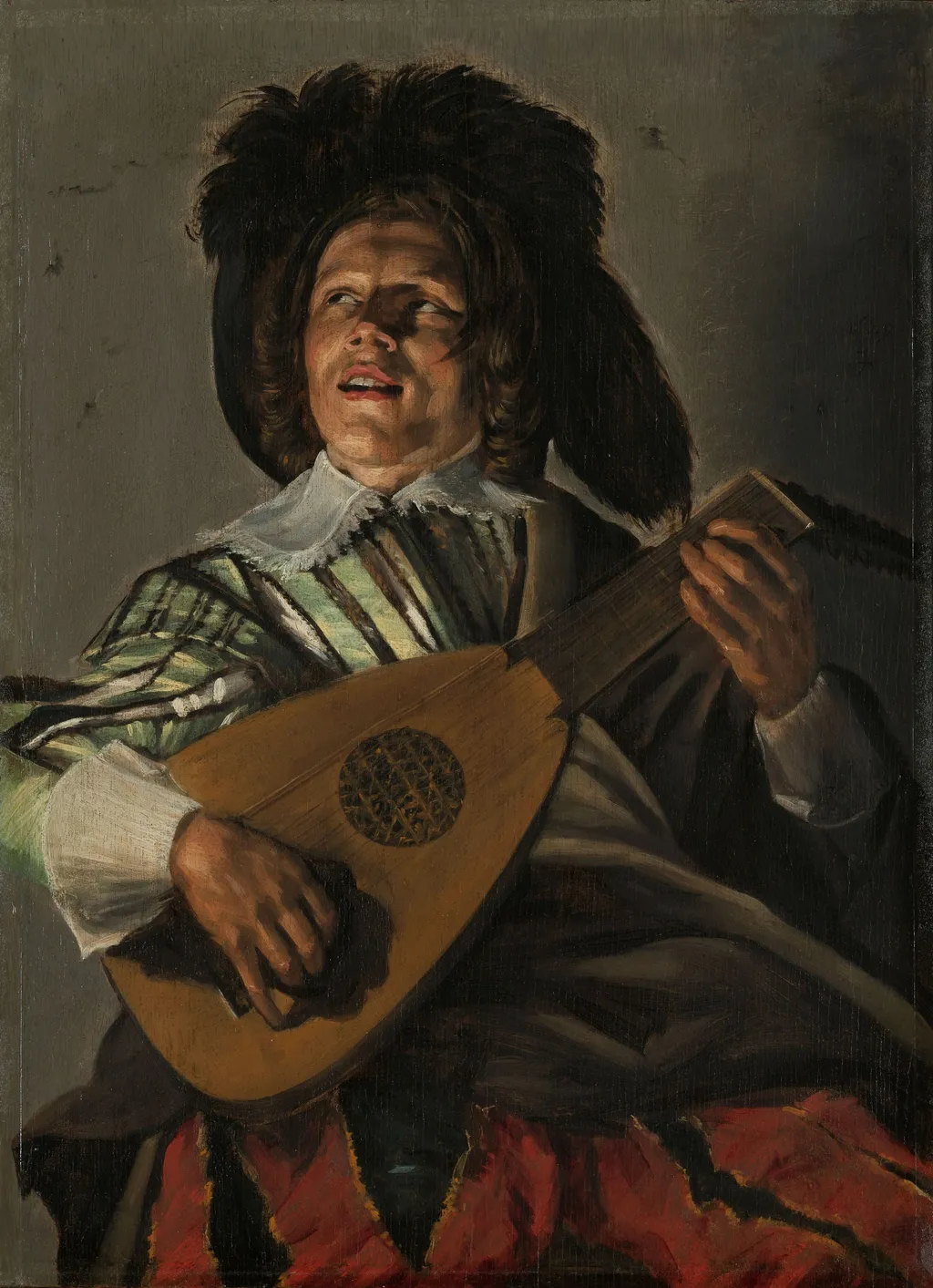
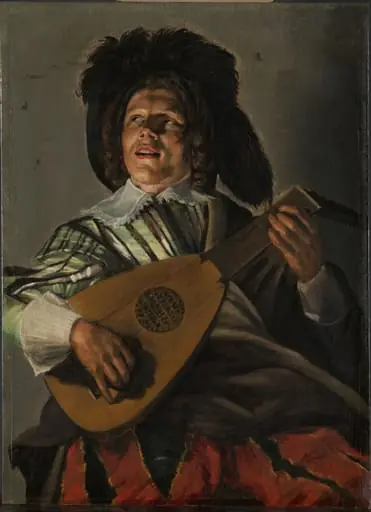
The Serenade is an oil painting by the Dutch Golden Age artist Judith Leyster. It dates from 1629 and is held in the collection of the Rijksmuseum.
About this work
Overview
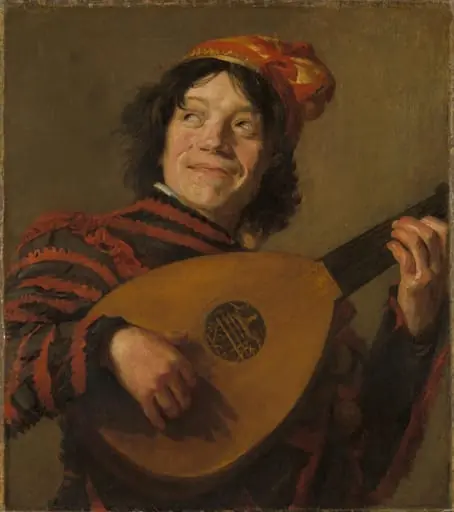
The canvas captures a musician mid-performance, isolating him against an unadorned background that concentrates attention on figure and instrument alike.
An oil painting dated 1629, The Serenade entered the Rijksmuseum collection after centuries of misattribution. Once credited to Frans Hals, the work passed through the Six collection before scholars reassigned it to Judith Leyster, a rare female presence in the Dutch Golden Age painter's guild. The canvas captures a musician mid-performance, isolating him against an unadorned background that concentrates attention on figure and instrument alike.
Subject & Meaning
The solitary figure wears a plumed hat, striped shirt with white collar and cuffs, and a red skirt-like garment. He cradles a lute, his gaze lifted upward in concentrated absorption. This upward glance, combined with the painting's title, suggests the act of serenading—directing music toward an unseen listener above or beyond the frame. The intimate scale and direct presentation transform a simple musical moment into a study of performed emotion and social ritual.
Technique & Style
Leyster deploys chiaroscuro to model form through pronounced light-dark contrasts, lending the figure substantial volume against the flat gray wall. The lute receives particular attention: warm golden-brown tones animate its surface, while carved details on the instrument's body demonstrate meticulous observation. The striped shirt and white accessories provide textural variety, painted with the loose yet controlled brushwork characteristic of Haarlem school practitioners.
History & Provenance
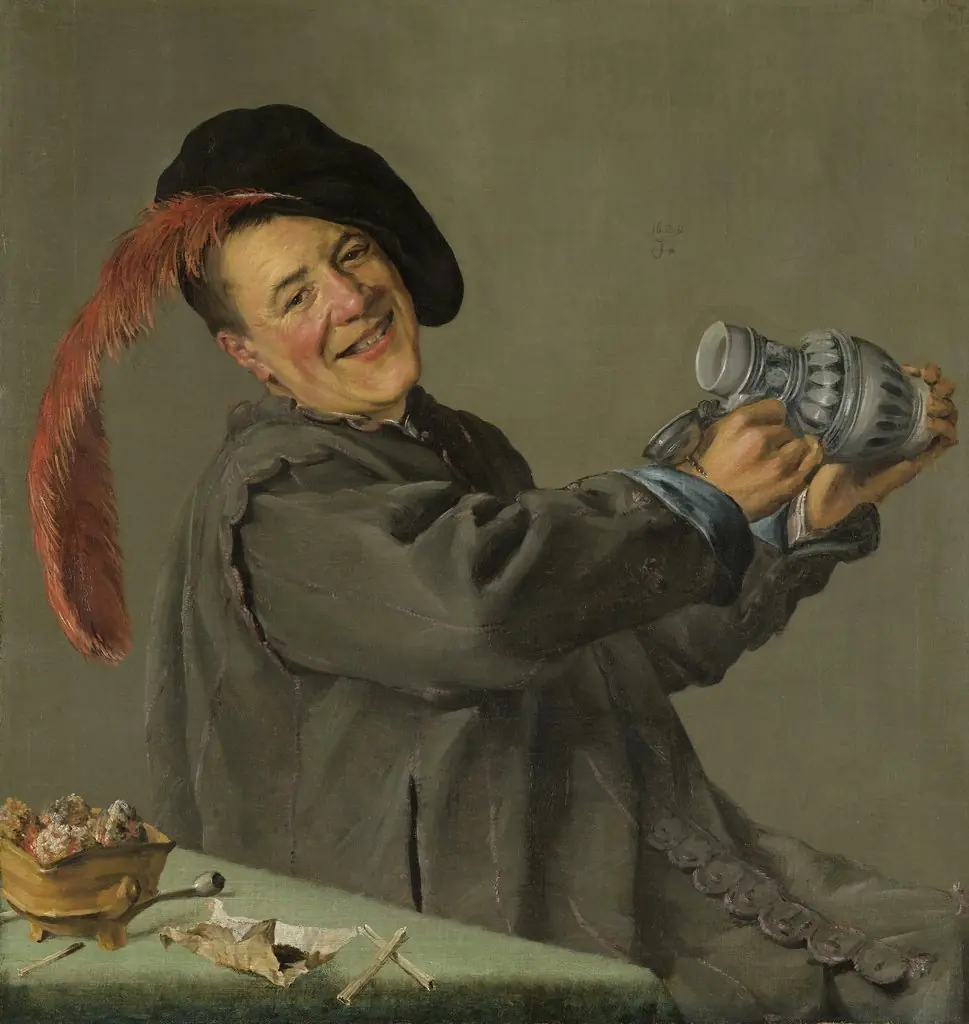
The painting endured nearly two centuries of erroneous attribution to Frans Hals until Wilhelm von Bode examined it in 1883. He identified a prominent "J" in the signature and reassigned the work to Jan Hals, Frans's brother. The correct attribution to Judith Leyster emerged only in 1893, when Hofstede de Groot included this canvas among seven paintings he first properly credited to her—restoring a signature achievement to an artist whose oeuvre had been absorbed into male colleagues' reputations.
Artist & collection
Artist
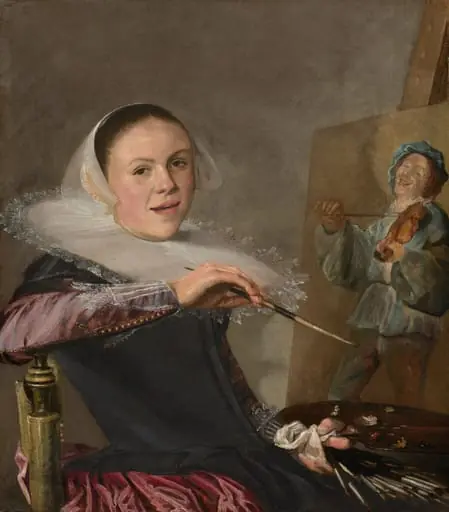
Judith Leyster lived in Haarlem, the Netherlands, in the 1600s—a time when painting was mostly a man’s game.