Artwork
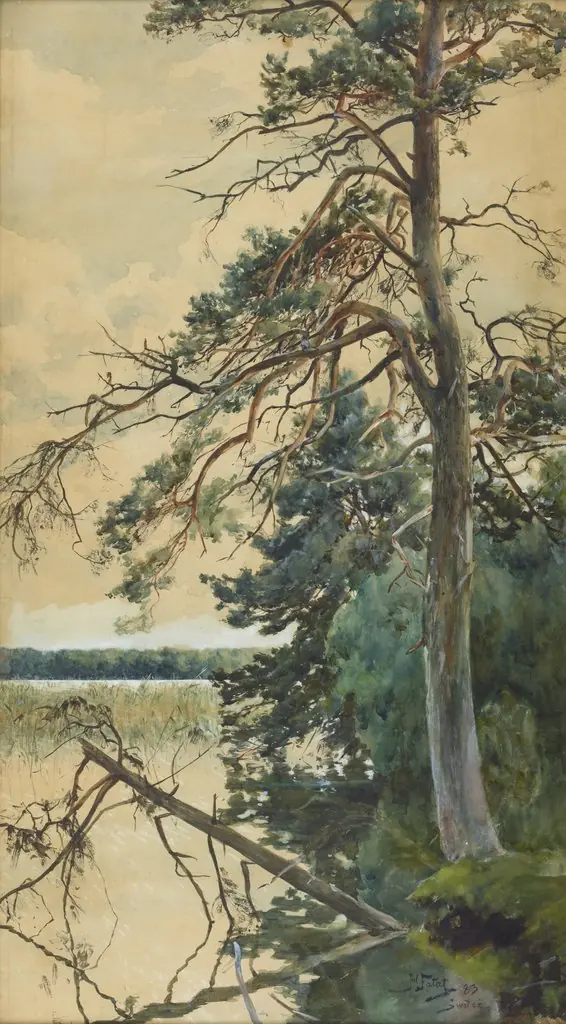
Autumn landscape from Bystra
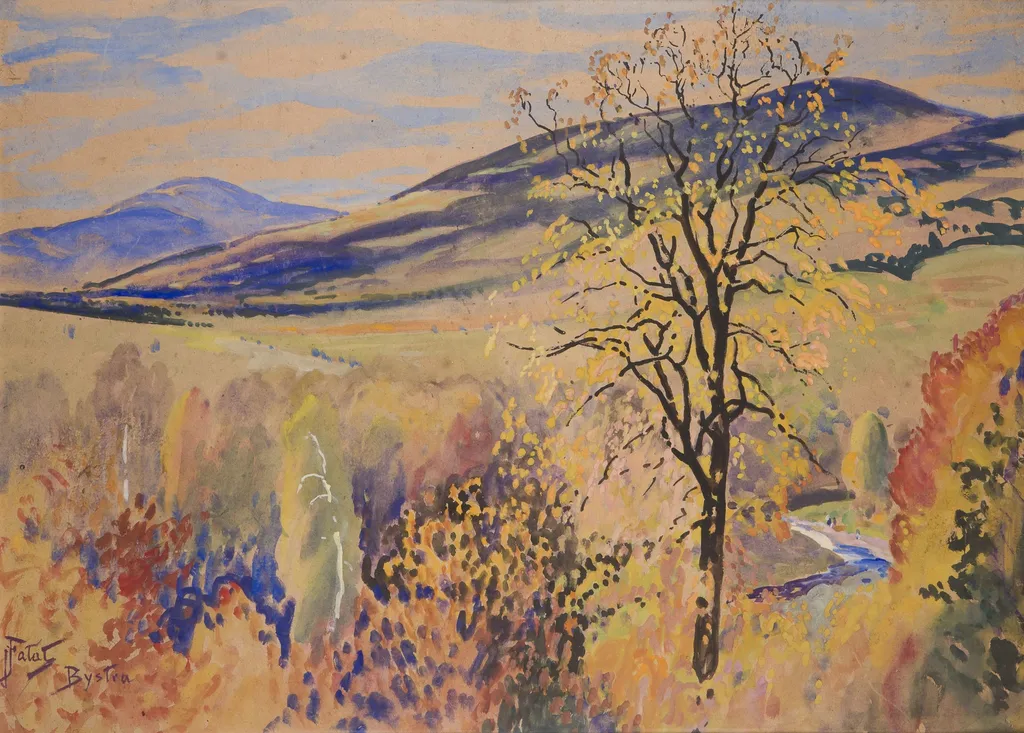
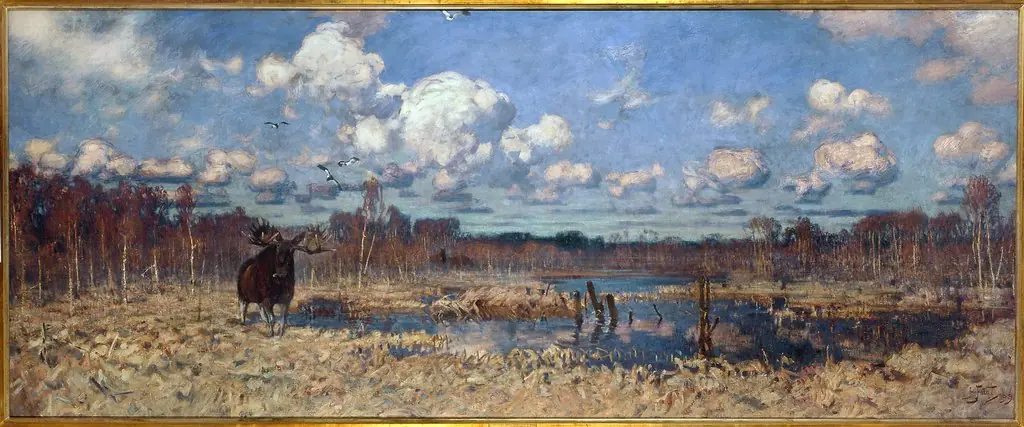
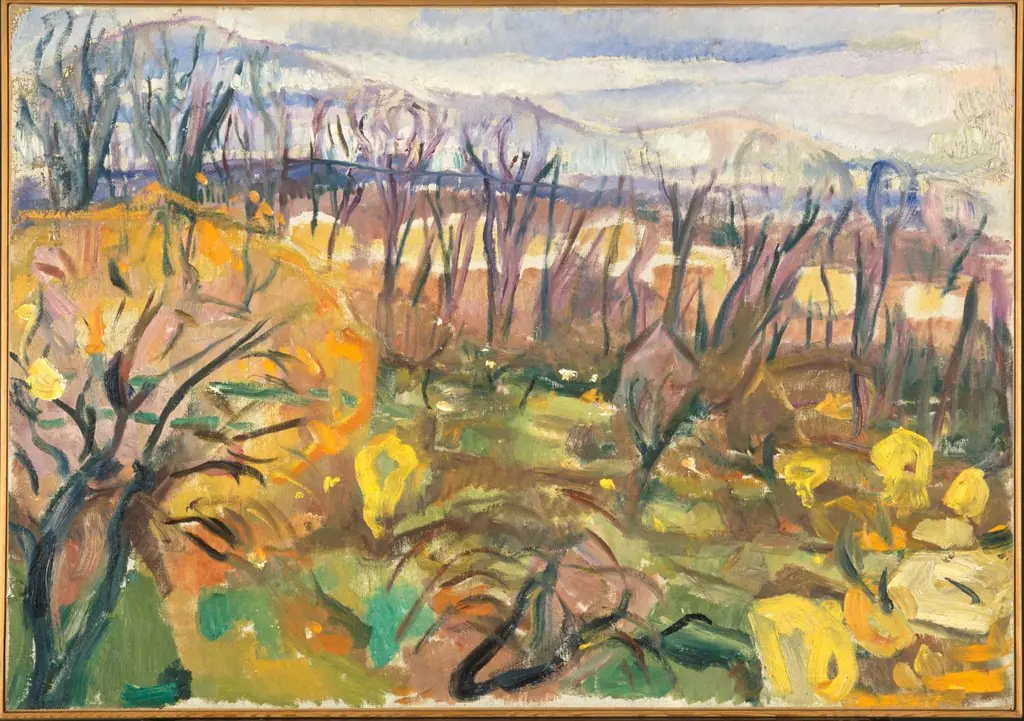
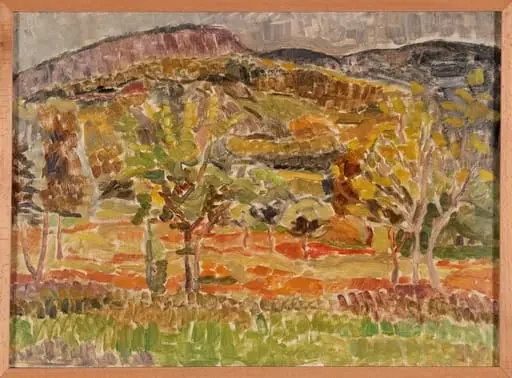
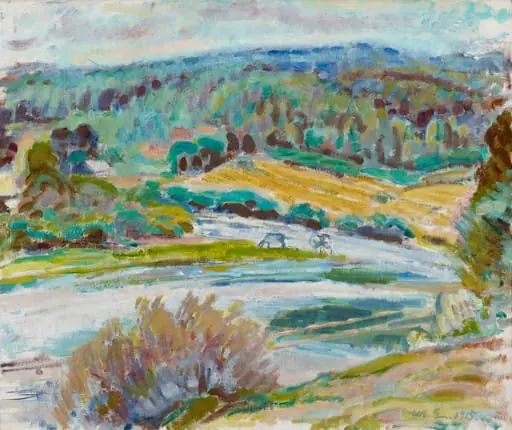
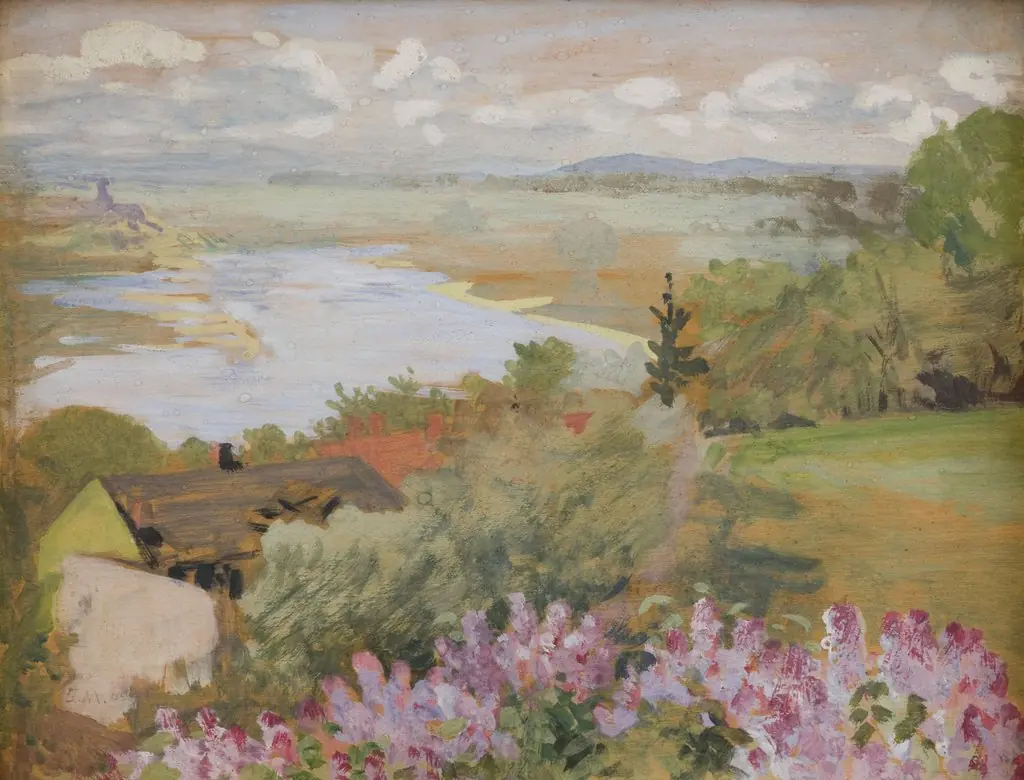
Autumn landscape from Bystra is an unspecified painting by Julian Fałat. It dates from 1902 and is held in the collection of the National Museum in Kraków.
About this work
Overview
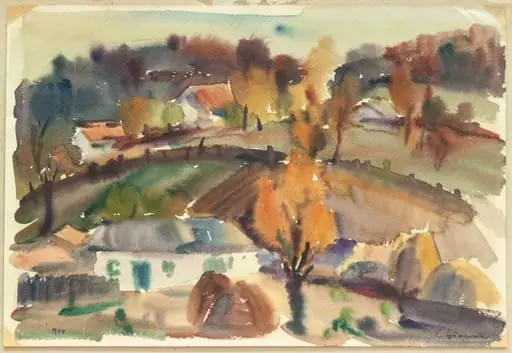
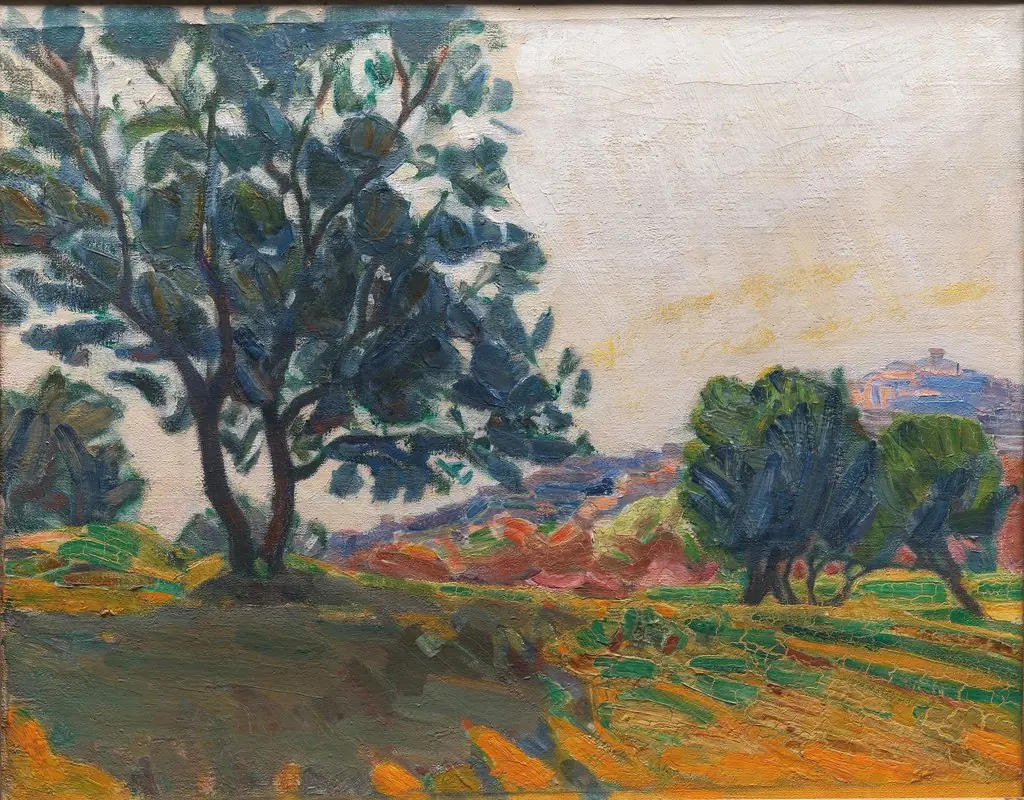
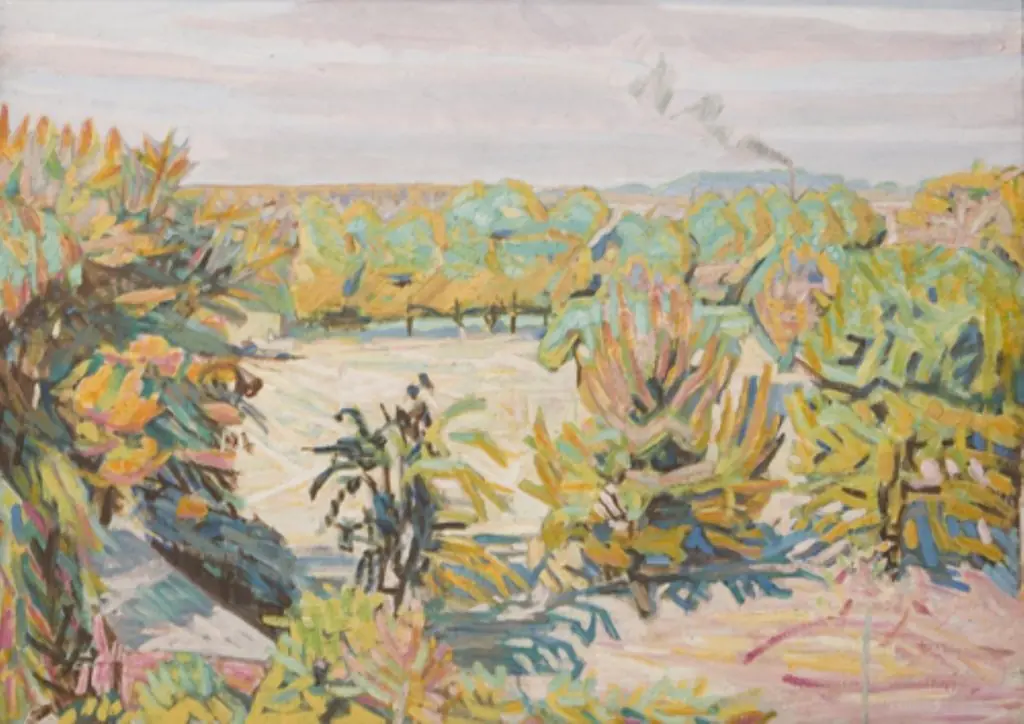
Painted in 1902, *Autumn Landscape from Bystra* is a watercolor work by Julian Fałat, a key figure in Polish Impressionism. It depicts a quiet rural scene near his home in Bystra Śląska, reflecting his deep engagement with the Polish countryside. The painting exemplifies Fałat’s skill in capturing transient natural effects through the fluidity of watercolor, a medium he elevated in Polish art.
Subject & Meaning
The composition centers on a lone tree with golden foliage in the foreground, framing a gently rolling landscape of green hills and scattered trees. The soft light and muted tones suggest late autumn, a time of quiet transition. There is no human presence, emphasizing solitude and the subtle rhythms of nature, aligning with the contemplative tone common in Fałat’s later work.
Technique & Style
Fałat employed loose, transparent washes to blend hues of ochre, olive, and pale blue, creating a sense of atmospheric depth. The watercolor’s fluidity allowed for soft edges between land, sky, and foliage, avoiding sharp definition. His technique prioritized mood over detail, using layered tints to suggest texture and light without heavy brushwork or opaque pigments.
History & Provenance
The painting remained in private hands until it entered the collection of the National Museum in Kraków, where it is now preserved. Its acquisition reflects institutional recognition of Fałat’s contribution to Polish landscape painting. Though not widely exhibited, it is consistently cited in scholarly surveys of early 20th-century Polish art.
Context
Created during a period when Polish artists were forging a national visual identity, Fałat’s work stood apart by focusing on intimate, unidealized rural scenes rather than historical or mythological themes. His emphasis on seasonal change and local topography aligned with broader European Impressionist trends, while maintaining a distinctly Polish sensibility.
Legacy
Fałat’s watercolors, including this one, helped redefine landscape painting in Poland by demonstrating the expressive potential of the medium beyond sketching. His approach influenced later generations of artists who sought to capture natural light and seasonal nuance with sensitivity and restraint, cementing his role in the nation’s artistic development.
Own this work as a print
Artist & collection
Artist
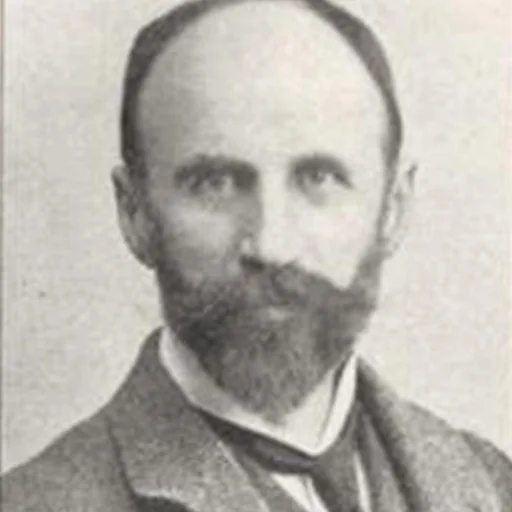
Julian Fałat (Tuligłowy, near Lwów, 30 July 1853 – 9 July 1929, Bystra Śląska) was one of the most prolific Polish watercolorists, one of the country's foremost landscapists, and a leading impressionist.