Artwork
Untitled
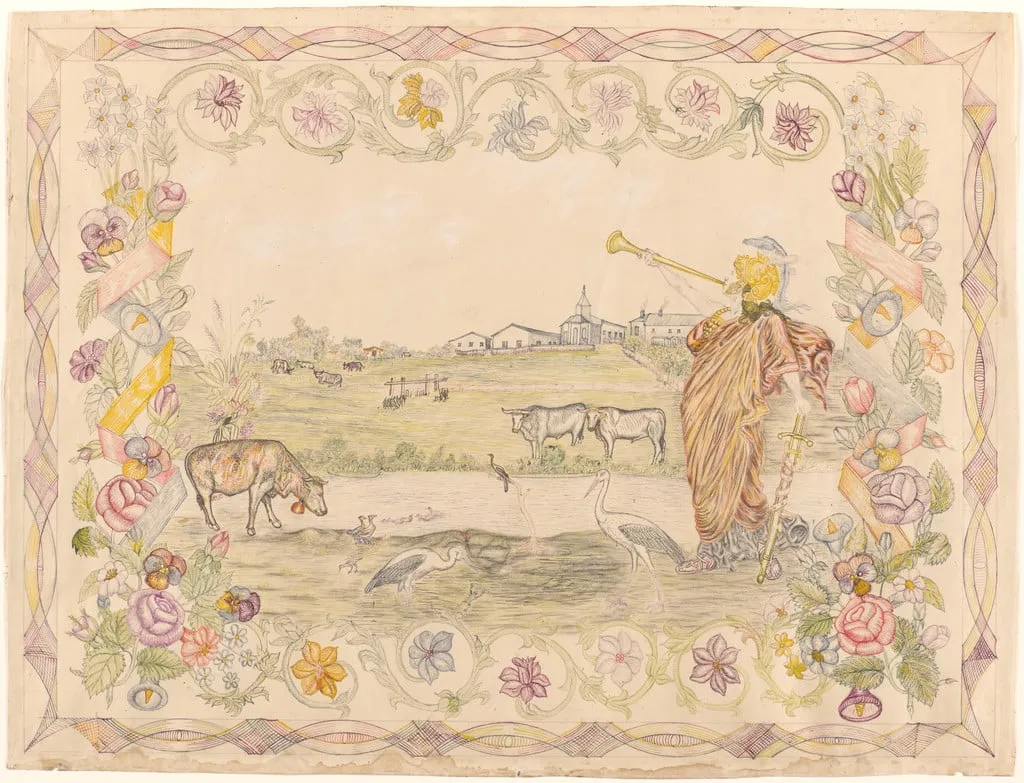
Untitled is a watercolor drawing by Julio Montenegro. It dates from 1928 and is held in the collection of the Museum of Modern Art.
About this work
Overview
It presents a solitary figure in a flowing robe, positioned beside a still pond, surrounded by animals and dense floral ornamentation.
Created around 1928, this watercolor and ink drawing by Julio Montenegro is part of The Museum of Modern Art’s collection. It presents a solitary figure in a flowing robe, positioned beside a still pond, surrounded by animals and dense floral ornamentation. The composition balances intricate detail with a quiet stillness, suggesting a symbolic rather than literal narrative. Its delicate medium and layered textures reflect an intimate, contemplative approach to image-making.
Subject & Meaning
The central figure, holding both a trumpet and a cross, may evoke religious or spiritual themes, possibly referencing messengers or sacred heralds. The presence of grazing cattle and waterfowl introduces elements of the natural world, while the abundance of flowers and swirling patterns suggests a symbolic landscape rather than a realistic one. The fusion of sacred objects with pastoral scenes implies a harmony between the divine and the earthly, rendered without overt doctrinal clarity.
Technique & Style
Montenegro employed transparent watercolor washes and fine ink lines to build texture and depth, particularly in the robe’s layered folds, which appear semi-translucent. Bright, non-naturalistic hues—pink, yellow, and green—dominate the bordering flora, creating a rhythmic, almost ornamental frame. The composition avoids perspective conventions, favoring a flattened space where figures and flora coexist in a dreamlike equilibrium, emphasizing pattern over spatial realism.
History & Provenance
The work entered The Museum of Modern Art’s collection as part of a broader effort to document early 20th-century Latin American modernism. While little is documented about its creation or early ownership, its inclusion in the museum’s holdings since the mid-20th century reflects its recognition as a significant example of regional artistic expression during a period of cultural redefinition.
Context
Made during a time when Latin American artists were redefining identity through hybrid visual languages, Montenegro’s work engages with indigenous, colonial, and modernist influences. Unlike European modernists who often rejected ornamentation, he embraced decorative elements as carriers of meaning. This piece aligns with broader regional tendencies to merge spiritual symbolism with everyday natural forms, resisting purely Western artistic paradigms.
Legacy
Though Montenegro’s oeuvre remains less widely studied than his contemporaries, this drawing exemplifies a quiet but distinct strand of modernist expression in Latin America—one that privileges symbolic richness over formal austerity. Its presence in a major international institution underscores its value as a testament to the diversity of modernist practices beyond dominant Euro-American narratives.
Artist & collection

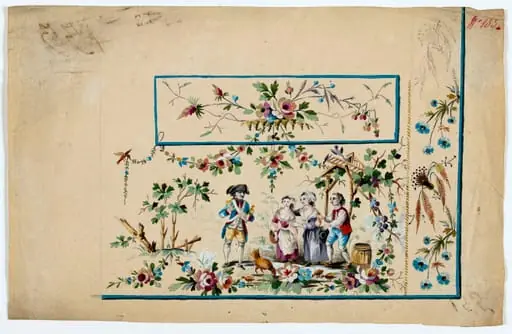 Gilet décor Louis Gillet parlant avec 2 paysans et leur fille, projets de broderies de gilet, XVIIIème siècle
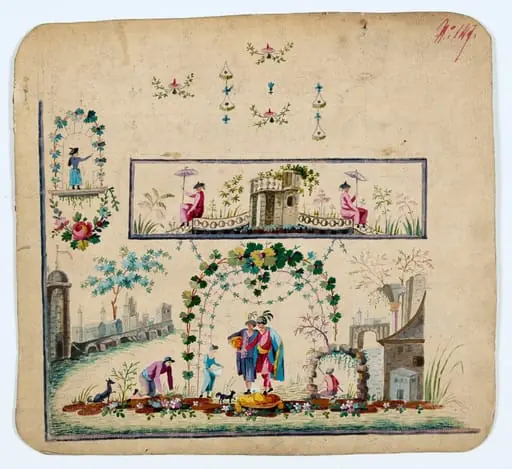 Gilet avec personnages traversant la rivière, projets de broderies de gilet, XVIIIème siècle
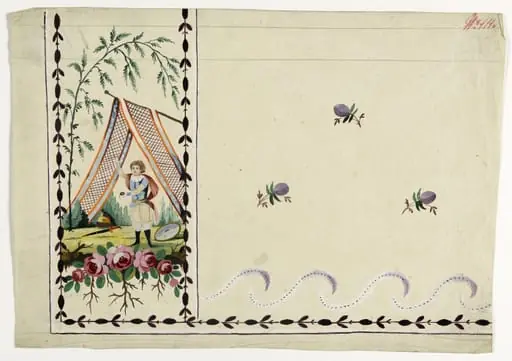 Gilet guerrier dans un paysage, projets de broderies de gilet, XVIIIème siècle
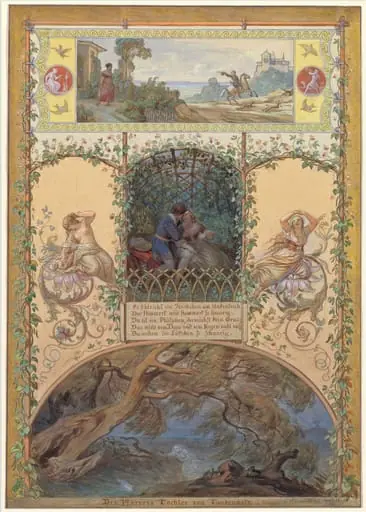 Des Pfarrers Tochter von Taubenhein (The Parson's Daughter from Taubenhain)
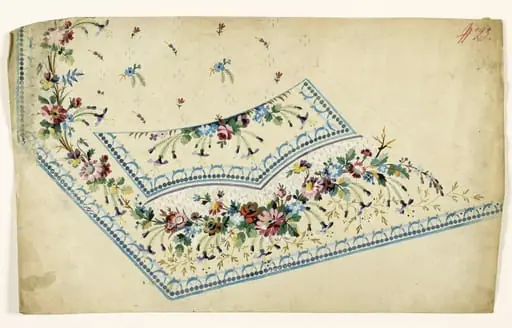 Composition de fleurs en guirlandes et en semis et frises de perles bleues, projets de broderies de gilet, XVIIIème siècle
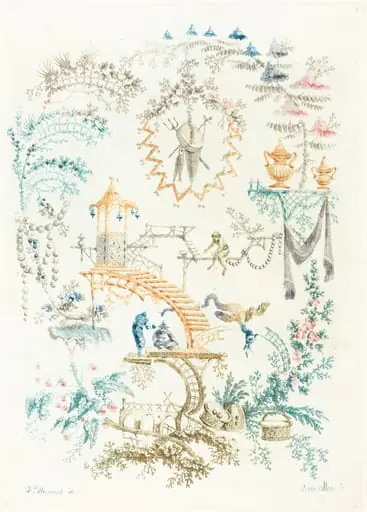 Arabesque with a Monkey
![Gilet décor Enée aborde en Afrique ou en Italie [ ? ], projets de broderies de gilet, XVIIIème siècle, by Anonyme](https://artifactworldgallery.com/img/anonyme--gilet-decor-enee-aborde-en-afrique-ou-en-italie-projets-de-b--71103e9e9849fdb0-w320.webp) Gilet décor Enée aborde en Afrique ou en Italie [ ? ], projets de broderies de gilet, XVIIIème siècle
Gilet décor Enée aborde en Afrique ou en Italie [ ? ], projets de broderies de gilet, XVIIIème siècle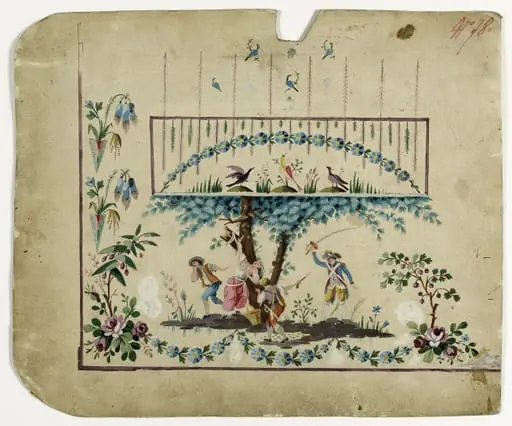 Gilet décor Louis Gillet délivrant une paysanne, projets de broderies de gilet, XVIIIème siècle
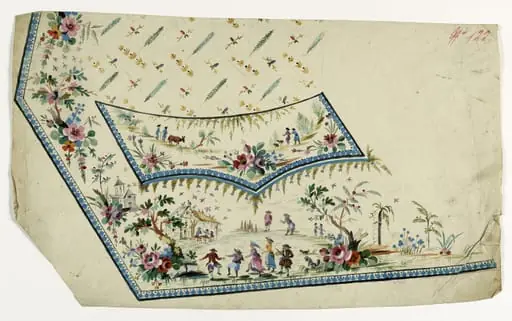 Gilet décor fête paysanne, projets de broderies de gilet, XVIIIème siècle
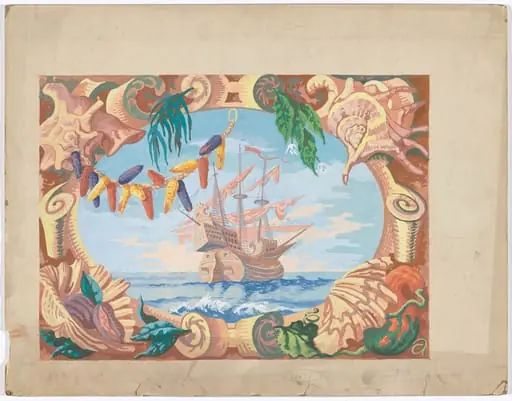 Untitled
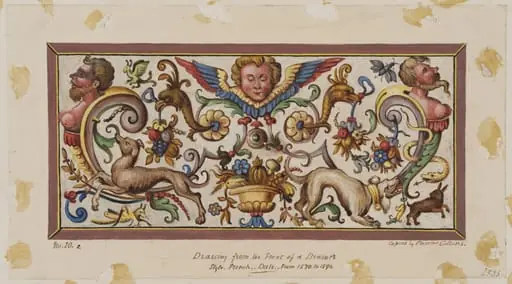 Decoration on the front of a drawer
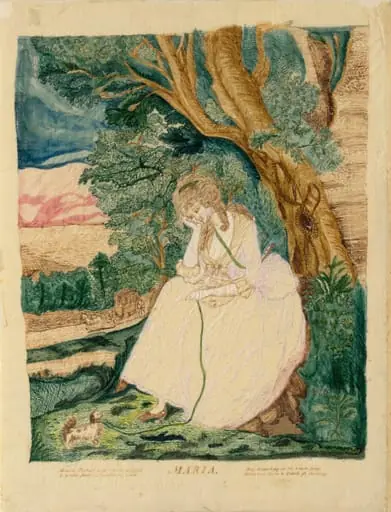 Maria
Maria