Artwork
The wooden mihrab of the Madrasa Halawiyya, Aleppo
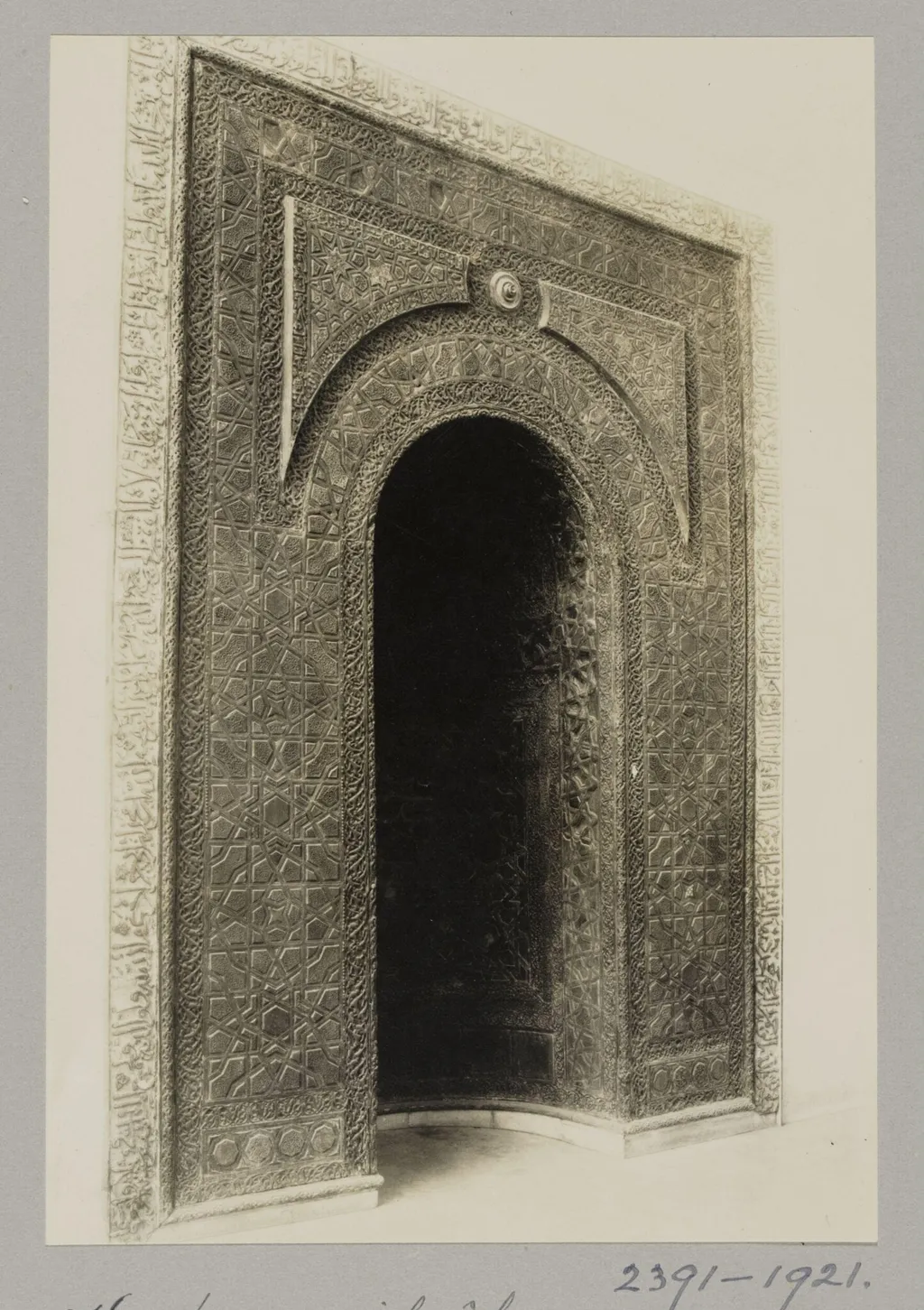
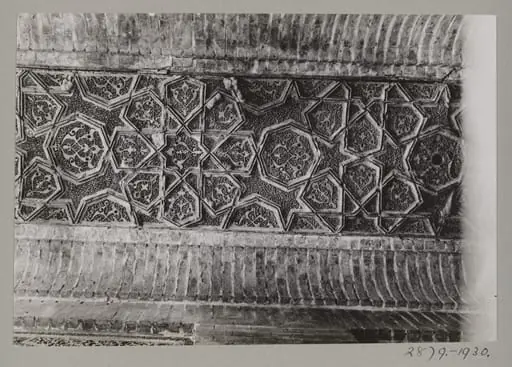
The wooden mihrab of the Madrasa Halawiyya, Aleppo is a photographic photography by K.A.C. Creswell. It dates from 1920 and is held in the collection of the Victoria and Albert Museum. A black-and-white photograph taken by K.
About this work
Overview
The composition isolates the mihrab against a shadowed background, heightening the contrast between carved wood and recessed space.
A black-and-white photograph taken by K.A.C. Creswell in 1920 captures the wooden mihrab from the Madrasa Halawiyya in Aleppo. The image is mounted and presents a frontal view of the door-like structure, emphasizing its depth and intricate surface. The composition isolates the mihrab against a shadowed background, heightening the contrast between carved wood and recessed space. Creswell documented Islamic architectural details during his fieldwork in the region.
Subject & Meaning
The object is a mihrab, a niche in Islamic religious architecture indicating the direction of Mecca. Though typically found in mosques, this wooden version was installed in a madrasa, reflecting the integration of devotional function within educational spaces. Its elaborate carving signals the building’s scholarly and spiritual significance. The absence of figural imagery aligns with Islamic aniconic traditions, focusing instead on abstract geometry as a form of contemplative expression.
Technique & Style
The surface is densely carved with interlacing geometric patterns—stars, polygons, and scrolling arabesques—each motif subtly varied to avoid repetition. The play of light and shadow in the photograph reveals the depth of the relief, achieved through precise chiseling of hardwood. The contrast between dark and light wood tones suggests inlay or contrasting timber species were used, enhancing the visual rhythm without color. The craftsmanship reflects regional Aleppine woodwork traditions of the Mamluk period.
History & Provenance
The mihrab originally belonged to the Madrasa Halawiyya, a 14th-century Islamic school in Aleppo, built during the Mamluk era. Creswell photographed it during his survey of Islamic monuments in Syria, shortly after the fall of the Ottoman Empire. The structure survived into the 20th century but was severely damaged in later conflicts. Creswell’s photograph remains one of the few detailed visual records of its original condition.
Context
In 14th-century Aleppo, madrasas served as centers of religious learning and community life. The inclusion of a finely carved wooden mihrab, rather than a tiled or stone one, indicates the patron’s wealth and the school’s prestige. Similar wooden mihrabs appear in other Syrian and Egyptian institutions of the period, suggesting a regional aesthetic preference for intricate woodwork in interior sacred spaces.
Legacy
Creswell’s photograph preserved a critical example of Islamic architectural detail before its physical destruction. The image became a reference in scholarly studies of Mamluk woodwork and influenced later documentation efforts in the Middle East. Though the original mihrab no longer exists intact, the photograph endures as a key artifact in the archival record of Syria’s cultural heritage.
Artist & collection
Artist
He spent years crawling across the Middle East with a bulky camera, measuring every arch and dome with his lens.

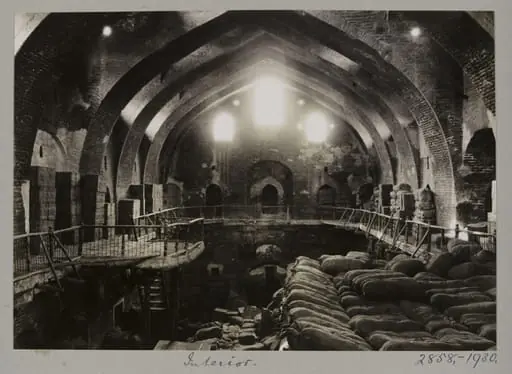 Interior of Khan Othma also known by Khan Murjan, Bagdad
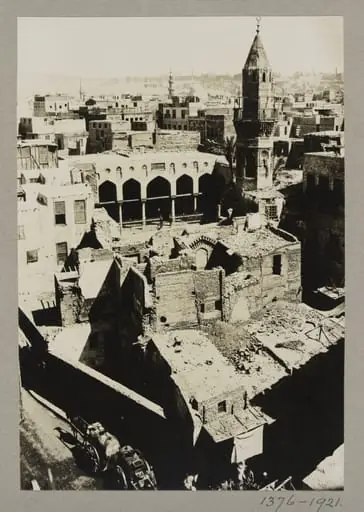 The mosque of Fatimid wazir Amir al-Salih Tala'i‘ seen from Bab Zuwayla, Cairo
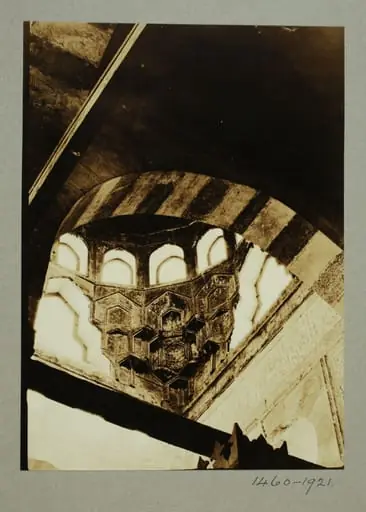 Pendentive of dome over mihrab in the mosque of Qadi Yahya Zayn al-Din (Habbaniyya), Cairo
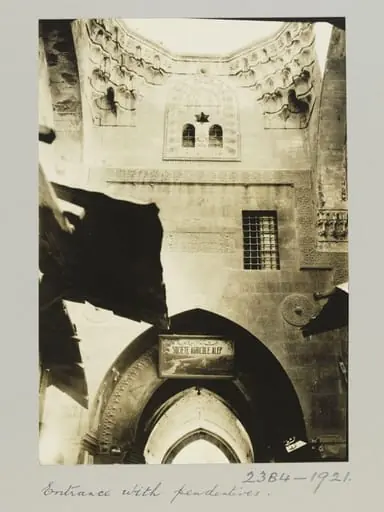 Entrance of Khan al-Jumruk, Aleppo
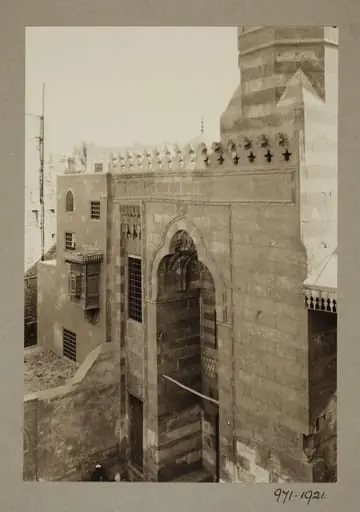 The entrance façade of the mosque of Qadi Yahya Zayn al-Din, Cairo
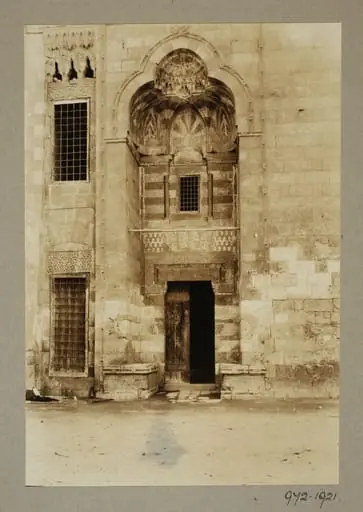 Entrance portal of the mosque of Qadi Yahya Zayn al-Din (Habbaniyya), Cairo
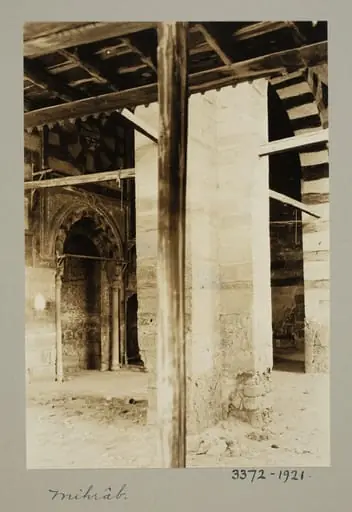 Mihrab of the mosque of Masih Pasha (Nur al-Din), Cairo
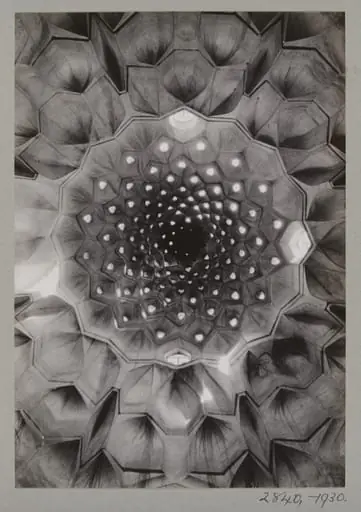 Interior view of dome of Mausoleum of Sitt Zubayda