Artwork
Istria, Carnero Gulf
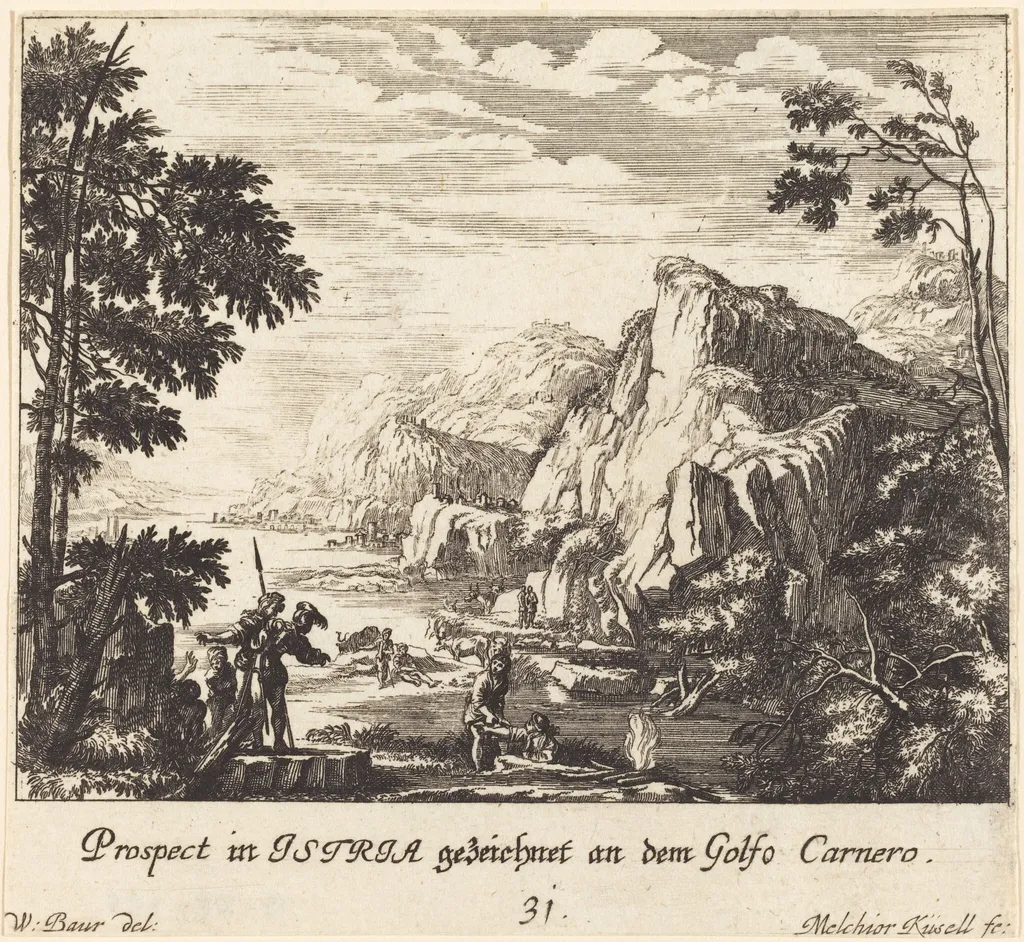
Istria, Carnero Gulf is an ink print by the Baroque artist Melchior Küsel. It dates from 1681 and is held in the collection of the National Gallery of Art.
About this work
Overview
Rendered in monochrome, the print captures a rugged shoreline with steep cliffs, a modest boat near the water’s edge, and figures scattered across the terrain.
Created in 1681 by Melchior Küsel, this etching depicts a coastal scene in Istria’s Carnero Gulf. Rendered in monochrome, the print captures a rugged shoreline with steep cliffs, a modest boat near the water’s edge, and figures scattered across the terrain. A fire glows in the distance, while trees frame the left margin. The inscription at the base identifies the location and confirms its purpose as a topographical observation.
Subject & Meaning
The scene portrays a quiet, unidealized moment along the Adriatic coast. Figures—some near a fire, one holding a long pole—suggest daily activity, possibly fishing or land management. The composition avoids narrative drama, instead emphasizing the relationship between human presence and the natural landscape. The inclusion of a specific location implies a documentary intent, rooted in observation rather than imagination.
Technique & Style
Küsel employed fine, controlled etching lines to model form and depth. Variations in line density create subtle contrasts between sunlit cliffs and shadowed crevices, enhancing the sense of volume without color. The horizon recedes softly, suggesting atmospheric perspective. The technique favors precision over flourish, aligning with 17th-century topographical print traditions that valued clarity and spatial accuracy.
History & Provenance
The print originates from Küsel’s work in the late 17th century, a period when detailed regional views were compiled for scholarly and navigational use. While its early ownership is undocumented, its survival in institutional collections suggests it was valued for its geographic specificity. No known series or companion plates have been identified, making this a singular record of the Carnero Gulf at the time.
Context
Produced during the height of Habsburg influence in Istria, the etching reflects a broader European interest in mapping and documenting lesser-known coastal regions. Unlike grand landscapes, this work belongs to a quieter genre of regional studies, often circulated among cartographers, travelers, and local administrators. Its modest scale and detail align with practical rather than decorative aims.
Legacy
Though not widely reproduced or studied today, the etching remains a tangible artifact of early scientific cartography. It contributes to the historical record of Adriatic coastal geography and demonstrates the role of printmaking in preserving regional topography before photography. Its quiet realism offers insight into how distant landscapes were visually cataloged in the pre-modern era.
Artist & collection


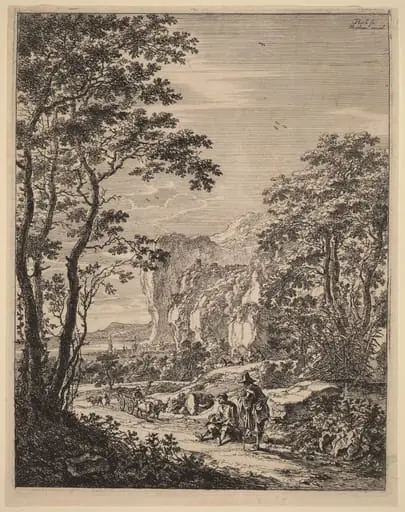 The Ox-Cart: View between Ancona and Sinigaglia
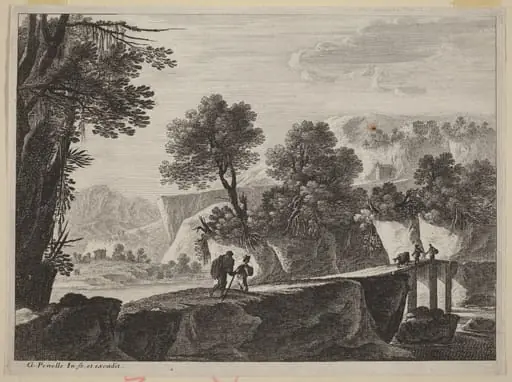 Travelers Approaching a Bridge
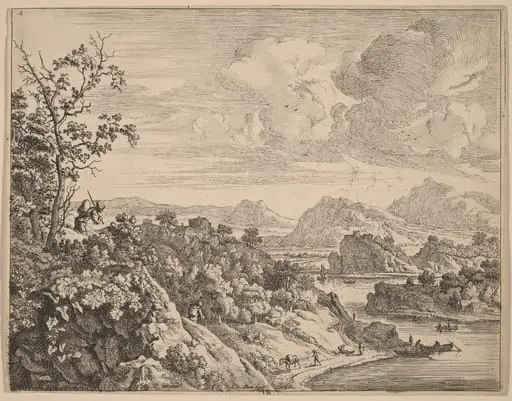 View of the River Rhine
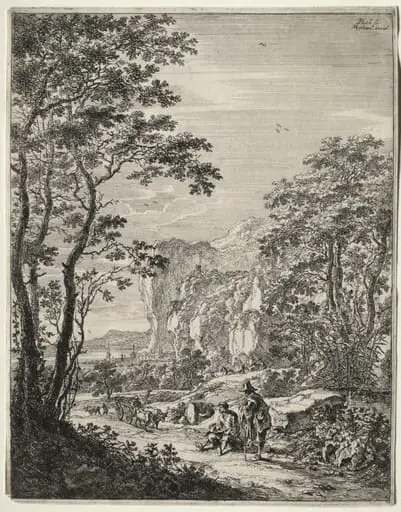 Ox-Cart. View between Ancona and Sinigaglia
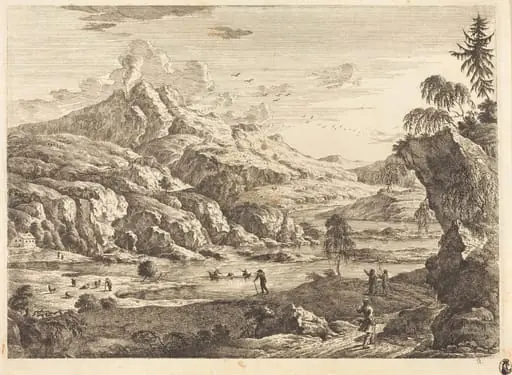 Mountainous Riverscape with Figures
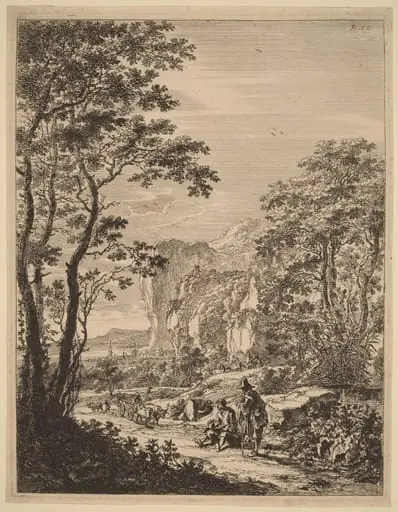 The Ox-Cart: View between Ancona and Sinigaglia
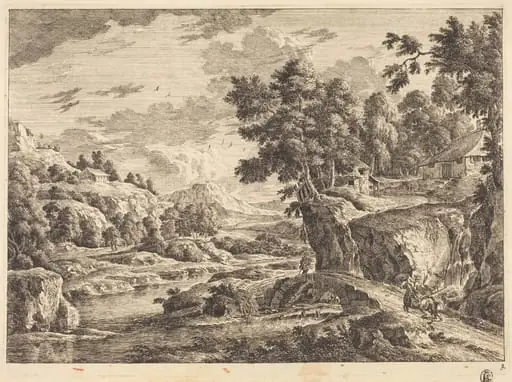 Landscape with a Bridge and Three Farm Buildings
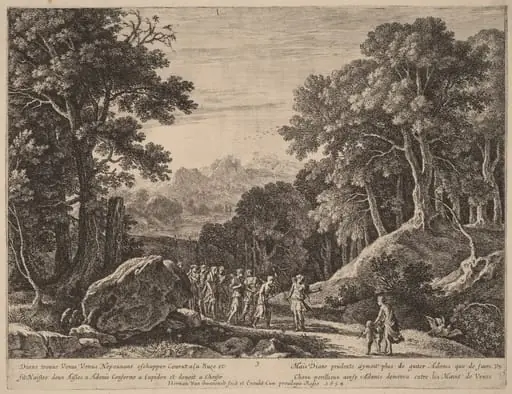 Venus Offering Diana a Choice between Cupid and Adonis
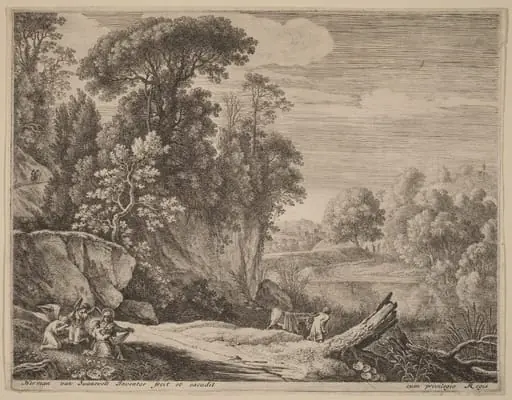 The Donkey Led to the River
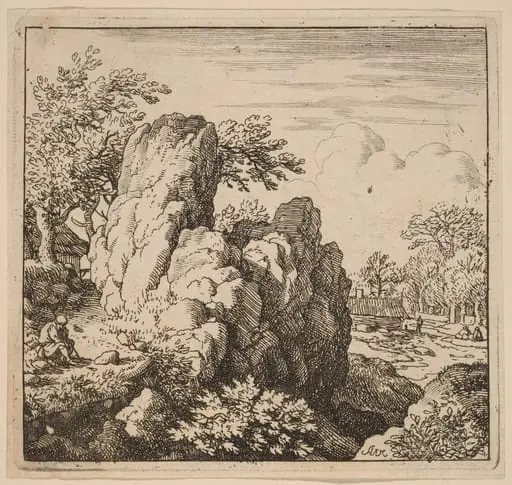 Large Rock
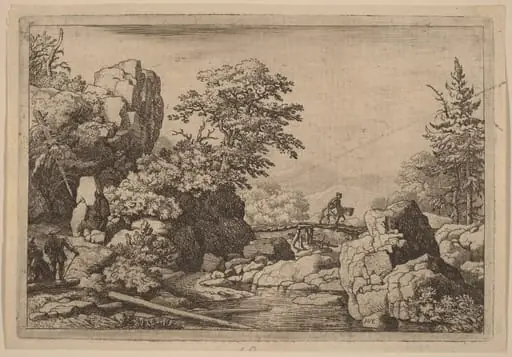 Horseman on a Bridge