Artwork
Statues of Mercury and Flora, Gardens of Dukedi Sora, Frascati
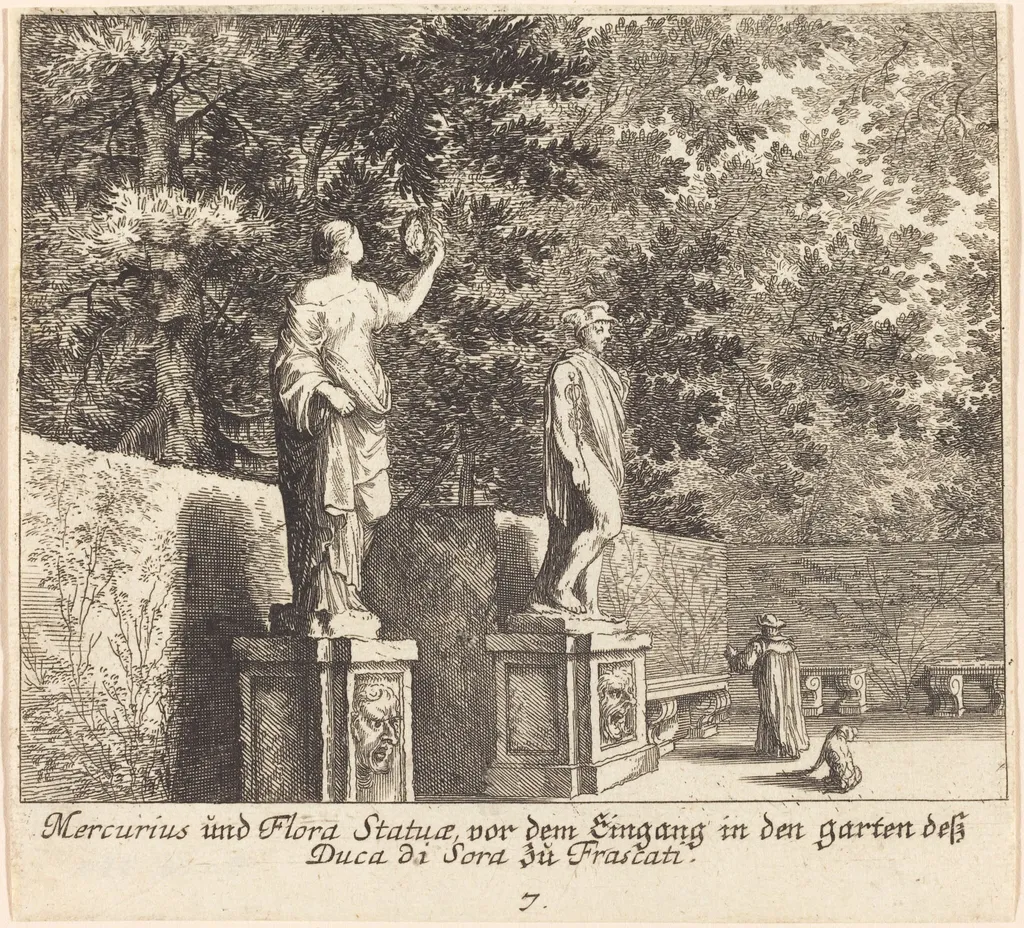
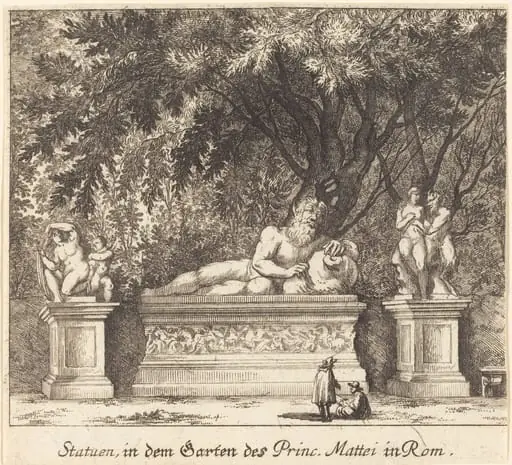
Statues of Mercury and Flora, Gardens of Dukedi Sora, Frascati is an ink print by the Baroque artist Melchior Küsel. It dates from 1681 and is held in the collection of the National Gallery of Art.
About this work
Overview
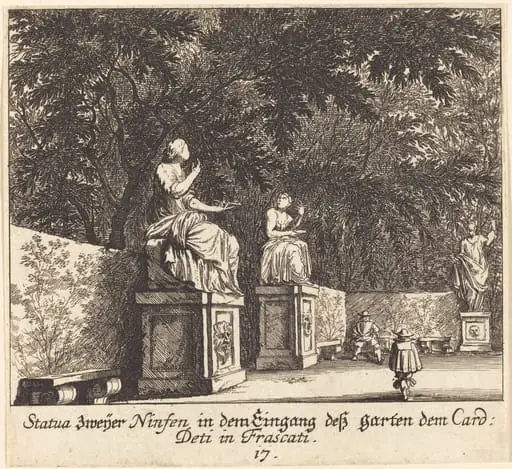
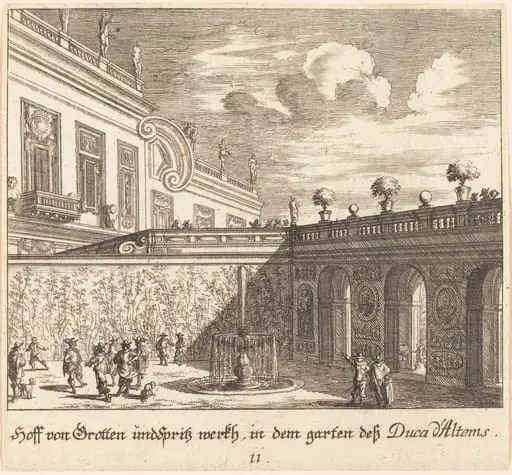
An etching from 1681 by Melchior Küsel, this print captures two classical statues within a cultivated garden at the Villa Dukedi Sora in Frascati.
An etching from 1681 by Melchior Küsel, this print captures two classical statues within a cultivated garden at the Villa Dukedi Sora in Frascati. Rendered with fine linear precision, the scene presents a quiet, contemplative atmosphere. The composition centers on two figures—Flora and Mercury—each positioned on stone pedestals amid carefully detailed foliage, suggesting an idealized Renaissance garden aesthetic.
Subject & Meaning
The figures represent Flora, goddess of flowers and spring, depicted with a wreath raised above her head, and Mercury, messenger of the gods, identifiable by his winged cap and flowing cloak. Their placement in a garden setting evokes themes of fertility, communication, and the harmony between nature and myth. The statues function as both decorative elements and symbolic anchors, reinforcing the humanist ideals of the era’s elite villa culture.
Technique & Style
Küsel employed fine-line etching to achieve intricate textures in fabric, foliage, and stone. Delicate cross-hatching defines the folds of garments and the contours of leaves, while subtle tonal variations suggest depth without shading. The precision of the lines reflects the engraver’s training in reproductive printmaking, prioritizing clarity and fidelity to sculptural form over expressive freedom.
History & Provenance
Created in 1681, the print likely served as a topographical record or souvenir for visitors to the Villa Dukedi Sora, a property associated with Roman aristocracy. Küsel, active in Germany and Italy, specialized in architectural and garden views. The work may have circulated among collectors interested in Italian villa culture, though its early ownership remains undocumented.
Context
This etching emerged during a period when Italian gardens were celebrated as cultural achievements, blending classical mythology with landscape design. Wealthy patrons commissioned such works to document their estates, aligning themselves with antiquity. Küsel’s print fits within a broader tradition of engraved garden views produced for European elites seeking to display refined taste and intellectual engagement with the classical past.
Legacy
Though not widely reproduced, the etching remains a modest example of late 17th-century topographical printmaking. It contributes to the historical record of Italian villa gardens and the dissemination of classical iconography through print. Küsel’s attention to architectural and natural detail offers insight into how garden spaces were visually codified and appreciated beyond their physical presence.
Artist & collection