Artwork
Grotto, Monta Tragone
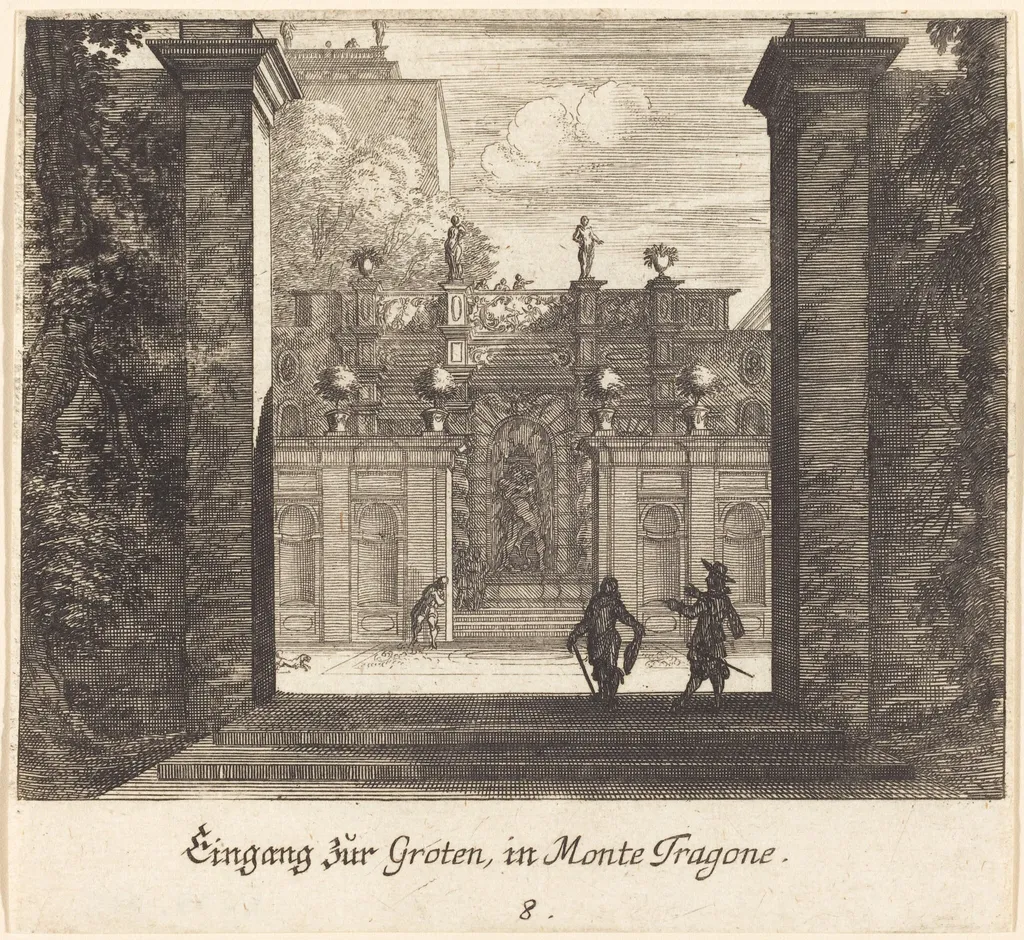
Grotto, Monta Tragone is an ink print by the Baroque artist Melchior Küsel. It dates from 1681 and is held in the collection of the National Gallery of Art.
About this work
Overview
Melchior Küsel’s 1681 etching titled *Grotto, Monta Tragone* depicts an elaborate entrance to an artificial cave. Rendered in monochrome, the composition centers on a grand portal flanked by massive pillars, leading the eye into a shadowy interior that suggests depth through careful line work and tonal shading.
Subject & Meaning
The scene presents a staged grotto, a popular feature of 17th‑century garden design, where architecture mimics natural rock formations. Two figures near the threshold hold a lantern, while a third approaches, emphasizing the interplay of light and darkness that underscores the grotto’s theatrical ambience.
Technique & Style
Küsel employs fine incised lines and cross‑hatching to model the stone pillars, the descending steps, and the decorative elements on the vaulted ceiling. The contrast between crisp outlines and soft shading creates a convincing illusion of three‑dimensional space on a flat sheet of paper.
History & Provenance
Created in 1681, the print bears the German caption *"Eingang für Grotten, in Monte Tragone,"* identifying the depicted structure as a designed grotto rather than a natural formation. The work reflects the period’s fascination with engineered landscapes and the dissemination of such motifs through print media.
Context
During the late Baroque era, artificial grottoes served as ornamental focal points in aristocratic gardens across Europe. Küsel’s etching documents this trend, offering a visual record of the decorative architecture that blended classical motifs with the emerging taste for picturesque scenery.
Artist & collection


 Il Greco in Troia: Plate 1
 H Beard Print Collection
 The Prima Macchina for the Chinea of 1769: A "Deliziosa"
 The Seconda Macchina for the Chinea of 1774: A Villa with Ancient Monuments and a Game of "Giostra"
 Il Greco in Troia: Plate 10
 Triumphal Arch for Friedrich IV
 Gardens, Duke d'Altems
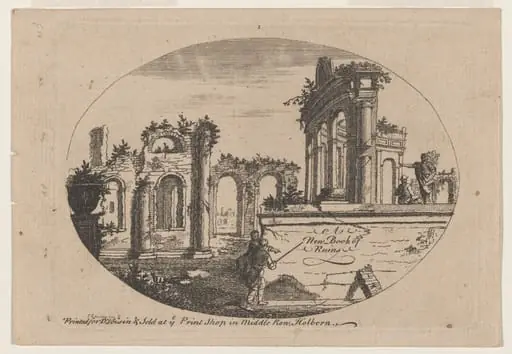 Title Page
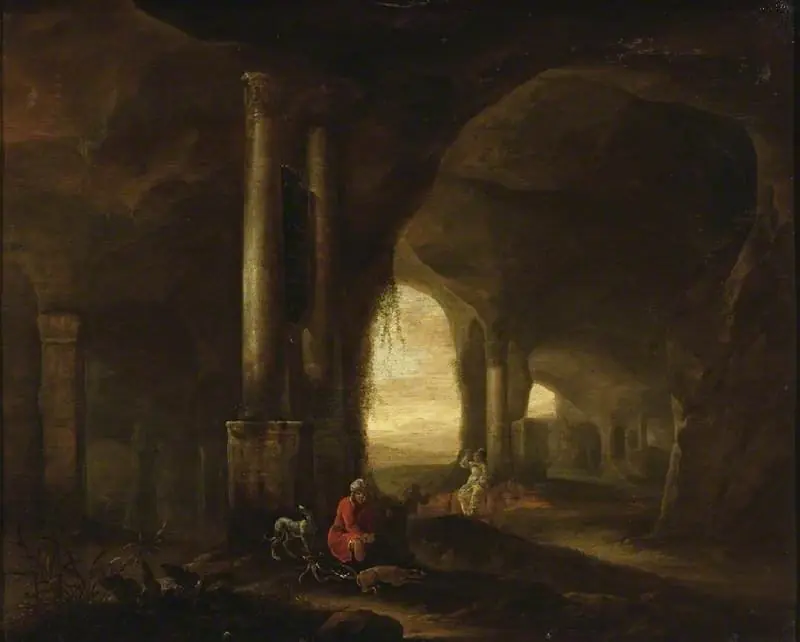 Grotto with figures
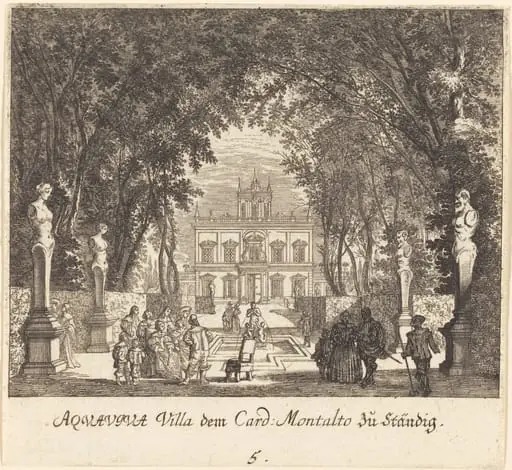 Villa Aquaviva