Artwork
Prince Svens's body is found
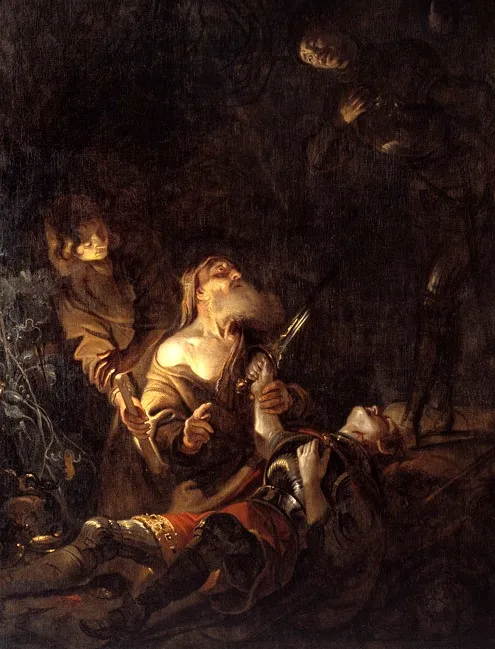
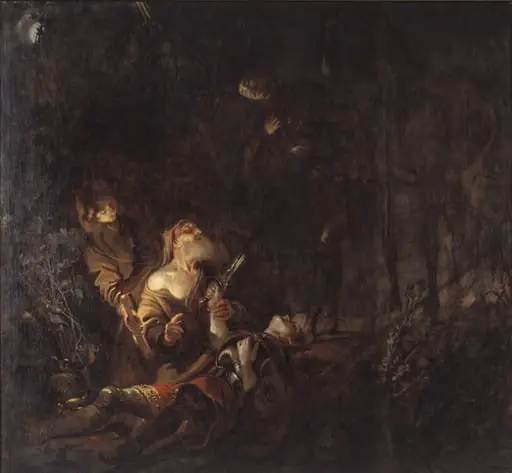
Prince Svens's body is found is an oil painting by the Dutch Golden Age artist Karel van Mander III. It dates from 1645 and is held in the collection of the Statens Museum for Kunst.
About this work
Overview
Created in 1645, this oil on canvas by Karel van Mander III depicts a solemn tableau in which a group of figures surrounds a fallen warrior. The central corpse, clad in red and silver armor, lies with its head thrown back, while surrounding men in dark garments attend the scene. A torch held aloft provides the sole illumination, casting deep chiaroscuro across the composition.
Subject & Meaning
The work portrays the aftermath of a battlefield encounter, focusing on the discovery of the prince’s body. The stark contrast between the bright armor and the surrounding darkness underscores the tragedy of loss. The torch, a source of light and revelation, suggests both the uncovering of truth and the fleeting nature of life in a martial context.
Technique & Style
Van Mander employs a dramatic use of light, allowing the torch’s flame to generate strong shadows that model the faces and forms of the figures. The palette is restrained, dominated by somber earth tones punctuated by the vivid reds of the armor. The painter’s handling of oil creates a tactile sense of texture in the fabric and metal, enhancing the scene’s realism.
History & Provenance
The painting has been part of the collection of Denmark’s National Gallery, Statens Museum for Kunst, since its acquisition in the early twentieth century. Its attribution to Karel van Mander III, a Dutch painter active in the mid‑seventeenth century, is supported by stylistic analysis and archival records linking the work to his oeuvre.
Context
Executed during the Thirty Years’ War era, the composition reflects contemporary preoccupations with honor, mortality, and the costs of armed conflict. Van Mander’s choice of a princely figure aligns with the period’s fascination with heroic narratives, while the somber tone mirrors the widespread devastation experienced across Europe at the time.
Artist & collection

 Prins Svens lig bliver fundet
 Socrate în închisoare; pandant: Sfântul Petru tămăduind un bolnav
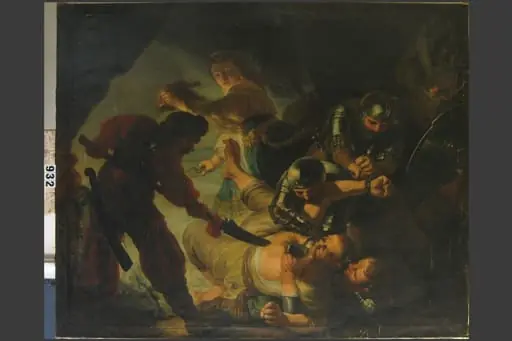 Orbirea lui Samson
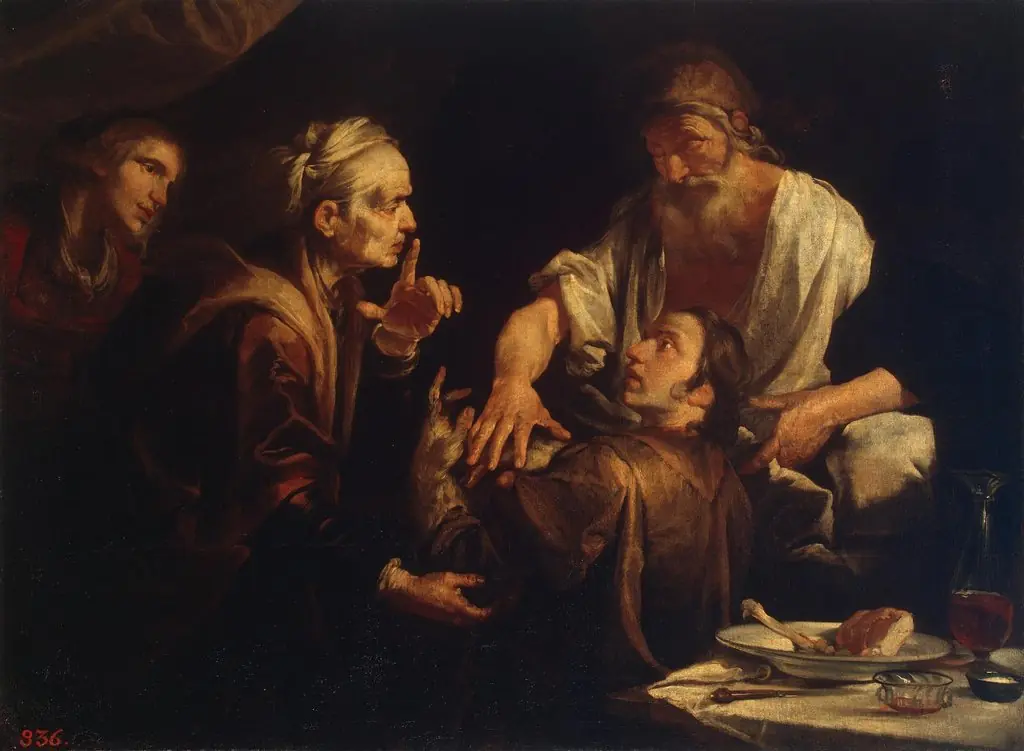 Isaac Blessing Jacob
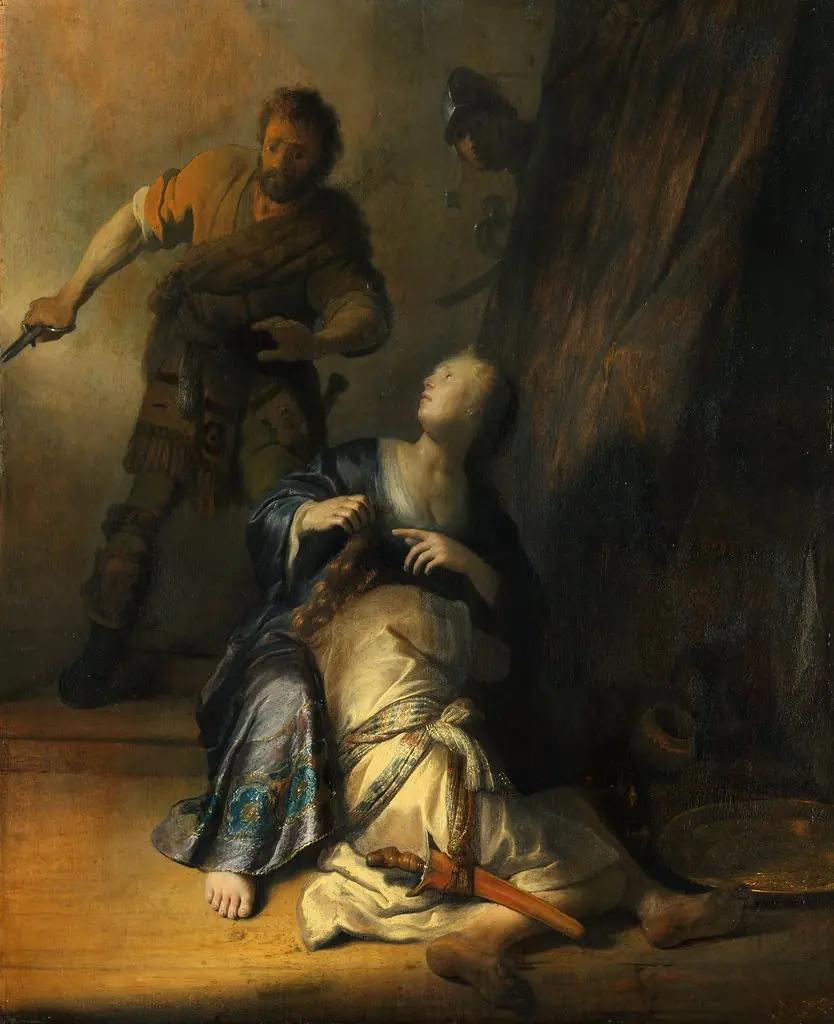 Samson betrayed by Delilah
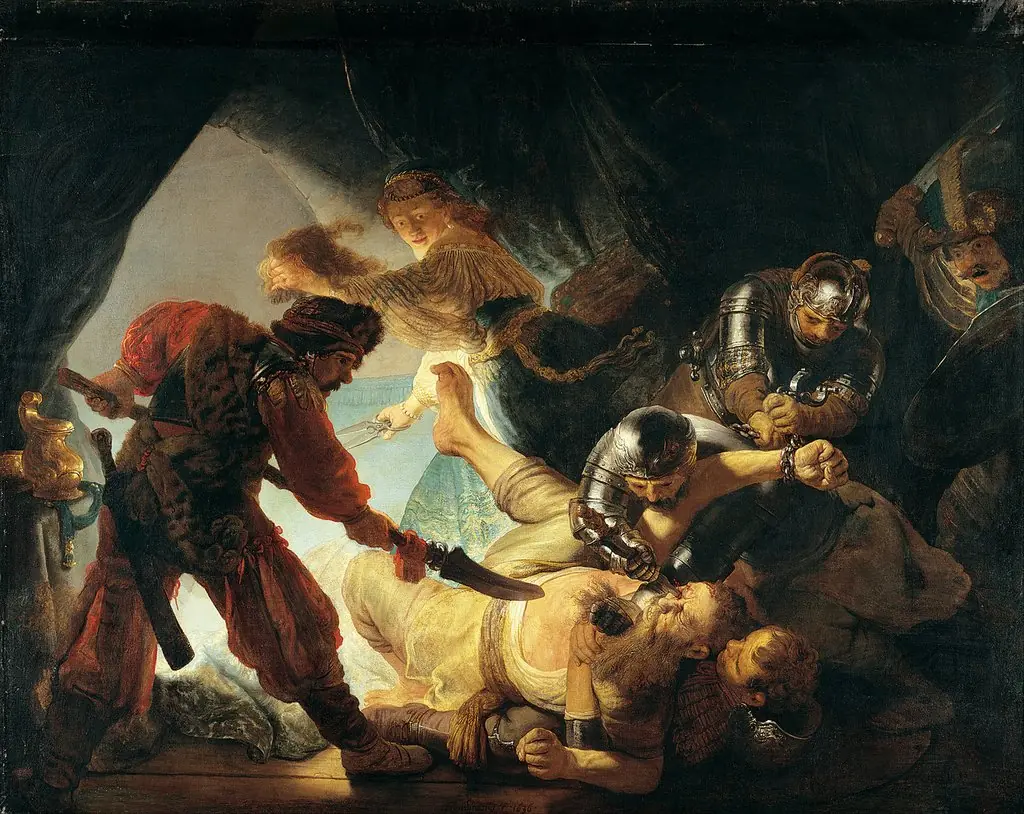 The Blinding of Samson
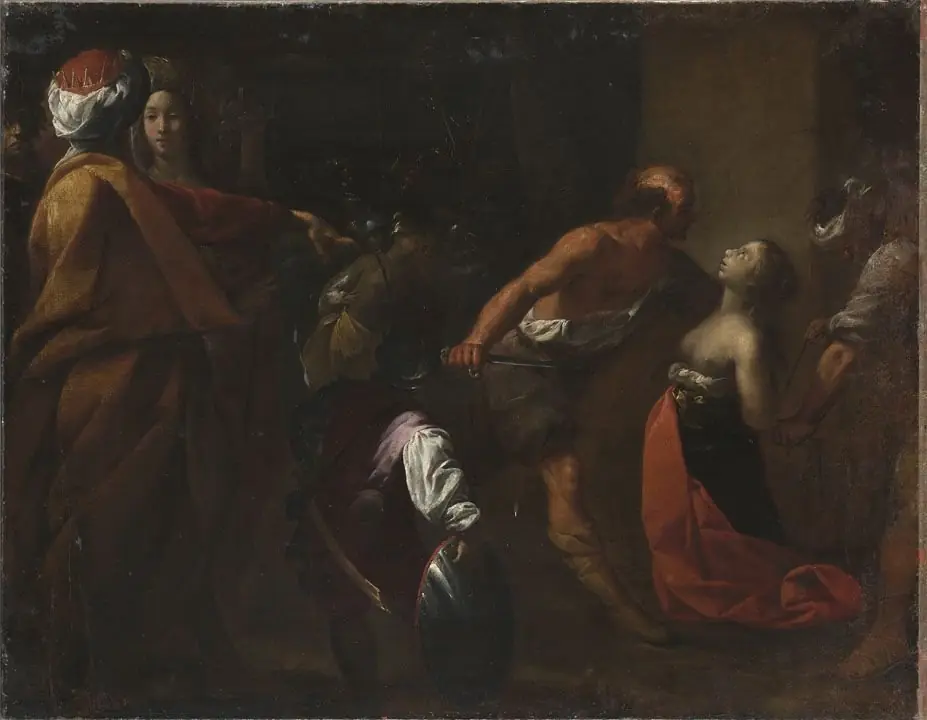 Martyrium der hl. Justina
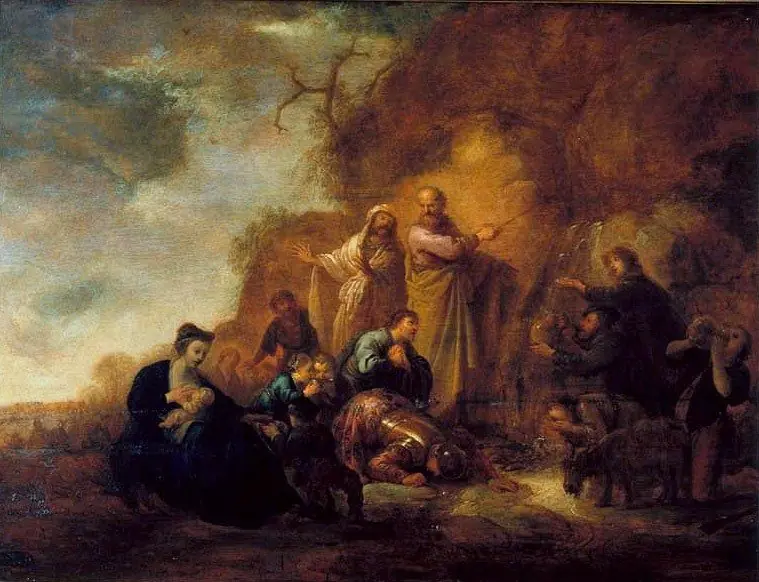 Moisés no Rochedo de Horeb
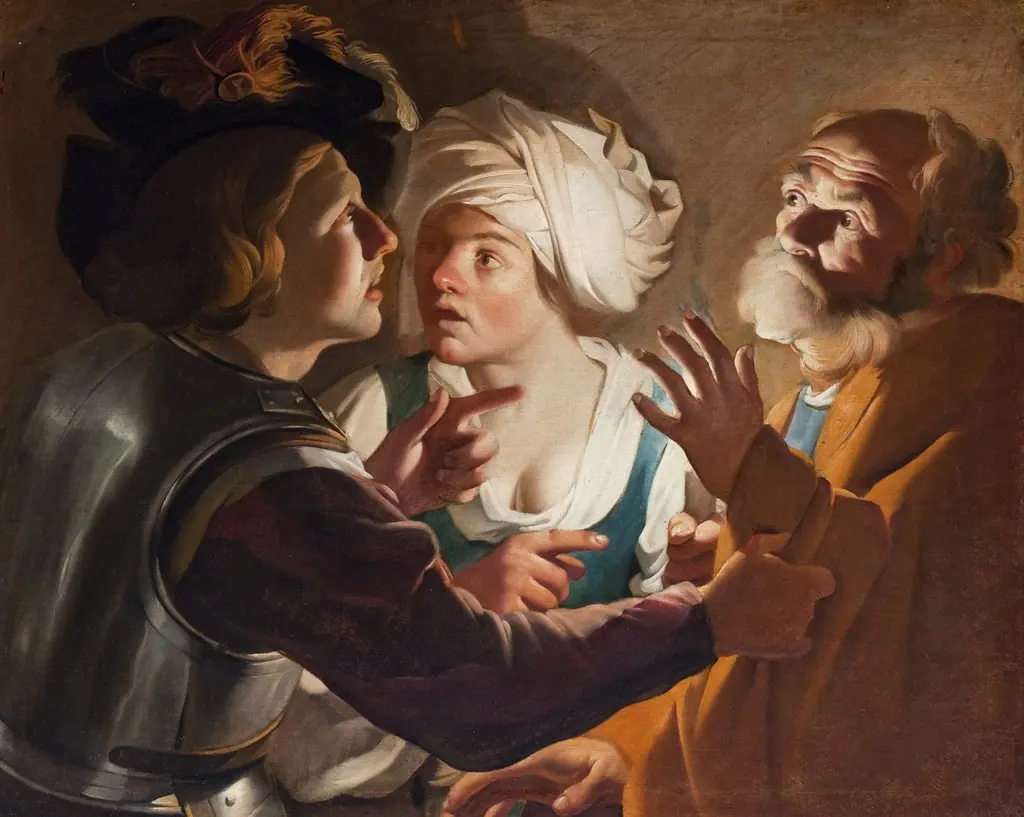 Denial of Saint Peter
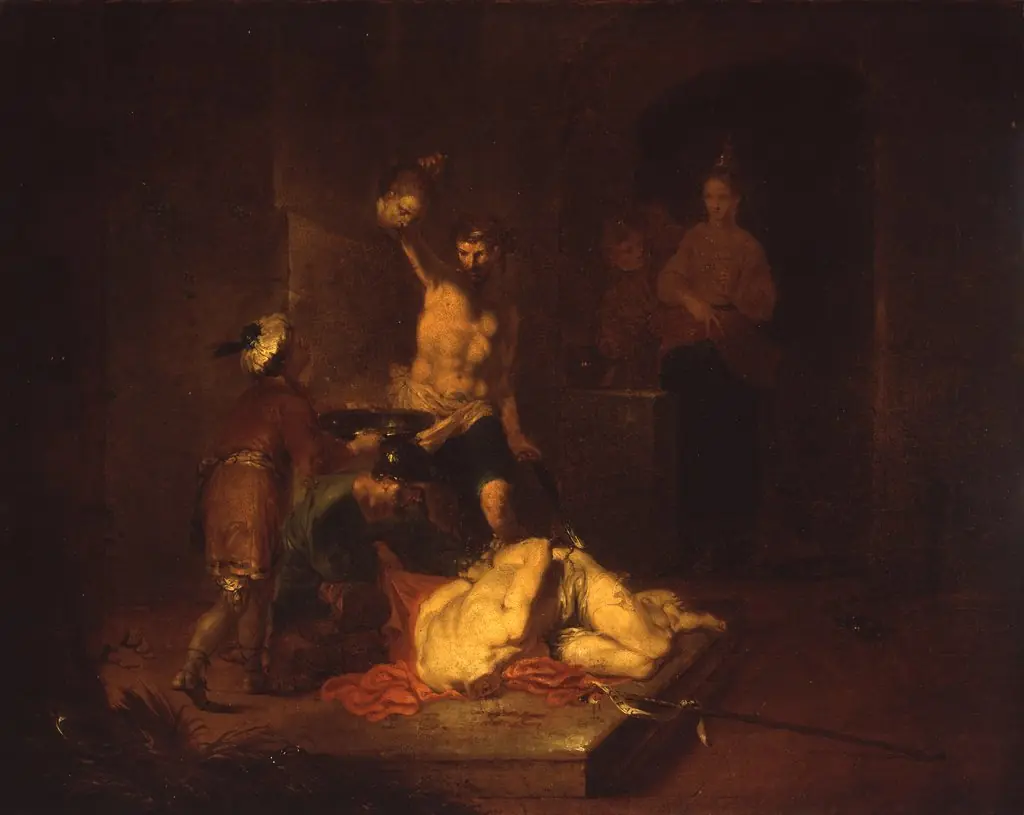 The Beheading of John the Baptist
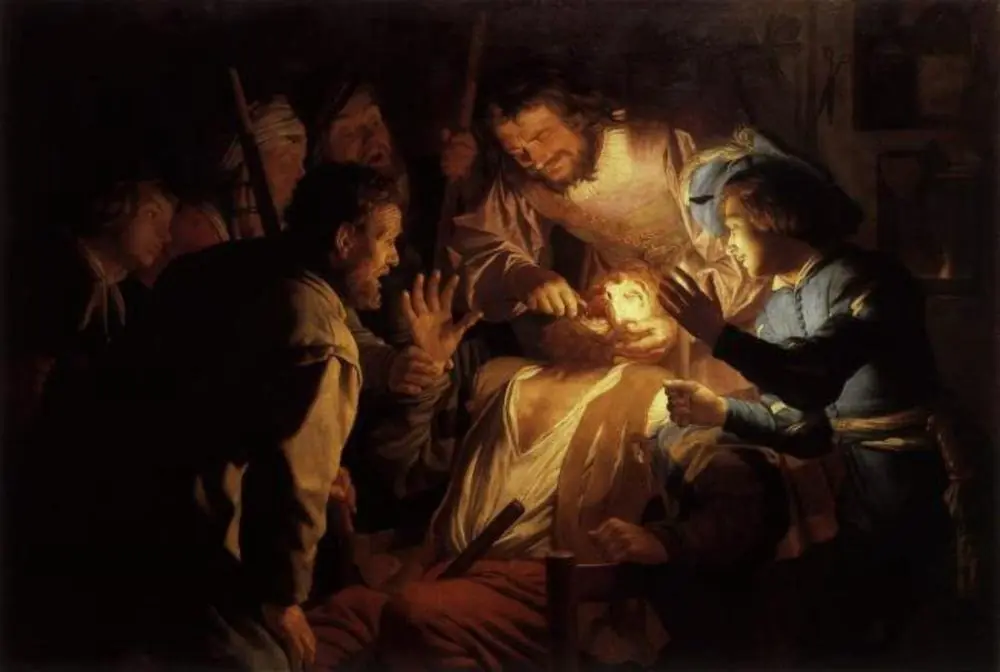 The Dentist
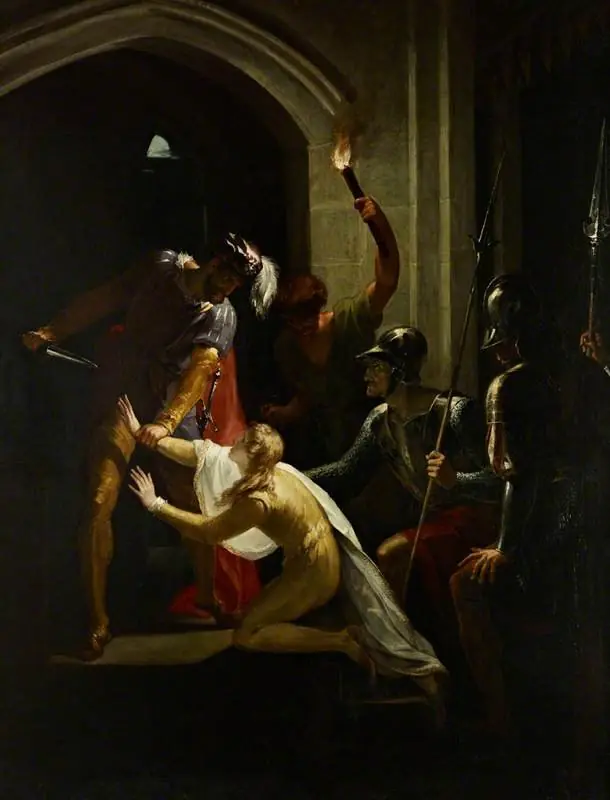 The Death of Arthur