Artwork
Interior of St. Stephen's Cathedral in Vienna
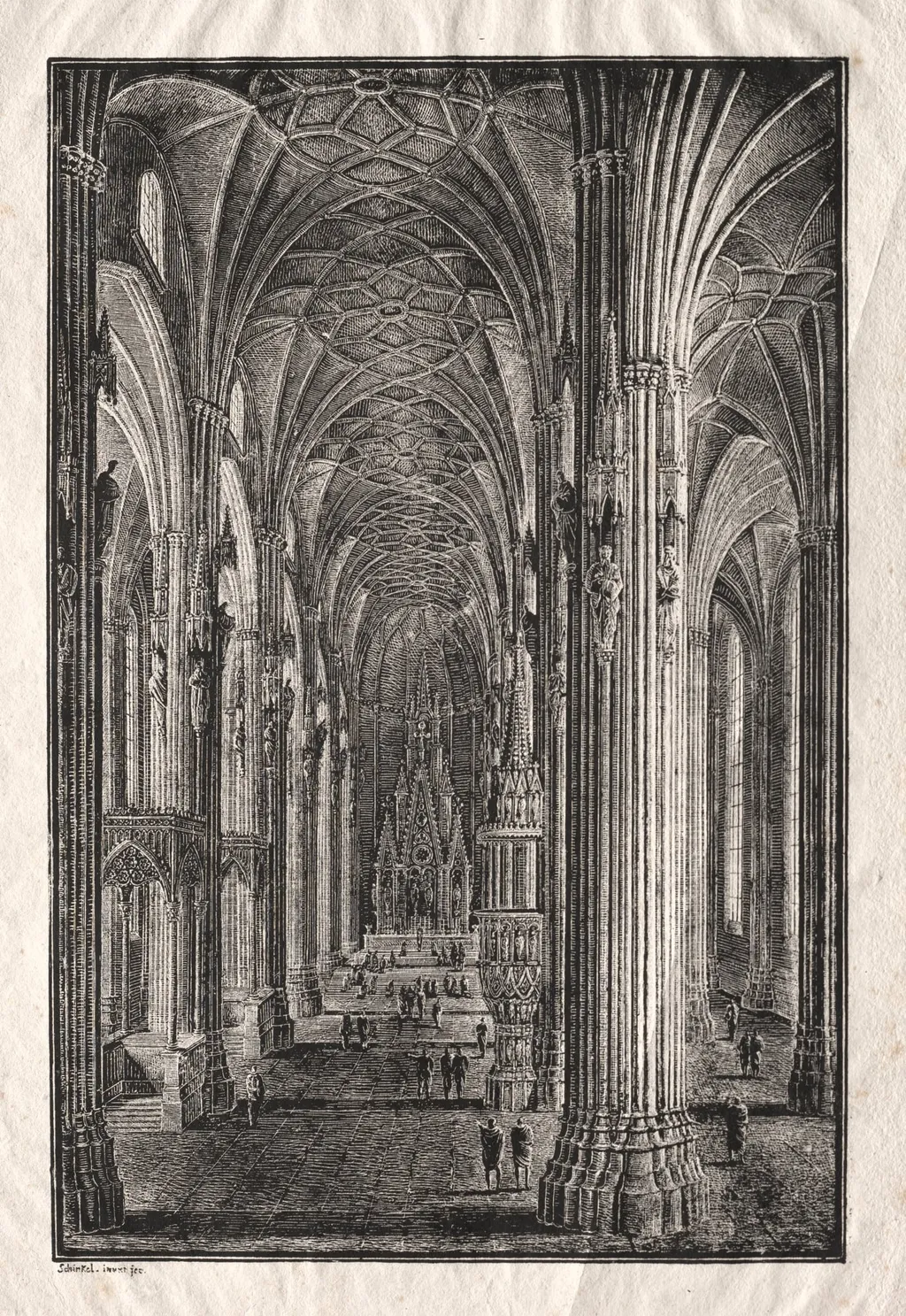
Interior of St. Stephen's Cathedral in Vienna is a print by the Romanticist artist Karl Friedrich Schinkel. It dates from 1810 and is held in the collection of the Cleveland Museum of Art. This lithograph depicts the interior of St.
About this work
Overview
The artist, Karl Friedrich Schinkel, adapted lithography to capture subtle shifts in light and shadow, moving beyond the medium’s typical linear conventions.
This lithograph depicts the interior of St. Stephen’s Cathedral in Vienna, rendered through an experimental printmaking method developed in late 18th-century Germany. The artist, Karl Friedrich Schinkel, adapted lithography to capture subtle shifts in light and shadow, moving beyond the medium’s typical linear conventions. Only a handful of impressions of this work survive, making it a rare example of his technical innovation in early lithographic practice.
Subject & Meaning
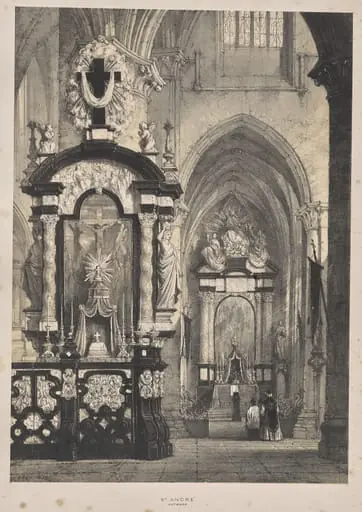
The print presents the vast, vaulted space of the cathedral, emphasizing its architectural grandeur through controlled contrasts of light and dark. Rather than focusing on religious iconography, the work invites contemplation of space, structure, and atmosphere. The play of illumination suggests the passage of daylight through high windows, evoking a quiet, meditative mood characteristic of 19th-century architectural representation.
Technique & Style
Schinkel applied ink uniformly across a lithographic stone, then scraped away areas to reveal the white paper beneath, mimicking the effect of light striking stone surfaces. This subtractive method allowed him to model form with tonal gradations, a departure from the line-based norms of the medium. The result approximates chiaroscuro, borrowing from painting traditions to achieve depth and volume in a printed image.
History & Provenance
Created during Schinkel’s active engagement with lithography in the 1820s, this print emerged from his broader exploration of architectural representation. As a leading Prussian architect and draftsman, he used the medium to document and disseminate his designs. The print’s rarity suggests limited circulation, likely intended for scholarly or artistic audiences rather than mass distribution.
Context
In the early 19th century, lithography was emerging as a tool for both artistic expression and architectural documentation. Schinkel’s work aligned with a broader European interest in capturing the spatial qualities of historic buildings. His approach reflected a shift from mere topographical record toward atmospheric interpretation, influencing how architecture was visually understood beyond the drawing board.
Legacy
Schinkel’s experimentation with lithographic tone expanded the technical possibilities of the medium, inspiring later artists to treat printmaking as a vehicle for light and texture rather than just line. His approach to architectural subjects helped bridge the gap between documentary precision and emotional resonance, contributing to the evolution of architectural illustration as a distinct visual discipline.
Artist & collection
Artist
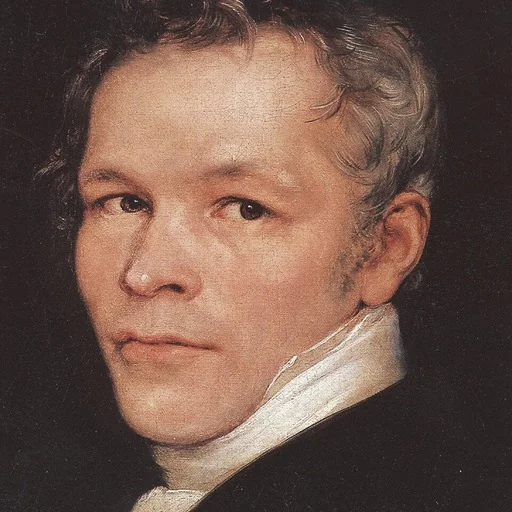
Karl Friedrich Schinkel (German pronunciation: ; 13 March 1781 – 9 October 1841) was a Prussian architect, city planner and painter who also designed furniture and stage sets.

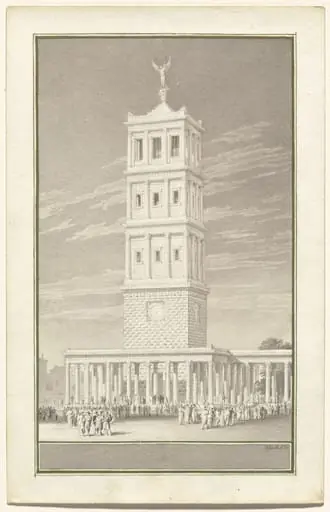 Campanile of a Cathedral for Berlin
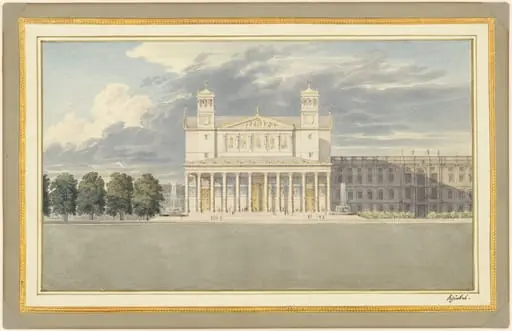 The Façade and Suroundings of a Cathedral for Berlin
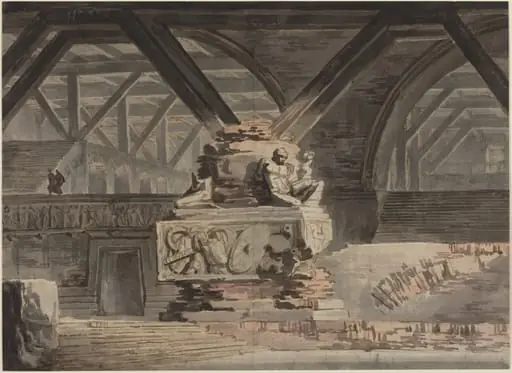 Stage Design: A Sepulchral Vault
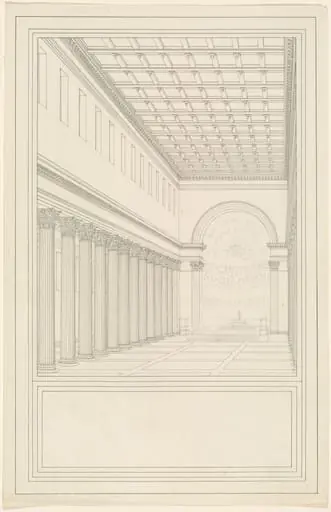 The Nave and Apse, without a Transept, of a Cathedral for Berlin
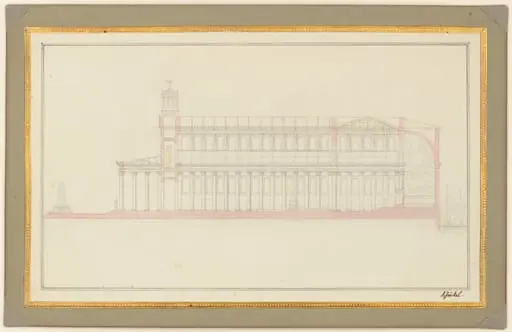 Longitudinal Section of a Cathedral for Berlin
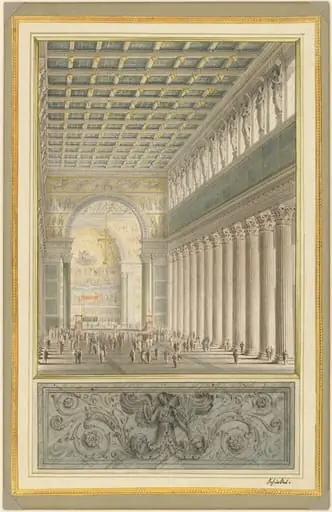 The Nave, Apse, and Crossing of a Cathedral for Berlin
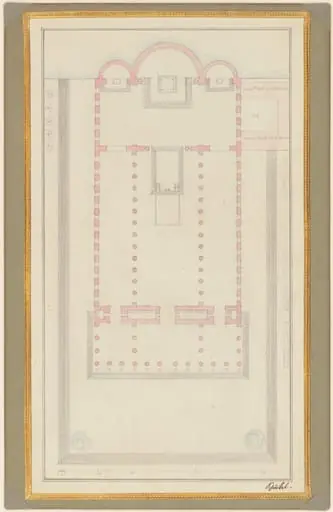 Ground Plan of a Cathedral for Berlin
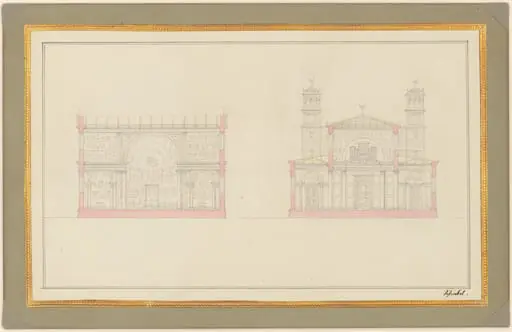 Section of the Crossing and the West End of a Cathedral for Berlin
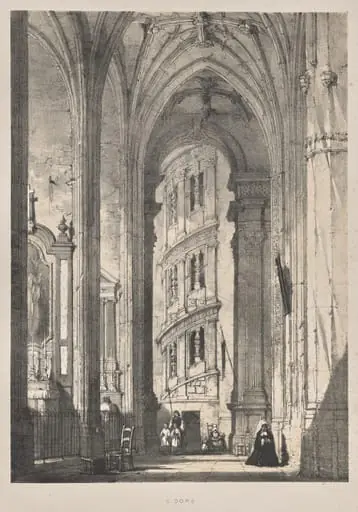 Architecture of the Middle Ages: Church of St. Gisors, Interior
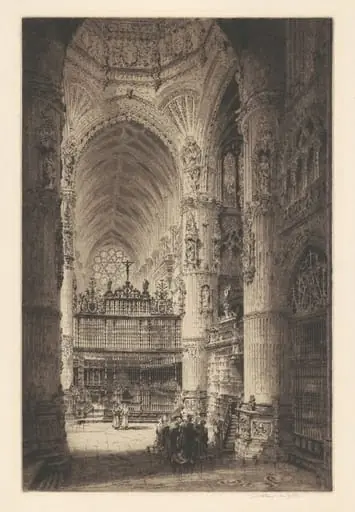 The Great Screen & Choir, Burgos
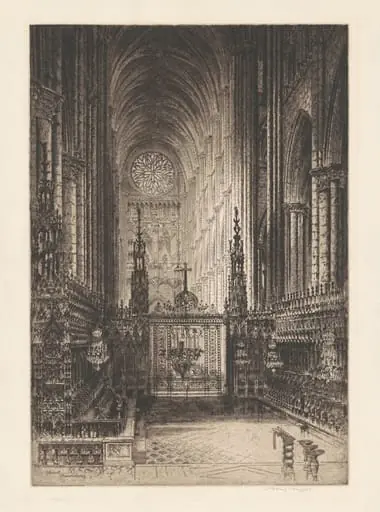 Interior of Amiens Cathedral
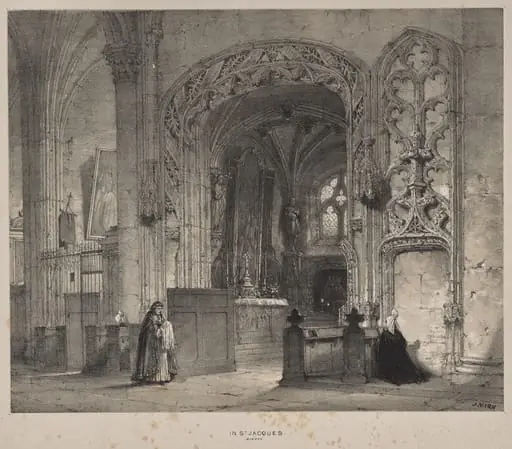 Architecture of the Middle Ages: Chapel in St. Jacques, Dieppe
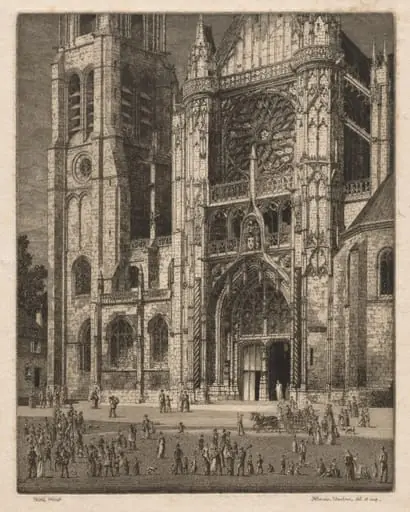 Sevins Cathedral
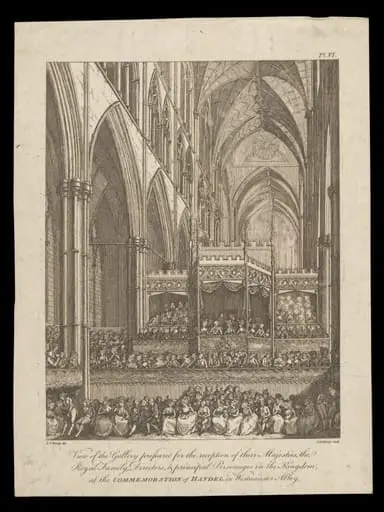 H Beard Print Collection
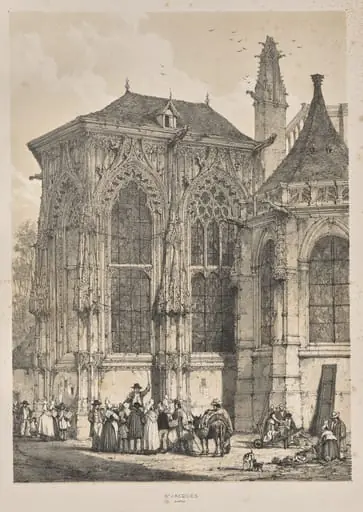 Architecture of the Middle Ages: St. Jacques, Dieppe, East End, Exterior
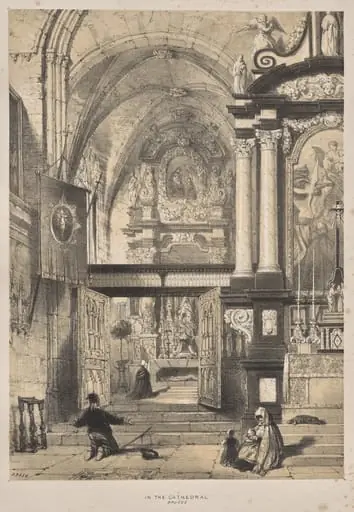 Architecture of the Middle Ages: In the Cathedral, Bruges
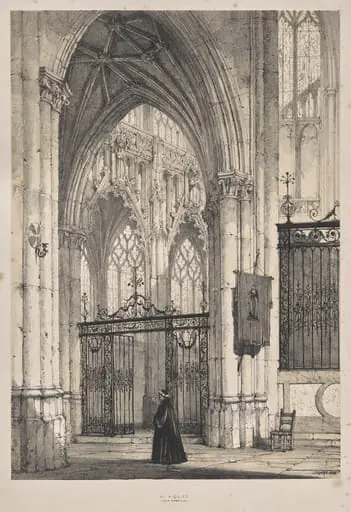 Architecture of the Middle Ages: Church of St. Riquier, near Abbeville
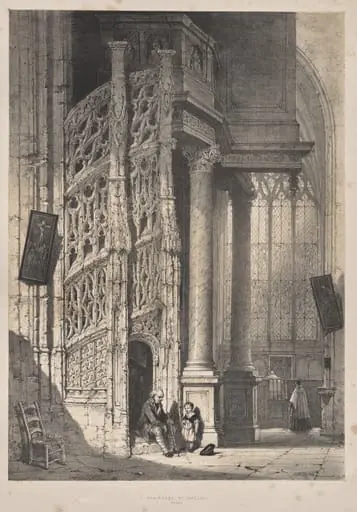 Architecture of the Middle Ages: Staircase, St. Maclou, Rouen
 Architecture of the Middle Ages: St. Andre, Antwerp
 The Sea near Staberhuk