Artwork
The Nave, Apse, and Crossing of a Cathedral for Berlin
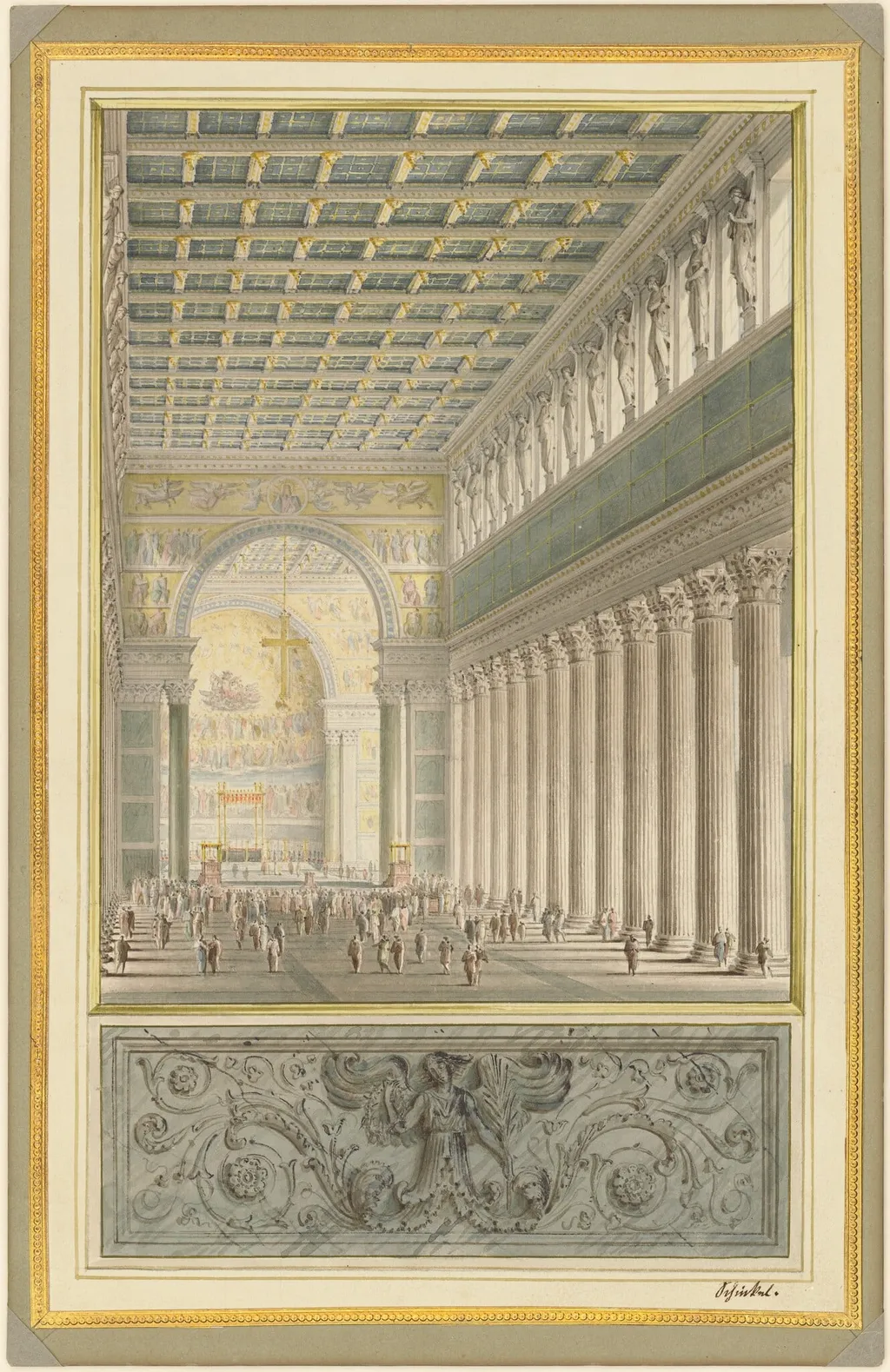
The Nave, Apse, and Crossing of a Cathedral for Berlin is a graphite drawing by the Romanticist artist Karl Friedrich Schinkel. It dates from 1827 and is held in the collection of the National Gallery of Art.
About this work
Overview
Created in 1827, this watercolor over graphite drawing by Karl Friedrich Schinkel presents a detailed interior of a proposed cathedral for Berlin. Executed on wove paper mounted for presentation, the composition outlines the nave, apse, and crossing, emphasizing spatial depth through linear perspective and a balanced arrangement of architectural elements.
Subject & Meaning
The work illustrates a grand ecclesiastical space, featuring a vaulted ceiling, rows of columns, and a prominent suspended cross. Figures are placed within the nave, suggesting both liturgical function and the human experience of sacred architecture, while the decorative arches and frescoed surfaces convey a sense of reverence and order.
Technique & Style
Schinkel employed graphite to define structural outlines before applying watercolor washes that model light and shadow across the interior. The restrained palette and precise draftsmanship reflect his neoclassical training, while the emphasis on verticality and ornamental detail hints at his later interest in Gothic Revival motifs.
History & Provenance
The drawing was produced during Schinkel’s tenure as Prussia’s leading architect and city planner, a period when he shaped Berlin’s urban development. It remains a testament to his architectural proposals, though the cathedral itself was never realized; the piece survives in museum collections as a record of his visionary designs.
Artist & collection
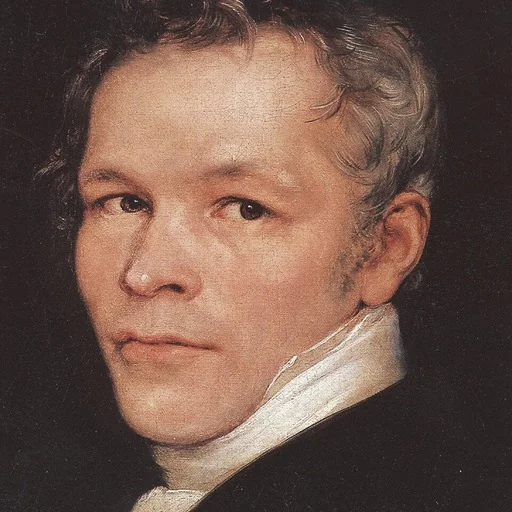
Artist
Karl Friedrich Schinkel (German pronunciation: ; 13 March 1781 – 9 October 1841) was a Prussian architect, city planner and painter who also designed furniture and stage sets.

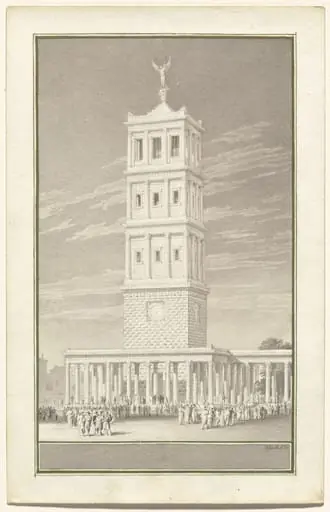 Campanile of a Cathedral for Berlin
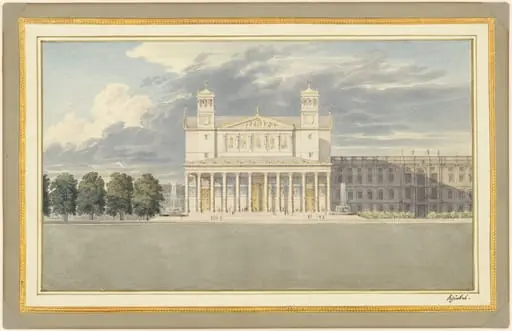 The Façade and Suroundings of a Cathedral for Berlin
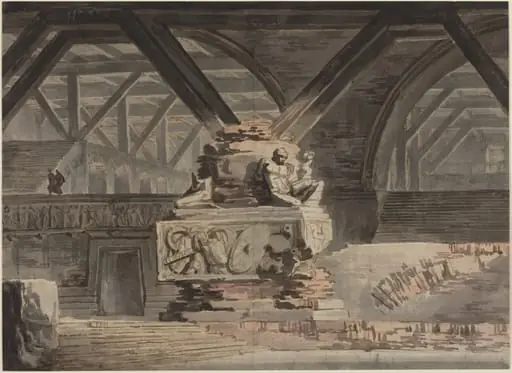 Stage Design: A Sepulchral Vault
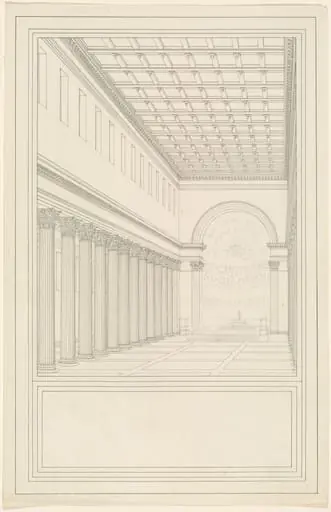 The Nave and Apse, without a Transept, of a Cathedral for Berlin
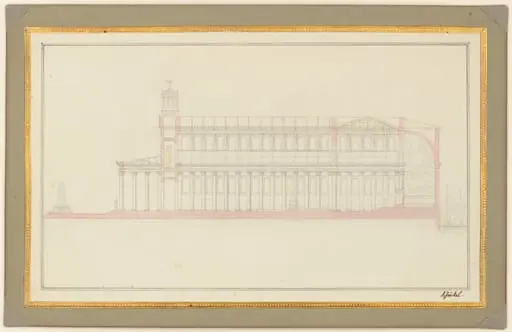 Longitudinal Section of a Cathedral for Berlin
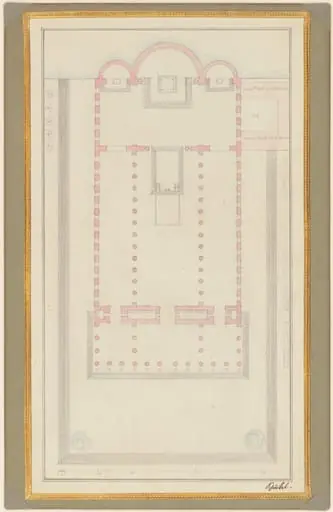 Ground Plan of a Cathedral for Berlin
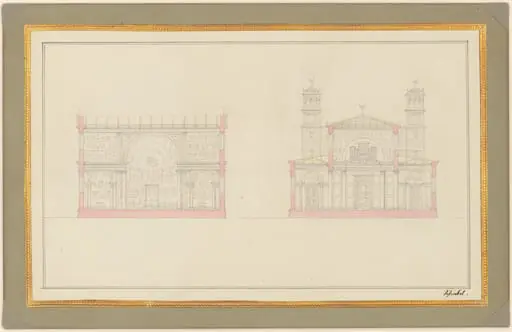 Section of the Crossing and the West End of a Cathedral for Berlin
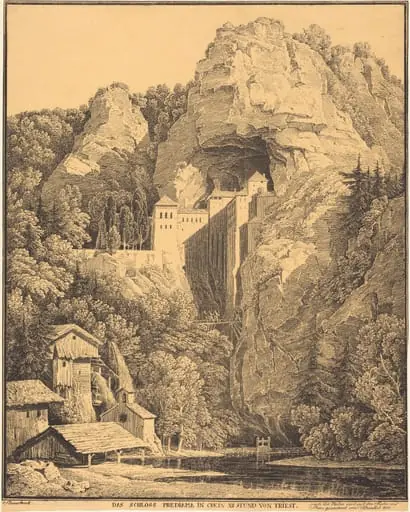 Das Schloss Prediama in Crein XII Stund: von Triest (Predjama Castle in Carniola, Twelve Hours from Trieste)
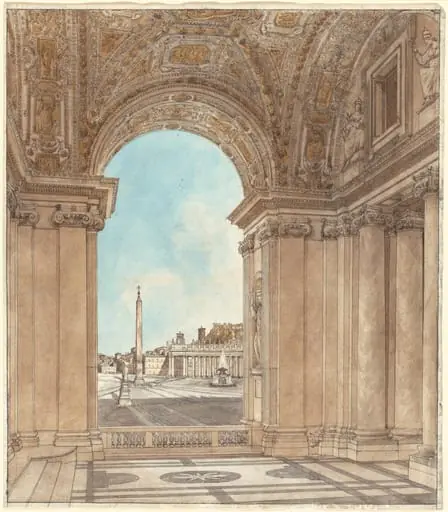 The Piazza of Saint Peter's Seen through an Arch of the Basilica
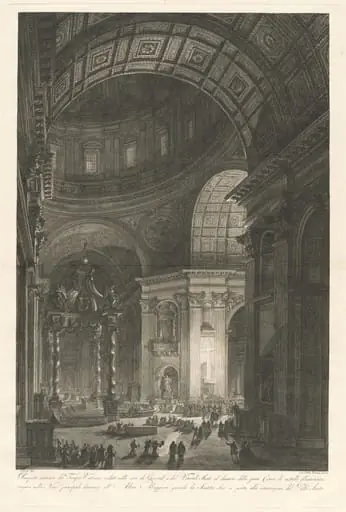 Interior of St. Peter’s, with the Illumination of the Cross of St. Peter
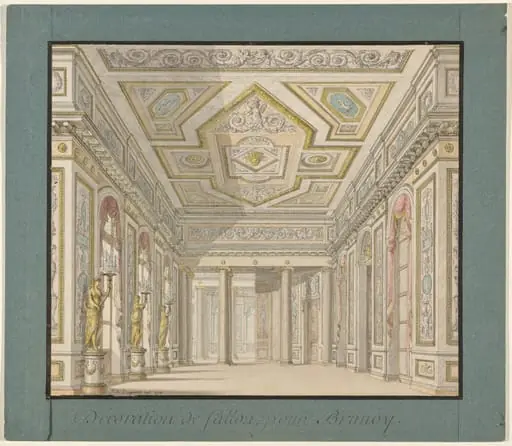 Décoration de sallon pour Brunoy (Design for the Interior of the Château de Brunoy)
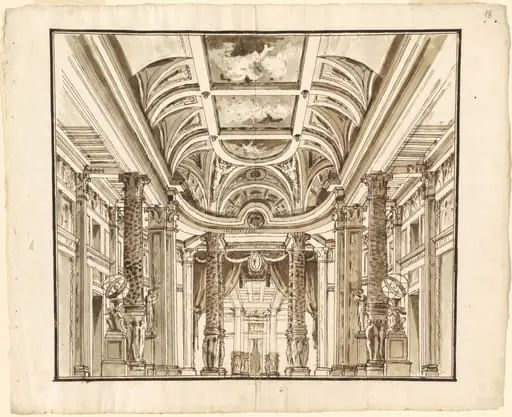 Fantasy of a Great Hall with Basketweave Columns
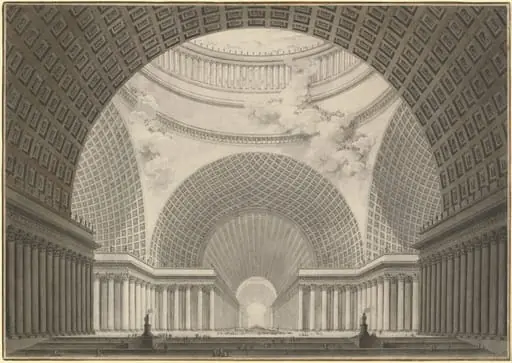 Perspective View of the Interior of a Metropolitan Church
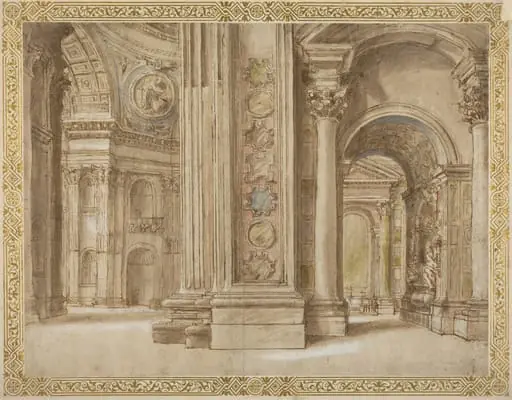 The Interior of Saint Peter's, Rome
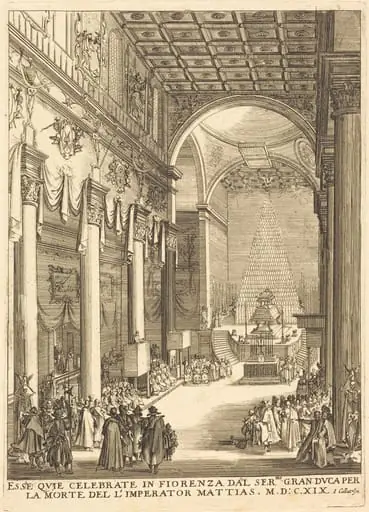 The Catafalque of the Emperor Mathias
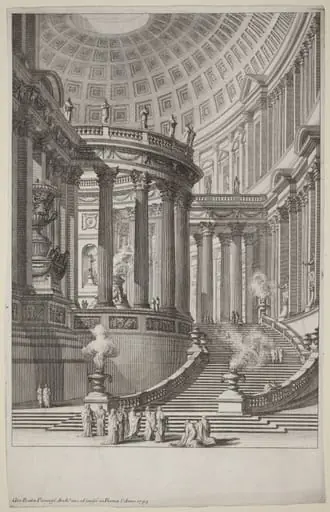 Tempio antico