Artwork
The Nave and Apse, without a Transept, of a Cathedral for Berlin
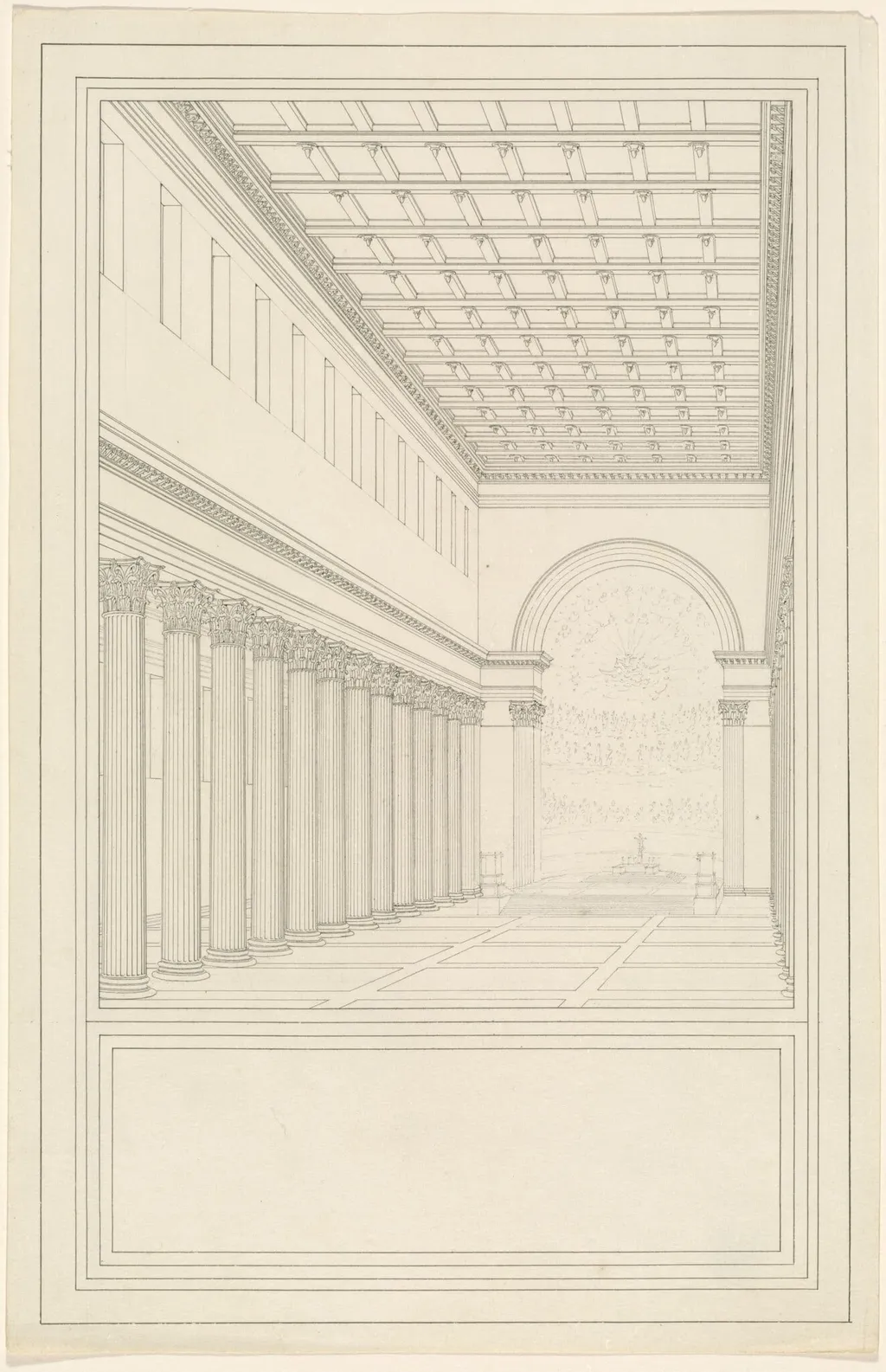
The Nave and Apse, without a Transept, of a Cathedral for Berlin is a graphite drawing by the Romanticist artist Karl Friedrich Schinkel. It dates from 1828 and is held in the collection of the National Gallery of Art.
About this work
Overview
Created in 1828 by the Prussian architect Karl Friedrich Schinkel, this drawing presents a projected cathedral for Berlin that consists solely of a nave and apse, omitting a transept. Executed in pen and black ink over a graphite underdrawing on wove paper, the work illustrates Schinkel’s architectural planning at a conceptual stage, emphasizing spatial organization and structural clarity.
Subject & Meaning
The image visualizes a hypothetical sacred interior, focusing on a longitudinal space defined by a high vaulted ceiling, slender columns, and a prominent archway that frames the view toward the altar. By excluding a transept, Schinkel highlights a simplified, processional layout, reflecting contemporary debates about liturgical function and the revival of historic church forms.
Technique & Style
Schinkel employed a precise pen line over a graphite sketch, with occasional pricking marks that suggest the transfer of the design onto the paper. The rendering relies on linear perspective, hatching, and shading to convey depth, light, and material texture, aligning with the Neoclassical emphasis on rational order while hinting at Gothic Revival ornamentation in the column capitals.
History & Provenance
The drawing originates from Schinkel’s early 19th‑century portfolio of architectural projects, a period when he was shaping Berlin’s urban fabric. It remained in private collections before entering a museum context, where it serves as documentation of his speculative designs that never materialized as built structures.
Context
At the time of its creation, Berlin was undergoing rapid expansion, and Schinkel’s proposals contributed to discussions about the city’s ecclesiastical architecture. The work reflects the broader European interest in reviving medieval forms within a modern, rational framework, a hallmark of the period’s architectural discourse.
Artist & collection
Artist
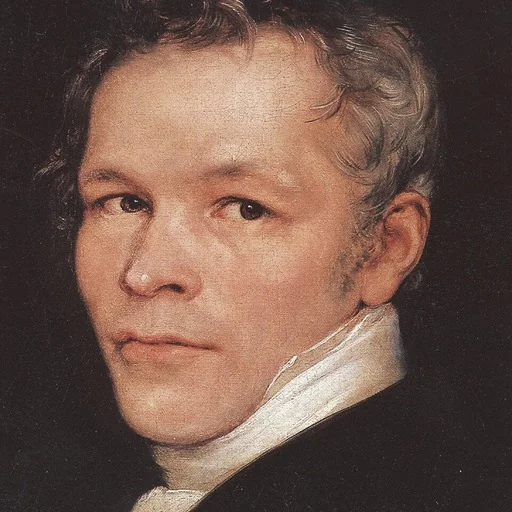
Karl Friedrich Schinkel (German pronunciation: ; 13 March 1781 – 9 October 1841) was a Prussian architect, city planner and painter who also designed furniture and stage sets.

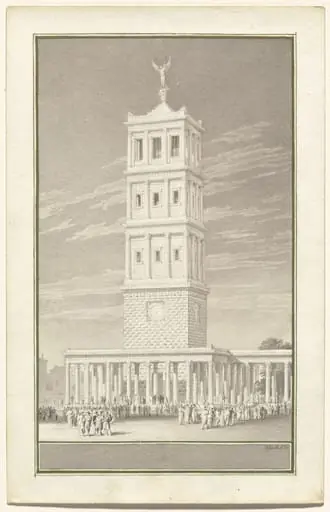 Campanile of a Cathedral for Berlin
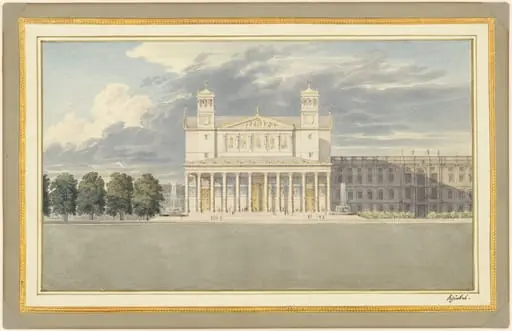 The Façade and Suroundings of a Cathedral for Berlin
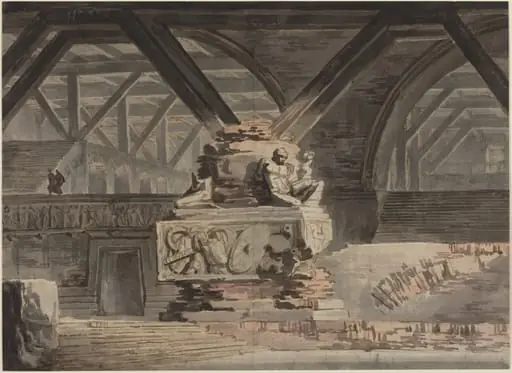 Stage Design: A Sepulchral Vault
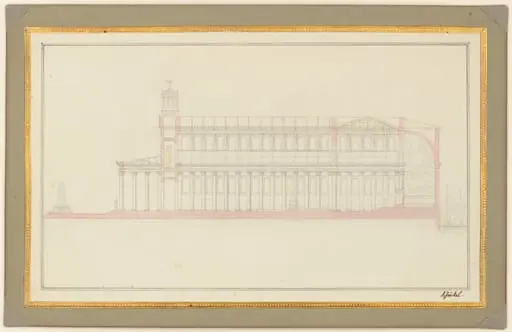 Longitudinal Section of a Cathedral for Berlin
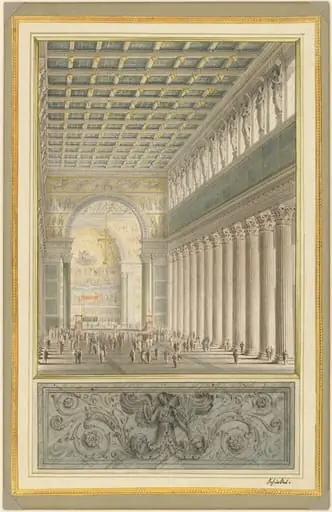 The Nave, Apse, and Crossing of a Cathedral for Berlin
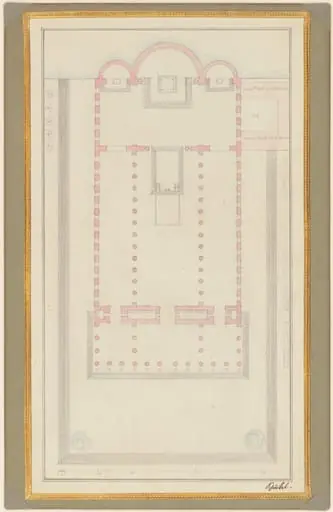 Ground Plan of a Cathedral for Berlin
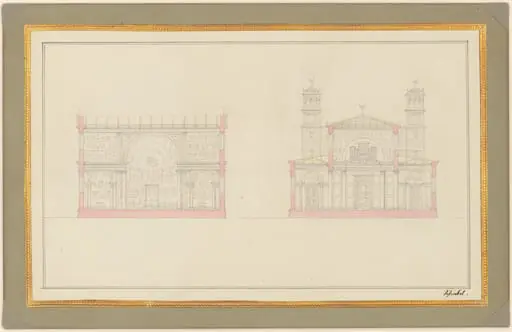 Section of the Crossing and the West End of a Cathedral for Berlin
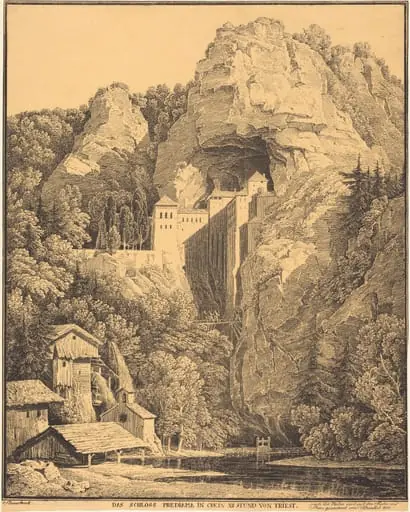 Das Schloss Prediama in Crein XII Stund: von Triest (Predjama Castle in Carniola, Twelve Hours from Trieste)
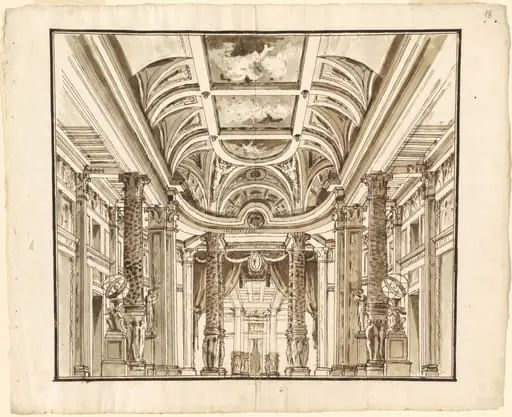 Fantasy of a Great Hall with Basketweave Columns
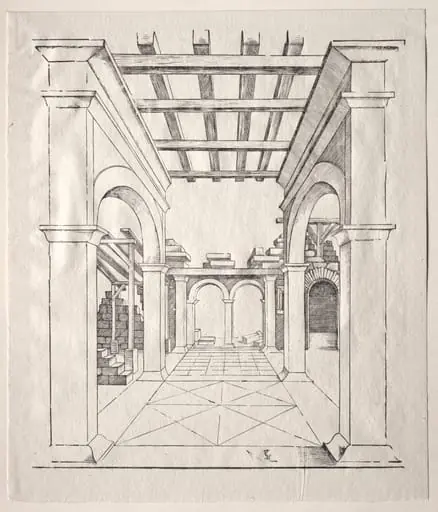 A Portico
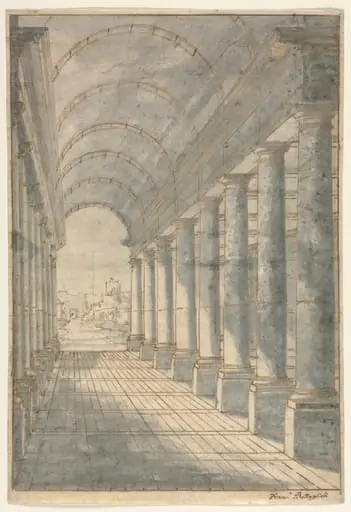 Barrel-Vaulted Arcade Rendered in Perspective
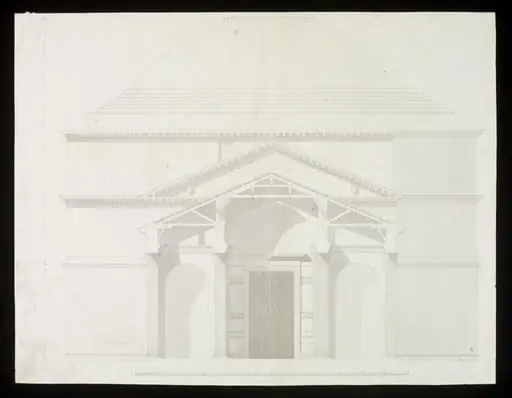 Longitudinal section through Pantheon portico
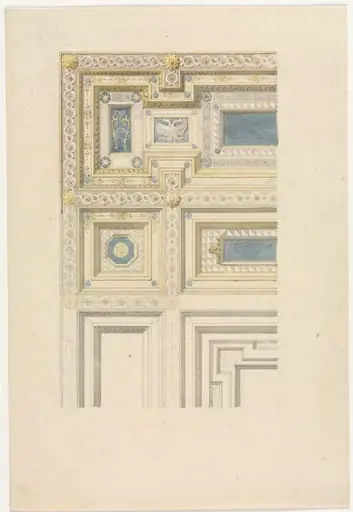 Design for Ornamental Ceiling
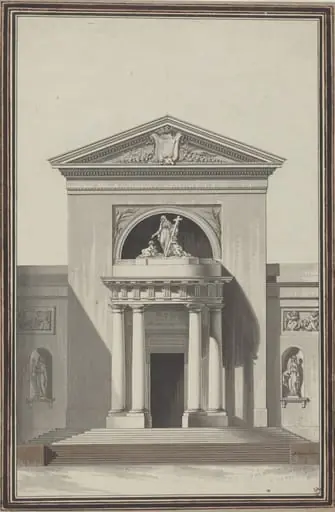 Facade for a Church with a Sculpture Representing Faith
 Untitled
 Elevation of wall showing mantelpiece.
 Corner of a Drawing Room
 Library, San Lorenzo
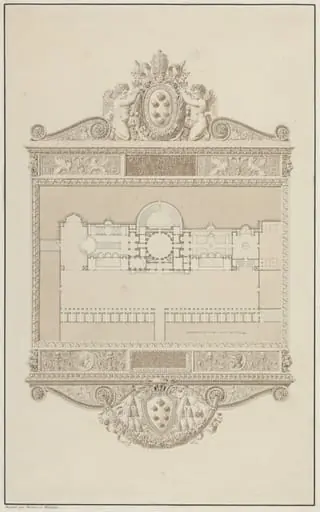 Villa Madama a Rome