Artwork
Section of the Crossing and the West End of a Cathedral for Berlin
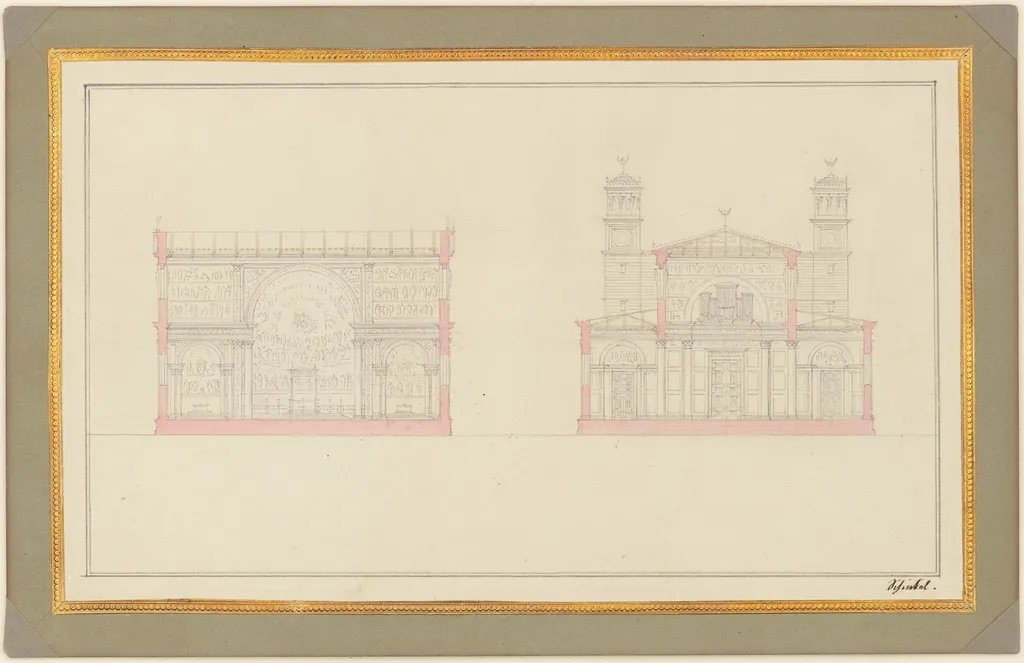
Section of the Crossing and the West End of a Cathedral for Berlin is a graphite drawing by the Romanticist artist Karl Friedrich Schinkel. It dates from 1827 and is held in the collection of the National Gallery of Art.
About this work
Overview
Section of the Crossing and the West End of a Cathedral for Berlin is a 1827 drawing by Karl Friedrich Schinkel, executed in graphite and watercolor on wove paper, mounted on a presentation base. It presents two contrasting views of a cathedral design.
Subject & Meaning
The drawing depicts a cathedral’s crossing and west end from two perspectives: one featuring a simple, tall-windowed wall with carvings, and the other showcasing grand columns, a clock tower capped with a cross. The design emphasizes architectural precision and the interplay of light on stone, with tiny figures underscoring the structure’s scale.
Technique & Style
Schinkel’s use of graphite and watercolor achieves clean lines and detailed renderings. Strategic pink highlights enhance visibility of architectural elements, reflecting his Neoclassical attention to clarity and form.
History & Provenance
Created in 1827, this work predates Schinkel’s influential Berlin buildings like the Bauakademie and Altes Museum, foreshadowing his impact on the city’s urban landscape.
Context
This drawing sits within Schinkel’s broader contribution to Neoclassical and Gothic Revival architecture, demonstrating his meticulous planning and design acumen.
Legacy
While the drawing’s direct influence on specific buildings is not detailed here, it exemplifies Schinkel’s architectural philosophy, which significantly shaped Berlin’s architectural identity.
Artist & collection
Artist
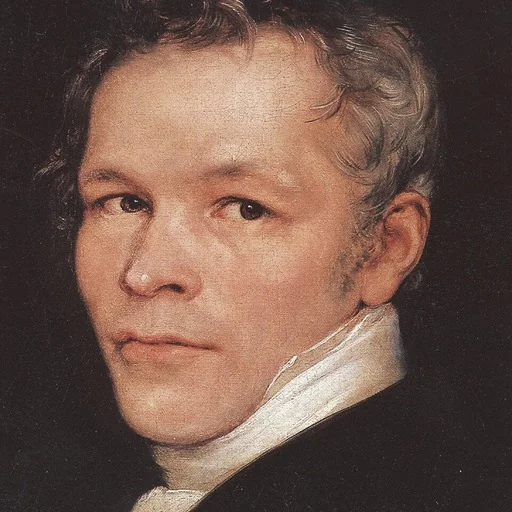
Karl Friedrich Schinkel (German pronunciation: ; 13 March 1781 – 9 October 1841) was a Prussian architect, city planner and painter who also designed furniture and stage sets.

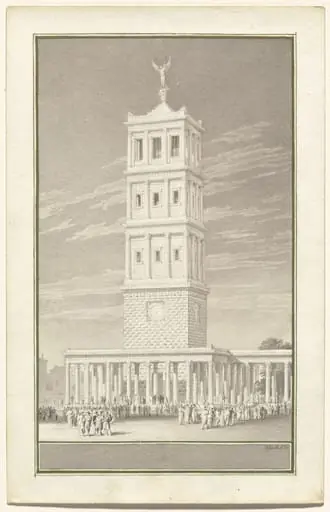 Campanile of a Cathedral for Berlin
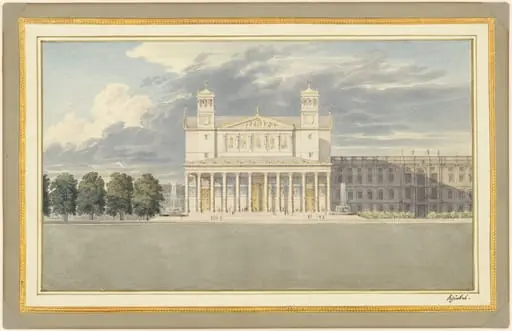 The Façade and Suroundings of a Cathedral for Berlin
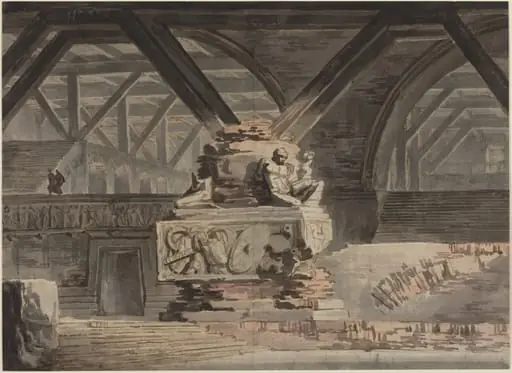 Stage Design: A Sepulchral Vault
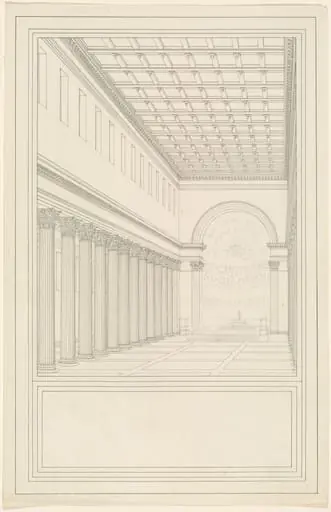 The Nave and Apse, without a Transept, of a Cathedral for Berlin
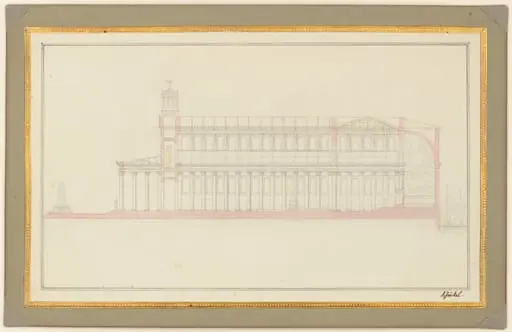 Longitudinal Section of a Cathedral for Berlin
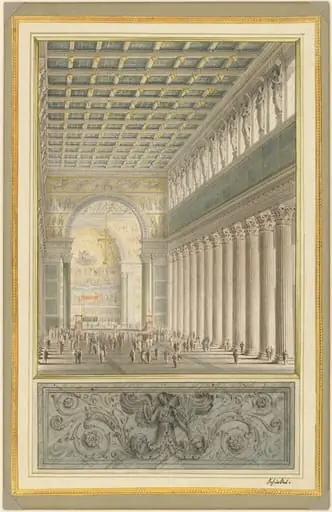 The Nave, Apse, and Crossing of a Cathedral for Berlin
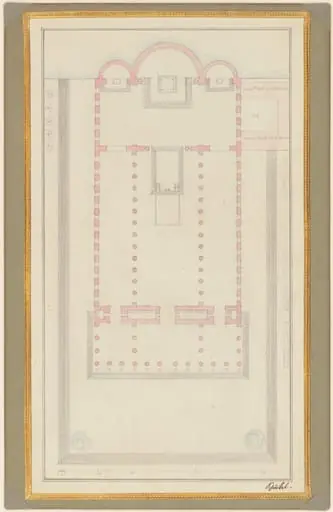 Ground Plan of a Cathedral for Berlin
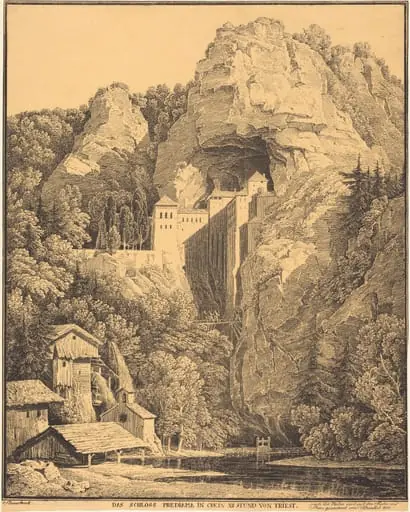 Das Schloss Prediama in Crein XII Stund: von Triest (Predjama Castle in Carniola, Twelve Hours from Trieste)
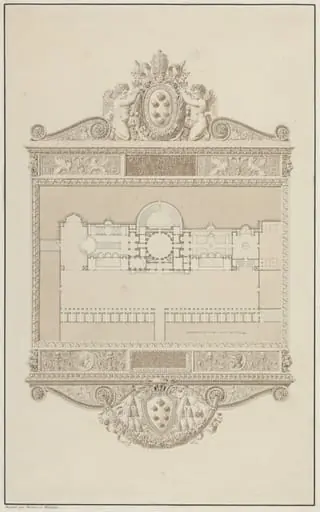 Villa Madama a Rome
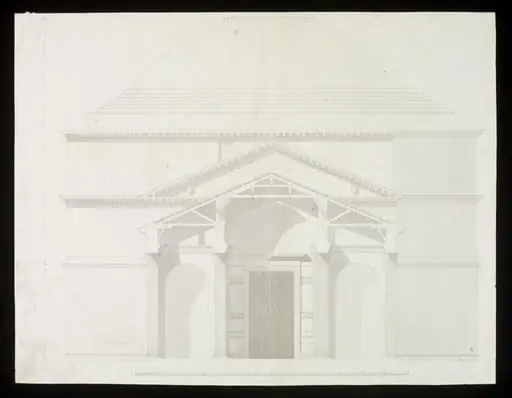 Longitudinal section through Pantheon portico
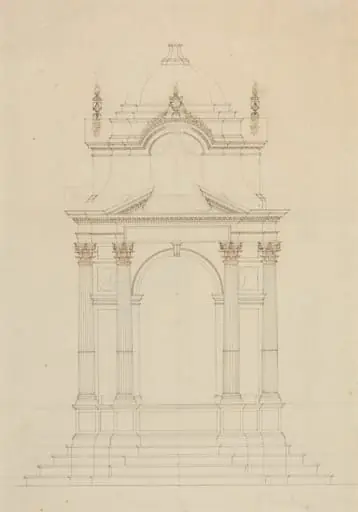 Design for a Baldaquin
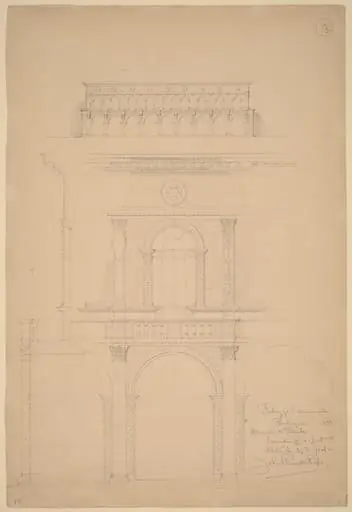 Palazzo Communale, Bologna
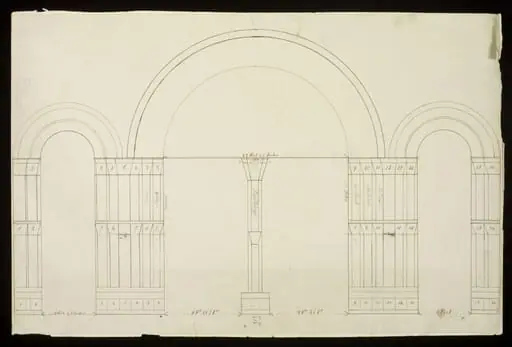 Untitled
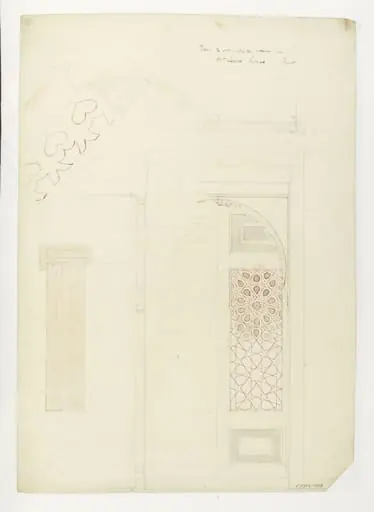 Drawing of a door, John Frederick Lewis house in Cairo
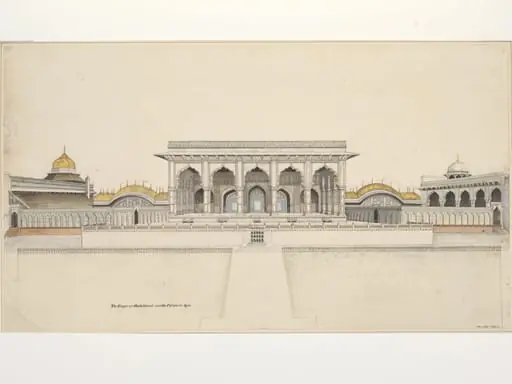 Elevation of the facade of the Khas Mahal, private apartments, Agra Fort, with the adjoining golden pavilions
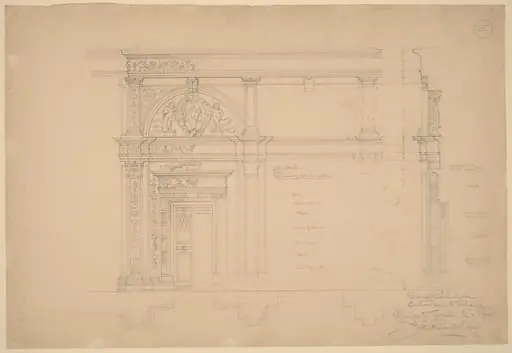 Siena Cathedral, Entrance to Library