Artwork
Untitled
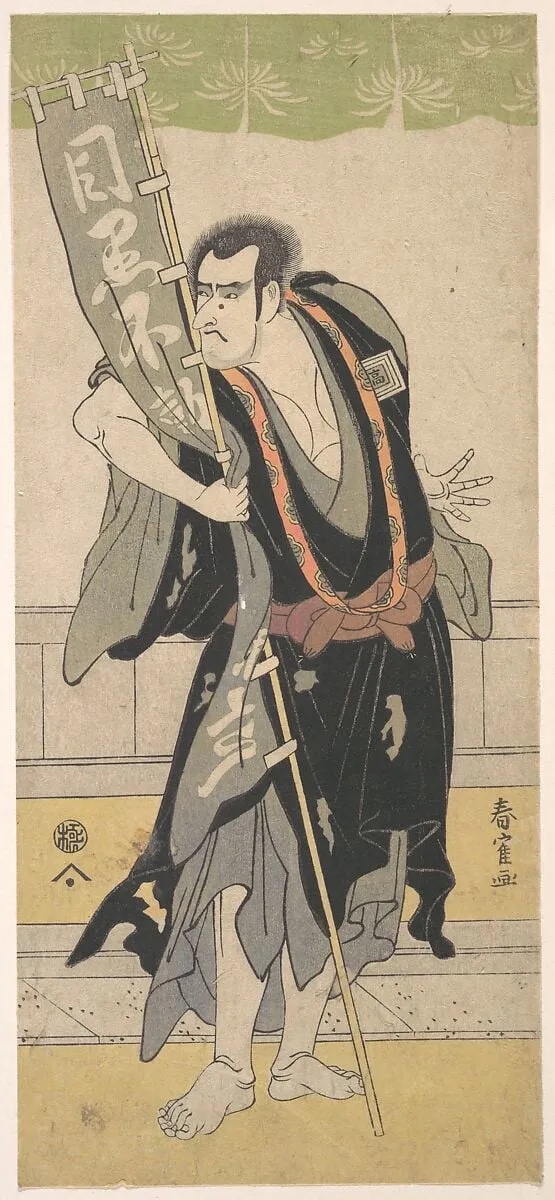
Untitled is an ink print by the Romanticist artist Katsukawa Shunkaku. It dates from 1795 and is held in the collection of the Metropolitan Museum of Art.
About this work
Overview
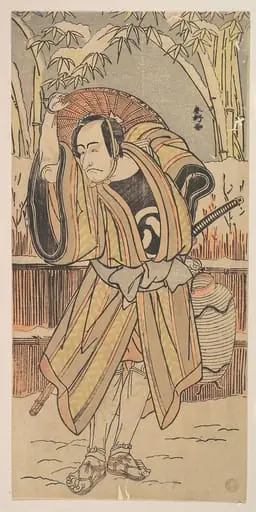
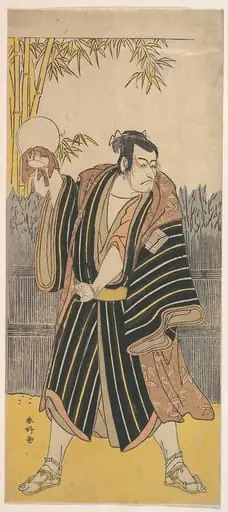
This woodblock print, dated around 1795, is attributed to Katsukawa Shunkaku and resides in The Metropolitan Museum of Art’s collection. Executed in ink and color on paper, it exemplifies the ukiyo-e tradition of late Edo-period Japan. The composition centers on a solitary figure in dynamic motion, rendered with strong outlines and vivid contrasts to convey immediacy and tension.
Subject & Meaning
His intense expression and rigid posture suggest a moment of resolve, possibly tied to a historical or theatrical narrative.
The figure is depicted mid-action, gripping a sword in one hand and a banner inscribed with Japanese script in the other. His intense expression and rigid posture suggest a moment of resolve, possibly tied to a historical or theatrical narrative. The banner’s text may reference a specific role or proclamation, though its exact meaning remains unconfirmed. The scene evokes martial readiness without specifying a known story.
Technique & Style
Shunkaku employed bold, clean lines and flat areas of color typical of ukiyo-e printing. The robe’s black fabric is accented with bright orange and white, creating visual emphasis. The background is minimal—a sparse fence and pale sky with faint green foliage—directing focus to the figure. The printing technique enhances the sense of urgency through sharp contrasts and restrained detail.
History & Provenance
The print was produced during the late 18th century, a period when woodblock prints of actors and warriors were widely circulated. It entered The Metropolitan Museum of Art’s collection through documented acquisition, though its earlier ownership history is not publicly detailed. Its preservation reflects its status as a representative work of Shunkaku’s output in the genre.
Context
Shunkaku worked within the Katsukawa school, known for portraits of actors and historical figures. This print aligns with contemporary trends favoring dramatic, individualized depictions over idealized forms. While not tied to a specific known performance or event, it reflects the popularity of warrior imagery in popular print culture during the Edo period.
Legacy
As one of fewer surviving works by Shunkaku, this print contributes to understanding the diversity within the Katsukawa tradition. It illustrates how printmakers adapted theatrical and martial themes for mass audiences, balancing stylization with emotional intensity. Its presence in a major museum underscores its role in documenting Edo-period visual culture.
Artist & collection

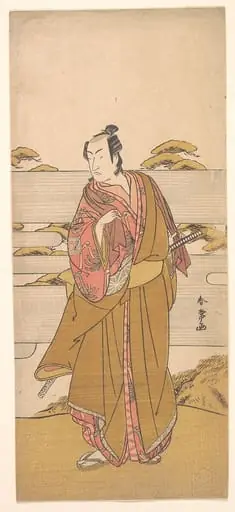 Untitled
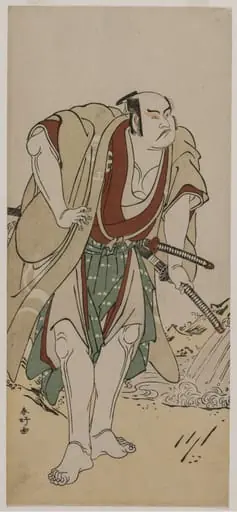 Otani Hiroji III as a Samurai Standing Beside a Stream
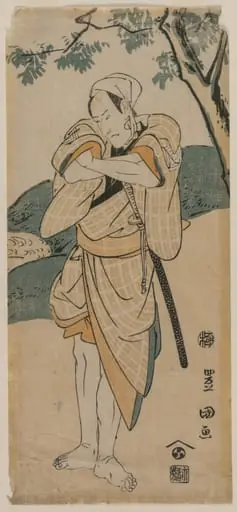 The Actor Ichikawa Danjuro as a Samurai
 Untitled
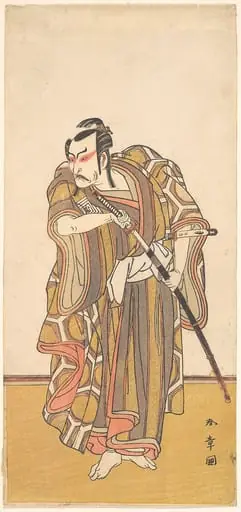 四代目市川團蔵|Kabuki Actor Ichikawa Danzō IV
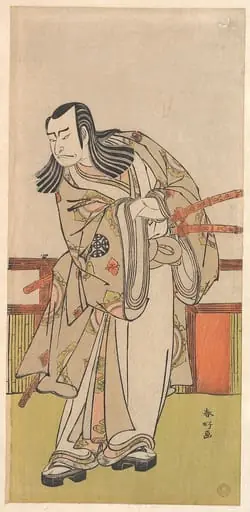 Untitled
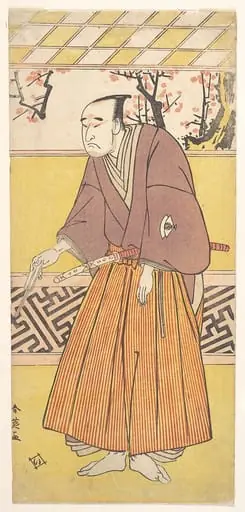 Untitled
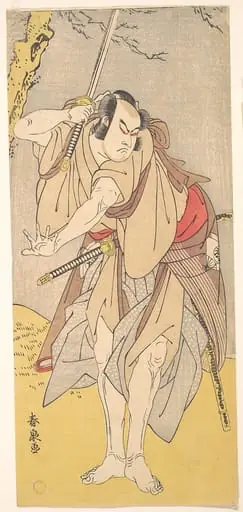 Untitled
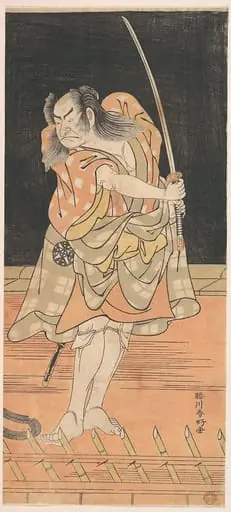 Untitled
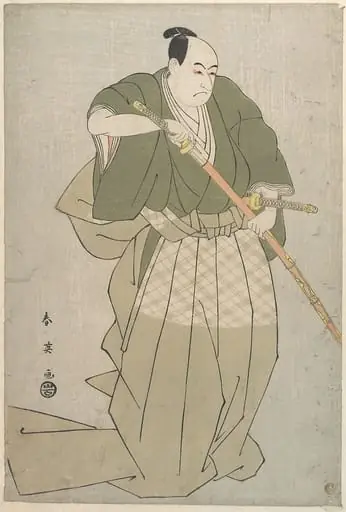 初代市川 男女蔵の桃井若狭之助|The Actor Ichikawa Omezō I as the Young Daimyo Momonoi Wakasanosuke
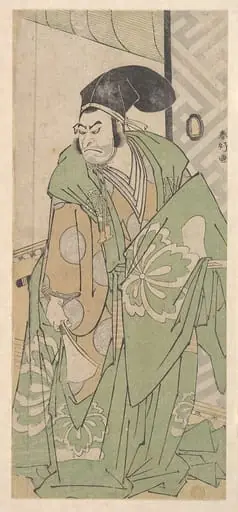 Untitled
 勝川春好画 七代目片岡仁左衛門 五代目市川團十郎|Kabuki Actor Ichikawa Danjūrō V