Artwork
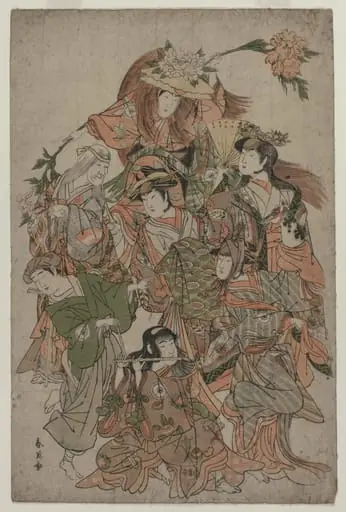
Seven Wise Women of the Pleasure Quarters
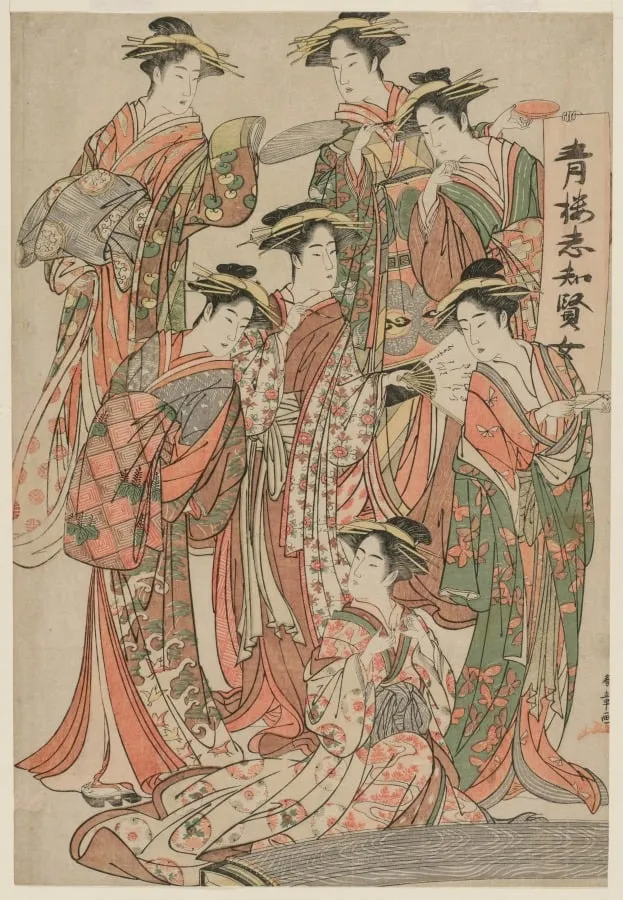
Seven Wise Women of the Pleasure Quarters is a print by the Romanticist artist Katsukawa Shunshō. It dates from 1784 and is held in the collection of the Cleveland Museum of Art.
About this work
If you like this, look up *subject: japan, edo period (1615–1868)* to see more of these lively, detailed scenes.
This print shows seven women in colorful robes, standing close together in a room. Their faces are pale, their hair is black and glossy, and each holds something—a fan, a pipe, a teacup.
The woman in the center isn’t just posing. She’s Hanaōgi, a famous courtesan known for her poetry. The brush in her hand and the fan with her poem tell you she’s more than a performer; she’s an artist too. These prints were like celebrity portraits of their time.
If you like this, look up *subject: japan, edo period (1615–1868)* to see more of these lively, detailed scenes.
Overview
The woodblock print titled Seven Wise Women of the Pleasure Quarters depicts a group of seven elegantly dressed women gathered within an interior space. Their attire is rendered in vivid hues, and each figure holds a distinct object—a fan, a pipe, a teacup, among others. The central figure, distinguished by a writing brush, draws particular attention as the focal point of the composition.
Subject & Meaning
The woman at the centre is identified as Hanaōgi, a celebrated courtesan renowned for her poetic talent. The fan she carries bears a verse signed with her name, while the brush in her hand underscores her role as a literate artist rather than merely an entertainer. The assembly of the seven women suggests a collective representation of cultured femininity within the pleasure districts of Edo‑period Japan.
Technique & Style
Executed in the ukiyo‑e tradition, the print employs bold color blocks and fine line work to delineate the figures’ garments and accessories. The pale complexion of the faces and the glossy black hair are rendered with delicate ink strokes, creating a contrast with the richly saturated robes. The composition balances individual detail with a harmonious grouping, characteristic of late Edo portrait prints.
History & Provenance
Produced during the Edo period (1615–1868), the image functioned as a visual record of prominent courtesans, akin to contemporary celebrity portraiture. Such prints were widely circulated among urban audiences, offering insight into the social status and artistic pursuits of women in the licensed quarters. The work remains a valuable document of the cultural milieu of its time.
Artist & collection
Artist
Katsukawa Shunshō spent his life in Edo (now Tokyo), where the city’s teahouses and theaters buzzed with energy.

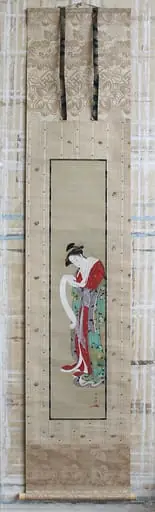
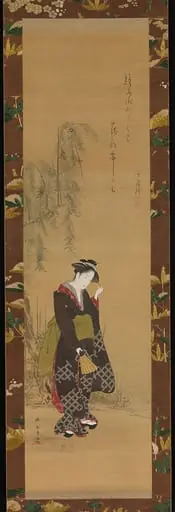
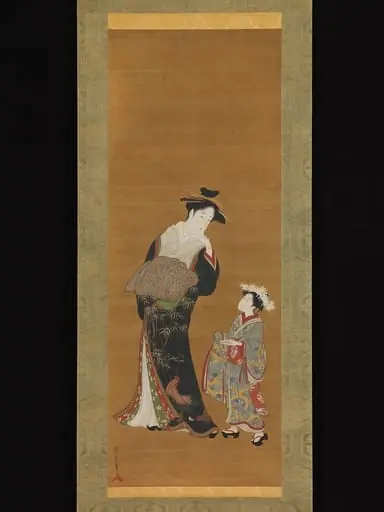
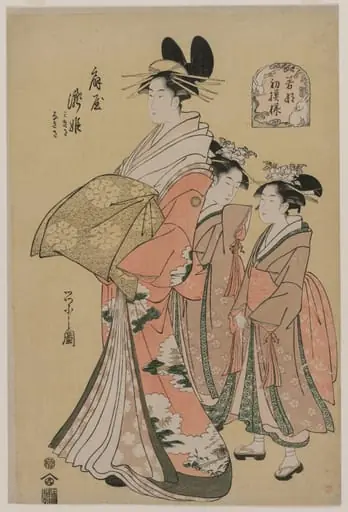 The Courtesan Takihime and Attendants (from the series New Patterns of Young Greens)
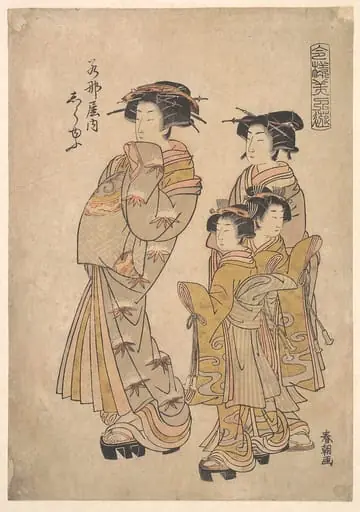 Untitled
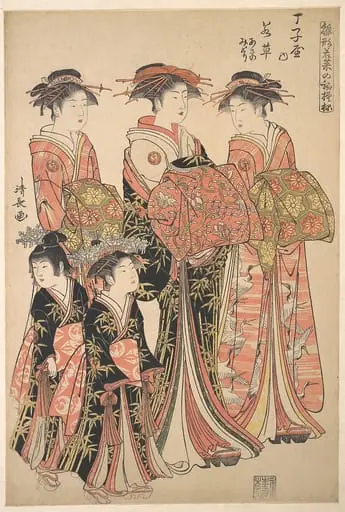 鳥居清長画 「雛形若菜の初模様 丁子屋の若草・ あさの・みどり」|The Courtesan Wakakusa of the Chōjiya Brothel, and Attendants Asano and Midori, from the series “A Pattern Book of the Year’s First Designs, Fresh as Spring Herbs” (Hinagata wakana no hatsumoyō)
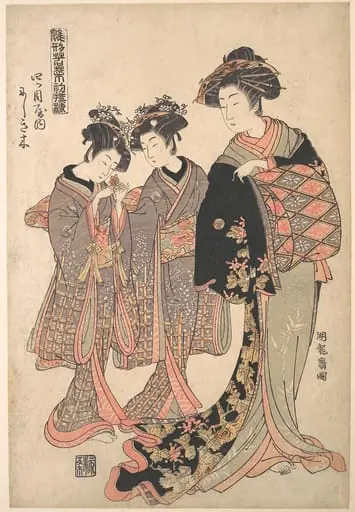 『雛形若菜初模様 四ツ目屋内 にしき木』|The Courtesan Nishikigi of the Yotsumeya Brothel, from the series “A Pattern Book of the Year’s First Designs, Fresh as Spring Herbs” (“Hinagata wakana hatsu moyō”)
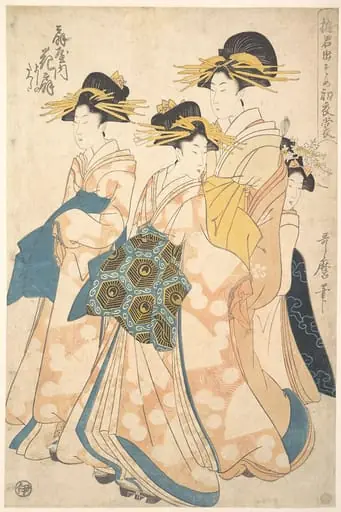 遊君出そめ初衣裳 扇屋内花扇|The Oiran Hanaogi of Ogiya attended by Two Shinzo and Her Kamuro Yoshino
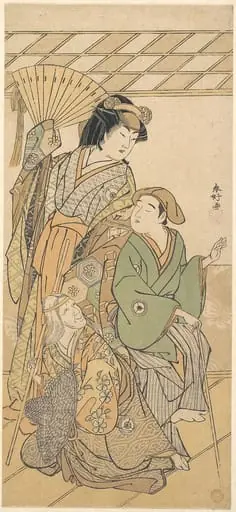 Untitled
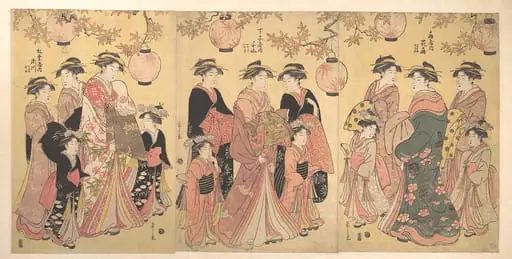 Untitled
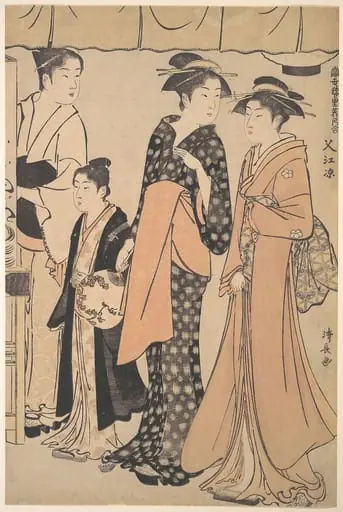 Sako no Suzumi|Cooling Off at Nakazu
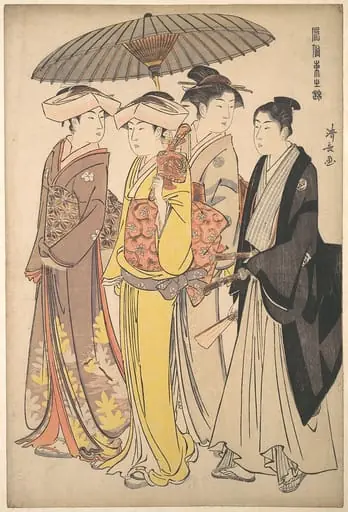 「風俗東之錦」 武家の息女と侍女と若党 |A Lady from a Samurai Household with Three Attendants, from the series A Brocade of Eastern Manners (Fūzoku Azuma no nishiki)
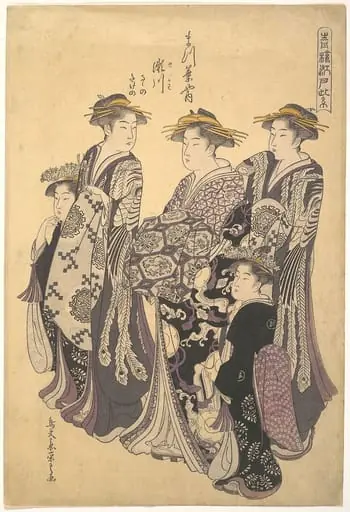 Seiryu Edo|Courtesan District of Edo
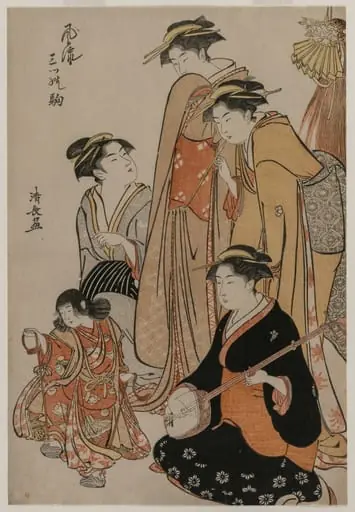 Women Watching a Girl Dance on Shells (From the series Fashionable Presentations of Three Horses)
 Iwai Hanshiro IV in a Dance of Seven Changes