Artwork
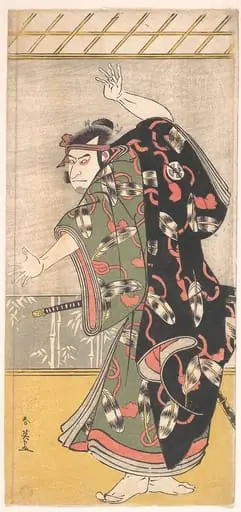
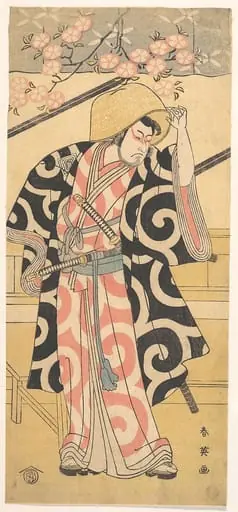
Iwai Hanshiro IV in a Dance of Seven Changes
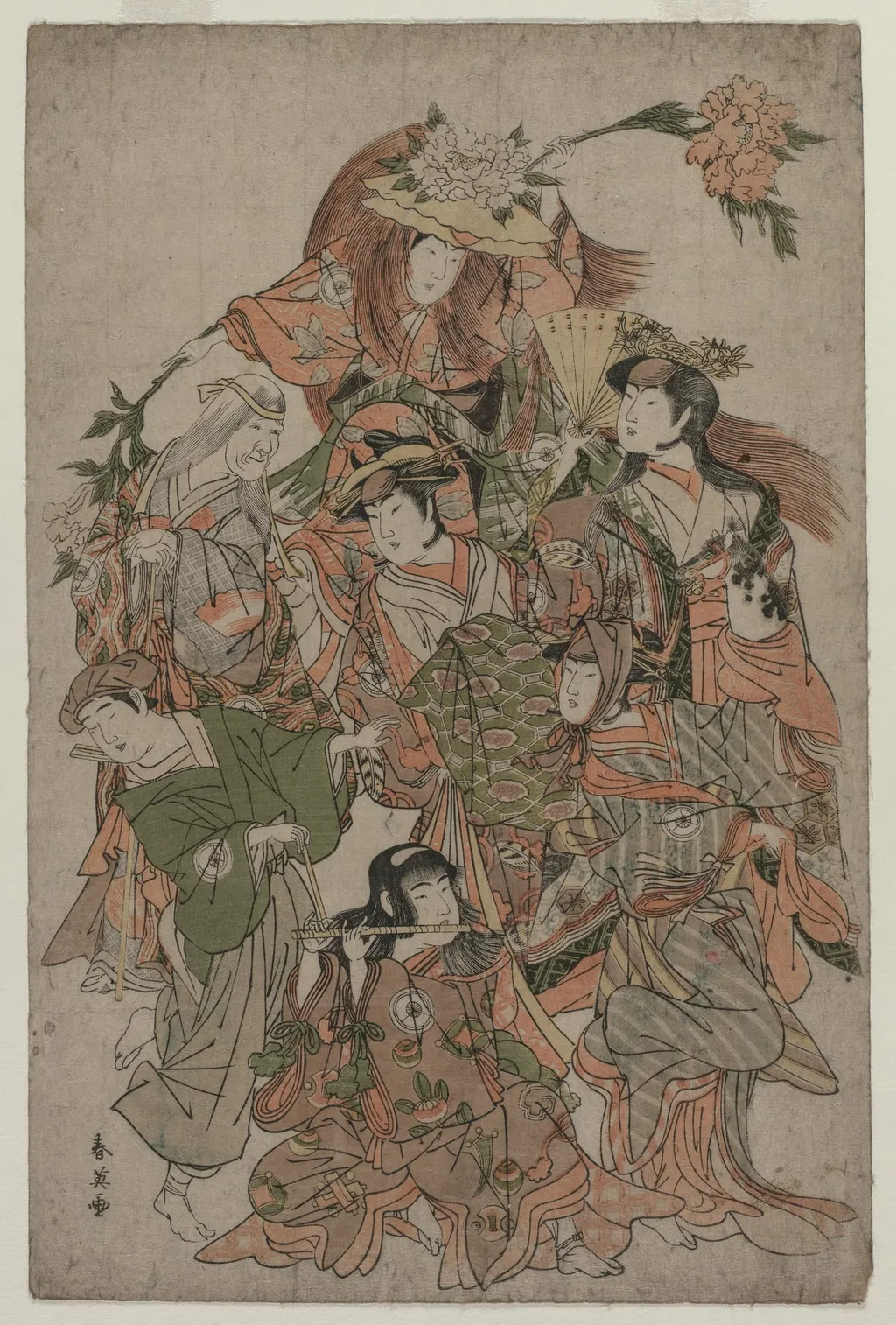
Iwai Hanshiro IV in a Dance of Seven Changes is a print by the Romanticist artist Katsukawa Shun'ei 勝川春英. It dates from 1793 and is held in the collection of the Cleveland Museum of Art.
About this work
This painting is called Iwai Hanshiro IV in a Dance of Seven Changes.
It was made by Katsukawa Shunei, a Japanese artist, around 1793 or 1794.
The painting is part of the Romanticism movement, which is interesting because it was not as common in Japanese art at that time.
You can learn more about this style at The Cleveland Museum of Art.
Overview
Iwai Hanshiro IV in a Dance of Seven Changes is a print created by Katsukawa Shunei around 1793-1794. It is a representative work of the artist's expertise in ukiyo-e, a style of Japanese art.
Subject & Meaning
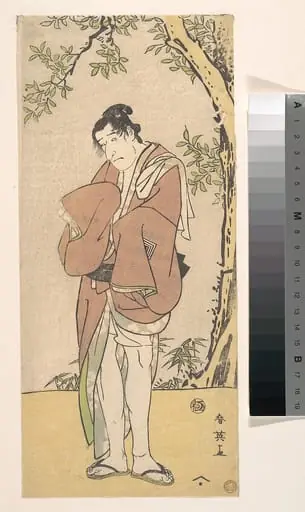
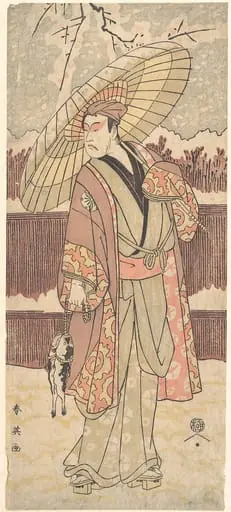
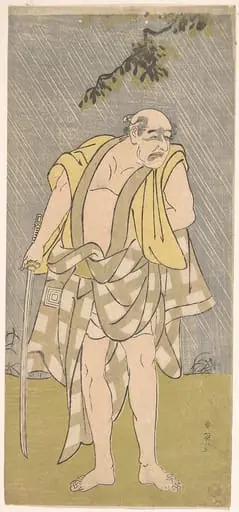
The print depicts Iwai Hanshiro IV, a kabuki actor, in a dynamic pose from a Dance of Seven Changes. Shunei's work captures the essence of kabuki performance, highlighting the actor's expression and movement.
Technique & Style
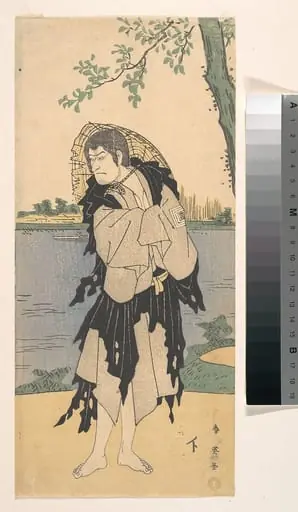
Shunei was known for his yakusha-e portraits, particularly detailed bust portraits like ōkubi-e, which he began producing in 1791. This print showcases his skill in conveying theatrical energy through composition and detail.
Context
While associated with the Romanticism movement, this print is more accurately characterized by its roots in ukiyo-e, a distinct Japanese art form. Its connection to Romanticism reflects the diverse influences present in late 18th-century art.
Artist & collection

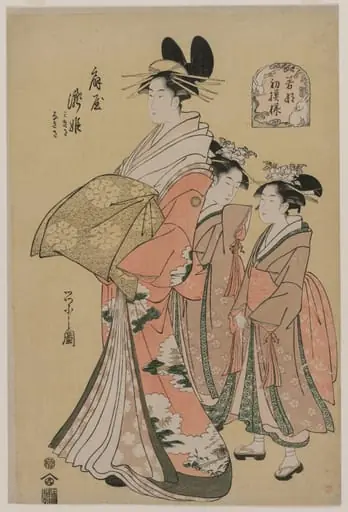 The Courtesan Takihime and Attendants (from the series New Patterns of Young Greens)
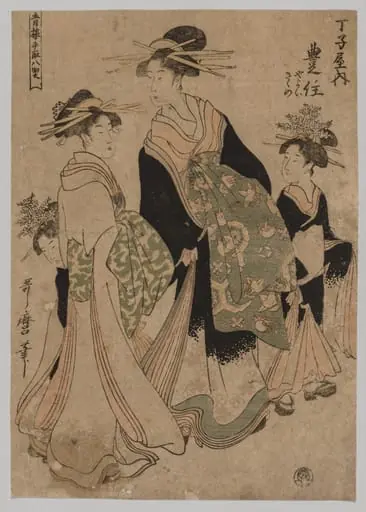 Courtesans and Attendants
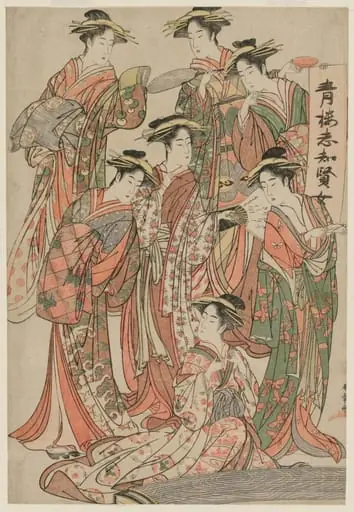 Seven Wise Women of the Pleasure Quarters
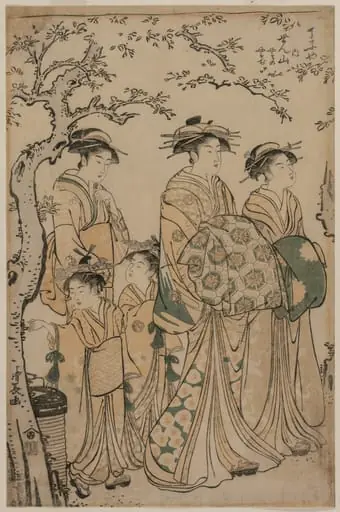 The Courtesan Senzan of Chojiya Strolling with her Kamuro Yasono and Yasoji and Two Shinzo
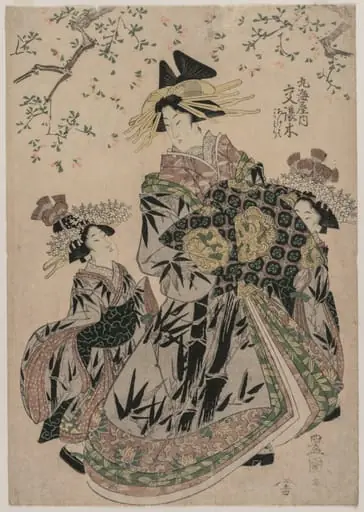 The Courtesan Katakoshigi (?) of Maruebiya with her Kamuro Ageha and Midori
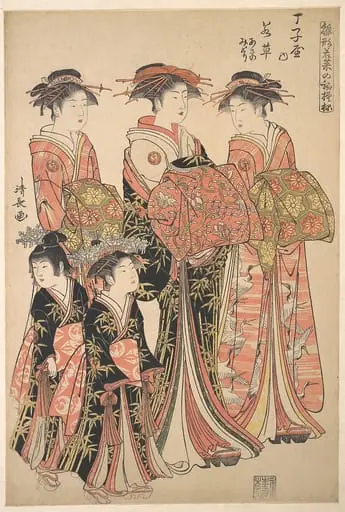 鳥居清長画 「雛形若菜の初模様 丁子屋の若草・ あさの・みどり」|The Courtesan Wakakusa of the Chōjiya Brothel, and Attendants Asano and Midori, from the series “A Pattern Book of the Year’s First Designs, Fresh as Spring Herbs” (Hinagata wakana no hatsumoyō)
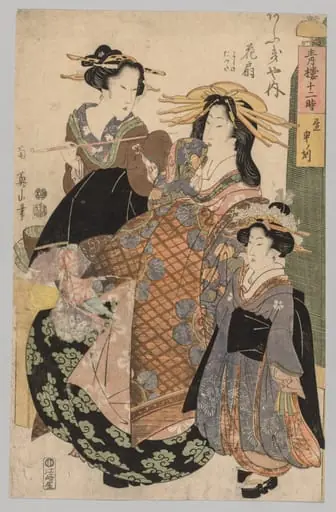 Two Women and a Girl
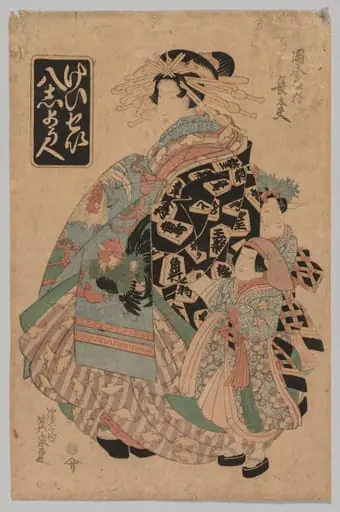 Chōdayu of the Okamotoya from the series ?
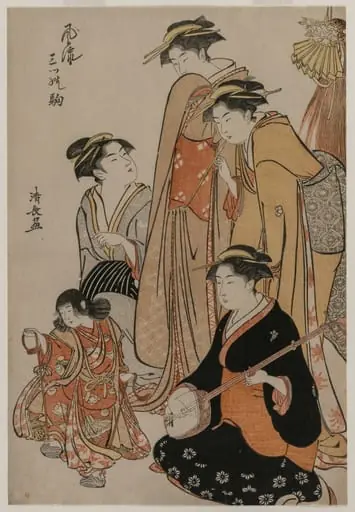 Women Watching a Girl Dance on Shells (From the series Fashionable Presentations of Three Horses)
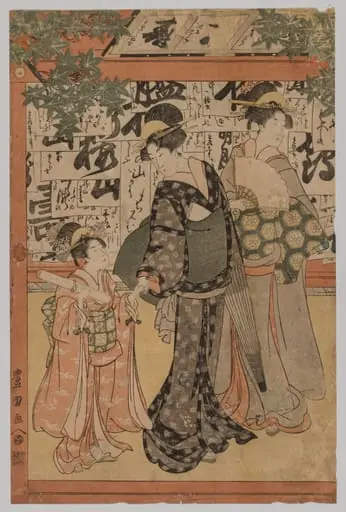 Examination for Writing
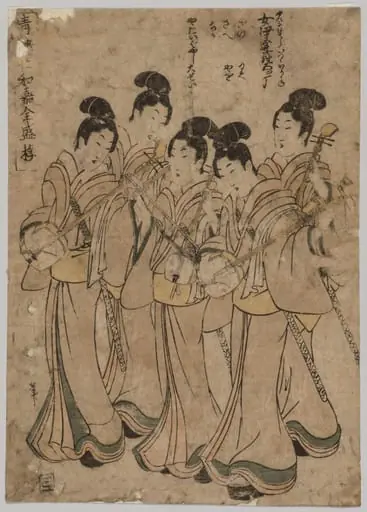 Young Women with Musical Instruments
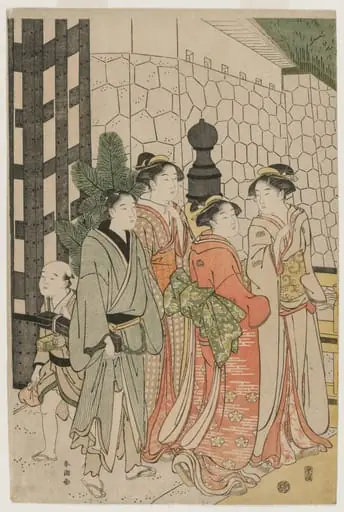 Young Man and Women on Tokiwa Bridge