Artwork
木曽海道六拾九次之内 下諏訪|Shimono Suwa Station
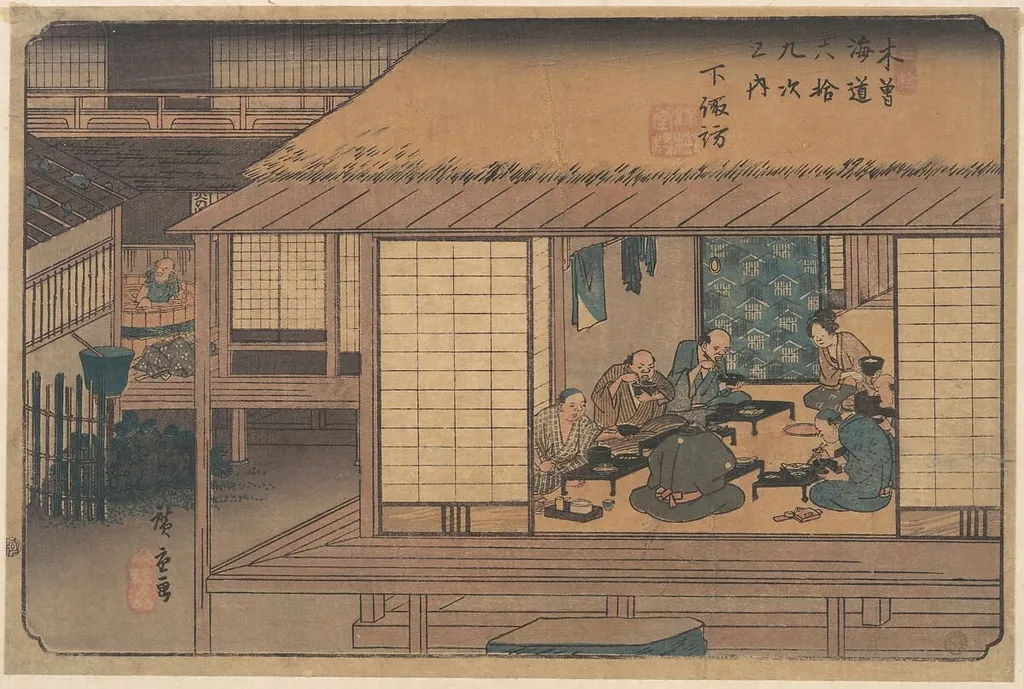
木曽海道六拾九次之内 下諏訪|Shimono Suwa Station is an ink print by the Romanticist artist Utagawa Hiroshige. It dates from 1835 and is held in the collection of the Metropolitan Museum of Art.
About this work
Overview
Unlike his more widely known *Tōkaidō* series, this work focuses on quieter, lesser-traveled locales.
Created around 1835 by Utagawa Hiroshige, this woodblock print is part of the series *The Sixty-Nine Stations of the Kiso Kaidō*, which documents rest stops along a historic mountain road. Unlike his more widely known *Tōkaidō* series, this work focuses on quieter, lesser-traveled locales. The print captures a moment of stillness at Shimono Suwa, emphasizing atmosphere over narrative, and reflects Hiroshige’s shift toward landscape and seasonal mood in ukiyo-e.
Subject & Meaning
The scene depicts a group of travelers seated on the floor of a rustic inn, sharing a meal beside an open veranda that overlooks a calm lake. The figures, dressed in simple garments and arranged with quiet intimacy, suggest a pause in journeying. The composition conveys the dignity of rest, framing daily life as part of the natural rhythm of travel. The open architecture blurs boundaries between interior and landscape, reinforcing harmony between human activity and the surrounding environment.
Technique & Style
Hiroshige employed fine woodblock carving and hand-coloring to achieve soft transitions in tone, particularly in the sky and water. Delicate lines define the paper screens and wooden beams, while muted pigments—pale blues, grays, and earth tones—enhance the sense of quietude. The lack of dramatic perspective and the flattened space reflect traditional ukiyo-e conventions, yet the attention to atmospheric detail anticipates later landscape traditions in Japanese art.
History & Provenance
The print was produced during Hiroshige’s early mature period, shortly after he began focusing on travel series. As part of a commercial print run, it was likely distributed to travelers and collectors in Edo. Few early impressions survive in good condition, and this print’s preservation reflects its modest but enduring appeal within the broader context of 19th-century Japanese print culture.
Context
The Kiso Kaidō was one of the five major roads of the Edo period, used primarily by officials and merchants. Unlike the more crowded Tōkaidō, it passed through remote, mountainous terrain, offering fewer inns and less bustling activity. Hiroshige’s choice to depict this route highlights the solitude and contemplative pace of travel in less frequented regions, contrasting with the urban energy of earlier ukiyo-e subjects.
Legacy
Though less celebrated than his *Tōkaidō* series, Hiroshige’s *Kiso Kaidō* prints influenced later Japanese and Western artists through their emphasis on mood and natural detail. This print exemplifies how everyday moments—shared meals, quiet interiors—could be elevated through composition and restraint. Its quiet realism helped redefine ukiyo-e’s potential beyond spectacle, paving the way for more introspective landscape traditions.
Artist & collection
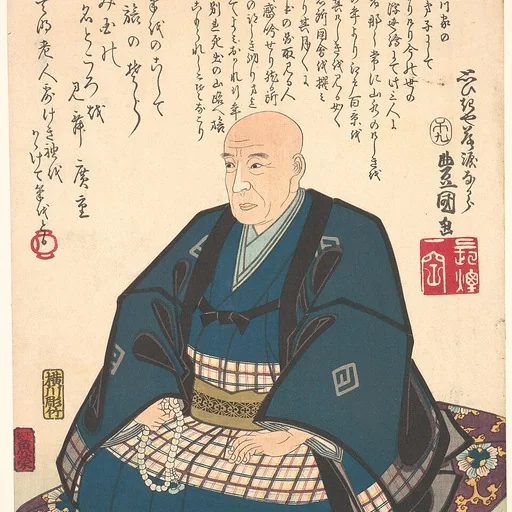
Artist
Utagawa Hiroshige (歌川 広重) or Andō Hiroshige (安藤 広重), born Andō Tokutarō (安藤 徳太郎; 1797 – 12 October 1858), was a Japanese ukiyo-e artist, considered the last great master of that tradition.

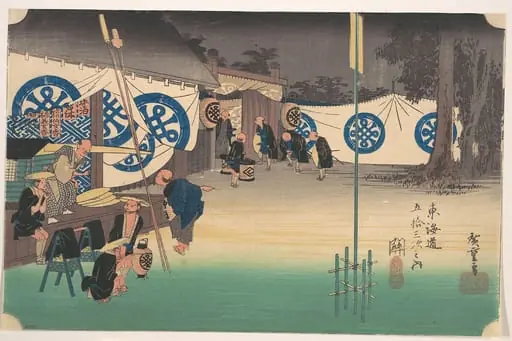 東海道五十三次 関 本陣早立|Seki, Stations No. 48
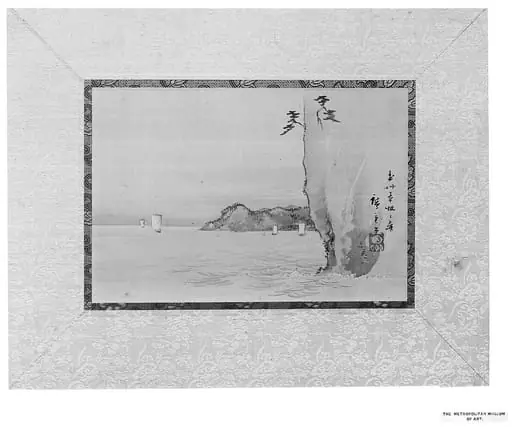
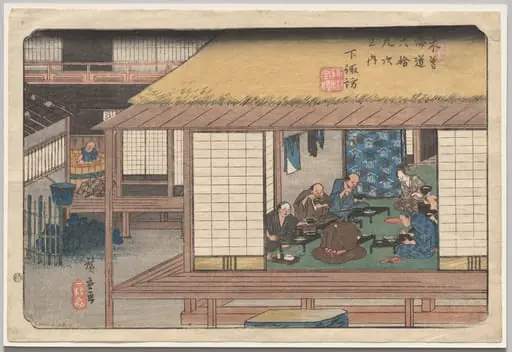 Shimosuwa, from Sixty-Nine Stations of the Kisokaidō
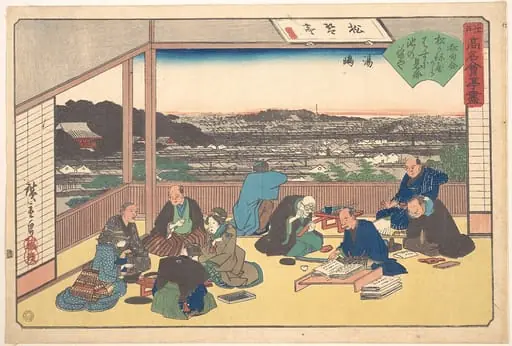 江戸高名会亭尽 湯島 松琴亭|Yushima (Matsu Kane-ya)
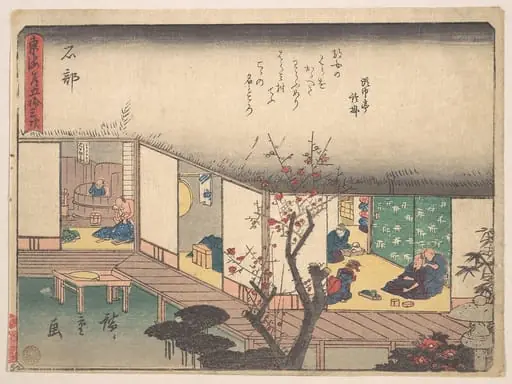 東海道五十三次 石部|Ishibe
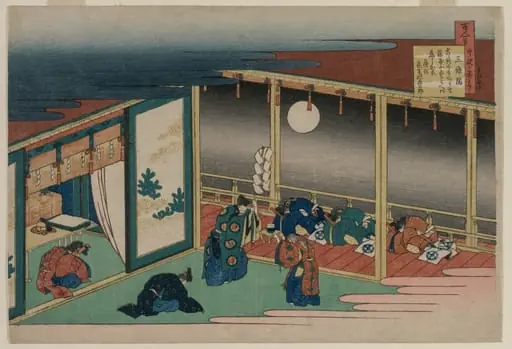 Poem by Emperor Sanjo, from the series One Hundred Poems by One Hundred Poets Explained by an Old Nurse
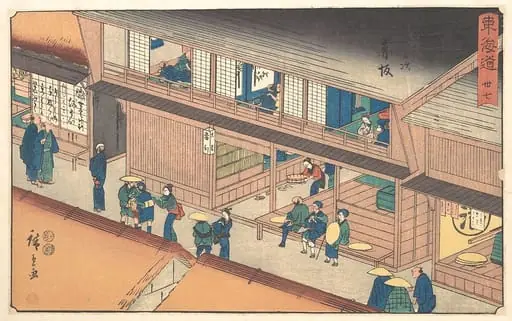 東海道五十三次 赤阪|Akasaka
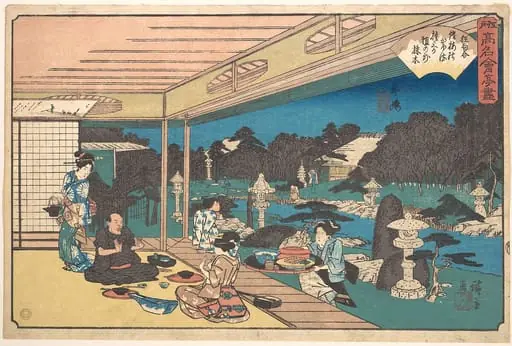 江戸高名会亭尽 牛嶋 武蔵屋|Ushijima (Musashi-ya)
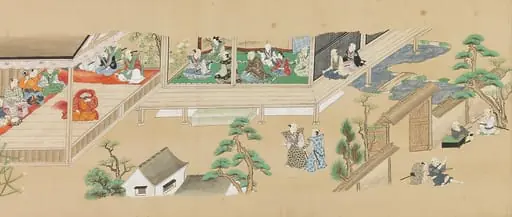 能楽風俗図絵巻|Six Noh Performances in Scenes from Daily Life
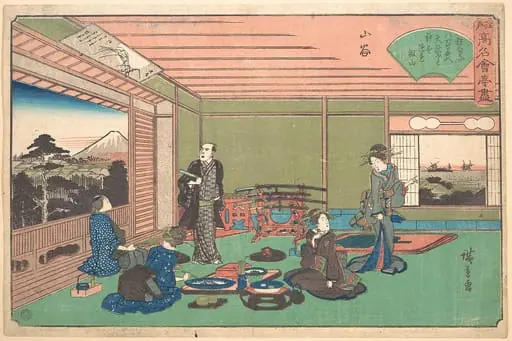 江戸高名会亭尽 山谷 八百善|San-ya (Yaozen)
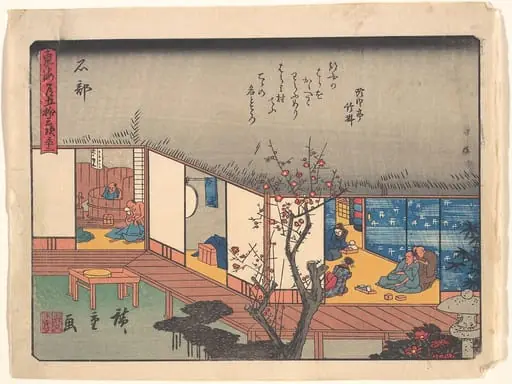 東海道五十三次 石部|Ishibe, from the series The Fifty-three Stations of the Tōkaidō Road
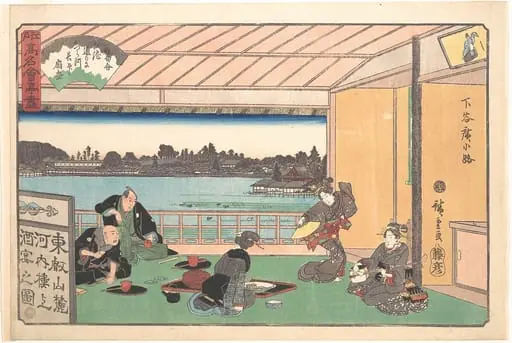 Shitaya Hirokōji (Oike)|江戸高名会亭尽 下谷広小路 河内楼|Teahouse at Hirokōji
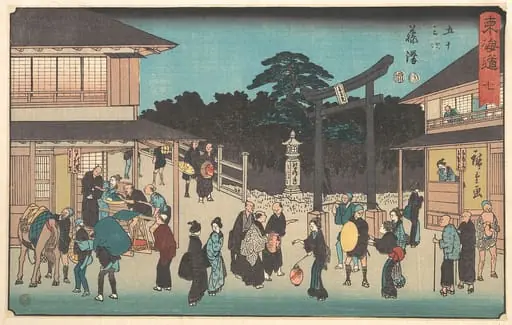 東海道五十三次 藤澤|Fujisawa