Artwork
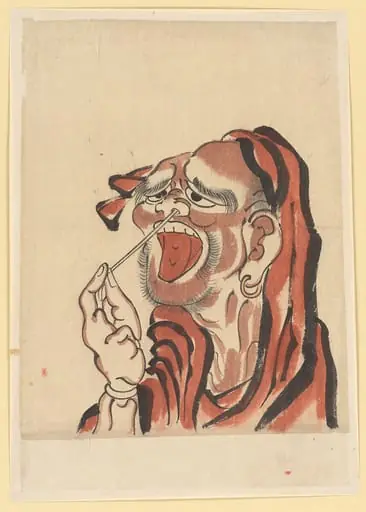
百人一首 乳母か縁説 素胜法師|Poem by Sōsei Hōshi, from the series One Hundred Poems Explained by the Nurse (Hyakunin isshu uba ga etoki)
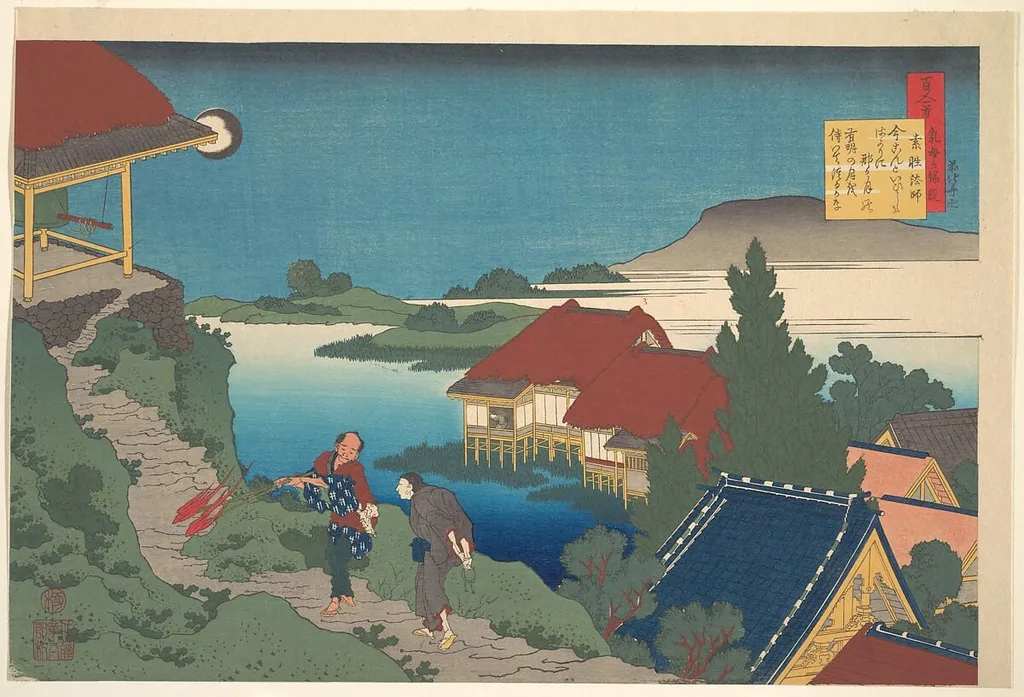
百人一首 乳母か縁説 素胜法師|Poem by Sōsei Hōshi, from the series One Hundred Poems Explained by the Nurse (Hyakunin isshu uba ga etoki) is an ink print by the Japonisme artist Katsushika Hokusai. It is held in the collection of the Metropolitan Museum of Art.
About this work
Overview
It features ink and color on paper, characteristic of ukiyo-e publishing practices of the time, and is held in the collection of The Metropolitan Museum of Art.
This woodblock print is part of the series One Hundred Poems Explained by the Nurse, a late Edo-period illustrated collection pairing classical waka poetry with narrative scenes. Though attributed to Katsushika Hokusai in error, the print was actually produced by Utagawa Kunisada around 1835–1836. It features ink and color on paper, characteristic of ukiyo-e publishing practices of the time, and is held in the collection of The Metropolitan Museum of Art.
Subject & Meaning
The print illustrates a poem by Sōsei Hōshi, a Heian-period monk, reflecting on impermanence and quiet solitude. Two figures traverse a winding path toward a body of water, one carrying red-wrapped items—possibly ritual offerings. Distant buildings and mountains frame the scene, evoking a pilgrimage or contemplative journey. The imagery aligns with the poem’s theme of transience, rendered through subtle human presence within an expansive natural setting.
Technique & Style
The print employs fine linework and layered color washes typical of ukiyo-e, with ink defining contours and pigments suggesting atmospheric depth. Foreground figures are rendered with greater naturalism, while the landscape recedes into stylized, flattened planes. The deep blue sky and textured brushwork in the foliage demonstrate the printer’s skill in achieving tonal variation. These techniques reflect the mature phase of Edo-period commercial printmaking, prioritizing clarity and emotional resonance over strict realism.
History & Provenance
Produced between 1835 and 1836, the print was published as part of a popular illustrated series commissioned by a Tokyo-based publisher. Though often misattributed to Hokusai due to stylistic similarities, it is the work of Kunisada, a leading ukiyo-e artist of the time. The print entered The Metropolitan Museum of Art’s collection in the early 20th century, following broader Western interest in Japanese prints after the Meiji Restoration.
Context
The series One Hundred Poems Explained by the Nurse reimagined the classical Hyakunin Isshu anthology for a broad urban audience, blending literary tradition with accessible visual storytelling. Illustrated by leading artists, each print paired a poem with a scene meant to evoke its mood. These works circulated widely as affordable art, reflecting the Edo period’s flourishing print culture and the public’s appetite for poetic and visual refinement.
Legacy
Though not as widely recognized as Hokusai’s landscapes, this print exemplifies the enduring influence of classical poetry in Edo visual culture. Its production highlights the collaborative nature of ukiyo-e—poets, artists, carvers, and publishers working in tandem. Today, it remains a key artifact in understanding how literary heritage was reinterpreted for everyday viewers, bridging aristocratic tradition and popular taste in 19th-century Japan.
Artist & collection

Artist
Katsushika Hokusai spent his life in Edo, now Tokyo, where he drew and carved prints for a living.

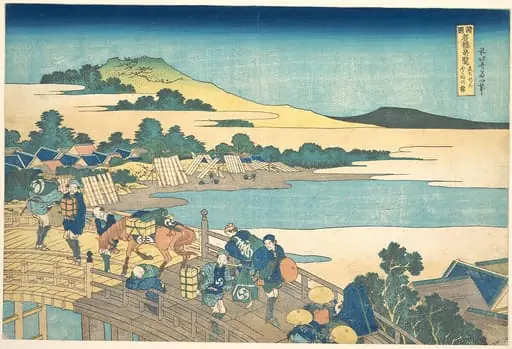 諸國名橋奇覧 ゑちぜんふくゐの橋|Fukui Bridge in Echizen Province (Echizen Fukui no hashi), from the series Remarkable Views of Bridges in Various Provinces (Shokoku meikyō kiran)
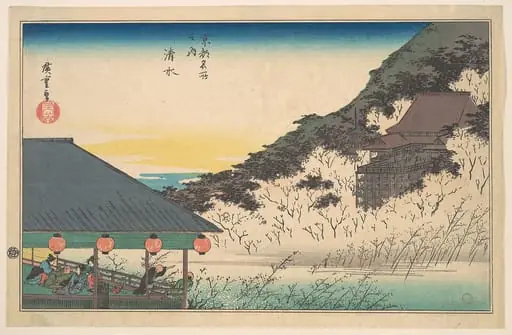 歌川広重画 「京都名所之内 清水」|Kiyomizu Temple (Kiyomizu), from the series Famous Views of Kyoto (Kyōto meisho no uchi)
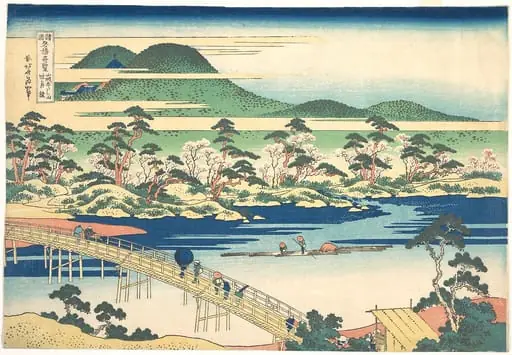 諸國名橋奇覧 山城あらし山吐月橋 |Togetsu Bridge at Arashiyama in Yamashiro, from the series Remarkable Views of Bridges in Various Provinces (Shokoku meikyō kiran)
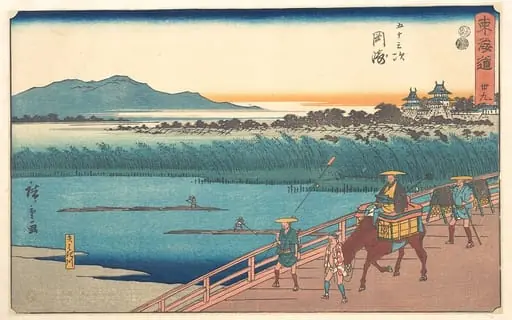 東海道五十三次 岡崎 矢はぎ川|Okazaki
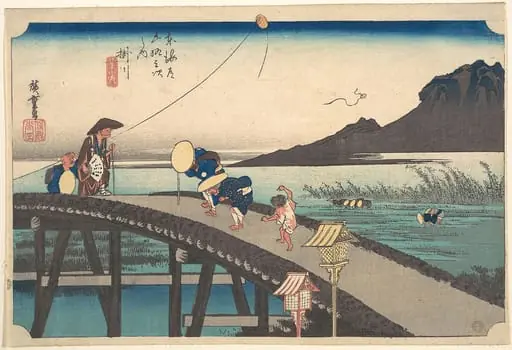 東海道五十三次之内 掛川 秋葉山遠望|Kakegawa, Akihasan Empo
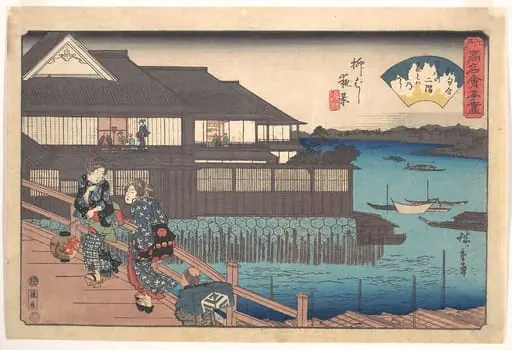 江戸高名会亭尽 柳ばし夜景 万八|The Manpachi at Evening in Yanagibashi
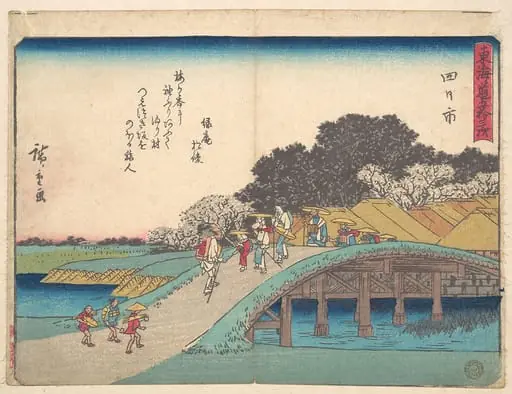 東海道五十三次 四日市|Yokkaichi
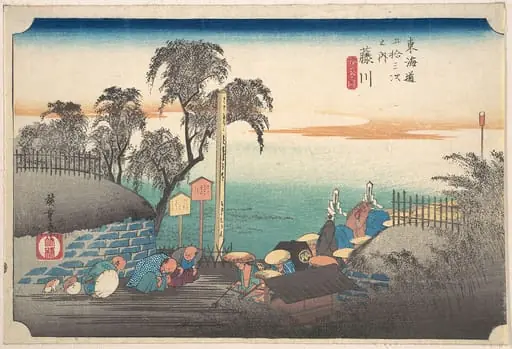 東海道五十三次之内 藤川 棒鼻の図|Fujikawa, Bo Bana
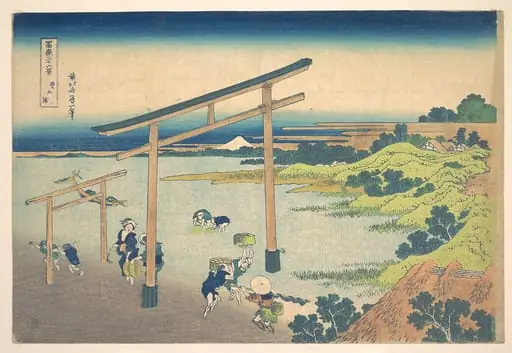 冨嶽三十六景 登戸浦|Noboto Bay (Noboto no ura), from the series Thirty-six Views of Mount Fuji (Fugaku sanjūrokkei)
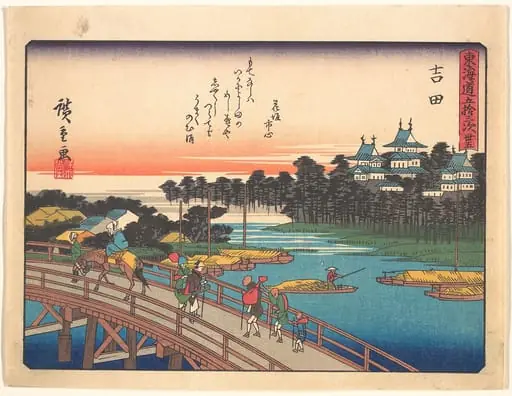 東海道五十三次 吉田|Yoshida, from the series The Fifty-three Stations of the Tōkaidō Road