Artwork
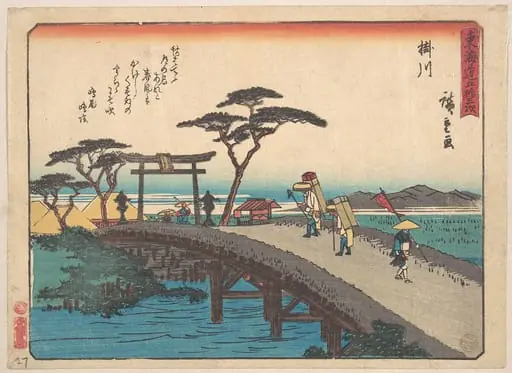
東海道五十三次之内 掛川 秋葉山遠望|Kakegawa, Akihasan Empo
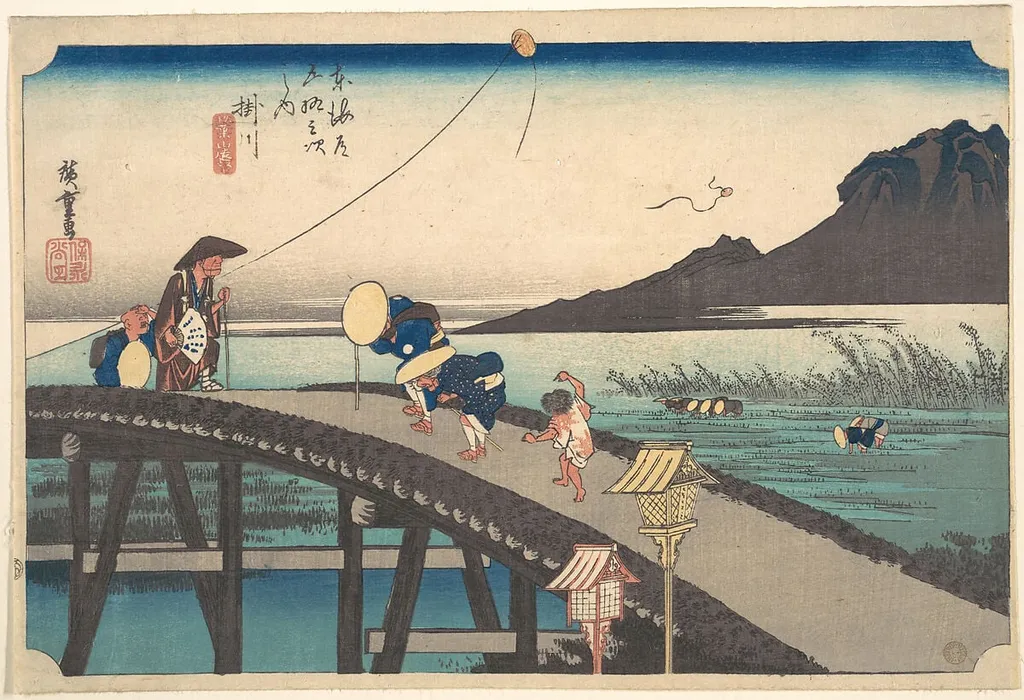
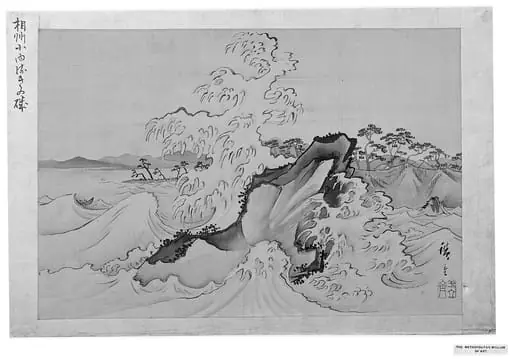
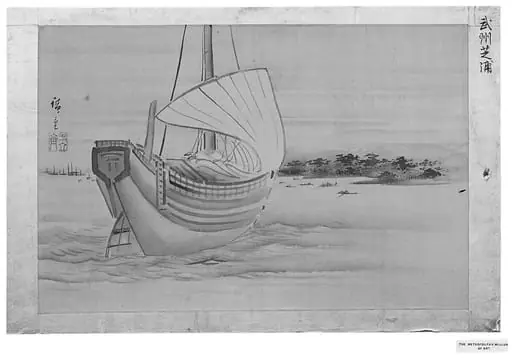
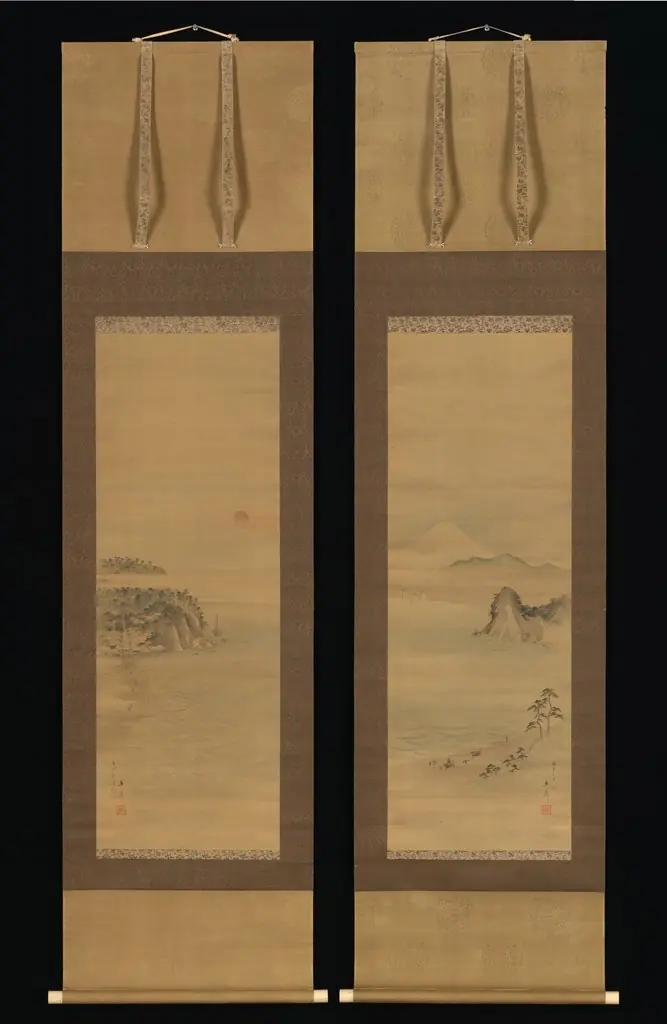
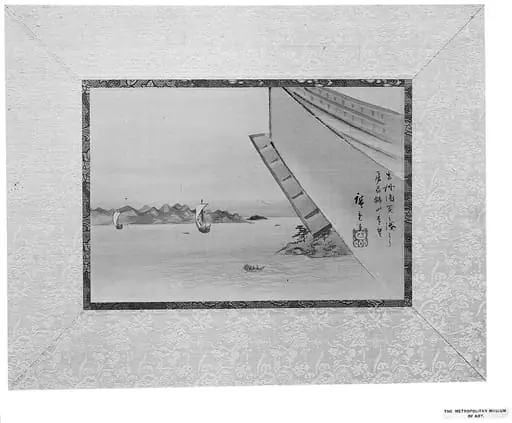
東海道五十三次之内 掛川 秋葉山遠望|Kakegawa, Akihasan Empo is an ink print by the Romanticist artist Utagawa Hiroshige. It dates from 1834 and is held in the collection of the Metropolitan Museum of Art.
About this work
Overview
Kakegawa, Akihasan Empo is a woodblock print created by Utagawa Hiroshige around 1834 as part of his series The Fifty-three Stations of the Tōkaidō.
Subject & Meaning
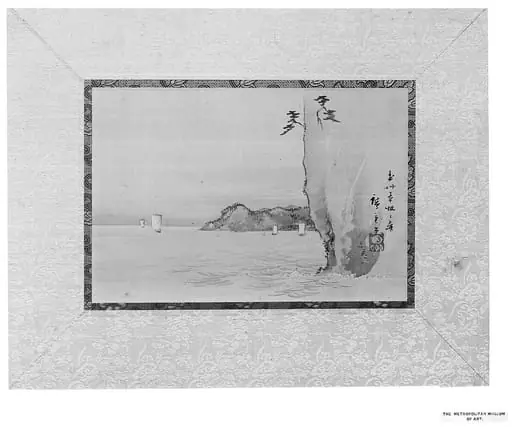
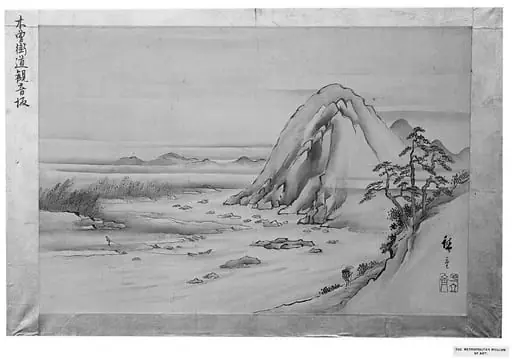
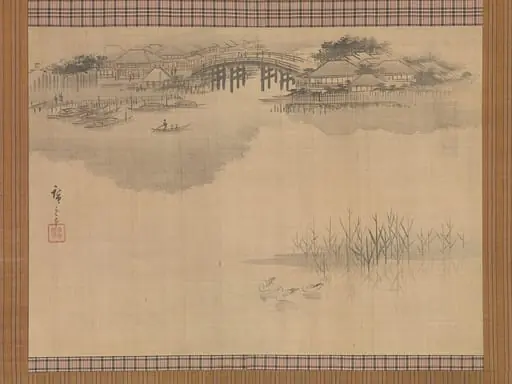
The print depicts a serene scene at Kakegawa, with a bridge over water where people engage in everyday activities, set against a backdrop of fields, boats, and the distant mountain Akihasan.
Technique & Style
Hiroshige employed simple colors and bold lines to convey depth, achieving a calm atmosphere in the scene.
History & Provenance
This work is characteristic of Hiroshige's late Edo period style, which focused on scenic views and atmospheric depictions of nature and travel routes.
Artist & collection
Artist
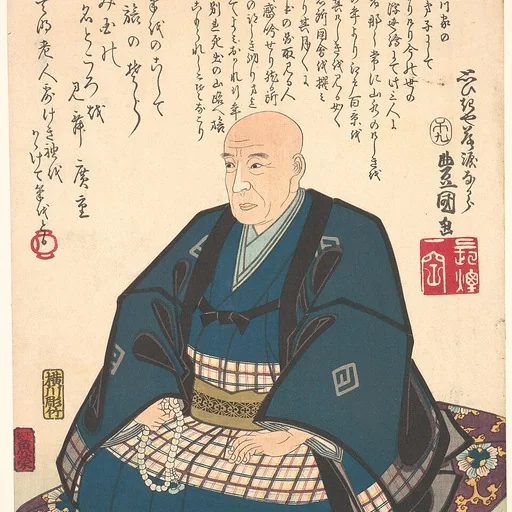
Utagawa Hiroshige (歌川 広重) or Andō Hiroshige (安藤 広重), born Andō Tokutarō (安藤 徳太郎; 1797 – 12 October 1858), was a Japanese ukiyo-e artist, considered the last great master of that tradition.