Artwork
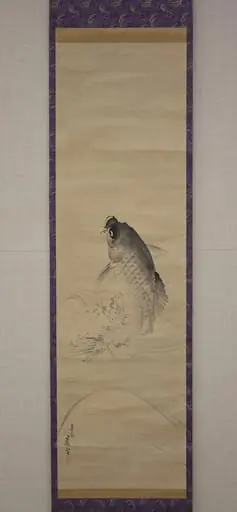
Carp Ascending a Waterfall
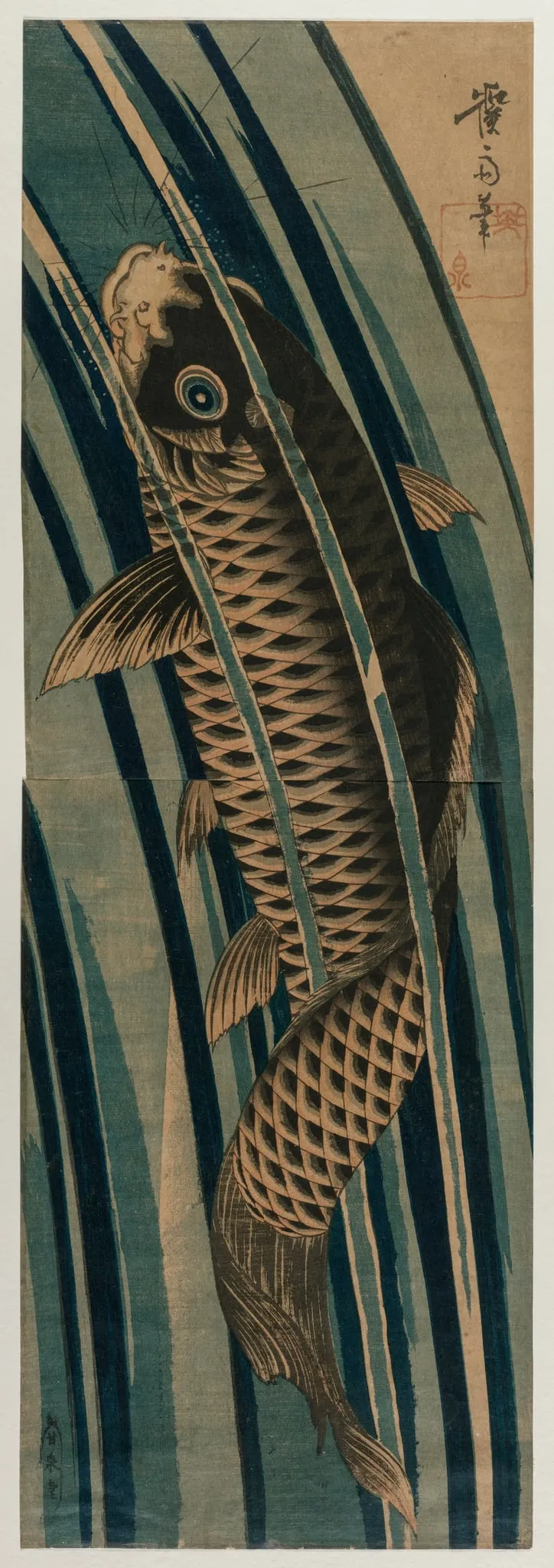
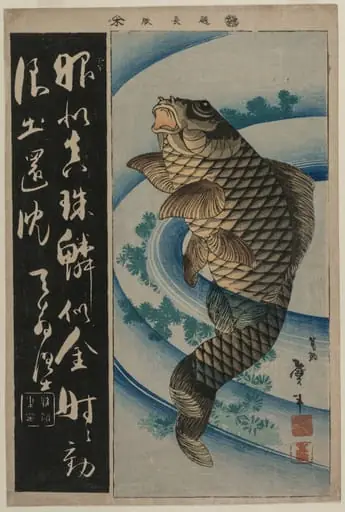
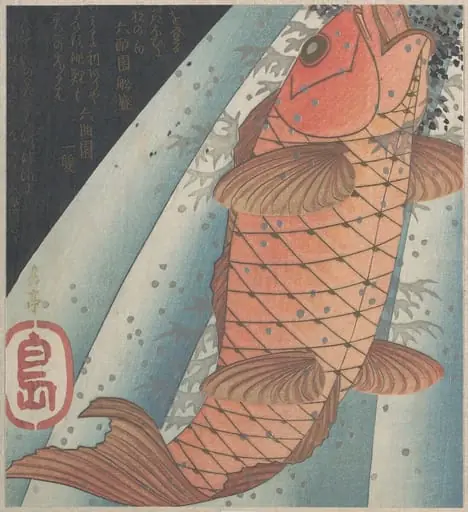
Carp Ascending a Waterfall is a print by the Romanticist artist Keisai Eisen. It dates from 1834 and is held in the collection of the Cleveland Museum of Art.
About this work
A carp leaps up a white-water waterfall, its scales shimmering in the spray. The fish twists mid-air, muscles straining against the current.
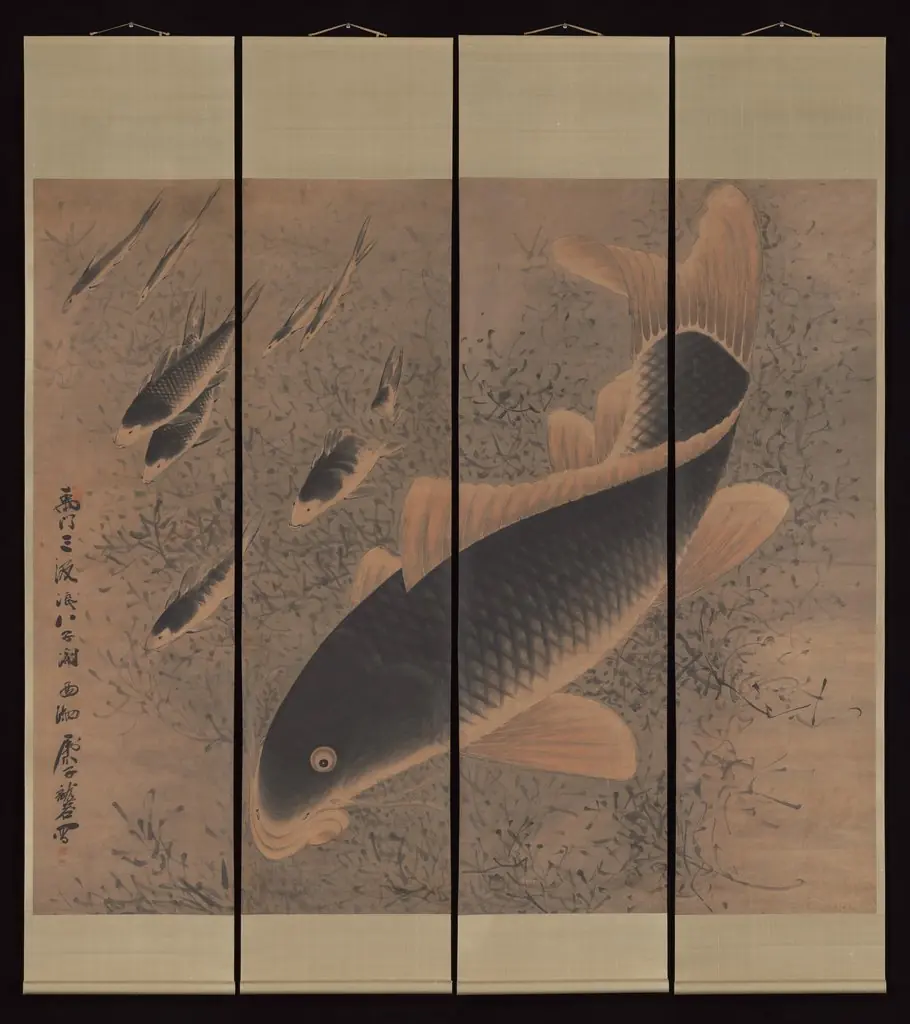
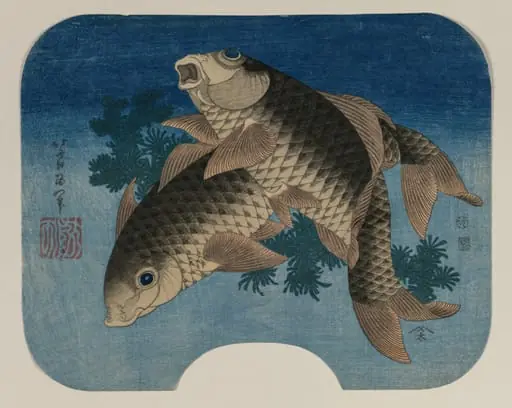
In Japan, the carp stands for grit and luck. Artists often show it climbing waterfalls—a symbol of pushing through hard times. This print is small, but the energy feels big.
To see more prints like this, look up *japan, edo period (1615–1868)*.
Overview
This small Japanese print depicts a carp in mid-leap, ascending a waterfall amidst white spray, conveying dynamic energy despite its compact size.
Subject & Meaning
The carp, a symbol of perseverance and good fortune in Asian lore, is shown in a traditional Japanese design motif, where it struggles upward against the water's force, embodying the triumph over adversity.
Technique & Style
The artist emphasizes the carp's physical exertion through twisted, straining body language, set against the contrasting serenity and turmoil of the waterfall, with shimmering scales highlighted in the spray.
History & Provenance
Attributed to the Edo Period (1615–1868), a time of flourishing Japanese printmaking, though specific artist and date within this range are not provided.
Context
Part of a broader Edo Period print tradition, this work reflects popular themes of resilience and luck, often depicted through the carp's iconic waterfall ascent.
Artist & collection
Artist
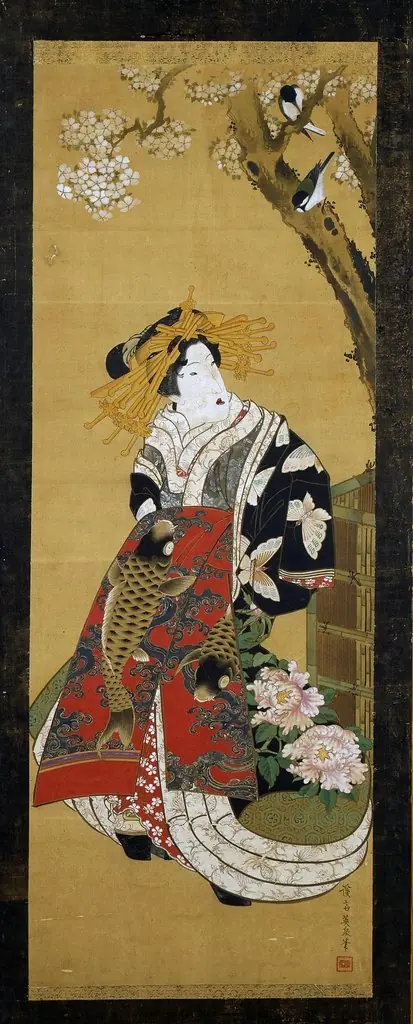
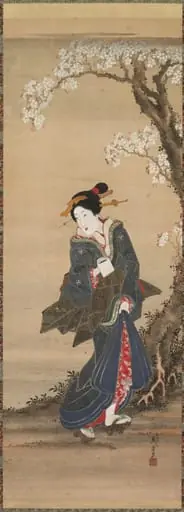
Eisen lived in Edo (now Tokyo) when the city pulsed with theaters, teahouses, and woodblock prints.