Artwork
Untitled
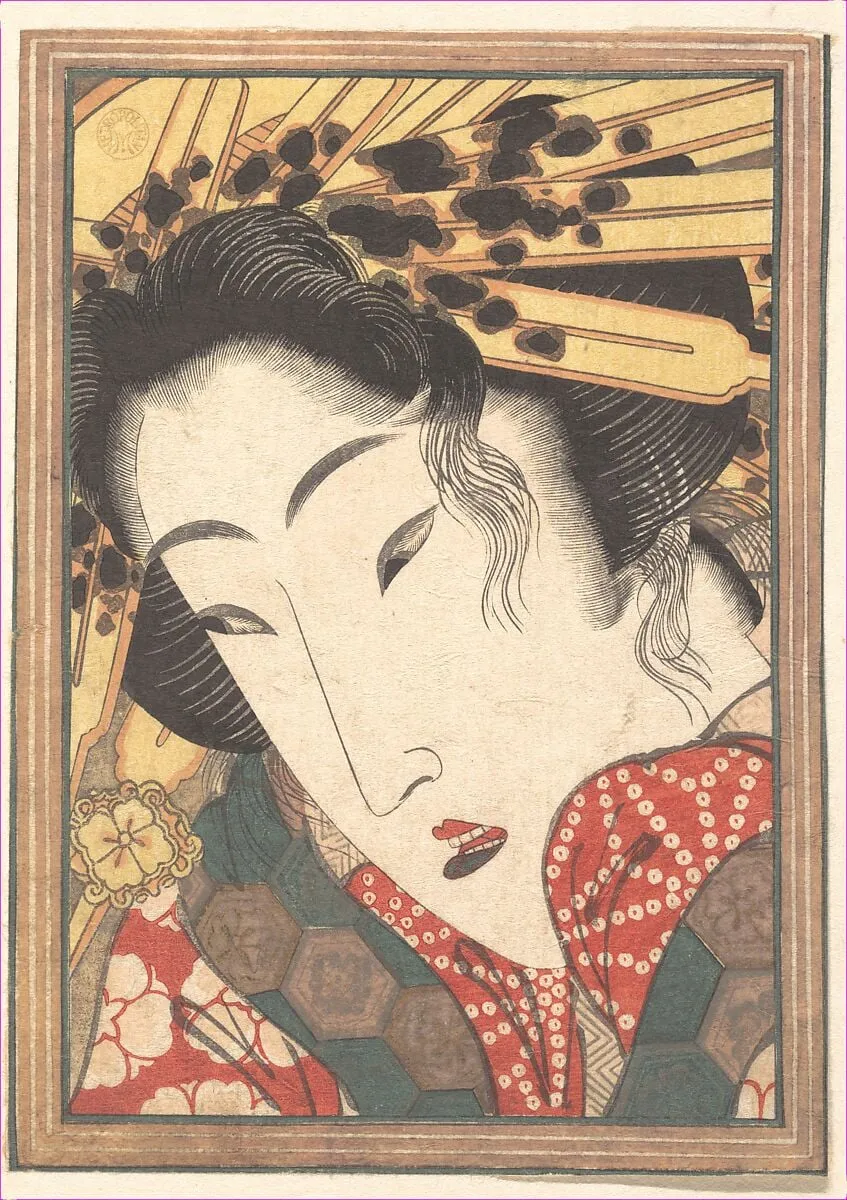
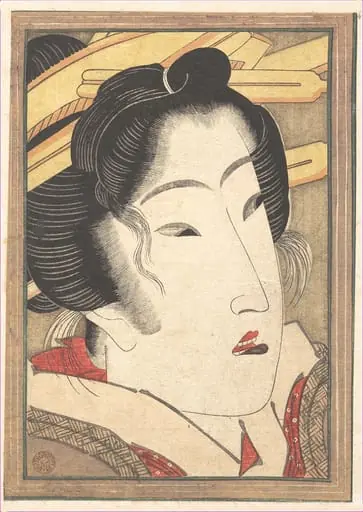
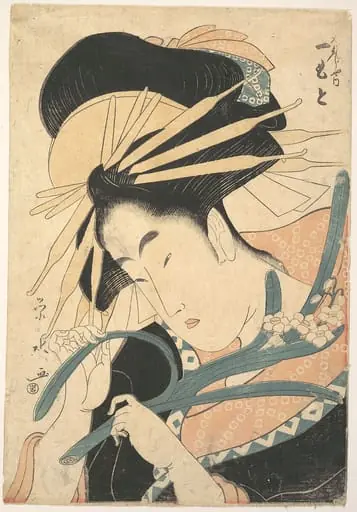
Untitled is an ink print by the Romanticist artist Keisai Eisen. It dates from 1824 and is held in the collection of the Metropolitan Museum of Art.
About this work
Overview
This woodblock print, dated 1824, is attributed to Keisai Eisen and belongs to the ukiyo-e tradition of Japanese printmaking. Executed in ink and color on paper, it depicts a solitary female figure in profile. The work is part of the collection at The Metropolitan Museum of Art, where it is cataloged as an example of early 19th-century portraiture in the genre.
Subject & Meaning
The subject is a woman rendered with quiet dignity, her face turned to the side, emphasizing composure and restraint. Her elaborate hairstyle, pinned into a dense, swirling knot, suggests status or formal occasion. The inclusion of a fan and a sprig of blossoms implies a refined, possibly seasonal, setting, though no narrative is explicitly stated—focus remains on presence rather than story.
Technique & Style
Background elements—gold lines and black voids—frame the figure with minimalism, directing attention to subtle textural details rather than ornate surroundings.
Eisen employs fine parallel lines to model form through cross-hatching, creating depth in the hair and fabric without heavy color application. The red sleeve with white dots and green collar are rendered with restrained palette choices, enhancing the graphic clarity. Background elements—gold lines and black voids—frame the figure with minimalism, directing attention to subtle textural details rather than ornate surroundings.
History & Provenance
The print was produced during Eisen’s active period in Edo, when woodblock prints of beauties were widely circulated. It entered The Metropolitan Museum of Art’s collection through documented acquisitions of Japanese prints in the early 20th century. No earlier ownership records are publicly detailed, but its preservation reflects its recognition as a representative work of the era’s print culture.
Context
Created during the late Edo period, this print aligns with the popularity of bijin-ga, or pictures of beautiful women, in urban print markets. While many such works emphasized fashion and leisure, Eisen’s approach here favors restraint and structure, reflecting a shift toward more introspective portraiture amid changing aesthetic tastes in Edo society.
Legacy
Though not among Eisen’s most widely reproduced works, this print exemplifies his skill in balancing detail with economy. Its use of line and negative space influenced later printmakers interested in minimalist expression. Today, it remains a reference for studying how texture and tone were achieved in woodblock printing without reliance on broad color fields.
Artist & collection
Artist
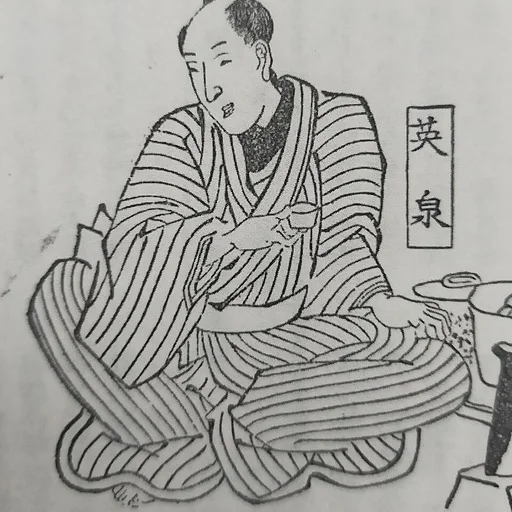
Eisen lived in Edo (now Tokyo) when the city pulsed with theaters, teahouses, and woodblock prints.

 Untitled
 Untitled
 Untitled
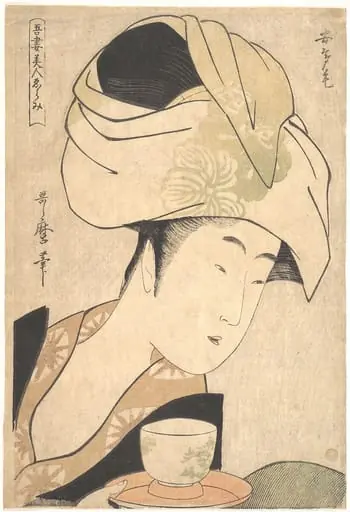 吾妻美人ゑらみ|A Tea-house Waitress
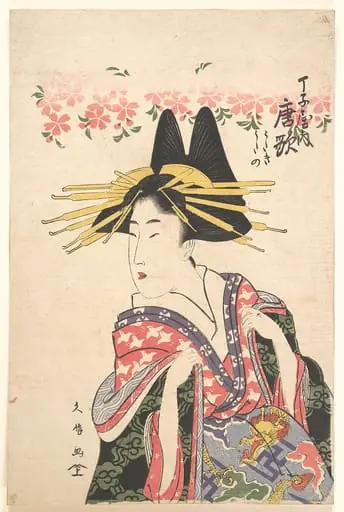 Untitled
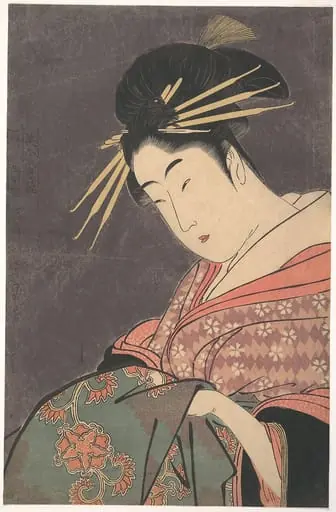 喜多川歌麿画 「美人気量競 五明楼 花扇」|“Hanaōgi of the Gomeirō,” from the series Comparing the Charms of Beauties (Bijin kiryō kurabe: Gomeirō Hanaōgi)
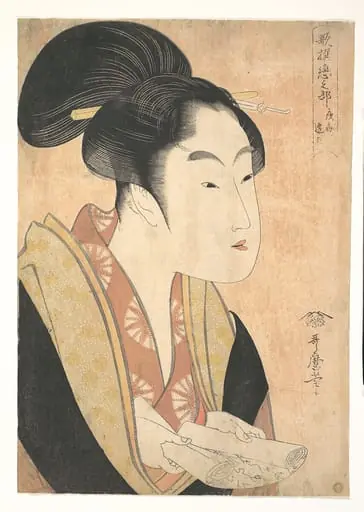 歌撰恋之部 夜毎に逢恋|A Young Woman Reading A Letter
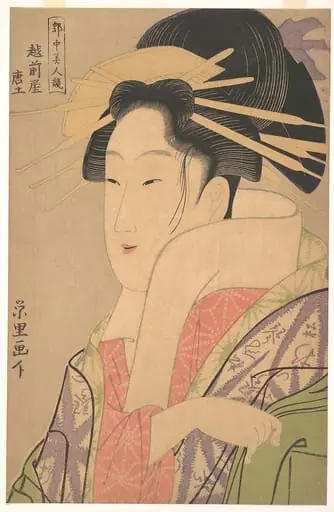 Untitled
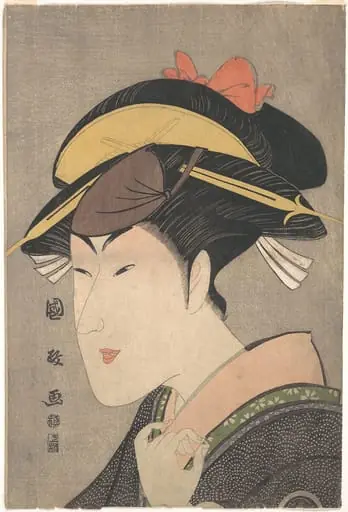 Untitled
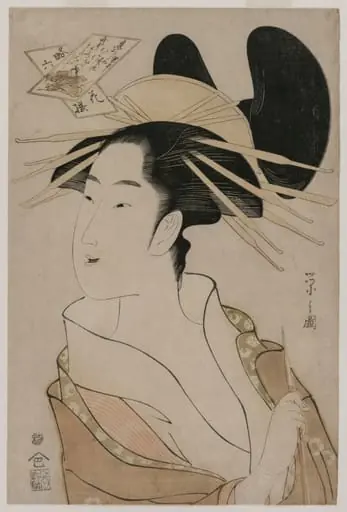 Portrait of a Courtesan Holding a Pipe (from the series The Six Immortal Poets in Modern Dress)
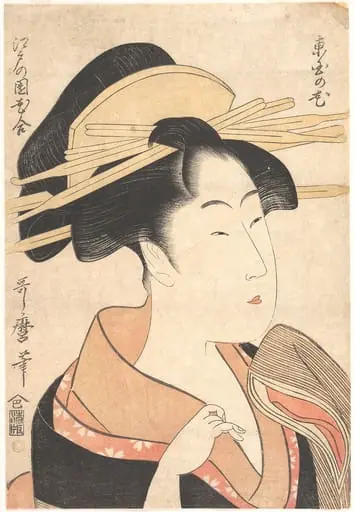 江戸の園花合 東屋の花|Azumaya no Hana
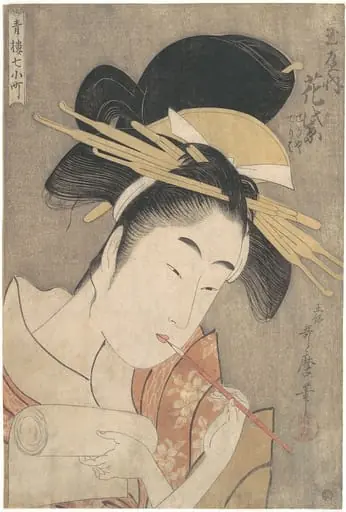 『青楼七小町』 「玉屋内花紫」|“Hanamurasaki of the Tamaya,” from the series Seven Komachi of the Pleasure Quarters (Seirō Nana Komachi)