Artwork
Ullanlinnanmäki
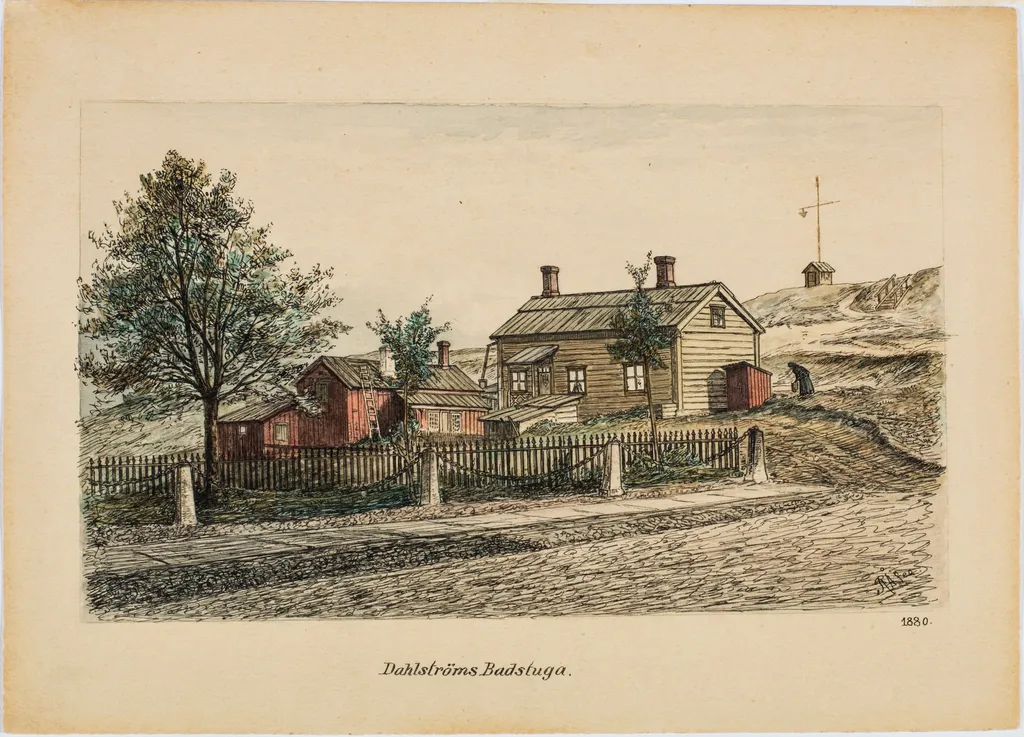
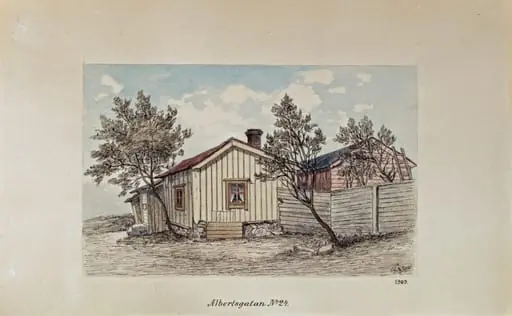
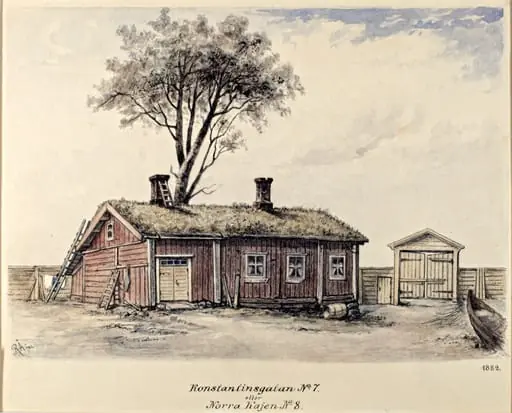
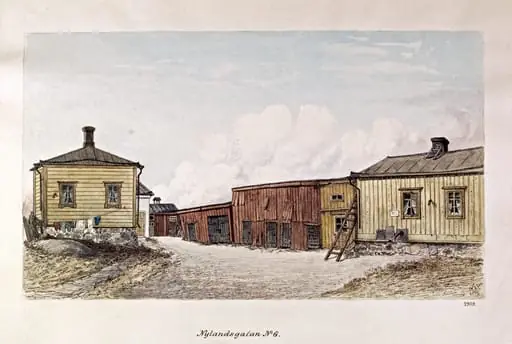
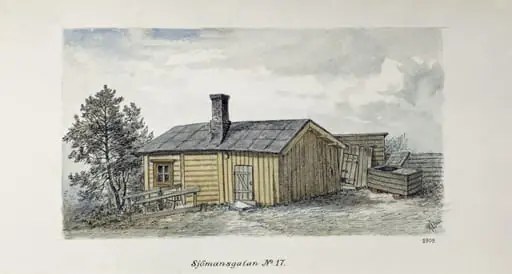
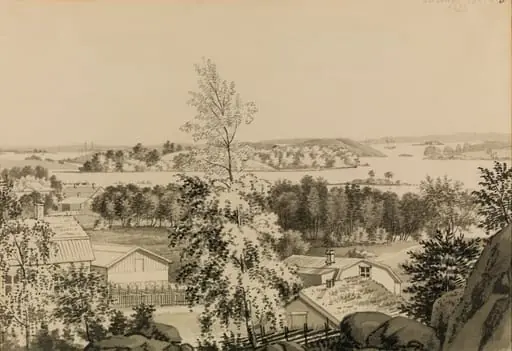
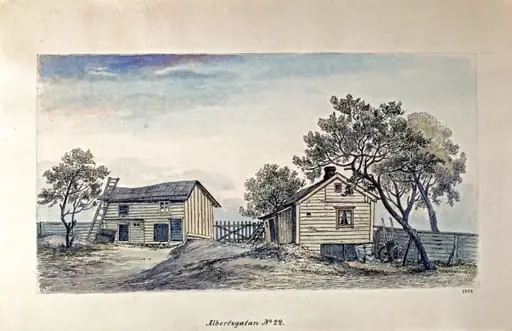
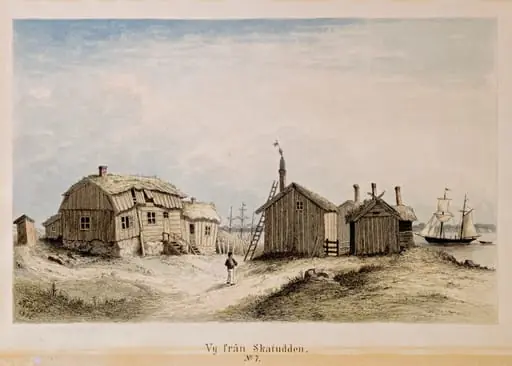
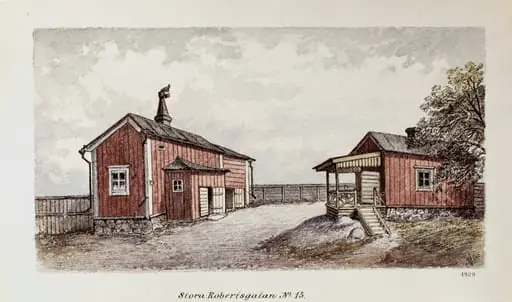
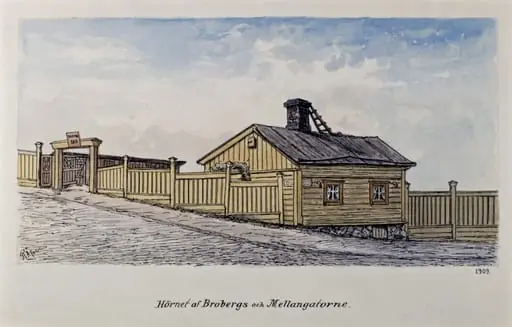
Ullanlinnanmäki is a drawing by Rudolf Åkerblom. It dates from 1897 and is held in the collection of the Helsinki City Museum.
About this work
Overview
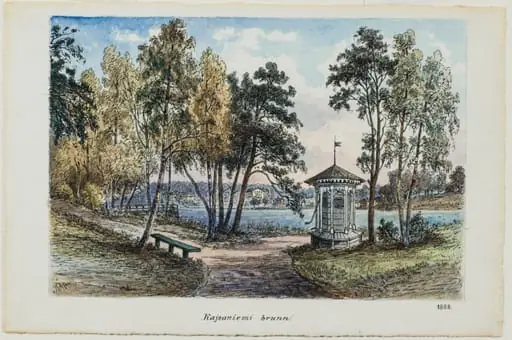
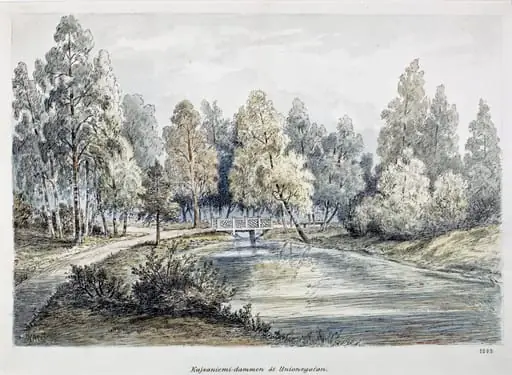
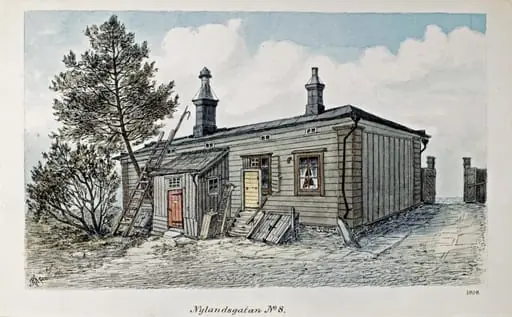
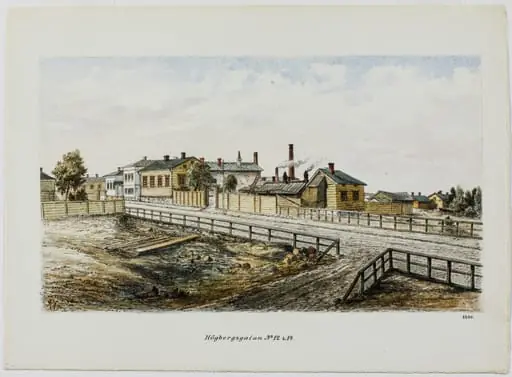
Ullanlinnanmäki is a pencil drawing by Finnish artist Rudolf Åkerblom, dated around 1897. It depicts a modest rural settlement nestled in a gentle landscape. The composition emphasizes stillness and solitude, with structures and terrain rendered in restrained tones. The work captures a quiet moment in everyday life, avoiding dramatic elements in favor of subtle observation.
Subject & Meaning
The scene portrays a small Finnish village, its wooden dwellings clustered along a winding path. A solitary figure moves near the largest building, suggesting domestic life without narrative emphasis. The distant church steeple anchors the composition spiritually and geographically. The absence of movement or interaction invites contemplation of isolation and the rhythm of rural existence.
Technique & Style
The drawing’s sketchlike quality arises from its loose yet controlled line work, avoiding polish in favor of immediacy.
Åkerblom employed fine, deliberate pencil lines to model form and texture. Cross-hatching builds shadow across rooftops and earth, while lighter strokes suggest foliage and distance. The drawing’s sketchlike quality arises from its loose yet controlled line work, avoiding polish in favor of immediacy. The muted palette of browns and grays reinforces the subdued atmosphere and tactile surface of the landscape.
History & Provenance
Created during Åkerblom’s early career, the drawing reflects his interest in Finnish vernacular architecture and rural life. It likely originated as a study or personal record rather than a commissioned piece. The work remained within Finnish collections until its inclusion in public archives, where it now serves as a document of late 19th-century provincial life.
Context
In the 1890s, Finland was developing a cultural identity distinct from Russian rule, with artists turning to native landscapes and traditions. Åkerblom’s focus on humble village scenes aligned with broader nationalist currents in art. Unlike grand historical paintings, this work valued quiet authenticity, contributing to a growing movement that celebrated ordinary Finnish life.
Legacy
Ullanlinnanmäki endures as an example of Finland’s late 19th-century drawing tradition, valued for its restraint and observational honesty. While not widely exhibited, it is referenced in studies of Finnish regional art and the evolution of landscape representation. Its quiet presence continues to inform interpretations of rural identity in Finnish visual culture.
Artist & collection