Artwork
Descending Geese at Katata (From the series Elegant Women and the Eight Views of Lake Biwa)
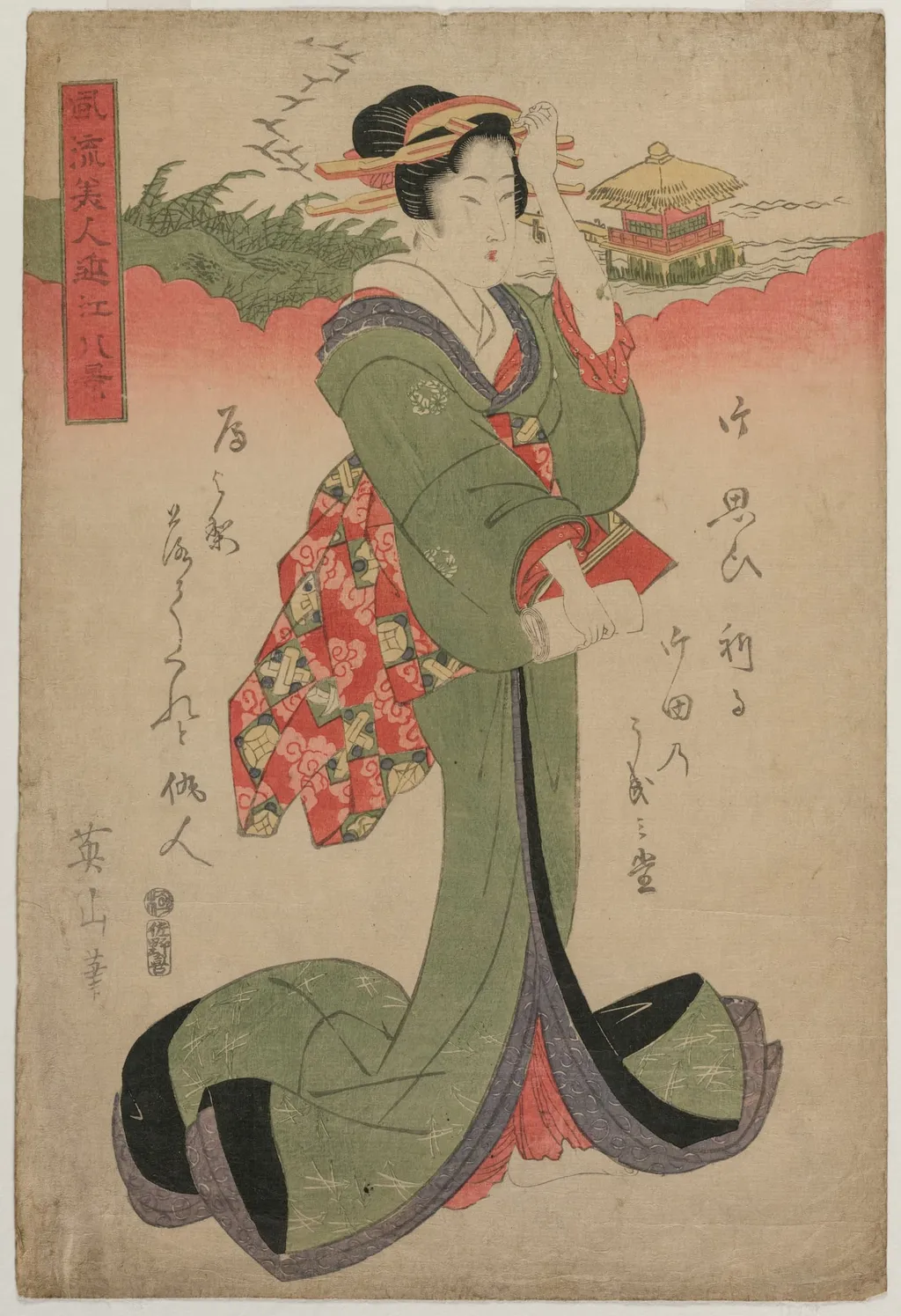
Descending Geese at Katata (From the series Elegant Women and the Eight Views of Lake Biwa) is a print by the Romanticist artist Kikukawa Eizan. It dates from 1814 and is held in the collection of the Cleveland Museum of Art.
About this work
Overview
Created around 1814 by Kikukawa Eizan, this woodblock print is part of a series depicting the Eight Views of Lake Biwa, a traditional Japanese poetic motif.
Created around 1814 by Kikukawa Eizan, this woodblock print is part of a series depicting the Eight Views of Lake Biwa, a traditional Japanese poetic motif. The work merges landscape with figures, presenting a celestial scene rather than a literal view. It is currently held in the collection of The Cleveland Museum of Art, where it represents the late Edo period’s fusion of narrative and aesthetic refinement in ukiyo-e.
Subject & Meaning
The print portrays a woman suspended in the sky, her presence suggesting a spirit or deity. She holds a red fan, a symbol often linked to grace and seasonal change, while geese—traditional emblems of autumn and migration—fly above. The floating temple evokes a heavenly realm, blending Buddhist imagery with poetic landscape conventions. The scene invites contemplation of transience and the ethereal, core themes in Japanese aesthetics.
Technique & Style
Eizan employed fine line work and layered color printing to achieve vivid contrasts: the woman’s bold red and green robes stand out against a softly graded sky. Delicate details in her hair and headband, along with the temple’s architectural precision, reflect the refined bijinga tradition. The dreamlike composition, with floating forms and atmospheric perspective, departs from naturalism, favoring symbolic harmony and decorative elegance.
History & Provenance
The print was produced during the late Edo period, a time when ukiyo-e prints flourished as affordable art for urban audiences. Eizan, known for his elegant depictions of women, adapted classical landscape themes into intimate, otherworldly scenes. The work entered The Cleveland Museum of Art’s collection in the 20th century, where it remains a key example of early 19th-century Japanese printmaking.
Context
This print responds to the Eight Views of Lake Biwa, a poetic cycle originating in China and adapted in Japan to celebrate seasonal and spiritual landscapes. Eizan’s version reimagines these views through a lens of fantasy, aligning with the era’s fascination with mythic narratives and idealized femininity. The integration of celestial elements reflects broader cultural interests in the boundary between the earthly and the divine.
Legacy
Eizan’s work contributed to the evolution of ukiyo-e by expanding its thematic range beyond urban life into mythic and literary realms. While less widely known than contemporaries like Hokusai or Hiroshige, his delicate compositions influenced later artists seeking to blend narrative depth with visual lyricism. Today, the print endures as a quiet testament to the poetic sensibility of Edo-period print culture.
Own this work as a print
Artist & collection

Artist
Kikukawa Eizan was a designer of ukiyo-e style Japanese woodblock prints. He first studied with his father, Eiji, a minor painter of the Kanō school, and subsequently with Suzuki Nanrei (1775–1844), of the Shijō…

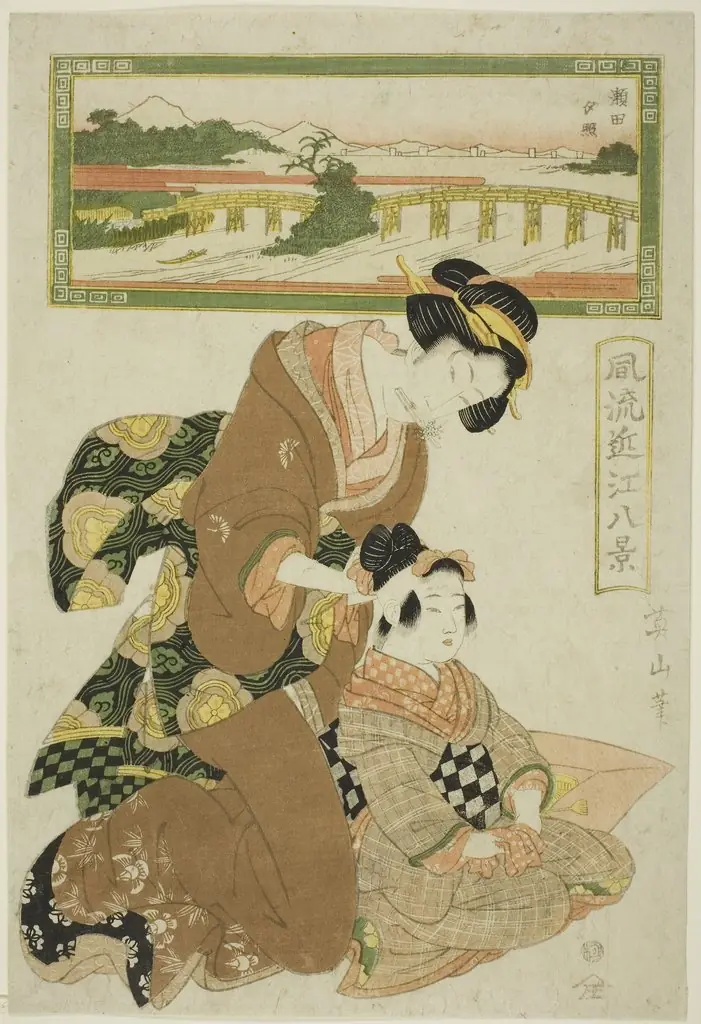 Evening Glow at Seta (Seta sekisho), from the series "Fashionable Eight Views of Omi (Furyu Omi hakkei)"
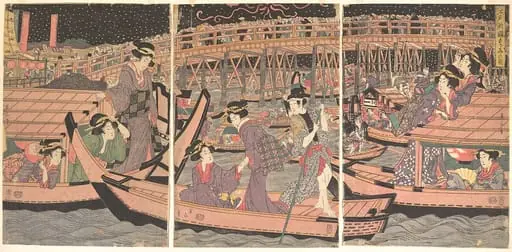 Untitled
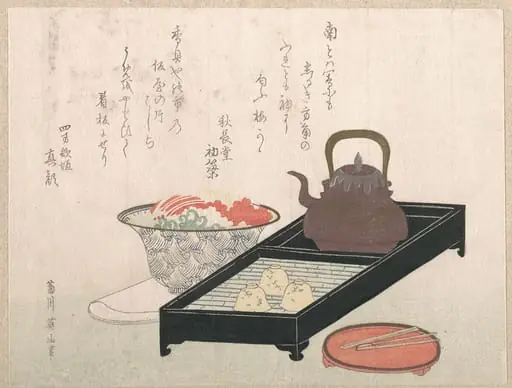 Untitled
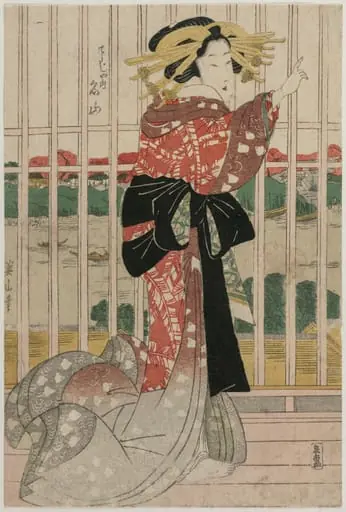 The Courtesan Meizan of the Chojiya on a Balcony Overlooking the Sumida River
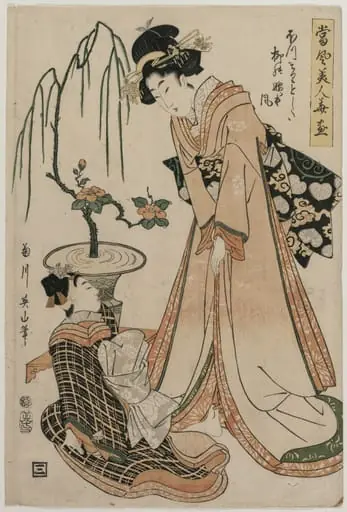 A Lady-in-Waiting with Waist as Slender as a Willow from the series Flowers and Modern Beauties
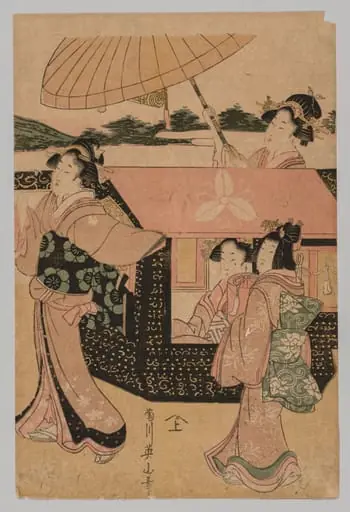 No Title
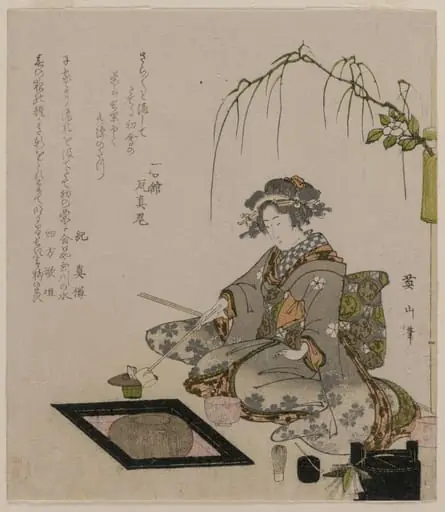 Woman Performing the Tea Ceremony
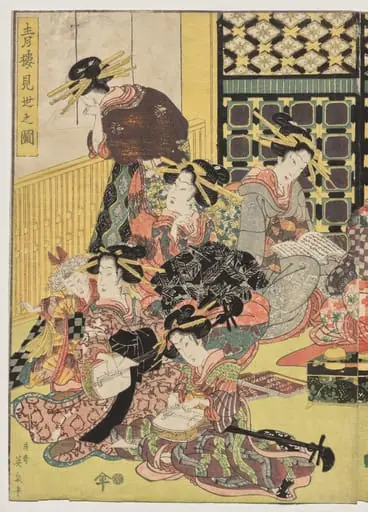 A Picture of the Viewing in the Pleasure Quarters
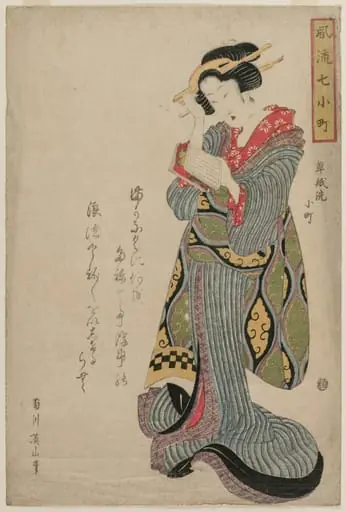 Komachi Washes the Book (from the series Seven Elegant Episodes from the Life of the Poetess Ono no Komachi)
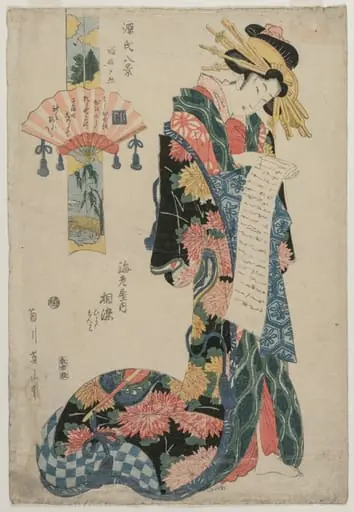 The Courtesan Aizome of the Ebiya (From the series Eight Views of the Tale of Genji)
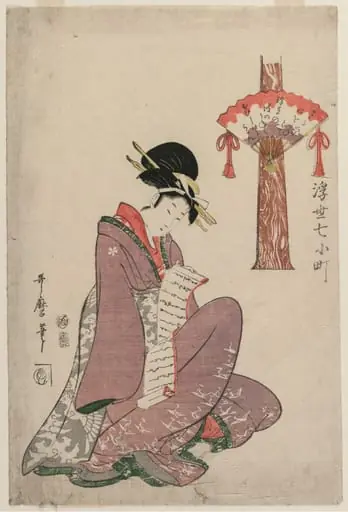 Woman Reading a Letter (from the series Seven Episodes in the Life of Komachi in the Floating World)
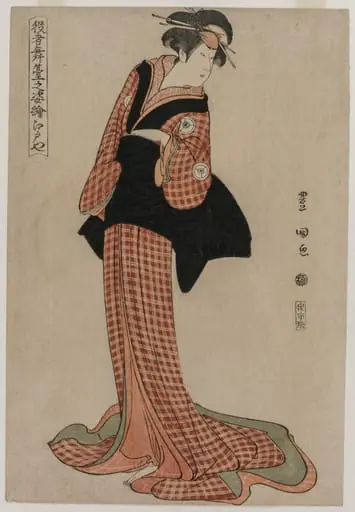 Iwai Kiyotaro (Edoya) as Okaru (from the series Pictures of Actors Onstage)
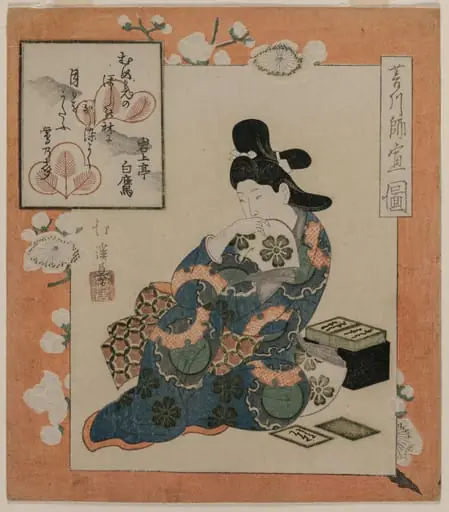 A Picture by Hishikawa Moronobu: Woman with a Set of Poem Cards
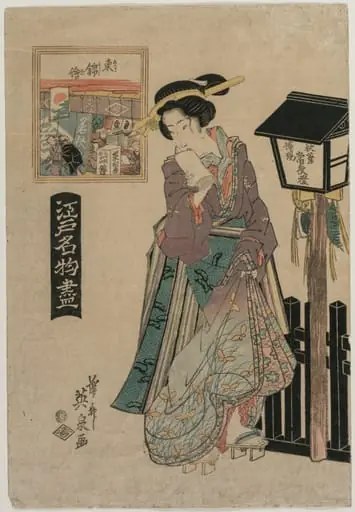 Pictures of Eastern Brocade (from the series Famous Products of Edo)
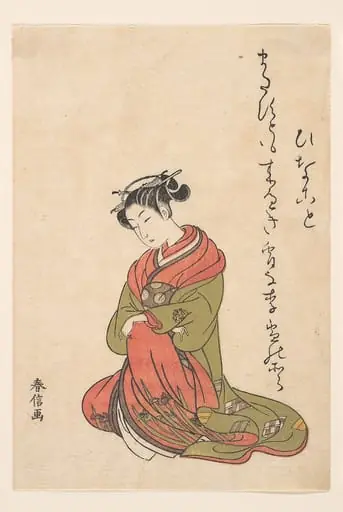 青楼美人合|The Courtesan Itsuhata with Her Pipe
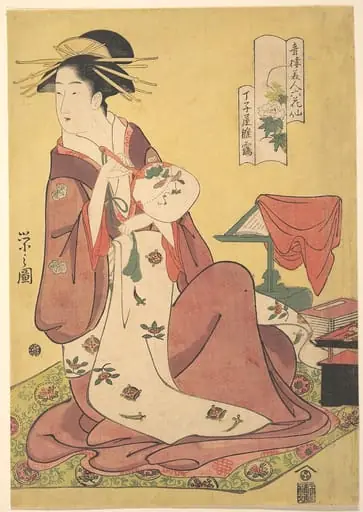 鳥文斎栄之画 「青楼美人六花仙 丁子屋雛鶴鸖」|The Courtesan Hinazuru of the Chōjiya Brothel (Chōjiya Hinazuru), from the series Beauties of the Pleasure Quarters as Six Floral Immortals (Seirō bijin rokkasen)
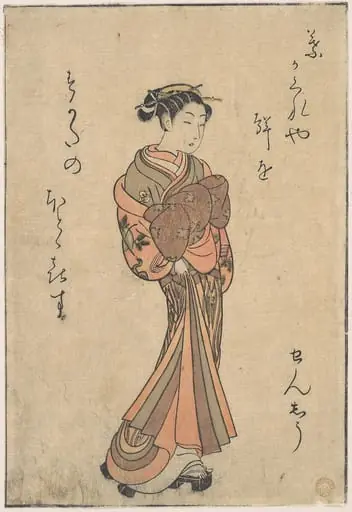 青楼美人合|The Courtesans, from the Series, "Seiro Bijin Awase Carver End Shigoro" (sic.)
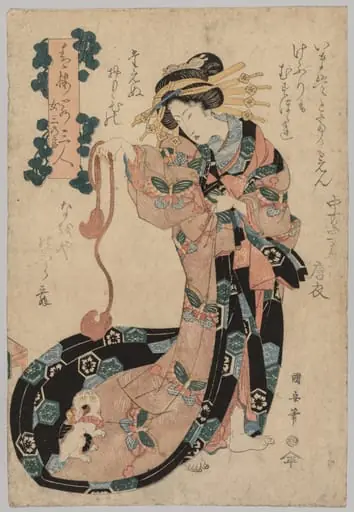 Courtesan
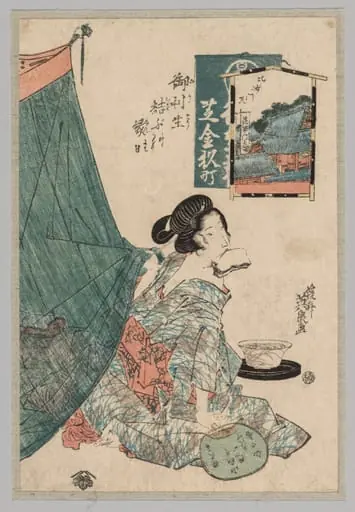 Woman with Papers in Mouth and Fan in Hand