Artwork
Johan Faulhaber, Mathematician
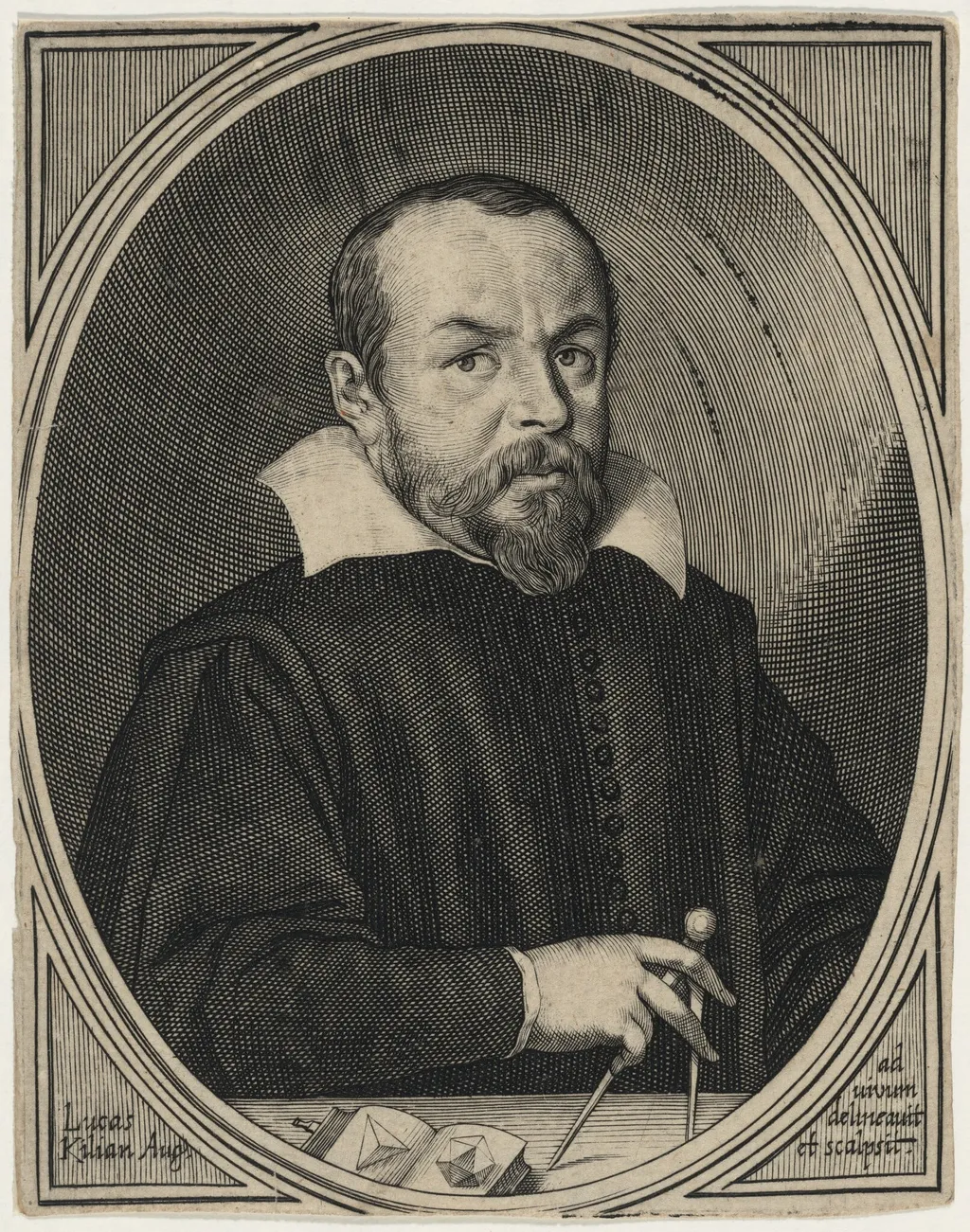
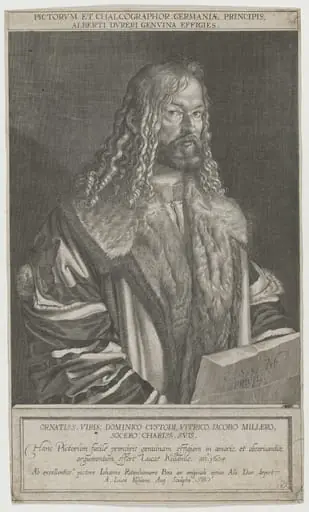
Johan Faulhaber, Mathematician is an ink print by the Baroque artist Lucas Kilian. It dates from 1615 and is held in the collection of the National Gallery of Art.
About this work
Overview
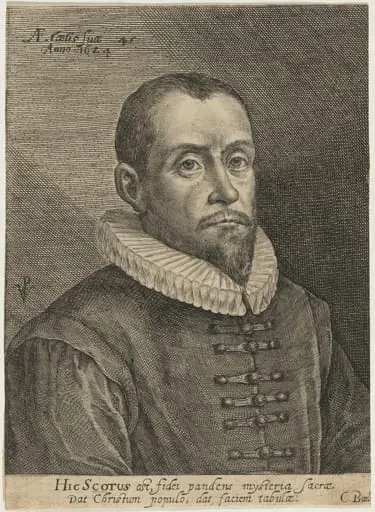
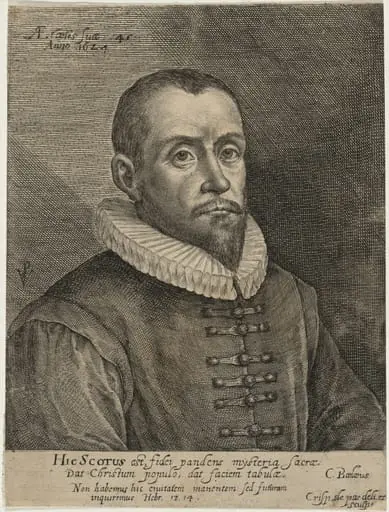
This 1615 engraving by Lucas Kilian portrays the German mathematician Johan Faulhaber in a formal, three-quarter pose.
This 1615 engraving by Lucas Kilian portrays the German mathematician Johan Faulhaber in a formal, three-quarter pose. Created in Augsburg, where Kilian operated within the Custos workshop, the print belongs to a tradition of scholarly portraiture that merged likeness with symbolic context. The work reflects the era’s interest in documenting intellectual figures through precise graphic reproduction, emphasizing both individual identity and professional discipline.
Subject & Meaning
Faulhaber is depicted as a scholar engaged with mathematical inquiry. His right hand holds a pointer, directed toward a diagram on the table, while his left rests nearby, suggesting contemplation. The geometric objects—likely compasses or measuring tools—signal his practical involvement in mathematics. His direct gaze to the side implies focus beyond the viewer, reinforcing the image as a representation of intellectual pursuit rather than mere likeness.
Technique & Style
Kilian employed fine, controlled lines and cross-hatching to render texture and volume, characteristic of Baroque printmaking. The contrast between the dark jacket and crisp white collar enhances the subject’s presence, while the detailed rendering of the diagram and tools demonstrates technical precision. The composition avoids ornamentation, favoring clarity and restraint, aligning with the period’s scholarly aesthetic and the engraver’s training in anatomical and portrait work.
History & Provenance
Produced in Augsburg around 1615, the engraving emerged from the Custos workshop, a hub for academic and artistic print production led by Kilian’s stepfather. Kilian, known for portraiture and scientific imagery, likely created this as part of a series documenting contemporary scholars. The print’s survival in institutional collections suggests early recognition of its value as a record of intellectual life in early 17th-century Germany.
Context
In early 17th-century Germany, mathematical study was gaining institutional prestige, often linked to navigation, architecture, and military engineering. Portraits of mathematicians like Faulhaber served to legitimize their work within broader cultural narratives of progress. Kilian’s engraving reflects this trend, positioning the scholar not as a solitary thinker but as a professional embedded in a world of tools, diagrams, and applied knowledge.
Legacy
The engraving remains a documented example of how visual art contributed to the representation of scientific identity before photography. Kilian’s restrained style and attention to detail influenced later academic portraiture in print. While not widely reproduced today, it endures as a historical artifact that captures the material culture of early modern mathematics and the role of engraving in preserving scholarly image and legacy.
Artist & collection
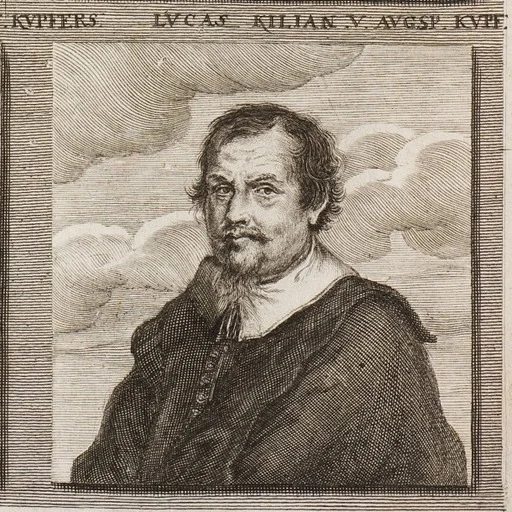
Artist
Lucas Kilian (Lucas Kilianus Augustanus; 1579–1637) was a German engraver and etcher from the Kilian family of engravers in Augsburg.