Artwork
Philip III, King of Spain
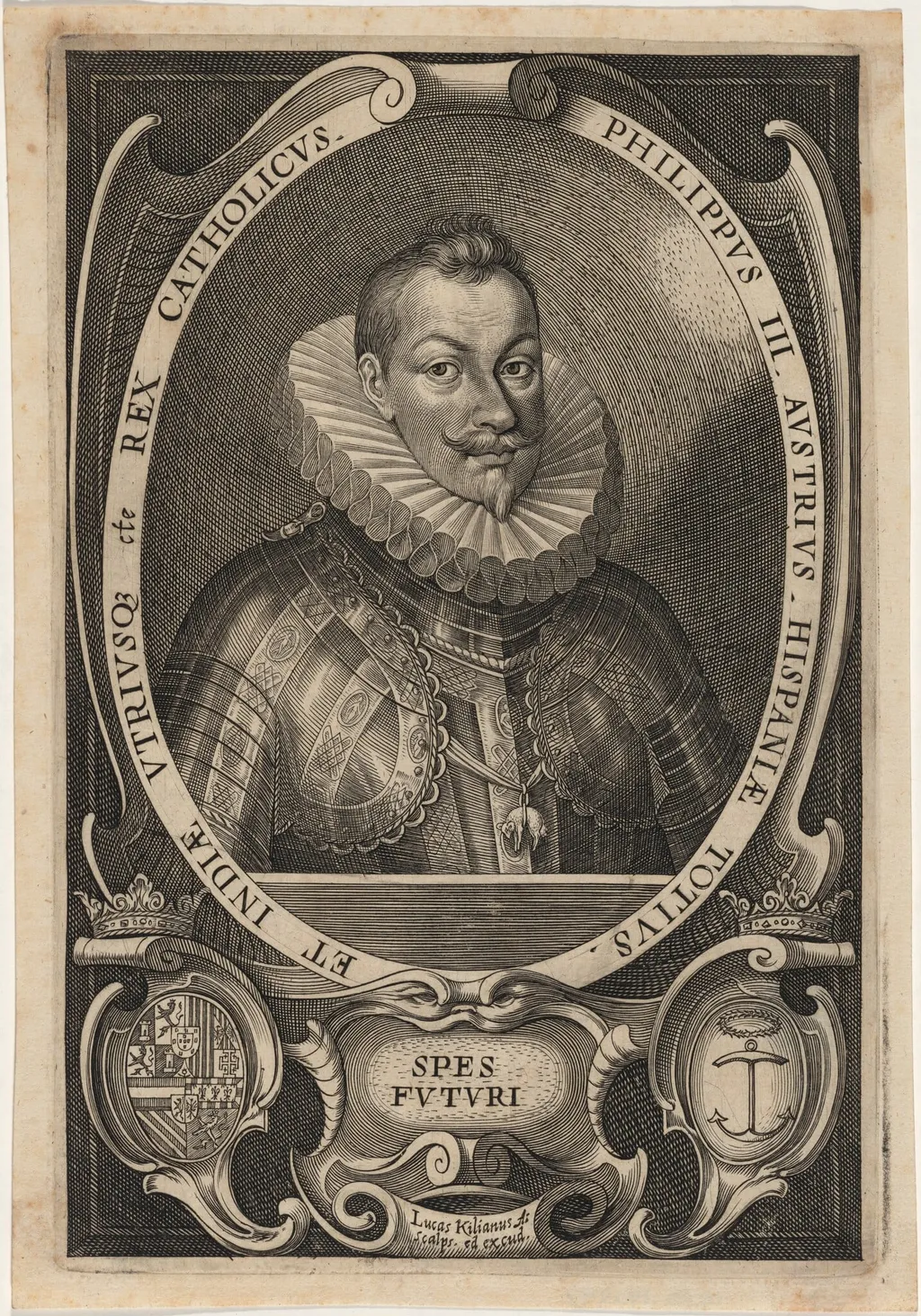
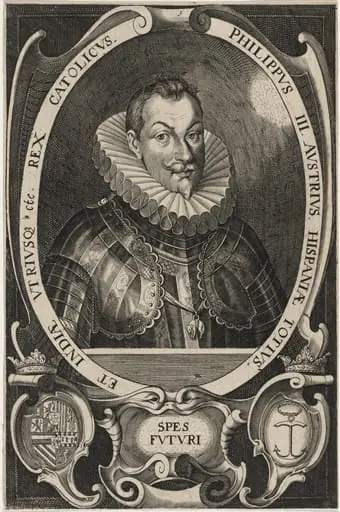
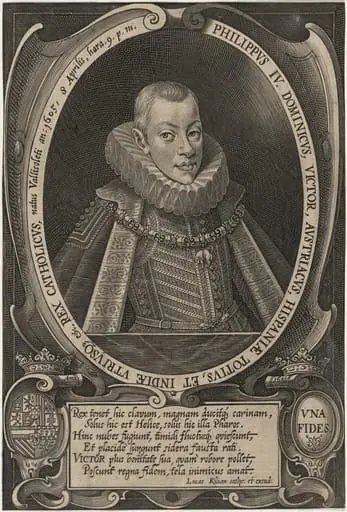
Philip III, King of Spain is an ink print by the Baroque artist Lucas Kilian. It dates from 1624 and is held in the collection of the National Gallery of Art.
About this work
Overview
Its monochrome tone and intricate line work reflect the technical priorities of the medium over color or texture.
Lucas Kilian’s 1624 engraving presents Philip III of Spain in profile, executed with precise linear detail characteristic of early 17th-century reproductive printmaking. Created in Augsburg, where Kilian worked within the tradition of his stepfather’s workshop, the image functions as a formal portrait intended for wide circulation among European elites. Its monochrome tone and intricate line work reflect the technical priorities of the medium over color or texture.
Subject & Meaning
The portrait emphasizes Philip III’s royal authority through symbolic elements: a wide ruffled collar and gold chain signify status, while a laurel wreath encircling his head bears Latin inscriptions declaring his title and role as a future-oriented sovereign. Two small shields beneath display heraldic emblems, reinforcing dynastic legitimacy. These features collectively construct an image of stable, divinely sanctioned rule, aligned with Habsburg propaganda goals.
Technique & Style
Kilian employed fine, controlled engraving lines to render texture and form, capturing the folds of fabric, the sheen of metal, and the crispness of the ruff with meticulous precision. The composition is tightly framed, focusing attention on the king’s face and regalia. The absence of background or shading directs the viewer’s gaze to the symbolic details, a hallmark of reproductive portraiture designed for clarity and replication.
History & Provenance
Produced in Augsburg, the print emerged from a well-established workshop network specializing in engraved portraits for aristocratic and scholarly audiences. Kilian, trained in this tradition, frequently reproduced images of European rulers for distribution across the Holy Roman Empire and beyond. This engraving was likely part of a series intended to circulate the Habsburg image beyond court circles, serving both archival and political functions.
Context
In the early 1600s, engraved portraits were vital tools for projecting royal presence in an era before photography. Philip III’s reign, marked by political decline and reliance on favorites, made visual assertions of dignity and continuity especially important. Kilian’s work reflects how print culture bridged the gap between the inaccessible court and the literate public, reinforcing monarchical ideology through accessible imagery.
Legacy
Kilian’s engraving exemplifies the broader European practice of using reproductive prints to standardize royal imagery. Though not original in composition, its technical refinement ensured its longevity in collections and archives. Such works influenced later portrait engravers and remain key sources for understanding how early modern rulers managed their public representation through the printed word and image.
Artist & collection
Artist
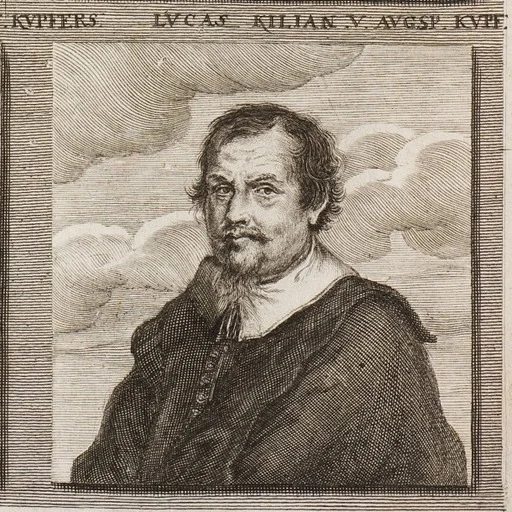
Lucas Kilian (Lucas Kilianus Augustanus; 1579–1637) was a German engraver and etcher from the Kilian family of engravers in Augsburg.