Artwork
Francis Sylvestri, Cardinal
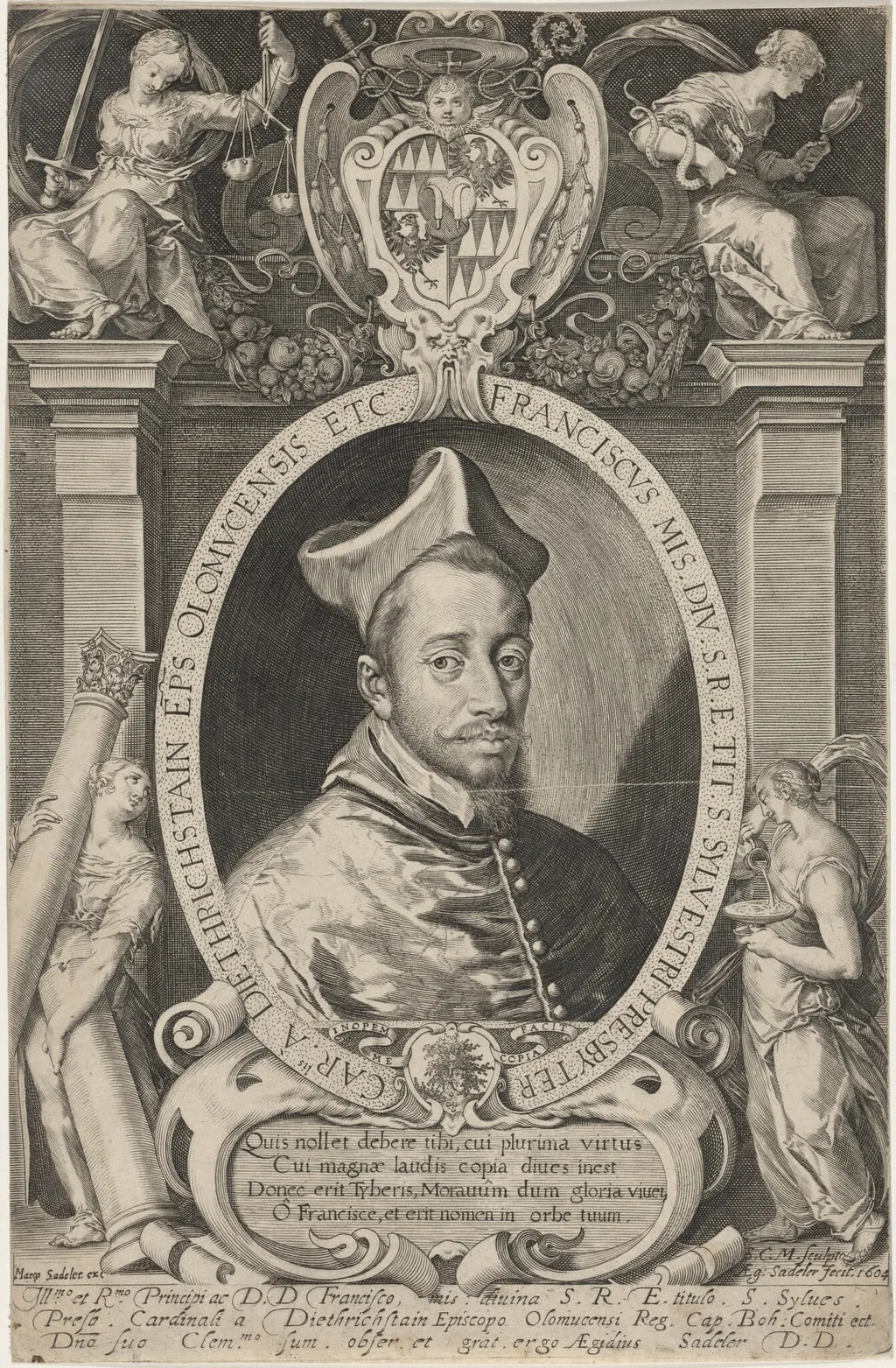
Francis Sylvestri, Cardinal is an ink print by the Baroque artist Aegidius Sadeler II. It dates from 1604 and is held in the collection of the National Gallery of Art.
About this work
Overview
This 1604 engraving by Aegidius Sadeler II portrays Cardinal Francis Sylvestri, a high-ranking church official.
This 1604 engraving by Aegidius Sadeler II portrays Cardinal Francis Sylvestri, a high-ranking church official. Created during Sadeler’s tenure at the Prague court of Emperor Rudolf II, the work exemplifies the precision and decorative richness typical of late Renaissance printmaking. Executed in black ink on paper, the image combines portraiture with elaborate allegorical framing, reflecting the era’s fusion of religious authority and artistic display.
Subject & Meaning
Cardinal Sylvestri is depicted with solemn dignity, dressed in ecclesiastical attire, his expression conveying gravitas. Surrounding his portrait is a ornate border featuring symbolic elements—a crown, a shield, and small figures holding books and swords—each likely representing virtues, offices, or familial heraldry. Below, a Latin poem extols his character and service, reinforcing his status through textual praise as much as visual grandeur.
Technique & Style
Sadeler employed fine-line engraving on copper to achieve intricate detail, from the texture of the cardinal’s collar to the delicate scrollwork framing the image. The composition balances realism with symbolic ornamentation, a hallmark of his courtly style. The use of cross-hatching and precise etching creates tonal depth without color, relying on line variation to define form and hierarchy within the static image.
History & Provenance
Produced in Prague around 1604, the print was likely commissioned to honor Sylvestri’s ecclesiastical role within the Habsburg sphere. Sadeler, part of a renowned family of engravers, worked extensively for imperial patrons, disseminating portraits of nobility and clergy across Europe. The signed work bears the mark of a professional workshop, intended for circulation among elite circles as both tribute and status object.
Context
In early 17th-century Europe, engraved portraits served as tools of political and religious representation. At Rudolf II’s court, where art and science intertwined, such prints reinforced the visibility of church leaders aligned with imperial power. The inclusion of heraldic symbols and poetic text aligns this work with broader traditions of commemorative portraiture, where image and inscription jointly constructed public identity.
Legacy
Sadeler’s engraving stands as an example of how printmaking extended the reach of portraiture beyond painting. While not widely known today, such works were crucial in shaping the visual culture of early modern Europe. The technique and iconography influenced later generations of engravers, preserving the likeness and authority of figures like Sylvestri for centuries through reproducible imagery.
Artist & collection
Artist
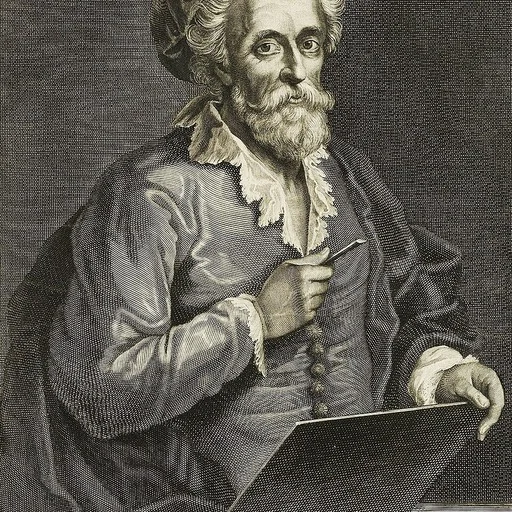
Aegidius Sadeler or Aegidius Sadeler II (1570–1629) was a Flemish engraver who was principally active at the Prague court of Rudolf II, Holy Roman Emperor and his successors.

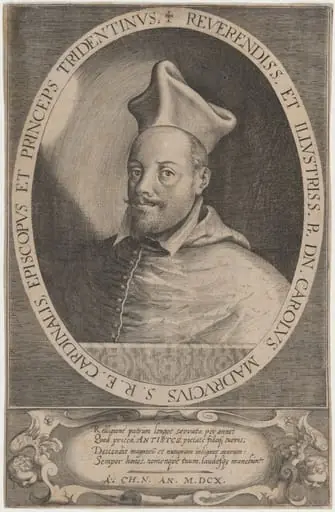 Cardinal Carolus Madrucius
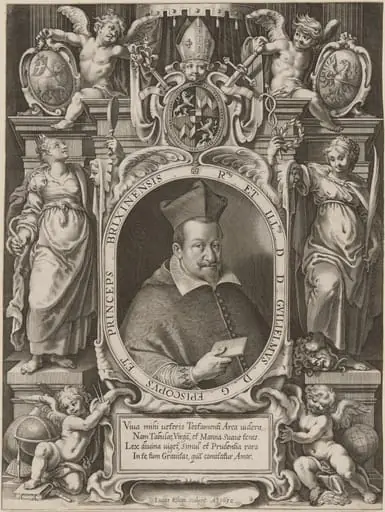 William von Welsberg, Archbishop of Brixen
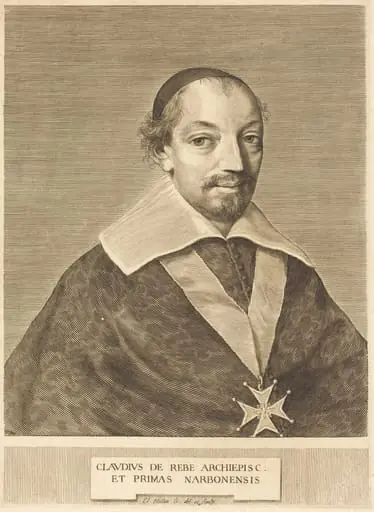 Claude de Rebe
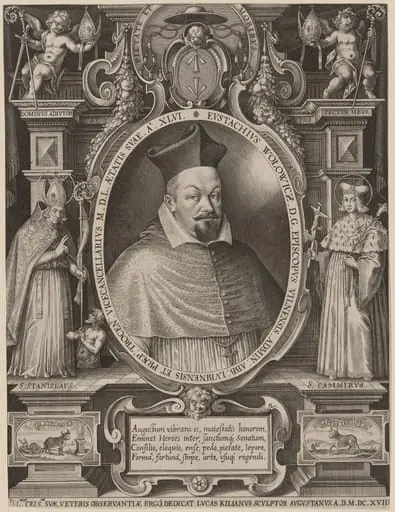 Eustace Wolowicz, Archbishop of Vilna
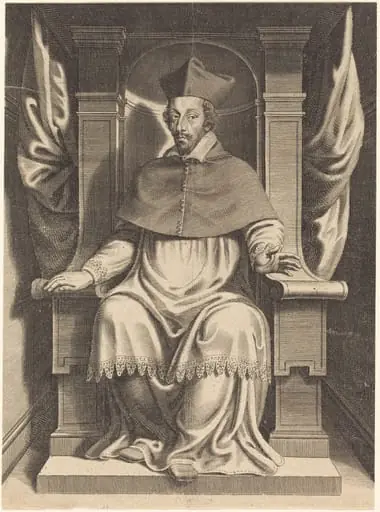 Armand Jean du Plessis, Cardinal Richelieu
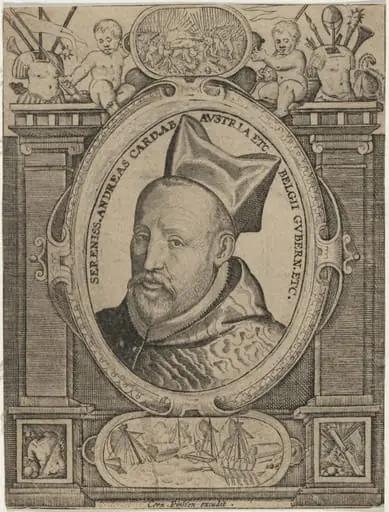 Andreas, Cardinal of the Holy Roman Empire
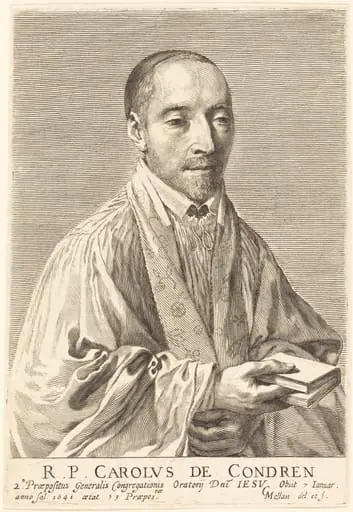 Charles de Condren
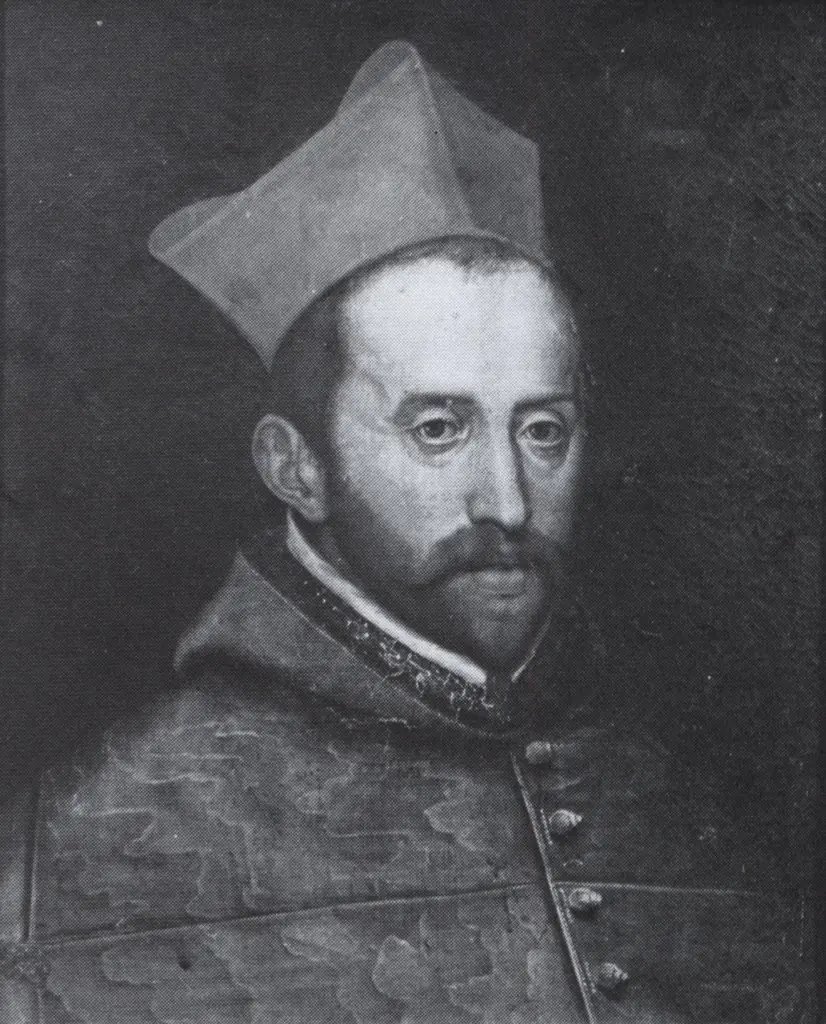 Andreas von Österreich
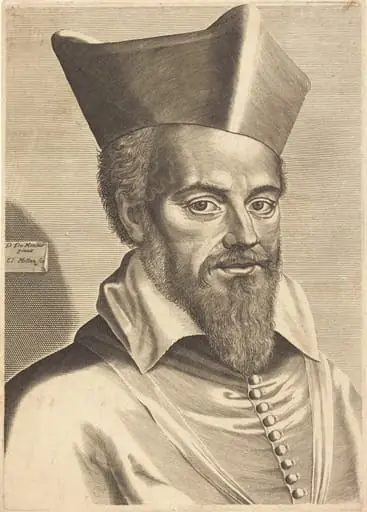 Nicolas Coeffeteau
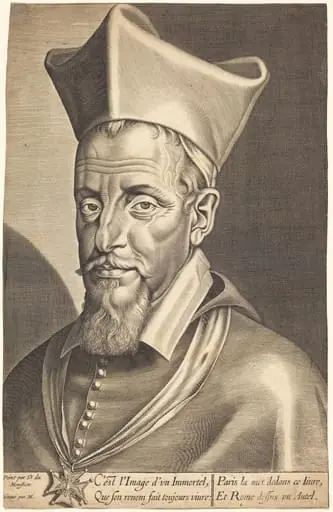 François La Rochefoucauld
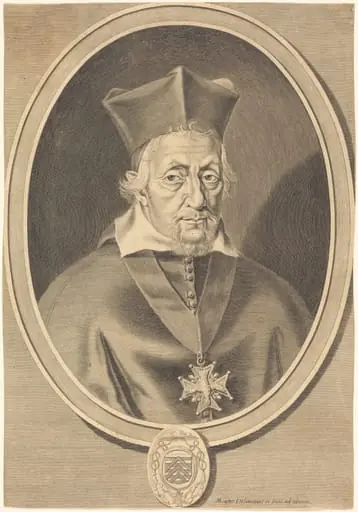 François La Rochefoucauld
 Anton Triest