Artwork
Prince Ernest, Duke of Saxony and Cleves
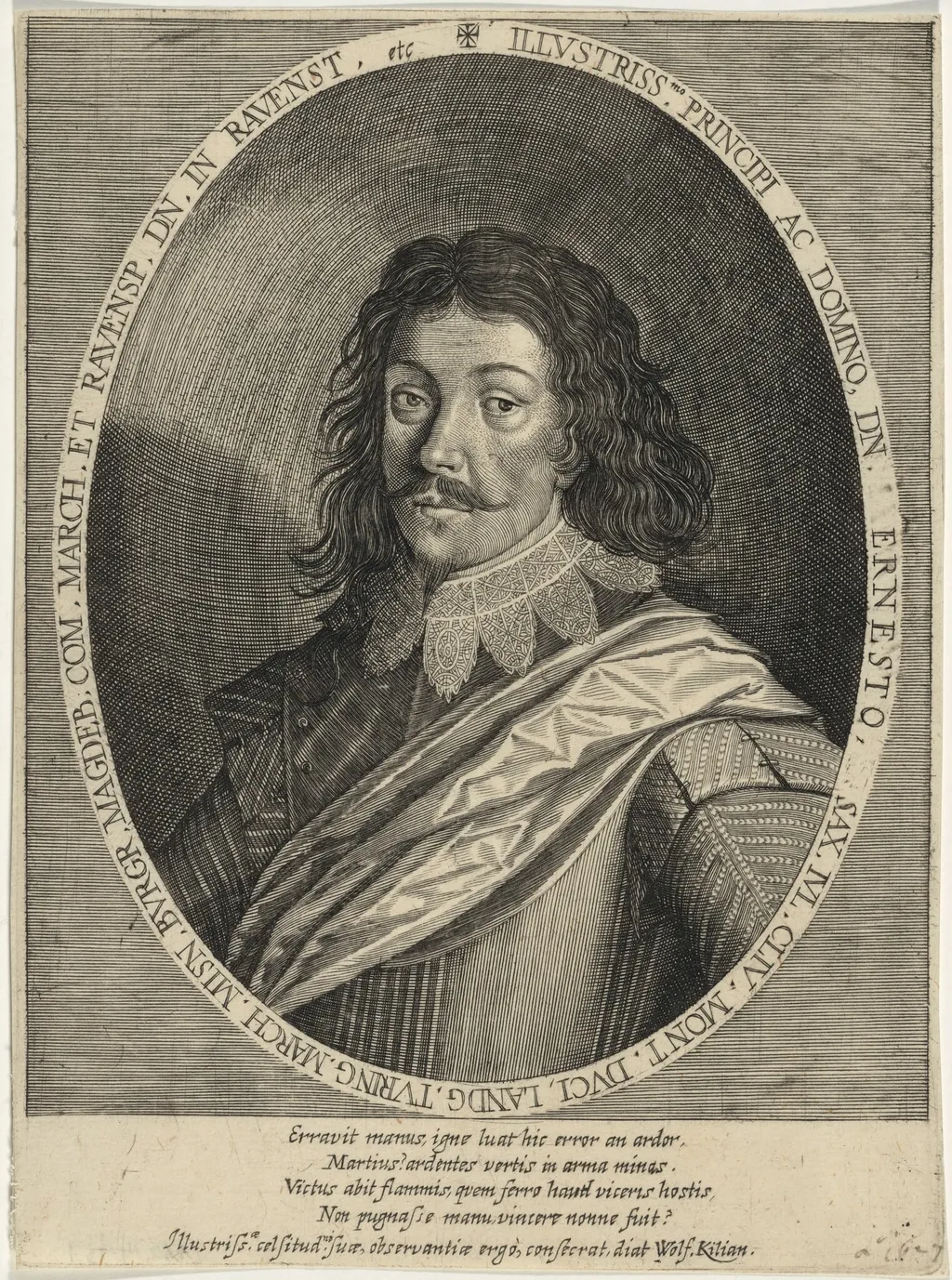
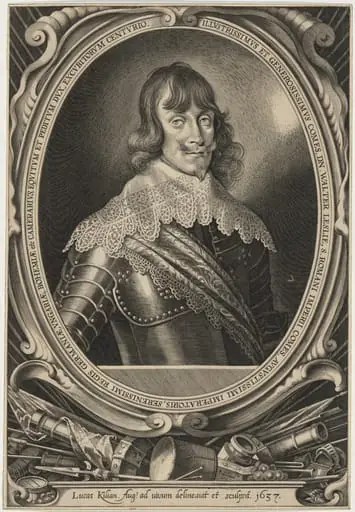
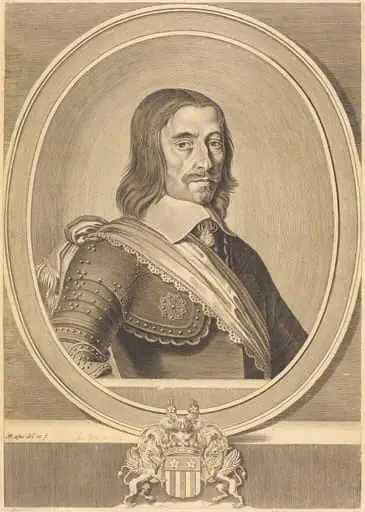
Prince Ernest, Duke of Saxony and Cleves is an ink print by the Baroque artist Wolfgang Philipp Kilian. It dates from 1693 and is held in the collection of the National Gallery of Art.
About this work
Overview
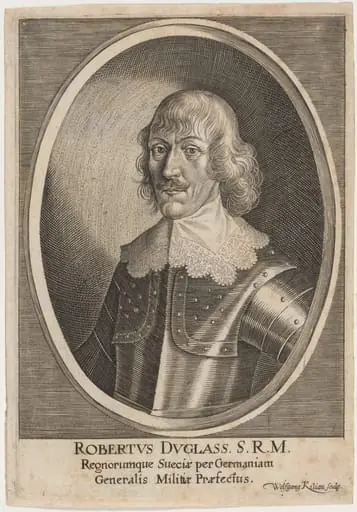
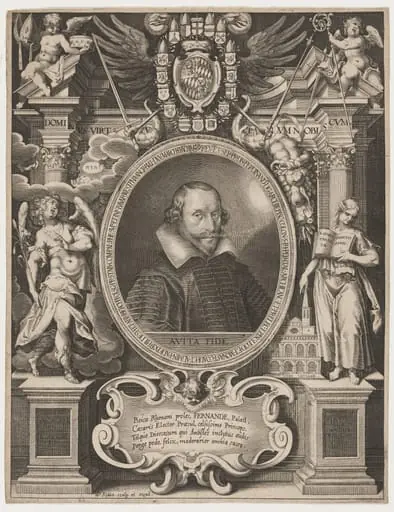
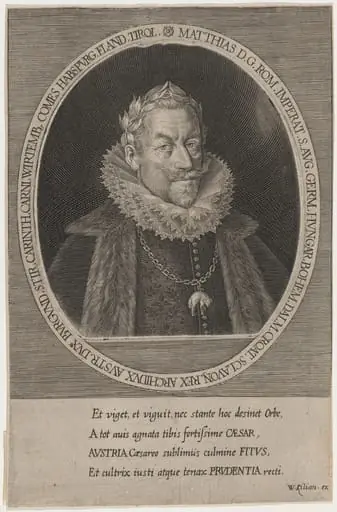
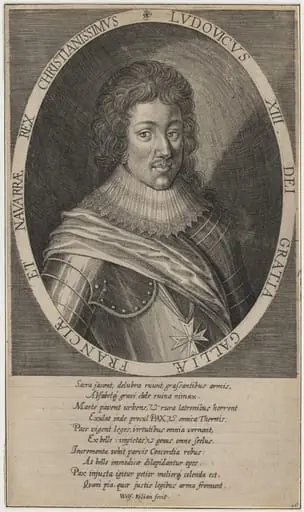
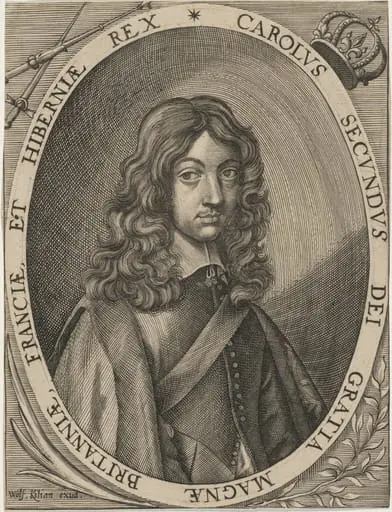
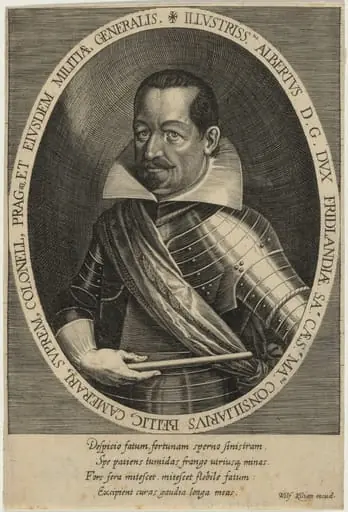
This 1693 engraving by Wolfgang Philipp Kilian depicts Prince Ernest, Duke of Saxony and Cleves, as a formal portrait in monochrome. Executed with fine, precise lines, the image captures the subject in a dignified pose, framed by a decorative border of Latin text. The plain background focuses attention on the figure, emphasizing the craftsmanship of the print rather than contextual detail.
Subject & Meaning
Prince Ernest, a member of the Saxon nobility, is portrayed with solemnity and authority. His mustache, wavy hair, and elaborate collar suggest status and adherence to courtly dress of the late 17th century. The Latin inscription surrounding the image likely contains his title or a moralizing phrase, reinforcing his position and the engraving’s function as a formal record of lineage and rank.
Technique & Style
The use of cross-hatching and delicate stippling creates subtle gradations of light and shadow, characteristic of German printmaking traditions.
Kilian employed fine-line engraving to render texture and volume, particularly in the fabric of the cloak and the folds of the collar. The use of cross-hatching and delicate stippling creates subtle gradations of light and shadow, characteristic of German printmaking traditions. The absence of color and the sharp, controlled lines reflect the precision valued in 17th-century reproductive portraiture.
History & Provenance
Created in 1693, the engraving was likely produced for distribution among noble circles or as part of a collection of portraits. Kilian, a member of a prominent Augsburg printmaking family, specialized in such commissioned works. While the exact early ownership is undocumented, its survival suggests it was preserved within aristocratic or institutional archives.
Context
In late 17th-century Germany, engraved portraits served as tools of political and familial representation, especially where painted likenesses were inaccessible. The Latin border reflects scholarly and ecclesiastical traditions influencing secular imagery. Kilian’s work aligns with a broader trend of using print to disseminate the likenesses of nobility across Europe.
Legacy
The engraving remains a representative example of German Baroque printmaking, illustrating how technical precision was used to convey social standing. Though not widely reproduced today, it contributes to the historical record of noble portraiture and the role of print in early modern identity formation.
Artist & collection