Artwork
The Stour at Blandford
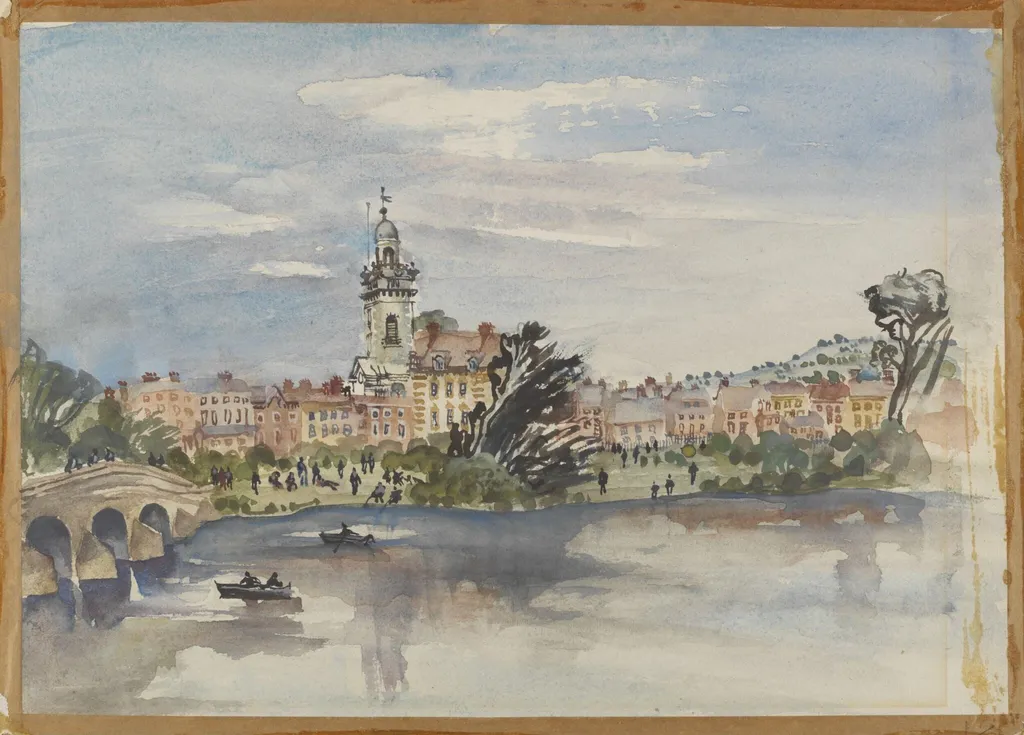
The Stour at Blandford is a watercolor work on paper by Kirk. It dates from 1940 and is held in the collection of the Victoria and Albert Museum.
About this work
Overview
The piece reflects the project’s commitment to documenting everyday landscapes with sensitivity and precision.
This 1940 watercolour by Kirk captures a quiet stretch of the River Stour in Blandford Forum, featuring a stone bridge, Georgian terraces, and a prominent church with a dome. Created during World War II as part of the Recording Britain initiative, the work contributes to a broader effort to visually archive the English countryside at risk from conflict and modernization. The piece reflects the project’s commitment to documenting everyday landscapes with sensitivity and precision.
Subject & Meaning
The scene centers on the river bridge and its surrounding architecture, emphasizing continuity and quiet domestic life. The church, as the tallest structure, anchors the composition, while the modest houses and two floating boats suggest routine activity. Trees along the bank frame the view, reinforcing a sense of place. The absence of overt drama or destruction underscores the project’s aim: to preserve the ordinary as a cultural record.
Technique & Style
Kirk employed loose, fluid brushwork to render the sky and foliage, creating a hazy, atmospheric effect. Delicate washes suggest distance and soft light, while the stone bridge and buildings are defined with firmer, more controlled lines. The restrained palette—pale blues, greys, and earth tones—enhances the tranquil mood. The technique balances spontaneity with observation, typical of watercolourists working under the Recording Britain project’s guidelines.
History & Provenance
Commissioned in 1940 under the Recording Britain scheme, initiated by Sir Kenneth Clark and funded by the Pilgrim Trust, this work was one of over 1,500 produced by 97 artists between 1940 and 1943. The project sought to document vulnerable landscapes before they were lost to war or development. Kirk’s watercolour entered the collection held by the Victoria and Albert Museum, where it remains part of a significant archive of mid-20th-century British topographical art.
Context
The Recording Britain project emerged during a period of national uncertainty, when fears of aerial bombardment and urban transformation threatened historic sites. Artists were sent across England, Wales, and Scotland to record rural towns, vernacular buildings, and natural features. This work aligns with a broader cultural movement to affirm national identity through visual documentation, prioritizing quiet, unassuming scenes over grand monuments.
Legacy
Kirk’s watercolour, like others in the Recording Britain collection, endures as a historical record of pre-war English life. It offers insight into how artists responded to wartime anxiety by focusing on resilience in the everyday. The project’s archive remains a vital resource for historians and artists, preserving a visual testimony to landscapes that have since changed or disappeared.
Artist & collection
Artist
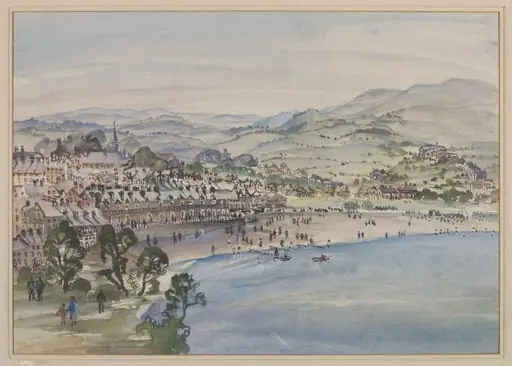
This British artist left a small but vivid trail of watercolours, all painted around 1940.

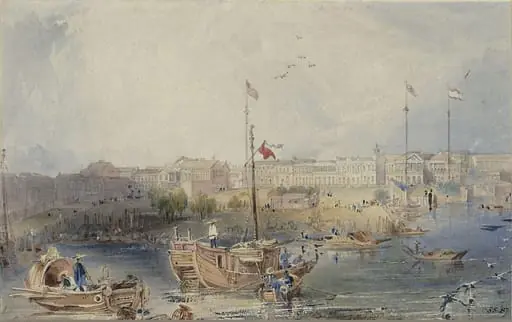 View in Guangzhou (Canton), China
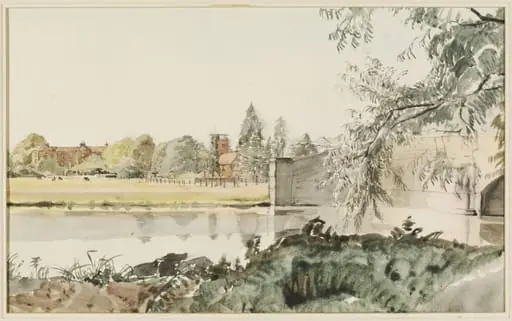 Cranford
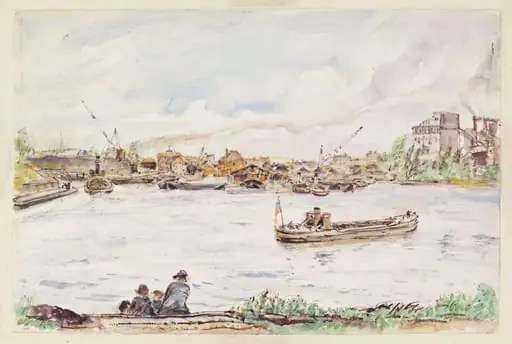 The Thames at Brentford
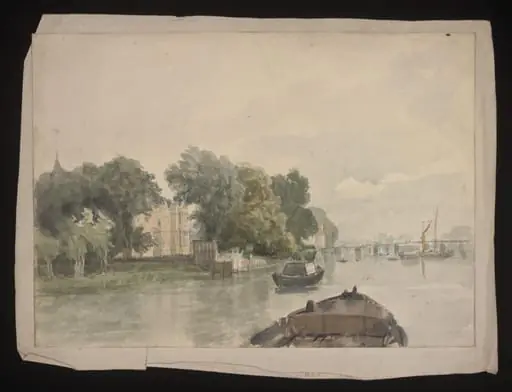 Watercolour drawing by the Grieve family, showing a scene on the River Thames
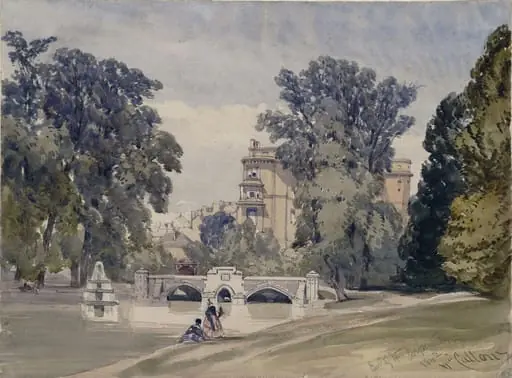 West end of the Serpentine, Kensington Gardens
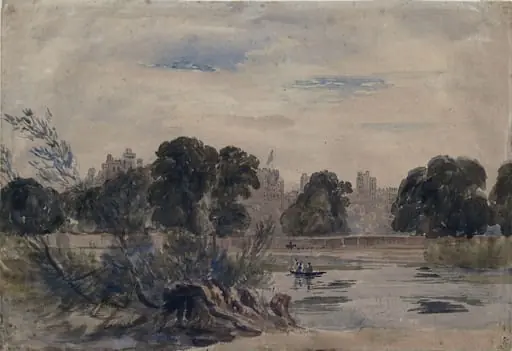 The River Thames and Windsor Castle
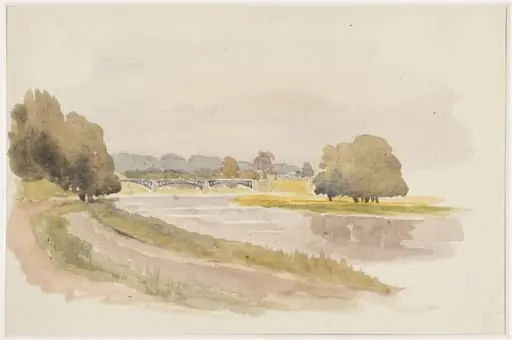 View of the bend of a river
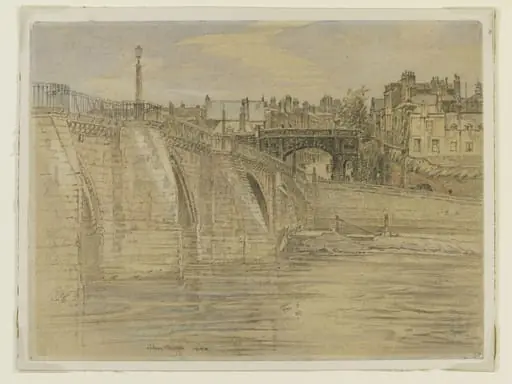 South Bridge Gate and Old Dee Bridge, Chester
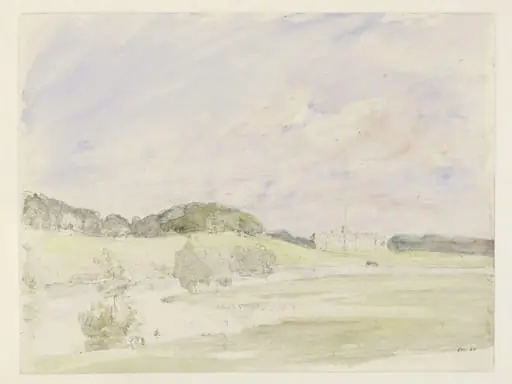 Petworth House from the Park
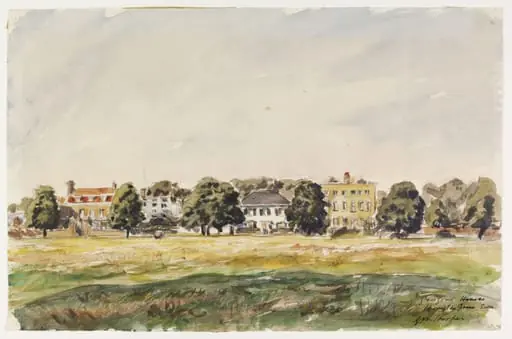 Georgian Houses, Hampton Green
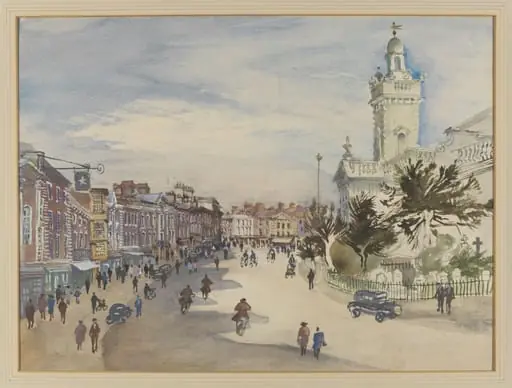 Blandford