Artwork
Swanage
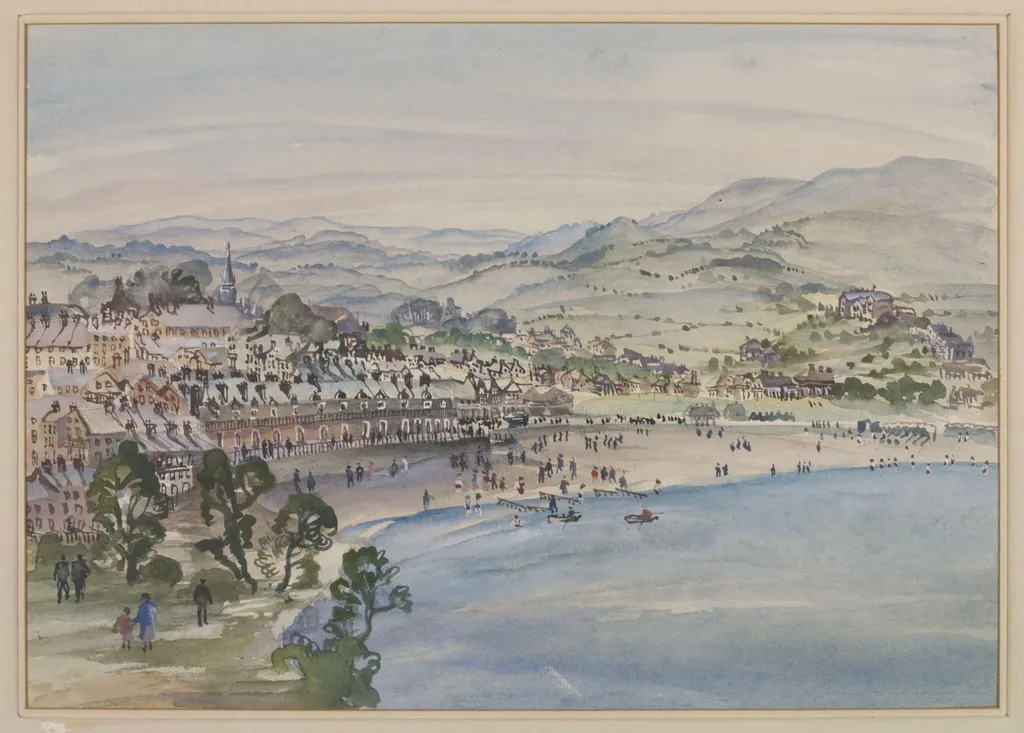
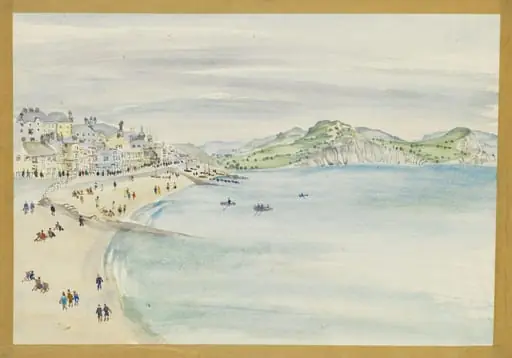
Swanage is a watercolor work on paper by Kirk. It dates from 1940 and is held in the collection of the Victoria and Albert Museum.
About this work
Overview
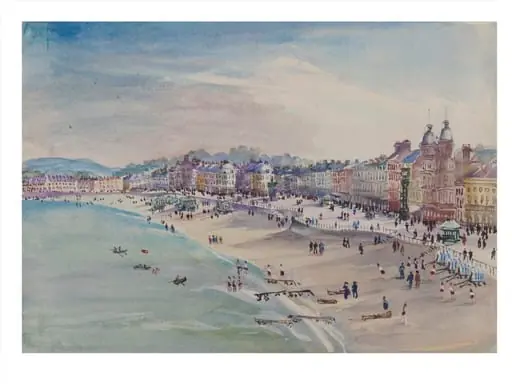
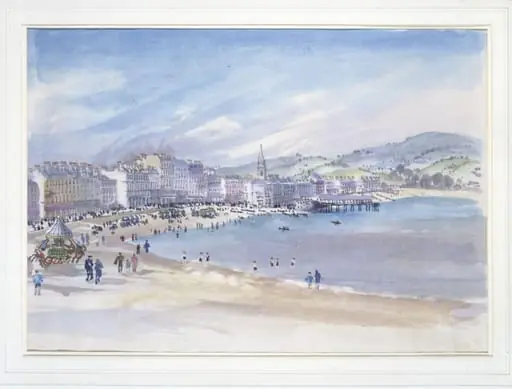
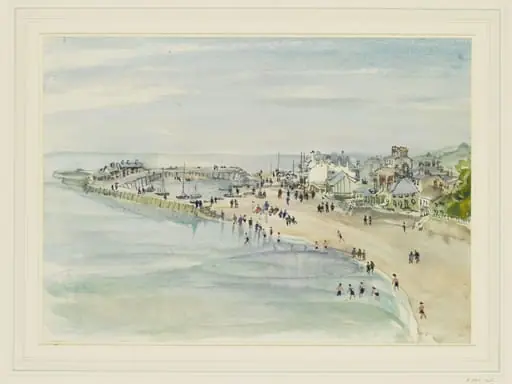
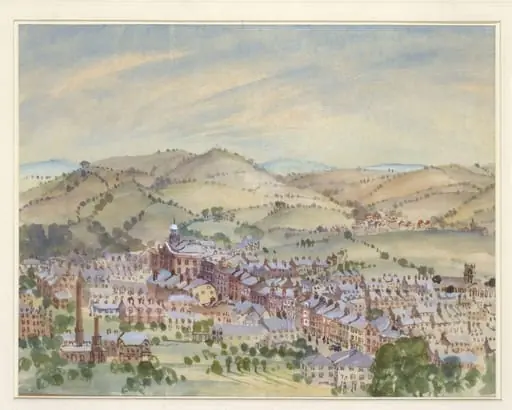
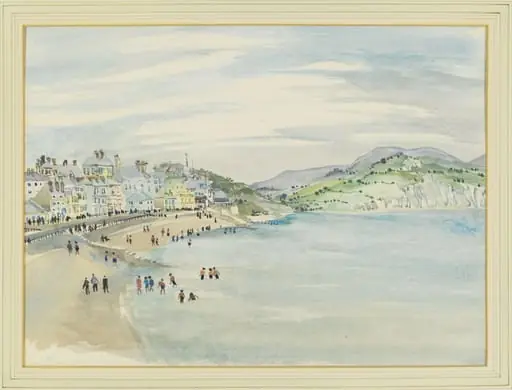
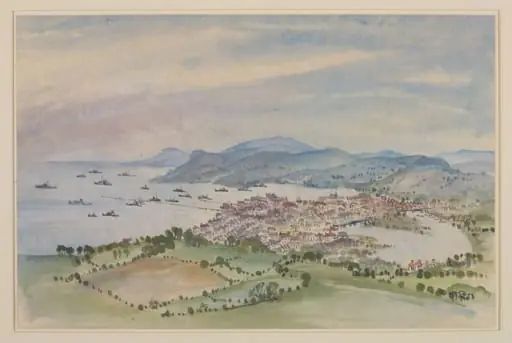
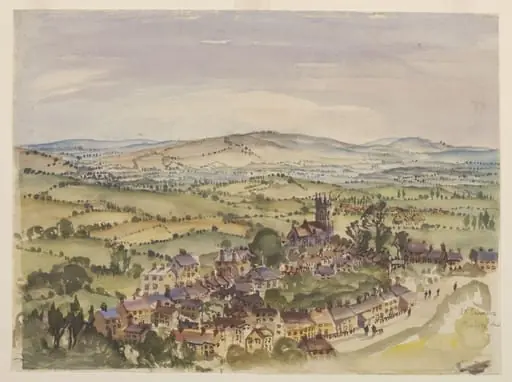
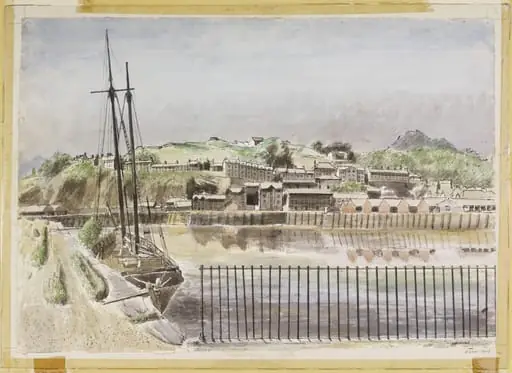
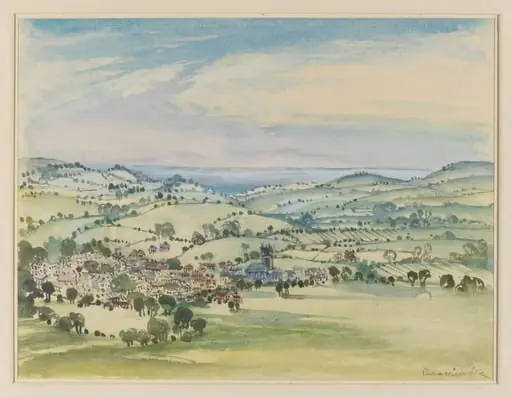
The work is a watercolour on paper titled *Swanage*, portraying a coastal vista of the Dorset town of Swanage. Rendered in 1940, the picture shows a beach populated with figures, a modest harbor with a few boats, and the town’s buildings and trees receding under a pale sky. The composition conveys a calm, everyday scene of the English seaside.
Subject & Meaning
The image captures a typical summer day on Swanage’s shoreline, emphasizing the relationship between the sea, the beach community, and the built environment. By presenting ordinary leisure and local architecture, the painting underscores a sense of place and continuity, reflecting the everyday life that the wartime project sought to preserve for future memory.
Technique & Style
Executed in transparent watercolour, the artist employs delicate washes and soft brushwork to render atmospheric light and subtle colour shifts. The palette is restrained, with muted blues, greys and earth tones that blend to create a gentle horizon and a sense of depth. The overall handling yields a tranquil, almost lyrical quality typical of British topographical watercolours.
History & Provenance
Created as part of the Recording Britain initiative, the piece was commissioned by a wartime effort to document the nation’s landscapes. The scheme, overseen by Sir Kenneth Clark, gathered works from nearly one hundred artists, amassing over fifteen hundred pieces. *Swanage* entered the collection alongside other regional studies intended to safeguard visual records of the British environment.
Context
By encouraging traditional media such as watercolour, the programme aimed to capture scenes that embodied national identity and heritage.
The Recording Britain project emerged during World War II amid fears of bomb damage, invasion and rapid change to the countryside. By encouraging traditional media such as watercolour, the programme aimed to capture scenes that embodied national identity and heritage. *Swanage* therefore functions both as a specific topographical record and as part of a broader cultural response to wartime uncertainty.
Artist & collection
Artist
This British artist left a small but vivid trail of watercolours, all painted around 1940.