Artwork
Shaftesbury St. James
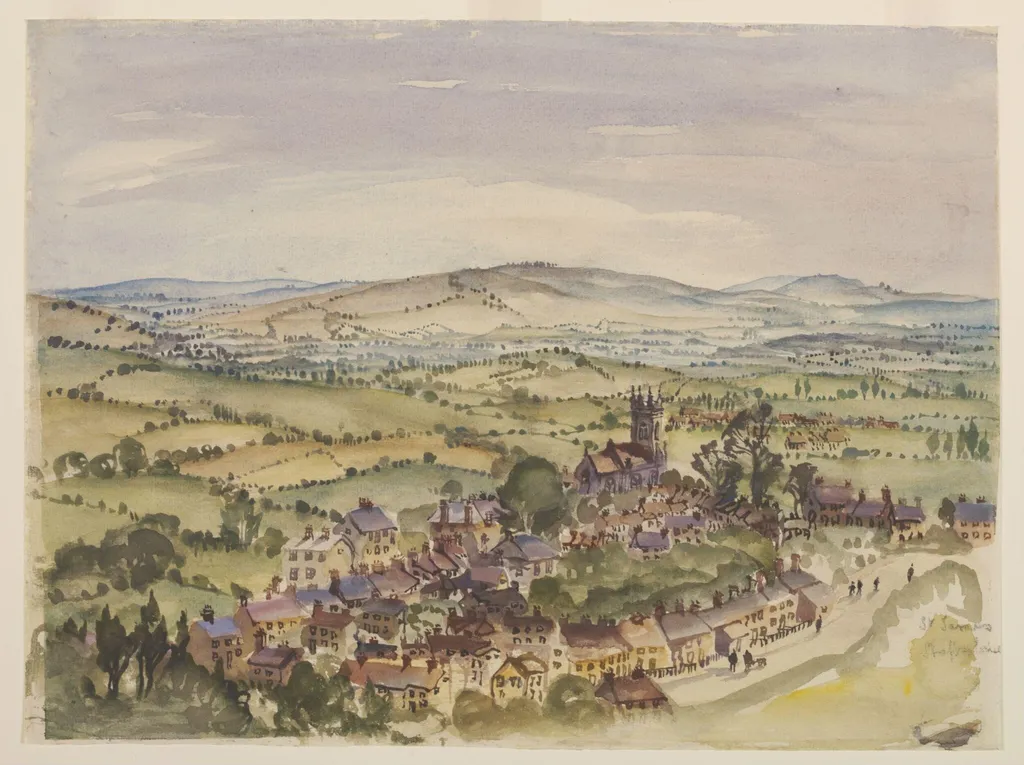
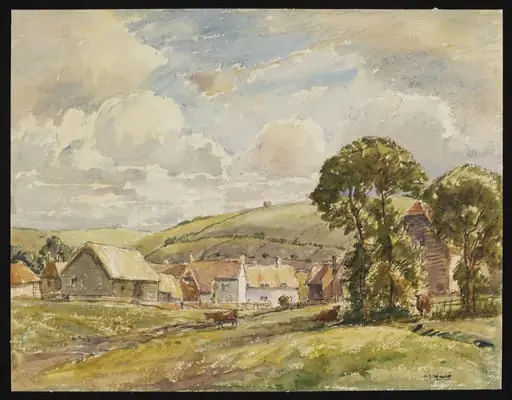
Shaftesbury St. James is a watercolor work on paper by Kirk. It dates from 1940 and is held in the collection of the Victoria and Albert Museum.
About this work
Overview
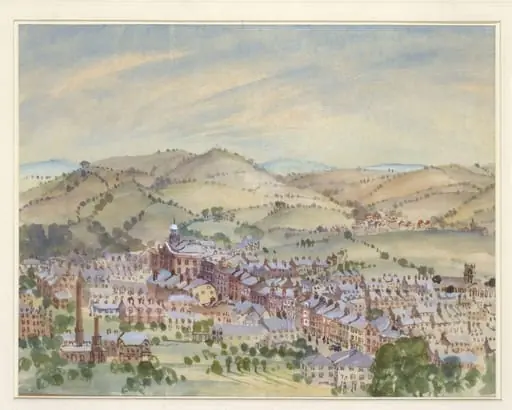
Rendered in delicate, translucent washes, the scene captures a panoramic view from above, emphasizing the town’s integration with the surrounding countryside.
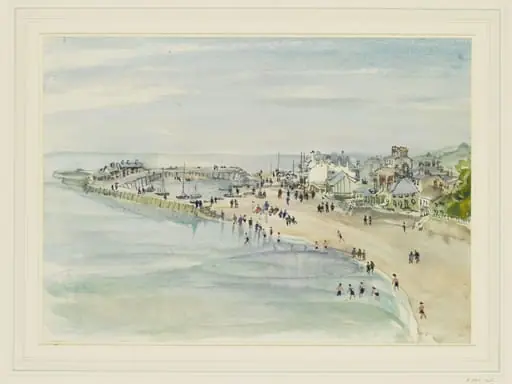
Painted in 1940 by Kirk, this watercolour depicts the town of Shaftesbury with St. James’ Church as its focal point. Rendered in delicate, translucent washes, the scene captures a panoramic view from above, emphasizing the town’s integration with the surrounding countryside. It was created as part of the *Recording Britain* project, a wartime effort to visually archive the nation’s rural and architectural character during a period of heightened uncertainty.
Subject & Meaning
The composition centers on St. James’ Church, its spire rising above clustered dwellings with dark tiled roofs. The undulating hills and scattered fields suggest a quiet, enduring rural life. By framing the town within expansive landscape, the artist conveys a sense of continuity and rootedness. The work reflects the project’s aim to preserve ordinary places perceived as vulnerable to wartime destruction or postwar change.
Technique & Style
Kirk employed loose, fluid watercolour techniques to suggest form through tone rather than detail. Soft washes of pale green, grey, and ochre define the hills and rooftops, while the sky is rendered with minimal pigment, allowing the paper’s brightness to evoke light. The absence of sharp lines and the gentle blending of colours create a hushed, atmospheric quality, reinforcing the scene’s stillness and intimacy.
History & Provenance
This work belongs to the *Recording Britain* collection, initiated in 1940 by the Pilgrim Trust and administered by the Committee for the Employment of Artists in Wartime. The project commissioned over 1,500 watercolours and drawings between 1940 and 1943, employing artists to document threatened landscapes. Kirk’s piece entered the collection as part of this systematic effort to safeguard visual records of Britain’s heritage during the Second World War.
Context
Created during the early years of the war, the painting responds to anxieties about cultural loss — from aerial bombing to urban redevelopment. The *Recording Britain* initiative sought to counteract erasure by focusing on unassuming, often overlooked places. This watercolour, like others in the series, elevates the mundane into a historical document, affirming the value of everyday topography amid national crisis.
Legacy
The *Recording Britain* collection, now held primarily by the Victoria and Albert Museum, remains a vital archive of mid-20th-century British landscape and architecture. Kirk’s watercolour contributes to a broader visual record that continues to inform historical and cultural studies. Its quiet realism offers a counterpoint to wartime propaganda, preserving a sense of place through observation rather than rhetoric.
Artist & collection
Artist
This British artist left a small but vivid trail of watercolours, all painted around 1940.

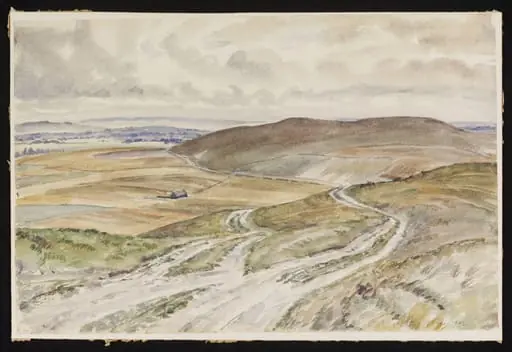 View from the Wansdyke in Stanton St. Bernard
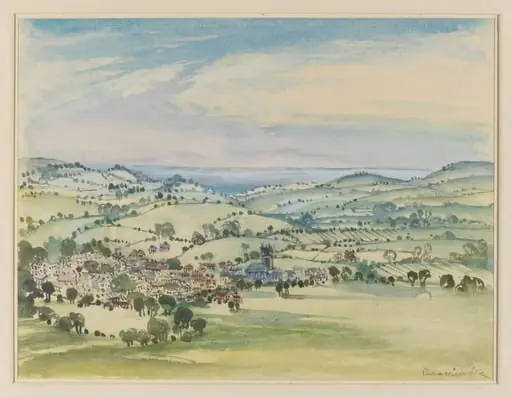 Beaminster
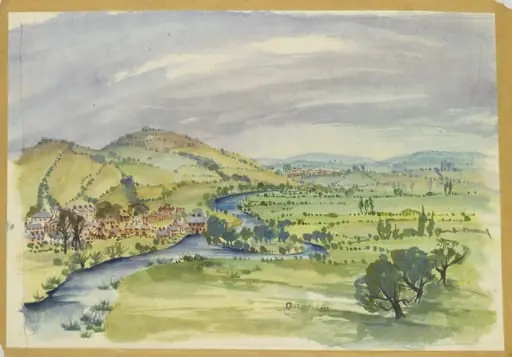 Durweston
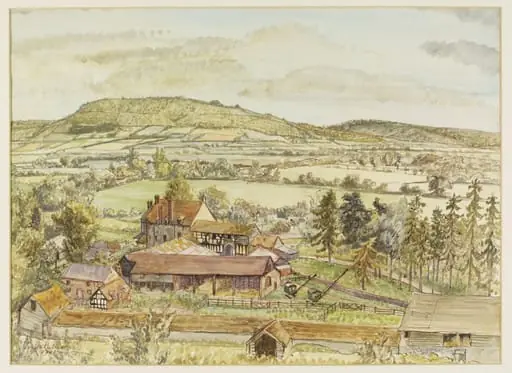 Grange Farm (Wigmore Abbey remains)
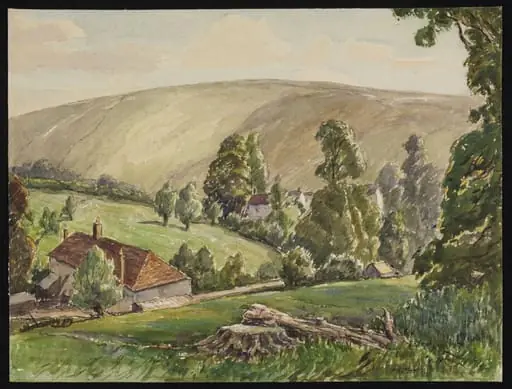 Bowerchalke
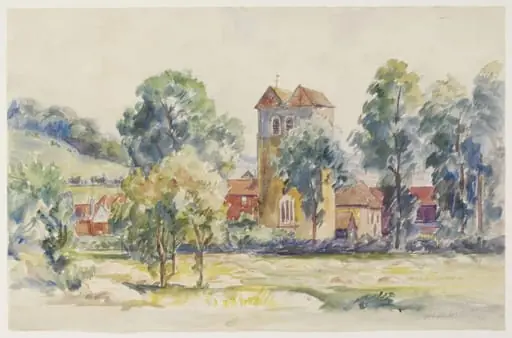 St. Bartholomew's Church, Fingest
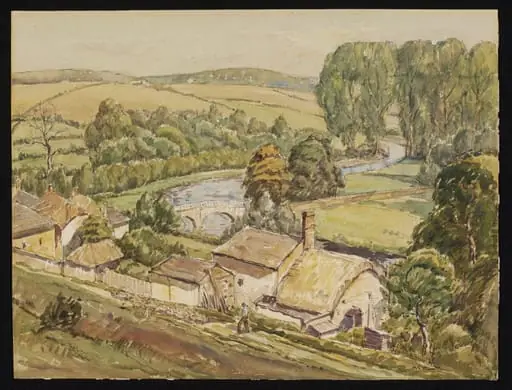 Woodford Bridge in the Avon Valley
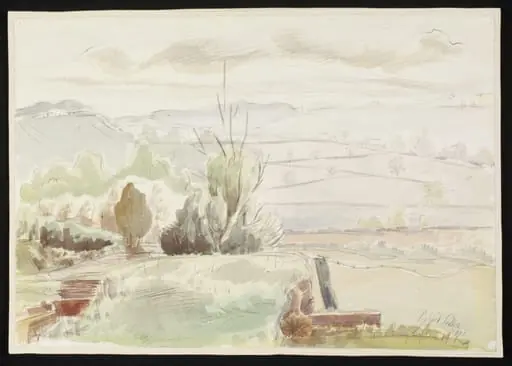 Porter Valley, No.2
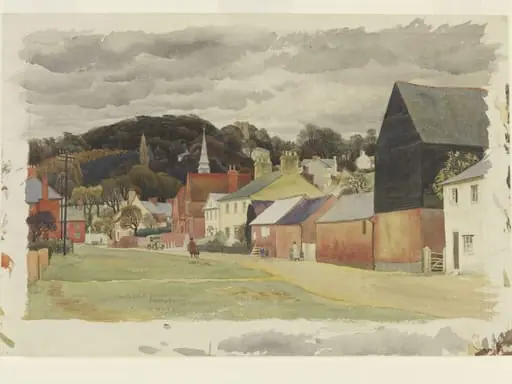 Bow Brickhill, Bletchley, Buckinghamshire
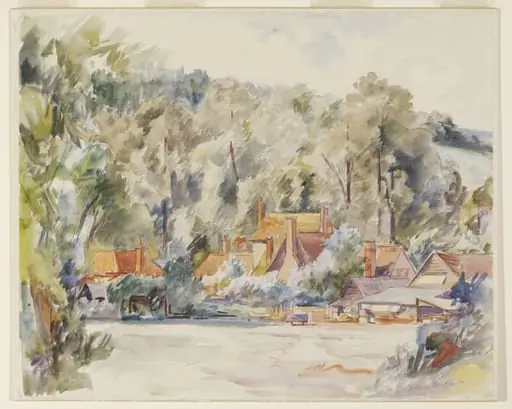 The Chequers Inn, Fingest
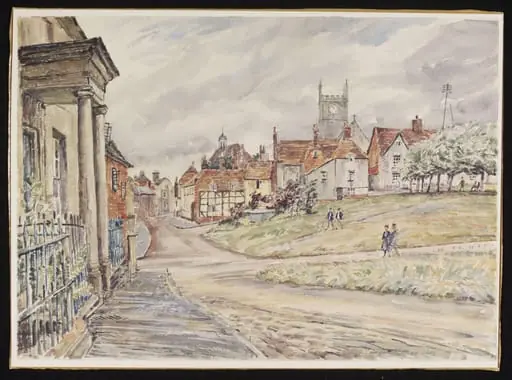 The Green and St.Mary's Church, Marlborough
 Wishford, Wylye Valley