Artwork
Enjoying the Evening Cool Along the Sumida River
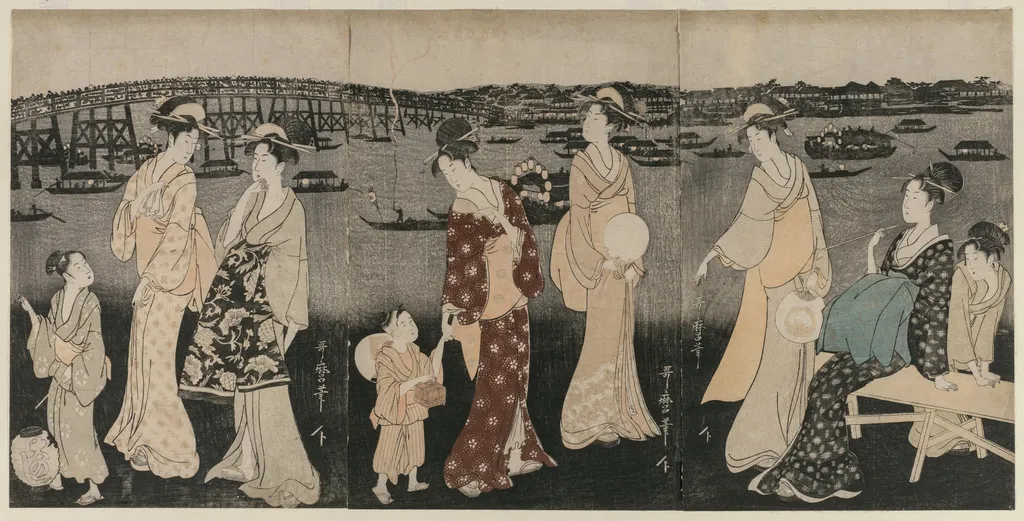
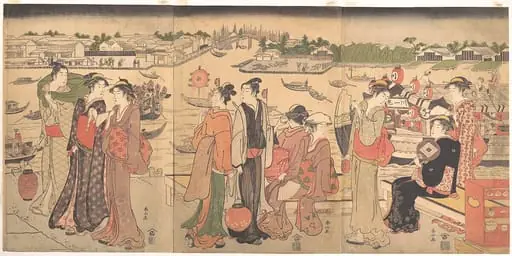
Enjoying the Evening Cool Along the Sumida River is a print by the Romanticist artist Kitagawa Utamaro. It dates from 1798 and is held in the collection of the Cleveland Museum of Art. This ukiyo-e print captures a summer evening along the Sumida River in Edo, centered on the bustling Ryōgoku Bridge.
About this work
Overview
The composition balances motion and stillness, drawing attention to both the spectacle above and the quiet interactions below.
This ukiyo-e print captures a summer evening along the Sumida River in Edo, centered on the bustling Ryōgoku Bridge. Crowds gather on the bridge and aboard floating pleasure boats to view fireworks illuminating the night sky. The scene blends public festivity with intimate moments, portraying ordinary citizens engaged in seasonal rituals. The composition balances motion and stillness, drawing attention to both the spectacle above and the quiet interactions below.
Subject & Meaning
The print depicts a common summer pastime: viewing fireworks from the river. Beyond the spectacle, it emphasizes human connection—children holding hands, a boy carrying a pet cricket, and a young attendant guiding patrons. These details suggest the quiet dignity of daily life amid celebration. The cricket, a symbol of autumn’s arrival, introduces a subtle temporal contrast, while the lantern’s inscription grounds the scene in commercial reality.
Technique & Style
Rendered in traditional woodblock print techniques, the image uses layered colors to convey the glow of fireworks and the dark silhouettes of figures. Fine lines define clothing and architecture, while the crowd is suggested through overlapping forms rather than individual detail. The perspective tilts slightly upward, enhancing the sense of height from the riverbank and drawing the eye toward the sky. Soft gradients in the night sky create atmospheric depth.
History & Provenance
Created in the early 19th century, likely during the 1820s or 1830s, the print belongs to a series documenting Edo’s seasonal events. It was produced for a broad urban audience, reflecting the popularity of river-side entertainment in the Tokugawa period. The Cleveland Museum of Art acquired it in the 20th century as part of its growing collection of Japanese prints, preserving its cultural context within a Western institutional setting.
Context
During the Edo period, the Sumida River was a favored venue for summer festivals, especially fireworks displays sponsored by merchants and guilds. Ryōgoku Bridge, a key crossing point, became a social hub. Lanterns like the one bearing 'Ōnoshi' were used by restaurants to attract customers, revealing the commercial undercurrents of public leisure. These events offered rare moments of shared experience across social classes.
Legacy
The print endures as a record of Edo’s urban culture, illustrating how ordinary life intertwined with public spectacle. Its focus on small, personal gestures—rather than grand narratives—aligns it with the broader ukiyo-e tradition of capturing fleeting, everyday beauty. Today, it remains a touchstone for understanding how Japanese society celebrated seasonal rhythms through communal activity and subtle visual storytelling.
Artist & collection


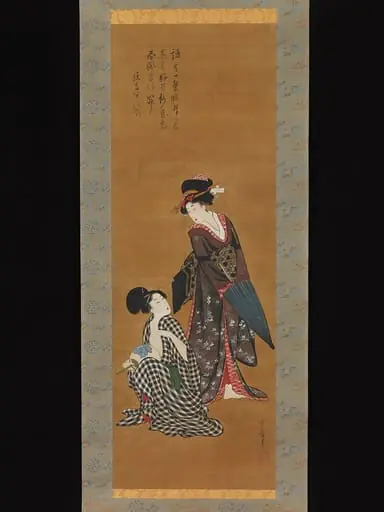 Untitled
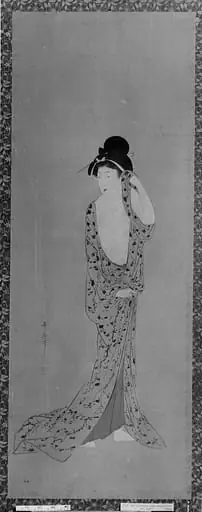 Untitled
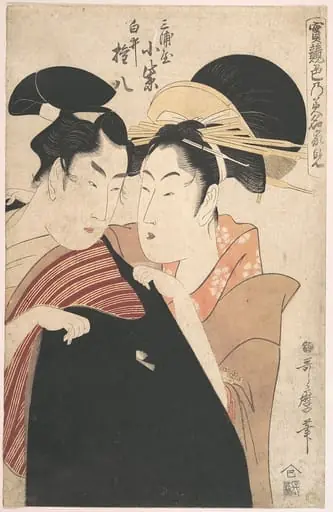 実競色乃美名家見 三浦屋小紫 白井権八|The Lovers Miura-ya Komurasaki and Shirai Gonpachi.
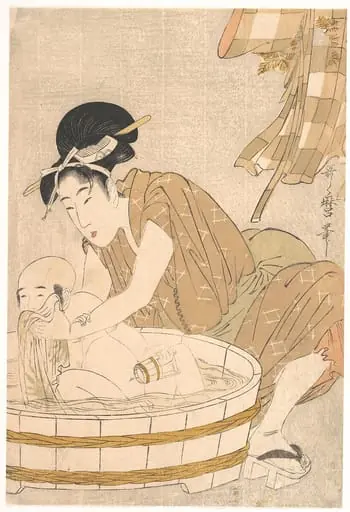 行水|Bathtime (Gyōzui)
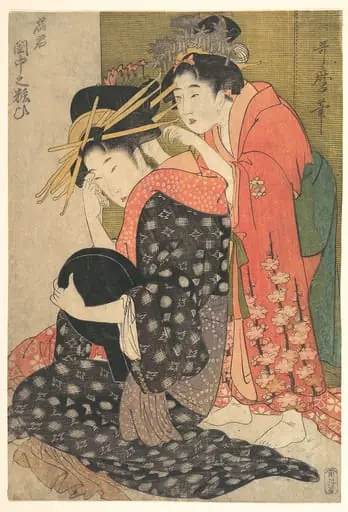 名君 閨中の粧ひ|The Oiran Yoso-oi Seated at Her Toilet
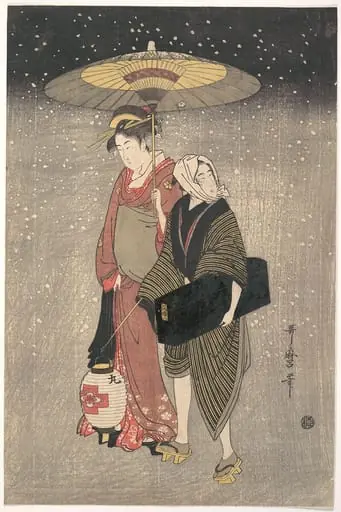 Untitled
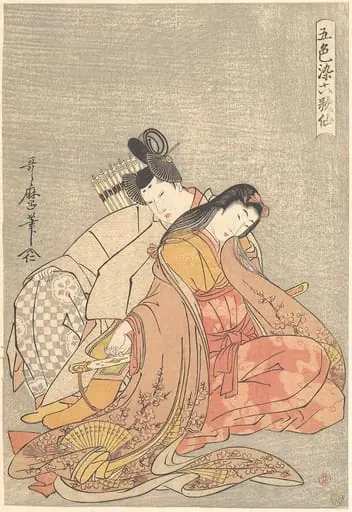 『五色染六歌仙』 在原業平と小野小町|“The Poet Ariwara no Narihira (825–880) and Ono no Komachi,” from the series Five Colors of Love for the Six Poetic Immortals (Goshiki-zome rokkasen)
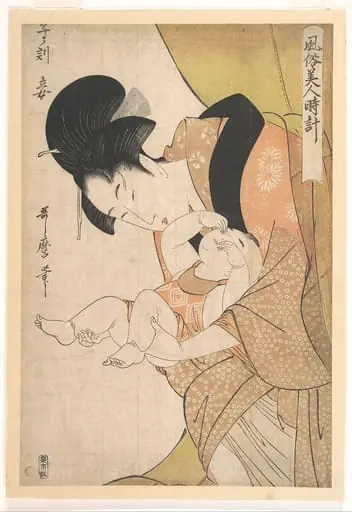 風俗美人時計 子ノ刻 妾|Midnight: Mother and Sleepy Child
![南四季 夏景|The Four Seasons in Southern Edo: A Summer Scene (Minami shiki; Natsu [no] kei), by Utagawa Toyokuni I](https://artifactworldgallery.com/img/utagawa-toyokuni-i--the-four-seasons-in-southern-edo-a-summer-scene-minami-shiki--de8110e8ab2ddcb5-w320.webp)