Artwork
Fond of Things from the series Eight Views of Favorite Things of Today's World
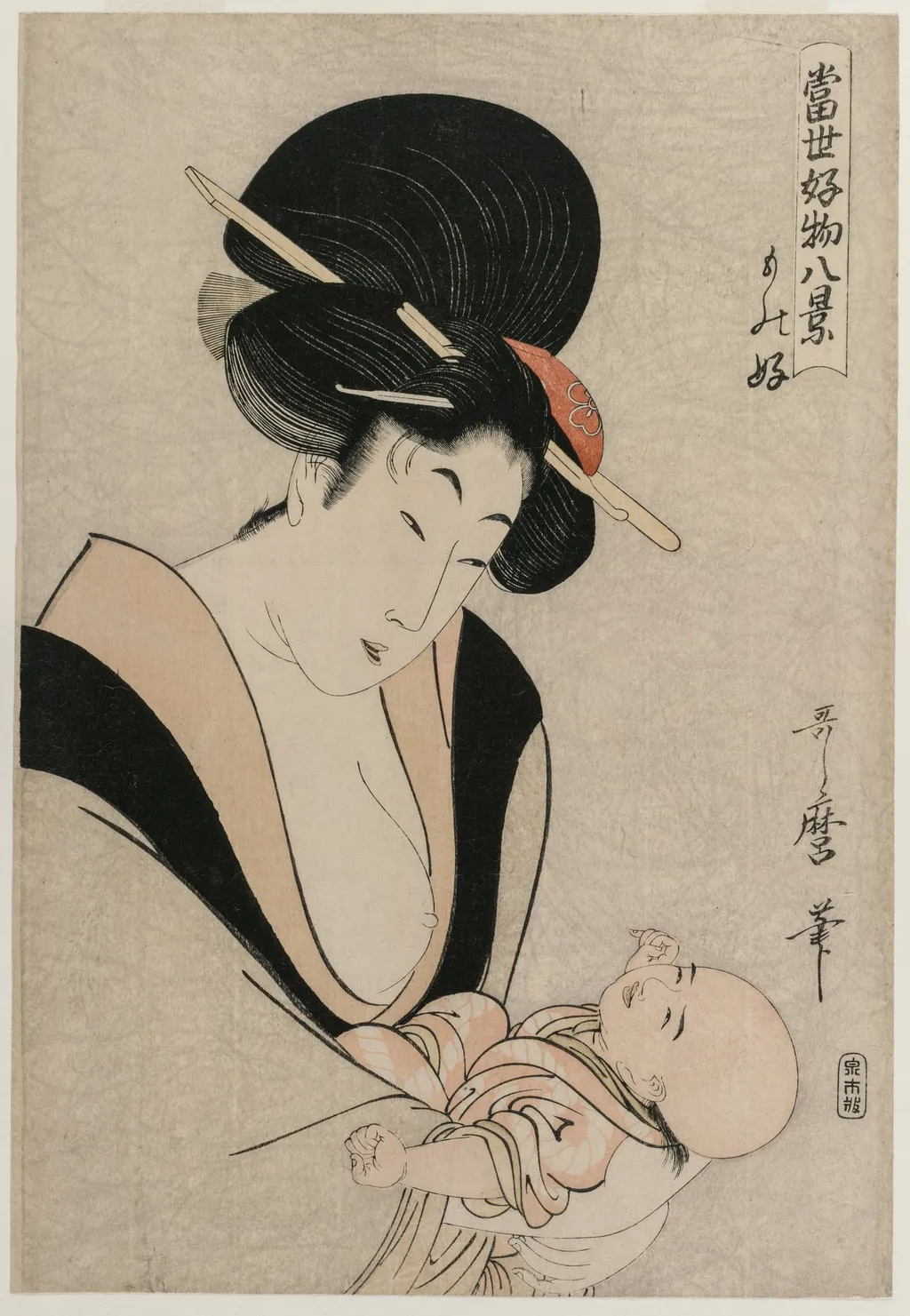
Fond of Things from the series Eight Views of Favorite Things of Today's World is a print by the Romanticist artist Kitagawa Utamaro. It dates from 1794 and is held in the collection of the Cleveland Museum of Art.
About this work
You can learn more about this time and place by exploring the subject: japan, edo period (1615–1868).
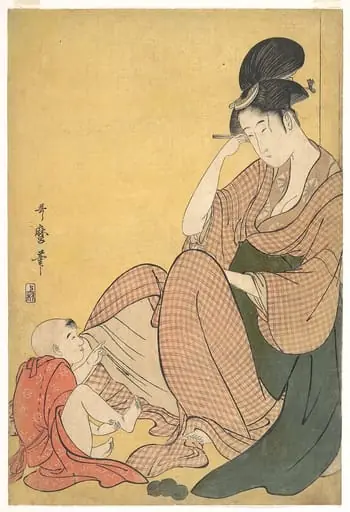
This painting shows a woman surrounded by everyday objects.
She's holding a fan and looking at something outside the scene.
The interesting thing about this work is that it gives us a glimpse into daily life in Japan during the Edo period, and the way it's composed suggests a quiet, intimate moment.
You can learn more about this time and place by exploring the subject: japan, edo period (1615–1868).
Overview
Created around 1794, this print is part of Kitagawa Utamaro’s series Eight Views of Favorite Things of Today's World. It depicts a woman in a domestic setting, surrounded by ordinary objects of daily life. The work is a woodblock print, typical of the ukiyo-e tradition, and is currently held in the collection of The Cleveland Museum of Art.
Subject & Meaning
The figure, holding a fan and gazing beyond the frame, suggests contemplation rather than action. The objects around her—likely personal belongings—evoke quiet intimacy and personal taste. Rather than portraying grand narratives, the image invites reflection on the value of mundane items in everyday existence during the Edo period.
Technique & Style
Utamaro employed fine linework and subtle gradations of color, characteristic of his refined approach to bijin-ga, or pictures of beautiful women. The composition is deliberately restrained, with soft contours and minimal background detail, focusing attention on the figure and her surroundings. The print’s scale and precision reflect the high craftsmanship of late 18th-century ukiyo-e production.
History & Provenance
The print was produced during the height of Utamaro’s career, when he was celebrated for his depictions of urban women. It entered the Cleveland Museum of Art’s collection through documented acquisition, likely in the early 20th century, as part of growing Western interest in Japanese prints. Its preservation reflects its status as a well-documented example of Edo-period printmaking.
Context
In late Edo-period Japan, urban culture flourished, and prints like this one catered to a growing middle class seeking art that mirrored their lives. Utamaro’s focus on private moments and personal objects aligned with a broader cultural shift toward valuing individual experience over public spectacle, particularly among women in the pleasure quarters and merchant classes.
Legacy
This print contributes to the broader recognition of ukiyo-e as a medium capable of conveying psychological depth through everyday scenes. While Utamaro is often associated with idealized beauty, works like this reveal his sensitivity to quiet, unguarded moments, influencing later artists and collectors who valued nuance over spectacle in Japanese printmaking.
Artist & collection


 Untitled
 Untitled
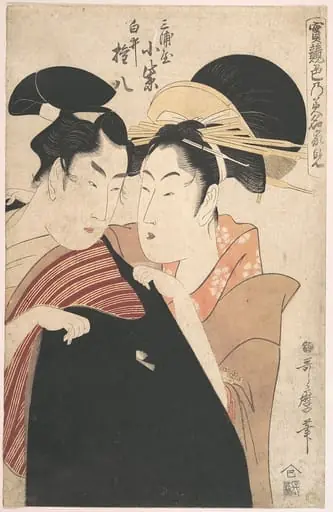 実競色乃美名家見 三浦屋小紫 白井権八|The Lovers Miura-ya Komurasaki and Shirai Gonpachi.
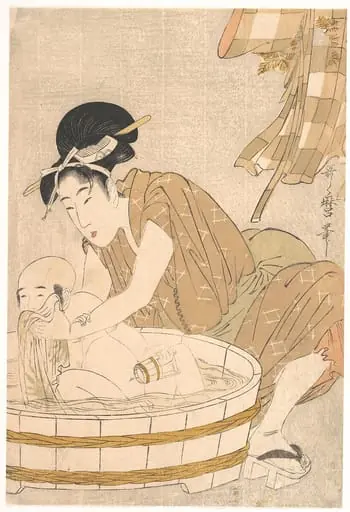 行水|Bathtime (Gyōzui)
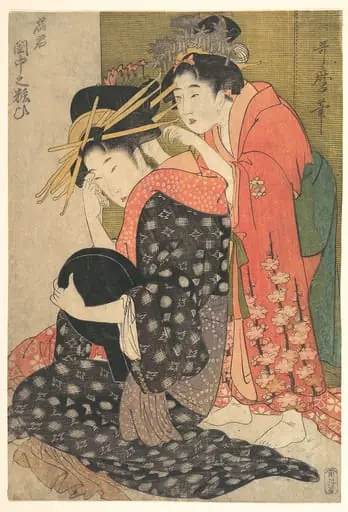 名君 閨中の粧ひ|The Oiran Yoso-oi Seated at Her Toilet
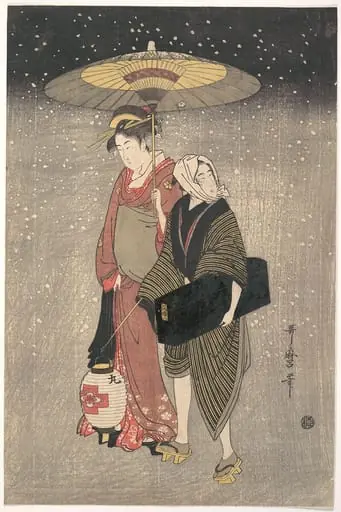 Untitled
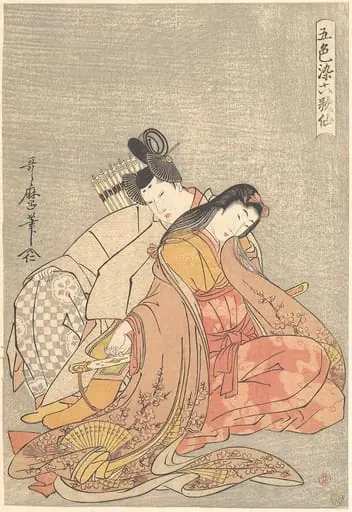 『五色染六歌仙』 在原業平と小野小町|“The Poet Ariwara no Narihira (825–880) and Ono no Komachi,” from the series Five Colors of Love for the Six Poetic Immortals (Goshiki-zome rokkasen)
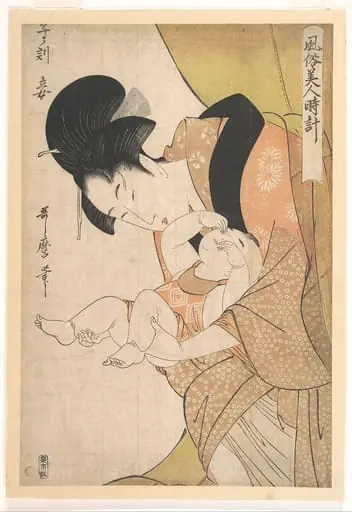 風俗美人時計 子ノ刻 妾|Midnight: Mother and Sleepy Child
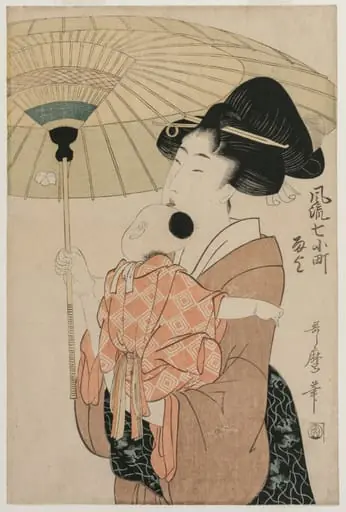 Prayers for Rain, from the series Seven Elegant Komachi
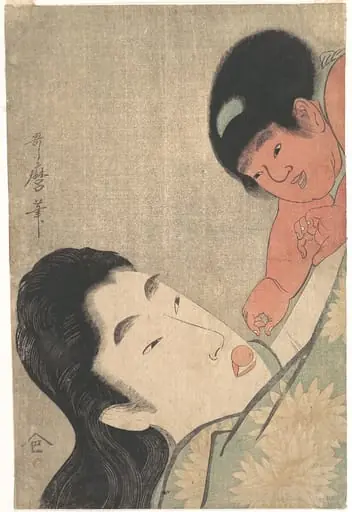 山姥と金太郎|Yamauba and Kintarō Playing with a Cherry
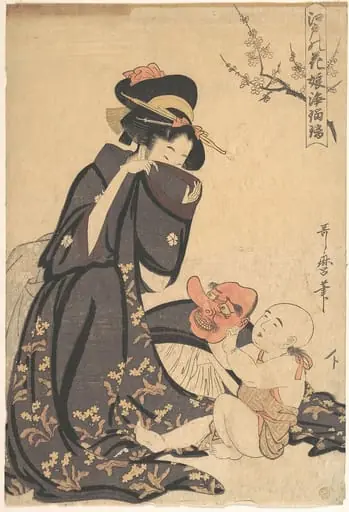 江戸の花 娘浄瑠璃|A Woman Playing with a Young Boy
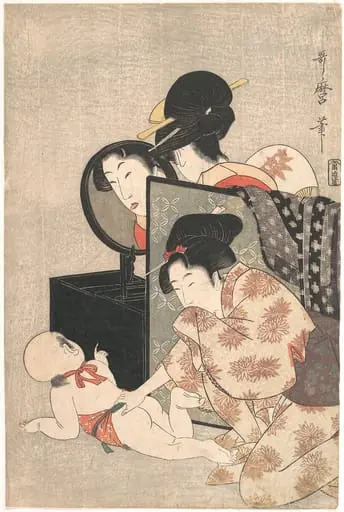 Untitled
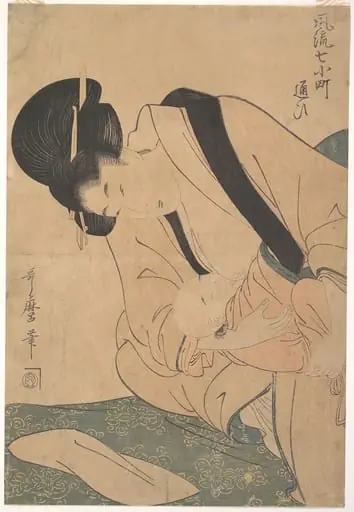 風流七小町 通ひ|Young MotHer Nursing Her Baby
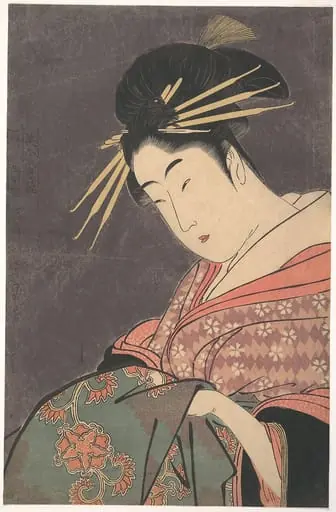 喜多川歌麿画 「美人気量競 五明楼 花扇」|“Hanaōgi of the Gomeirō,” from the series Comparing the Charms of Beauties (Bijin kiryō kurabe: Gomeirō Hanaōgi)
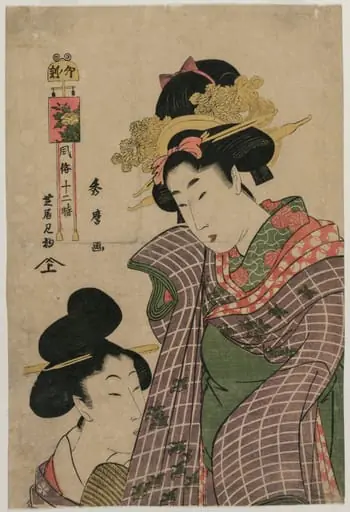 Going to the Kabuki Theater in the Hour of the Hare (From the Series The Twelve Hours with Daily Events)
 Untitled
 Cleaning Combs