Artwork
Woman Representing Good Fortune
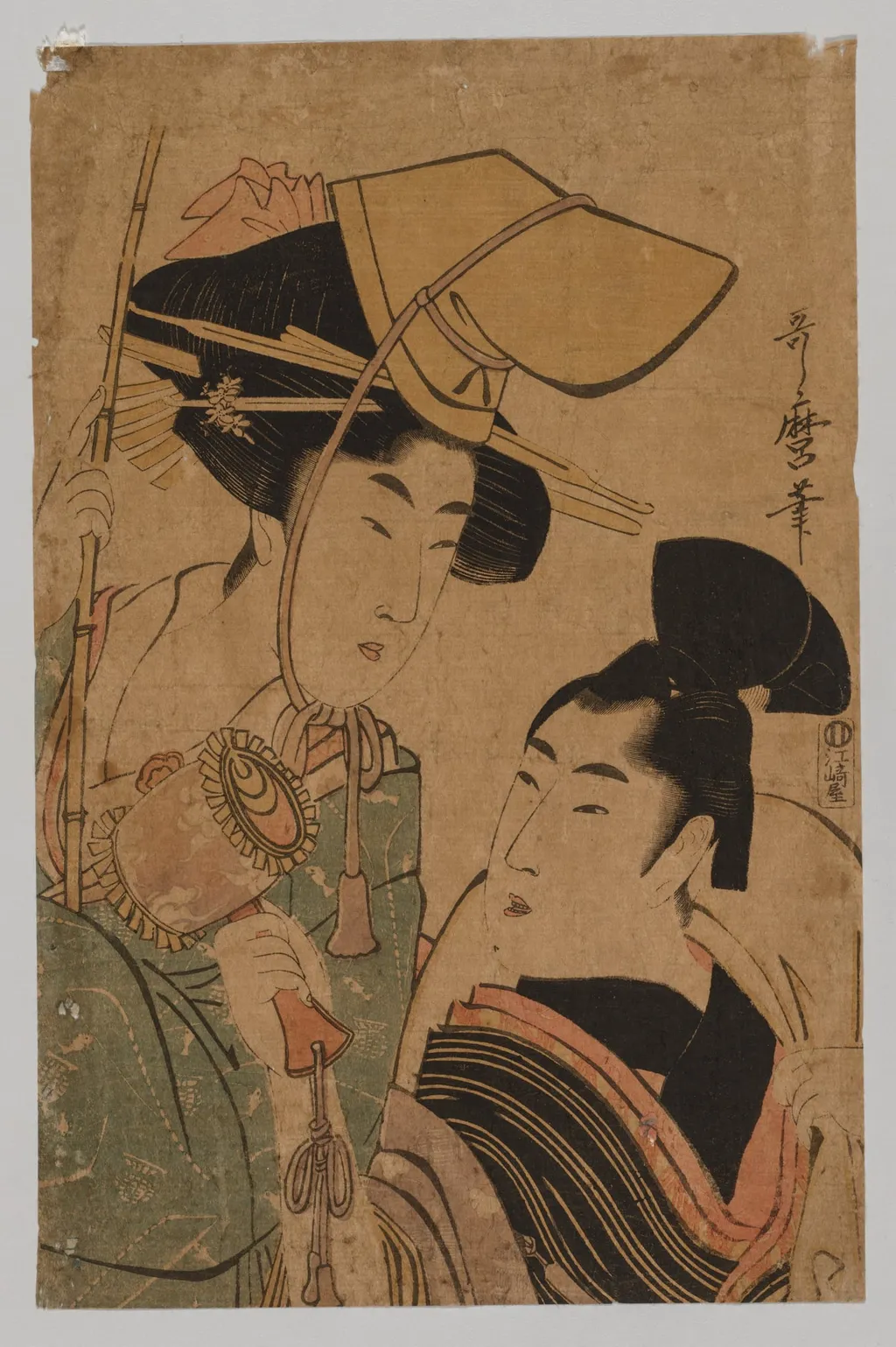
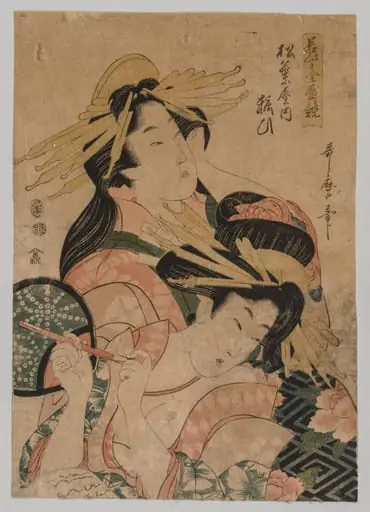
Woman Representing Good Fortune is a print by the Romanticist artist Kitagawa Utamaro. It dates from 1780 and is held in the collection of the Cleveland Museum of Art.
About this work
Overview
The work is part of the collection at The Cleveland Museum of Art, where it represents the expressive potential of Edo-period printmaking.
This woodblock print, dated around 1780, is attributed to Kitagawa Utamaro, a leading artist of the ukiyo-e tradition. It depicts two figures in formal attire, rendered with sharp outlines and areas of flat, unmodulated color. The composition emphasizes symbolic gestures and costume details rather than naturalistic depth. The work is part of the collection at The Cleveland Museum of Art, where it represents the expressive potential of Edo-period printmaking.
Subject & Meaning
The central figure, a woman adorned with a tall black hat and ornate green-and-gold robes, is understood to symbolize good fortune, possibly linked to the deity Fukurokuju or a personified ideal of prosperity. Her staff and open fan suggest ritual or ceremonial authority. The man beside her, dressed in somber robes with a distinctive curl of hair, may represent a guardian or attendant. Their interaction implies a moment of spiritual or social significance, rooted in popular beliefs of the time.
Technique & Style
Utamaro employs the conventions of ukiyo-e woodblock printing: bold black outlines define forms, while areas of color are applied flatly without shading. The contrast between the woman’s vibrant garments and the man’s muted attire heightens visual focus. Delicate patterns on fabric and precise rendering of accessories like fans and hats reflect the artist’s attention to detail. The lack of perspective and flattened space aligns with traditional Japanese compositional principles.
History & Provenance
Created during the late 18th century, the print emerged from the thriving commercial print culture of Edo. It likely circulated as a single-sheet print, collected by urban patrons interested in symbolic imagery and fashionable aesthetics. The work entered the Cleveland Museum of Art’s collection through documented acquisitions in the 20th century, preserving its original condition and attribution to Utamaro.
Context
In Edo-period Japan, prints like this served both decorative and didactic roles, often illustrating folk beliefs, deities, or moral ideals. Utamaro was known for his portrayals of women and mythological themes, blending realism with stylization. This print reflects a broader trend in ukiyo-e of personifying abstract concepts—such as fortune or virtue—through recognizable, elegant figures, appealing to a literate, urban audience.
Legacy
Though not among Utamaro’s most widely reproduced works, this print exemplifies his skill in conveying symbolic narratives through refined visual language. It contributes to the understanding of how Edo-period artists translated spiritual and cultural ideals into accessible imagery. The print remains a reference point for scholars studying the intersection of religion, gender, and visual culture in Japanese printmaking.
Artist & collection


 Untitled
 Untitled
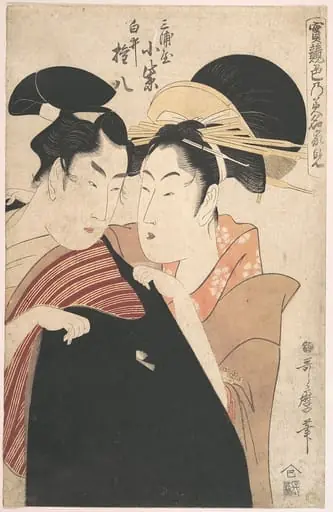 実競色乃美名家見 三浦屋小紫 白井権八|The Lovers Miura-ya Komurasaki and Shirai Gonpachi.
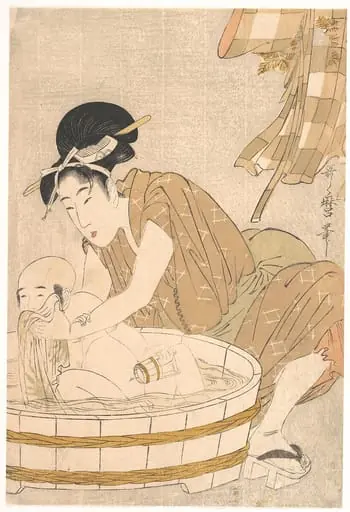 行水|Bathtime (Gyōzui)
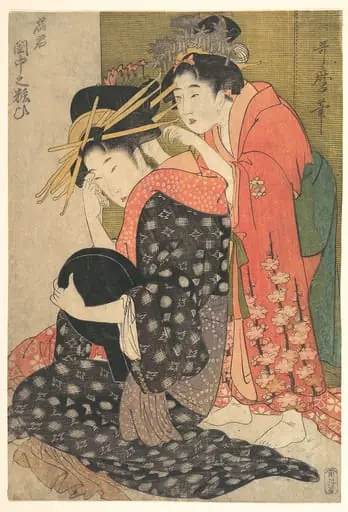 名君 閨中の粧ひ|The Oiran Yoso-oi Seated at Her Toilet
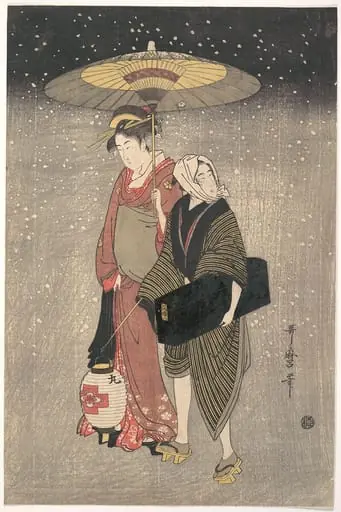 Untitled
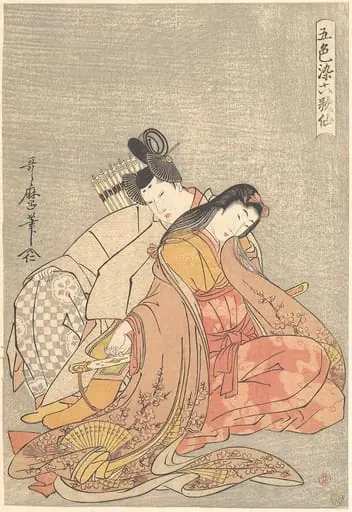 『五色染六歌仙』 在原業平と小野小町|“The Poet Ariwara no Narihira (825–880) and Ono no Komachi,” from the series Five Colors of Love for the Six Poetic Immortals (Goshiki-zome rokkasen)
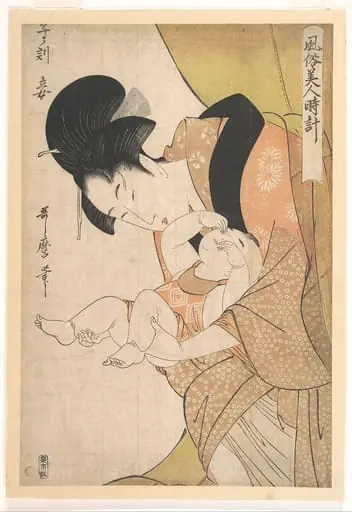 風俗美人時計 子ノ刻 妾|Midnight: Mother and Sleepy Child
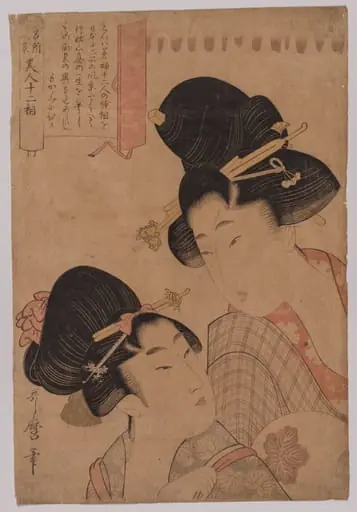 Two Courtesans
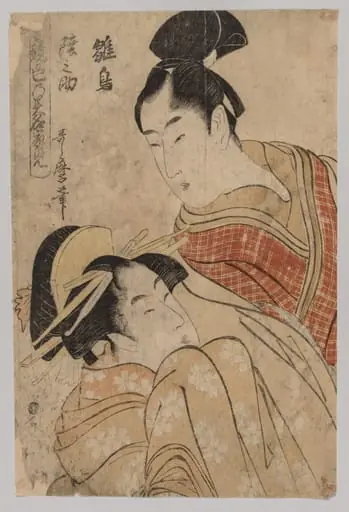 Making Love
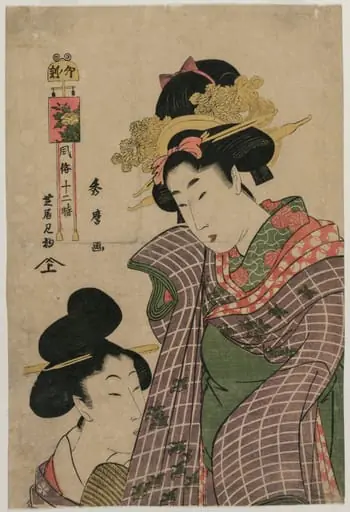 Going to the Kabuki Theater in the Hour of the Hare (From the Series The Twelve Hours with Daily Events)
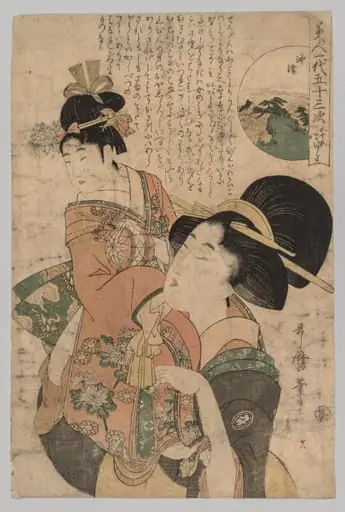 Nakatsu, from the series Fifty-three Stations in the Life of a Beauty
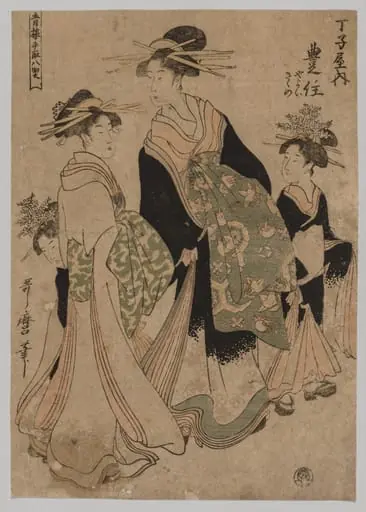 Courtesans and Attendants
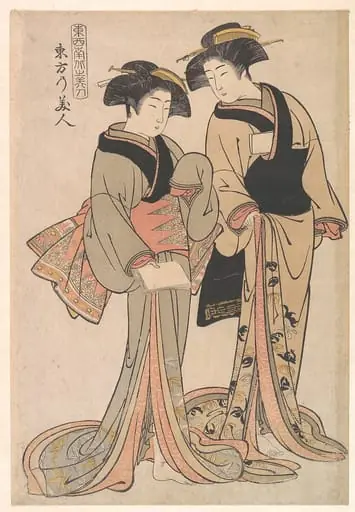 Untitled
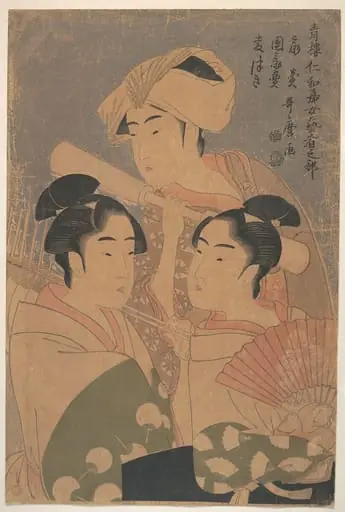 青楼仁和嘉女芸者之部 扇売 団扇売 麦つき|The Niwaka Performers
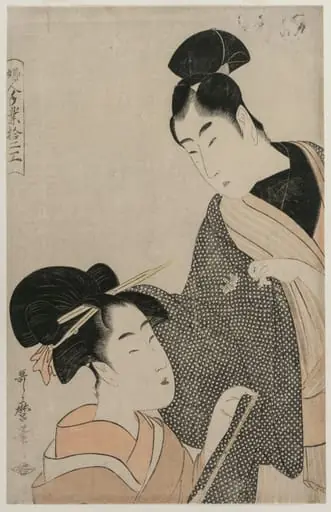 Woman Measuring a Man's Gown (from the series Twelve Occupations of Women)
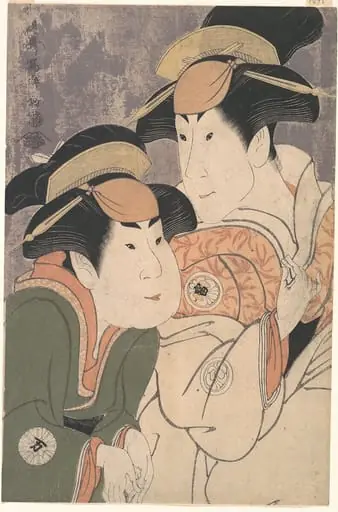 Untitled
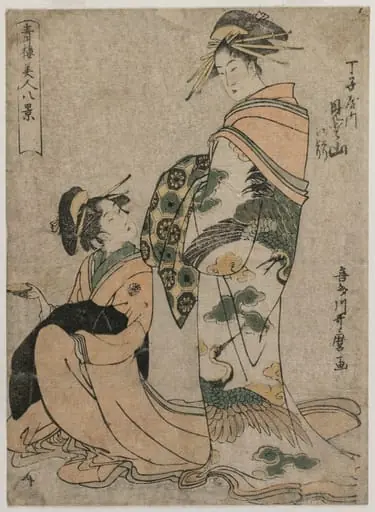 The Courtesan Misyama of Chojiya (from the series Eight Views of Beautiful Women of the Green Houses)
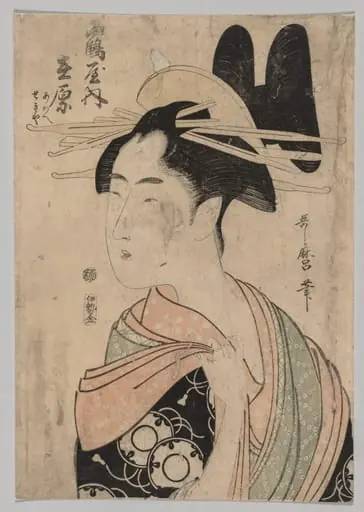 Woman of the Yoshiwara
 Half-length Portrait of Two Courtesans