Artwork
Net Fishing at Night
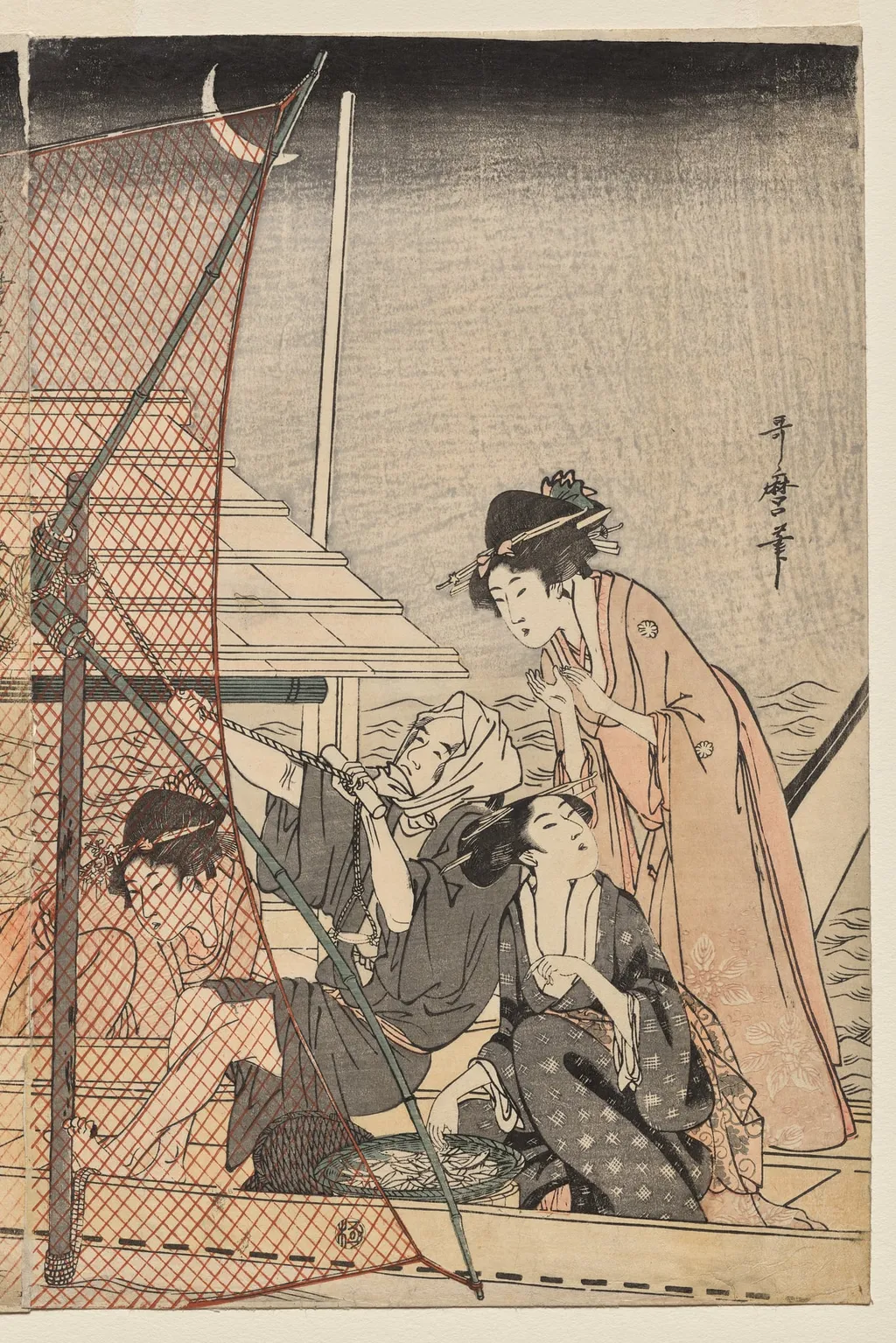
Net Fishing at Night is a print by the Romanticist artist Kitagawa Utamaro. It dates from 1800 and is held in the collection of the Cleveland Museum of Art. This print captures a nocturnal scene on the Sumida River, where leisure and labor coexist under moonlight.
About this work
Overview
The composition juxtaposes a party of pleasure-seekers with a fishing vessel, highlighting the layered rhythms of urban life.
This print captures a nocturnal scene on the Sumida River, where leisure and labor coexist under moonlight. Edo residents frequently took to the water at night to escape summer heat, and the river served both as a route to pleasure quarters and a working space for fishermen. The composition juxtaposes a party of pleasure-seekers with a fishing vessel, highlighting the layered rhythms of urban life.
Subject & Meaning
The scene contrasts the indulgent boat party—likely including courtesans and patrons—with the quiet labor of fishermen. This duality reflects the social fabric of Edo, where recreation and livelihood were intertwined along the river. The presence of nets, used both for fishing and as barriers against mosquitoes, subtly frames the tension between comfort and exposure in the humid night air.
Technique & Style
Utamaro employs layered printing to render the fishing net’s delicate texture, using varying ink tones to suggest depth and movement. The net’s pattern acts as a visual filter, framing figures and creating rhythm across the composition. His attention to subtle gradations in color and line reflects a refined ukiyo-e approach, prioritizing atmospheric nuance over bold narrative.
History & Provenance
The print likely belongs to a series focused on river scenes at night, though its exact origin remains uncertain due to variations in color and printing. Such works were produced for a broad urban audience, often circulated as affordable woodblock prints. The differing hues suggest possible publication across multiple editions or publishers, common in Utamaro’s later career.
Context
The Sumida River was a vital artery of Edo life, connecting residential areas with the Yoshiwara pleasure district. Evening boat excursions were a seasonal ritual, especially in summer, when the water offered relief from stifling heat. Fishing on the river was both economic necessity and cultural backdrop, making such scenes familiar and resonant to contemporary viewers.
Legacy
Utamaro’s depiction of everyday moments on the Sumida River contributed to the broader ukiyo-e tradition of documenting urban life with quiet precision. His focus on transient, intimate encounters—rather than grand narratives—helped define the genre’s humanistic character. These prints remain valuable records of Edo’s social rhythms and aesthetic sensibilities.
Artist & collection


 Untitled
 Untitled
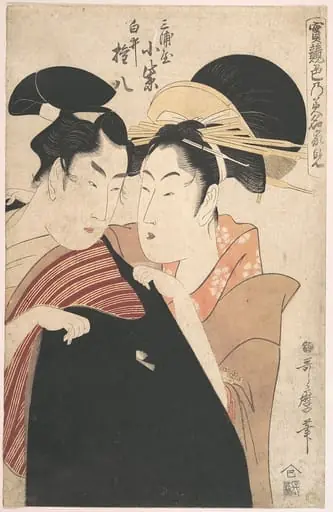 実競色乃美名家見 三浦屋小紫 白井権八|The Lovers Miura-ya Komurasaki and Shirai Gonpachi.
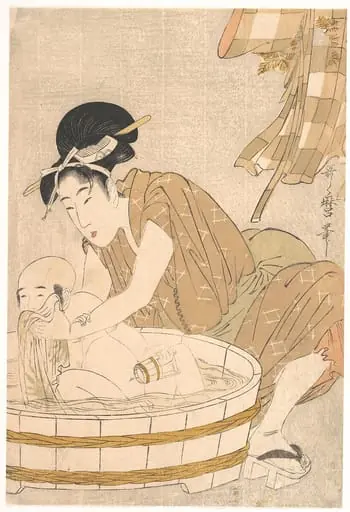 行水|Bathtime (Gyōzui)
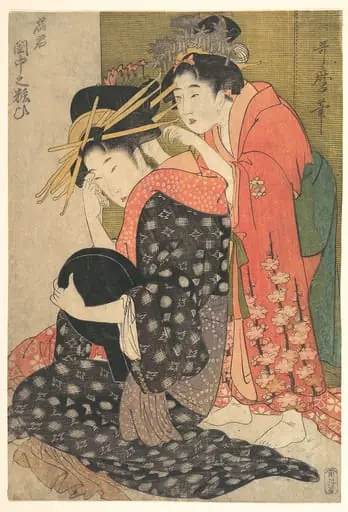 名君 閨中の粧ひ|The Oiran Yoso-oi Seated at Her Toilet
 Untitled
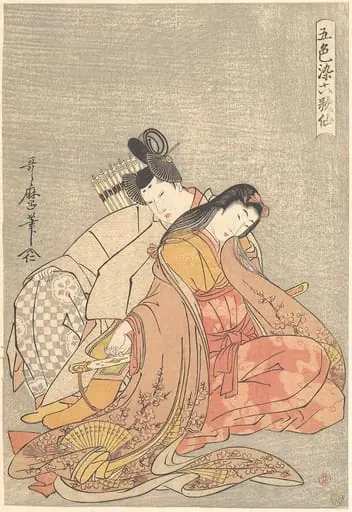 『五色染六歌仙』 在原業平と小野小町|“The Poet Ariwara no Narihira (825–880) and Ono no Komachi,” from the series Five Colors of Love for the Six Poetic Immortals (Goshiki-zome rokkasen)
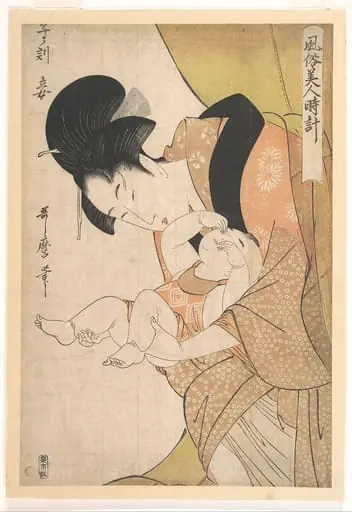 風俗美人時計 子ノ刻 妾|Midnight: Mother and Sleepy Child
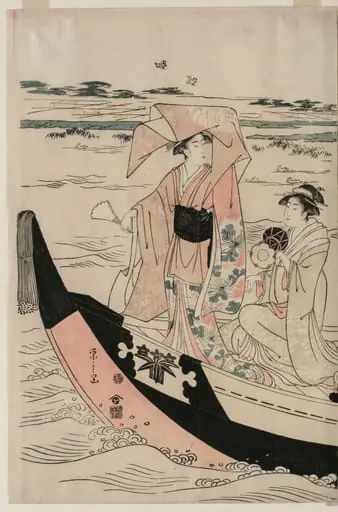 Women in a Pleasure Boat on the Sumida River
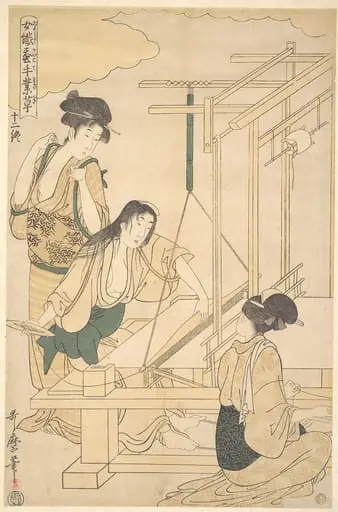 女織蚕手業草 十二終|Women Weaving Silk Cloth
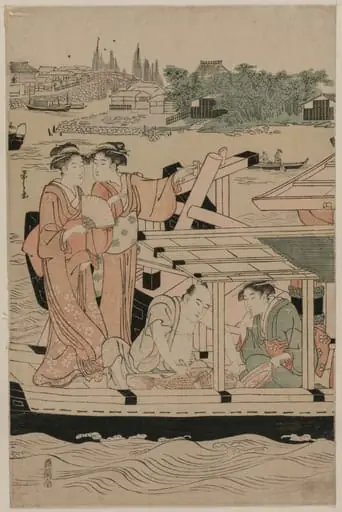 Leftmost Print from Pleasure Boats on the Sumida River beneath Shin-Ōhashi Bridge
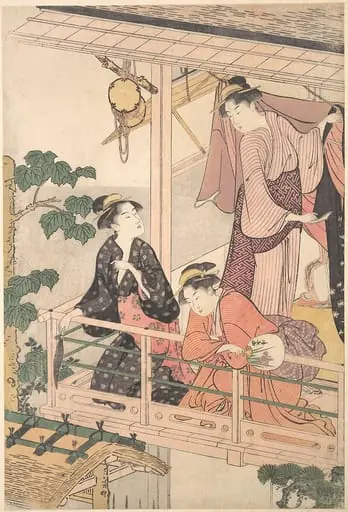 二階座敷に三人の女|Three Women on a Balcony
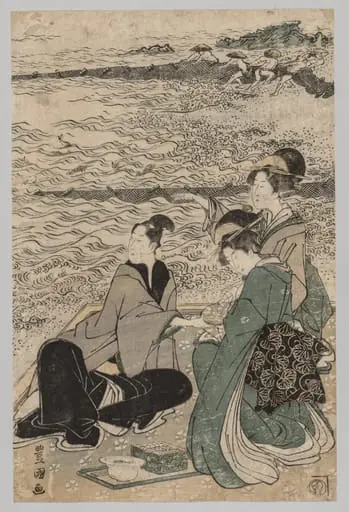 Man and Two Women at the Sea Shore
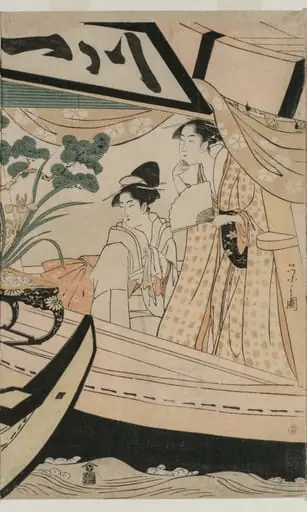 Party on the Pleasure Boat Kawaichimaru
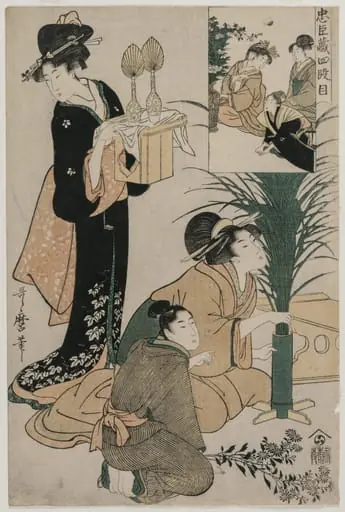 Chushingura: Act IV of The Storehouse of Loyalty
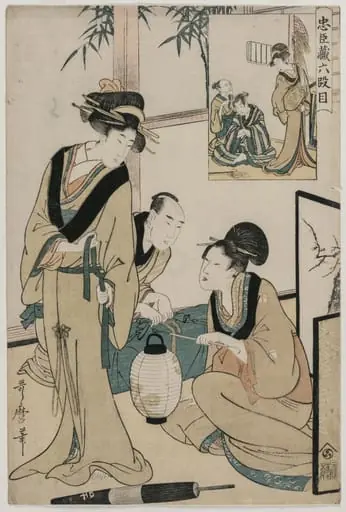 Chushingura: Act VI of The Storehouse of Loyalty
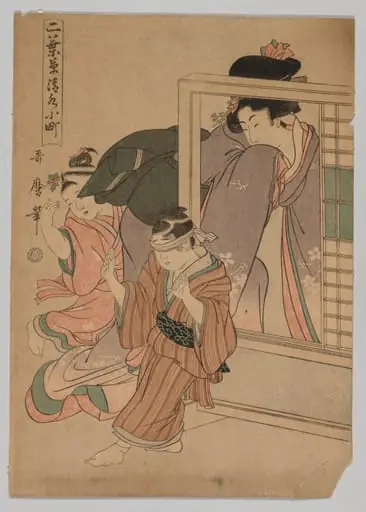 Kiyomizu Komachi from the series Little Seedlings: Seven Komachi