Artwork
Kiyomizu Komachi from the series Little Seedlings: Seven Komachi
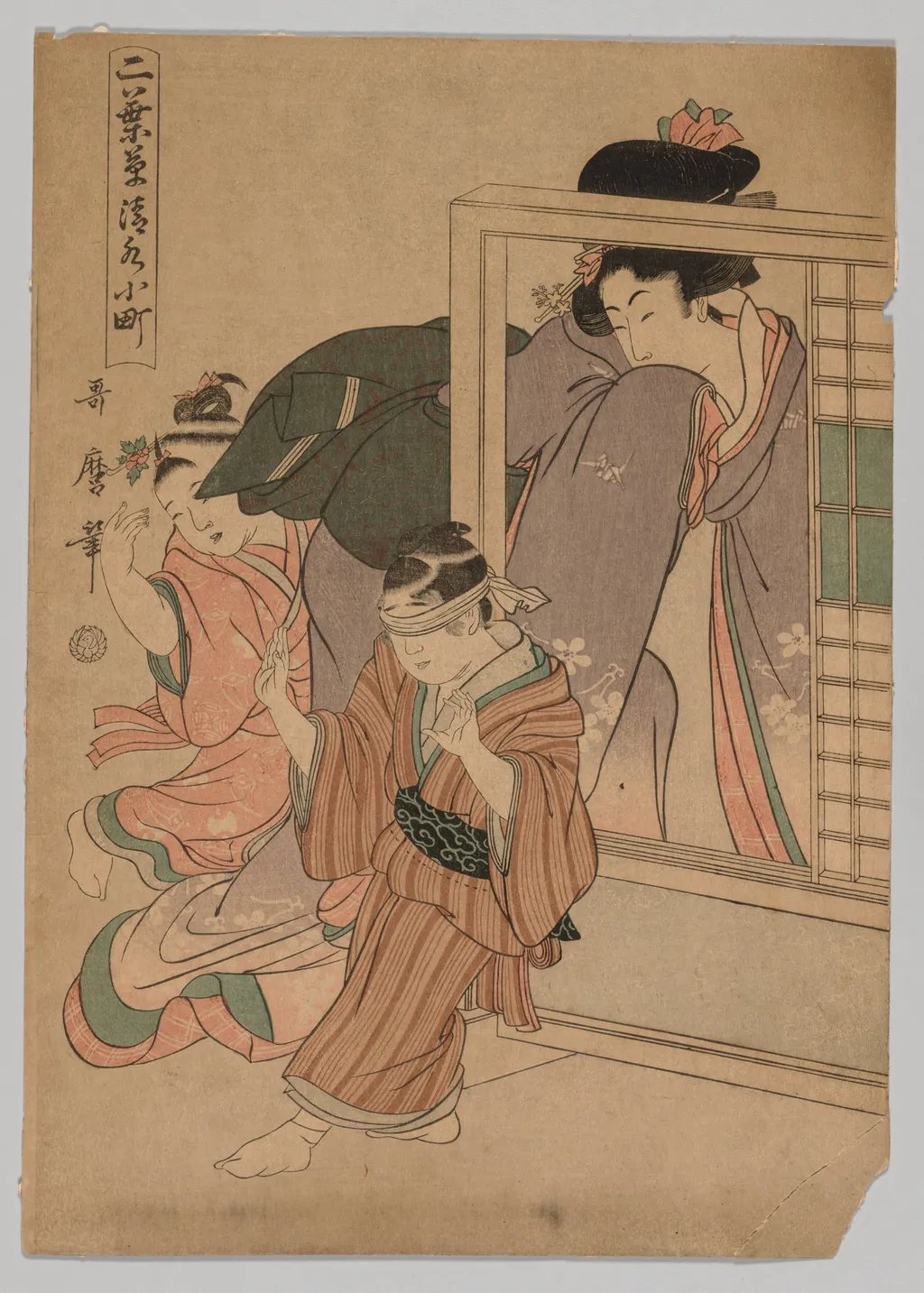
Kiyomizu Komachi from the series Little Seedlings: Seven Komachi is a print by the Romanticist artist Kitagawa Utamaro. It dates from 1803 and is held in the collection of the Cleveland Museum of Art.
About this work
Overview
Created around 1803 by Kitagawa Utamaro, this woodblock print is part of the series Little Seedlings: Seven Komachi. It depicts three women in an interior setting, rendered with the refined elegance characteristic of ukiyo-e. The print is held in the collection of The Cleveland Museum of Art and exemplifies Utamaro’s focus on intimate, everyday moments of women’s lives during the Edo period.
Subject & Meaning
The inclusion of a mirror introduces a layer of introspection, subtly reinforcing themes of fleeting youth and self-awareness tied to the Komachi legends.
The figures represent interpretations of the legendary poet Ono no Komachi, a symbol of beauty and transience in Japanese literature. Each woman’s posture and gesture suggests a different facet of her character—contemplation, restraint, and self-adornment. The inclusion of a mirror introduces a layer of introspection, subtly reinforcing themes of fleeting youth and self-awareness tied to the Komachi legends.
Technique & Style
Utamaro employs bold, clean outlines and areas of flat, unmodulated color typical of ukiyo-e printing. The composition is carefully balanced, with the mirror reflecting only a partial face, creating spatial depth without realism. Textures are suggested through subtle variations in pattern and line, not shading, emphasizing decorative harmony over naturalism.
History & Provenance
The print was produced during Utamaro’s mature period, shortly before his death in 1806. It was likely issued as part of a limited series, circulated among urban patrons in Edo. The Cleveland Museum of Art acquired it in the 20th century, preserving its original condition and coloration, which remain vivid despite its age.
Context
This work emerged during a time when ukiyo-e prints celebrated the lives of courtesans, actors, and literary figures. The Komachi series drew on classical poetry and folklore to elevate contemporary portraiture. Utamaro’s focus on quiet, interior scenes reflected a broader cultural interest in emotional nuance and the aesthetics of impermanence.
Legacy
Utamaro’s series contributed to the enduring appeal of Komachi as a cultural archetype in Japanese art. His ability to convey psychological depth through restrained composition influenced later generations of printmakers. The work remains a key example of how traditional literary themes were reimagined in the visual culture of early 19th-century Japan.
Artist & collection


 Untitled
 Untitled
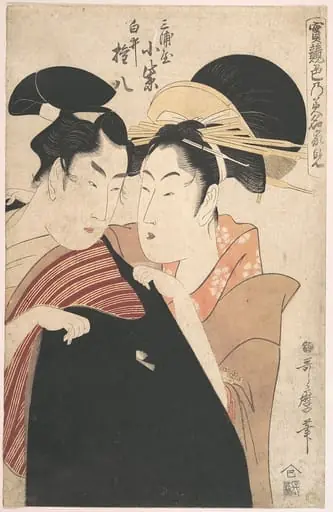 実競色乃美名家見 三浦屋小紫 白井権八|The Lovers Miura-ya Komurasaki and Shirai Gonpachi.
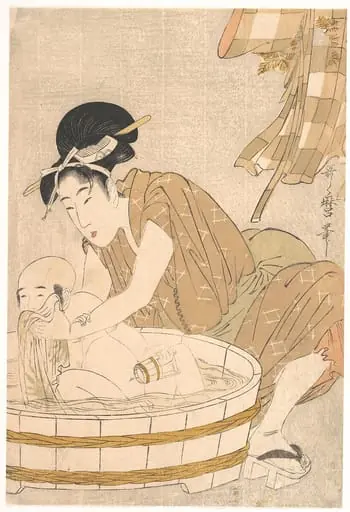 行水|Bathtime (Gyōzui)
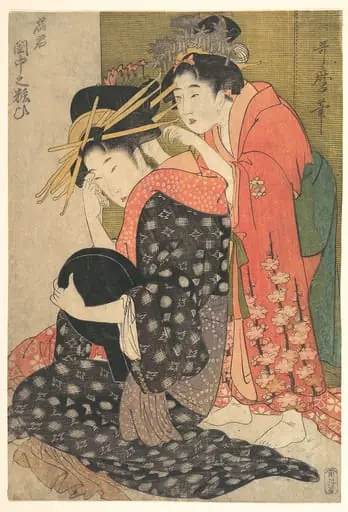 名君 閨中の粧ひ|The Oiran Yoso-oi Seated at Her Toilet
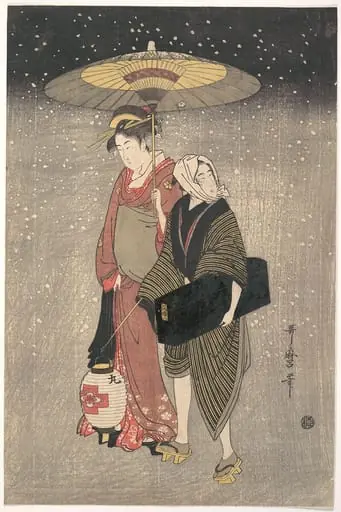 Untitled
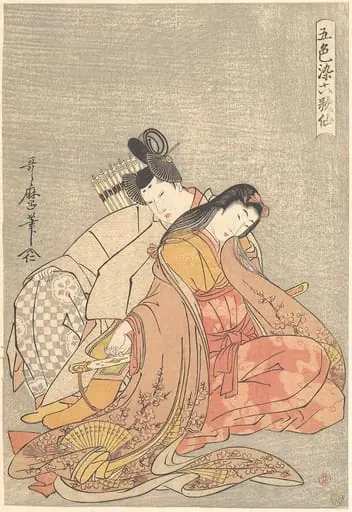 『五色染六歌仙』 在原業平と小野小町|“The Poet Ariwara no Narihira (825–880) and Ono no Komachi,” from the series Five Colors of Love for the Six Poetic Immortals (Goshiki-zome rokkasen)
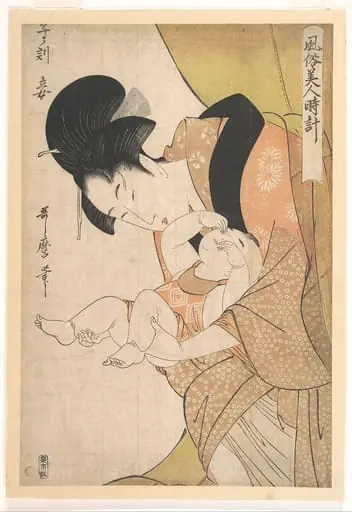 風俗美人時計 子ノ刻 妾|Midnight: Mother and Sleepy Child
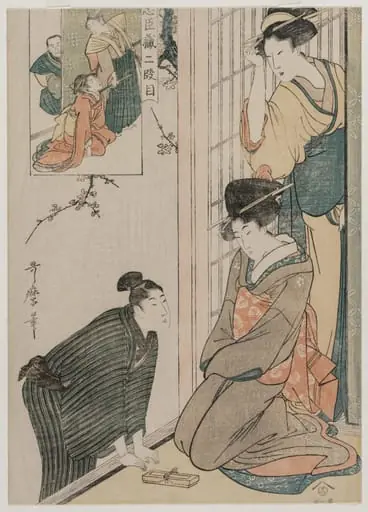 Chushingura: Act II of The Storehouse of Loyalty
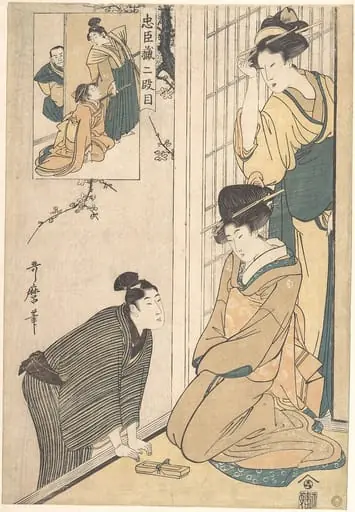 忠臣蔵二段目|A Young Man at the Side of a House
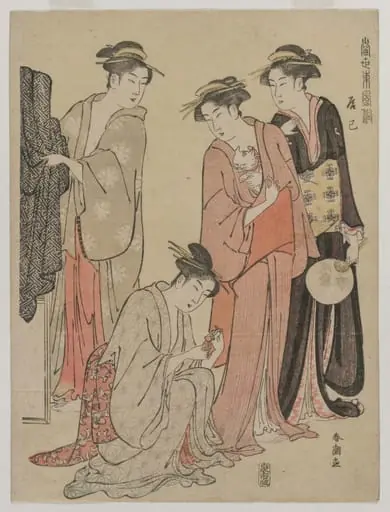 Women of the Tatsumi District (from the series Eastern Customs of the Present Day)
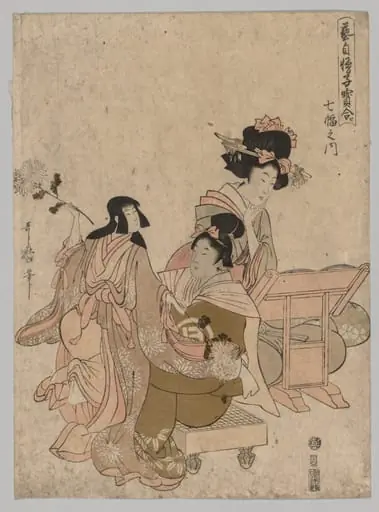 Bunraku Puppetry from the series Competition of Precious Children Proud of their Arts, Among Seven Scrolls
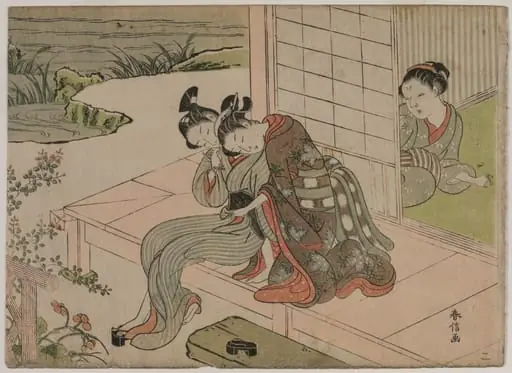 Woman Watching Young Couple Embrace on a Veranda
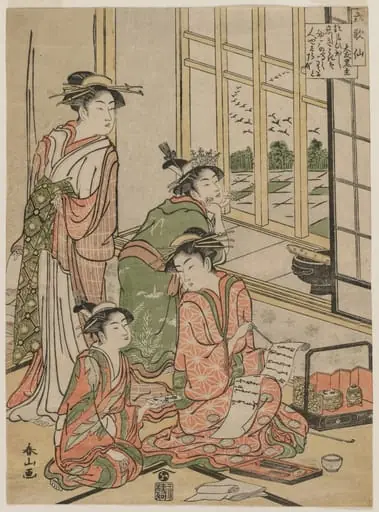 Courtesans at Leisure from the series The Six Immortal Poets
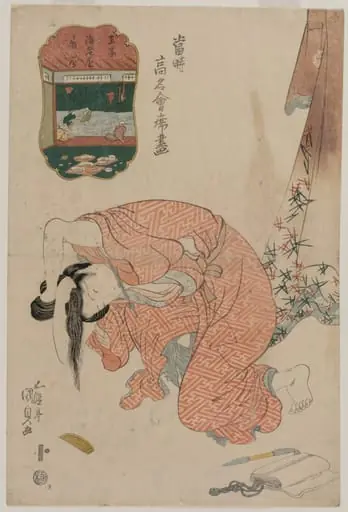 Woman Tying Her Hair (from the series Famous Restaurants of the Present Day)
 Courtesans of the Ōgiya on a Spring Outing
 Three Women (from the series A Brief Collection of Japanese Beauties)
 Making Love