Artwork
Takigawa of the Ōgiya from the series A Selection of Eastern Beauties
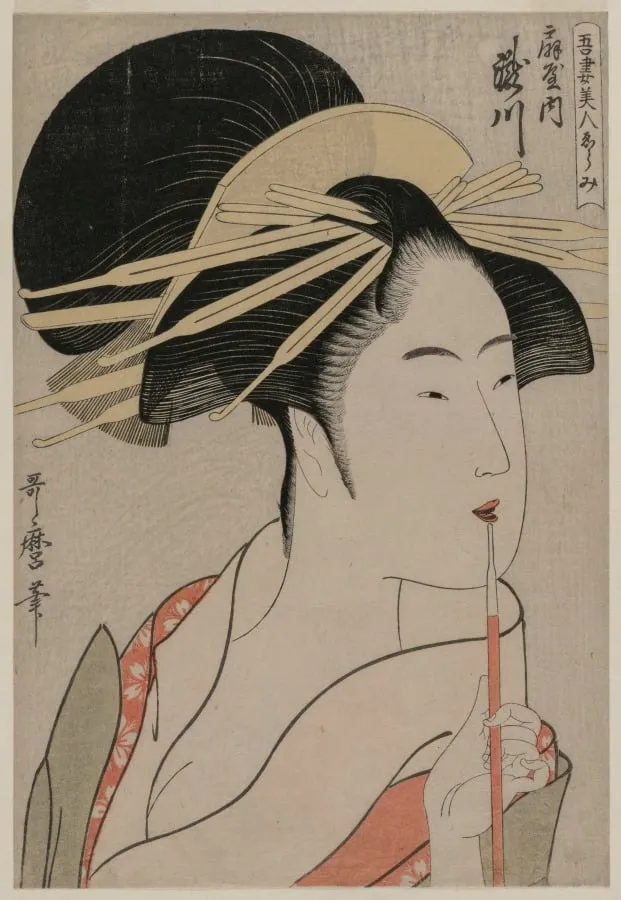
Takigawa of the Ōgiya from the series A Selection of Eastern Beauties is a print by the Romanticist artist Kitagawa Utamaro. It dates from 1798 and is held in the collection of the Cleveland Museum of Art. This woodblock print depicts Takigawa, a renowned courtesan of the Ōgiya brothel in Edo’s Yoshiwara district.
About this work
The artist used thin wood strips to print those delicate hairs, a trick that made the image feel real.
You see a woman in a patterned kimono, holding a long pipe to her lips. A few loose strands of hair fall by her temple.
This is Takigawa, a famous courtesan in Edo (now Tokyo). People bought prints like this to follow the latest styles—like fashion magazines today. The artist used thin wood strips to print those delicate hairs, a trick that made the image feel real.
If you like this, look up *japan, edo period (1615–1868)* for more prints of daily life.
Overview
This woodblock print depicts Takigawa, a renowned courtesan of the Ōgiya brothel in Edo’s Yoshiwara district. Part of the series A Selection of Eastern Beauties, it captures her in a moment of quiet indulgence, smoking a long tobacco pipe. The image reflects the popularity of courtesan portraiture in the late 18th century, where such prints served as visual guides to contemporary fashion and social trends among urban women.
Subject & Meaning
Takigawa is portrayed not as an idealized figure but as a real, recognizable personality within Edo’s pleasure quarters. Her act of smoking tobacco signals both personal refinement and alignment with elite fashion. The print functions as a cultural artifact, documenting how courtesans embodied aesthetic authority, influencing dress, grooming, and behavior among the merchant class who collected such images.
Technique & Style
The artist employed fine woodblock carving to render delicate details, notably the wisps of hair at the temple, created by leaving narrow, uncarved ridges in the printing block. This technique, known as *karazuri*, produced subtle texture without ink, enhancing realism. The kimono’s pattern is rendered with precision, and the composition emphasizes stillness, focusing attention on the courtesan’s poised demeanor and the tactile quality of her attire.
History & Provenance
Produced in the 1780s, the print originates from the flourishing ukiyo-e market in Edo, where publishers commissioned series of famous beauties to meet public demand. The Ōgiya was among the most esteemed brothels, and Takigawa’s fame ensured wide circulation of her image. Surviving impressions are held in major collections, including the British Museum and the Metropolitan Museum of Art, attesting to its early and enduring appeal.
Context
During the late Edo period, the Yoshiwara was a center of fashion and entertainment, and courtesans like Takigawa were celebrities whose styles were avidly imitated. Woodblock prints served as affordable, mass-produced media, analogous to modern fashion magazines. Their circulation reflected the rise of consumer culture among townspeople, who used these images to navigate and participate in urban aesthetics.
Legacy
This print exemplifies how ukiyo-e bridged art and daily life, preserving the visual language of Edo’s pleasure districts. Its technical innovation in depicting fine detail influenced later printmakers, while its subject matter contributed to the global perception of Japanese aesthetics in the 19th century. Today, it remains a key reference for understanding gender, status, and visual culture in pre-modern Japan.
Artist & collection


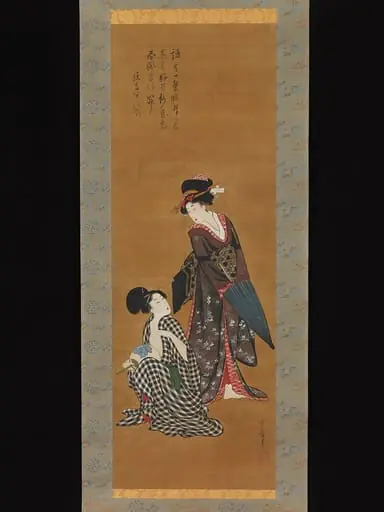 Untitled
 Untitled
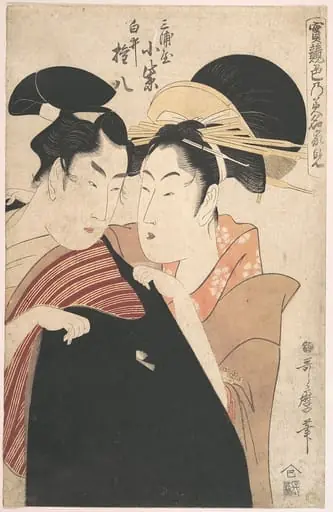 実競色乃美名家見 三浦屋小紫 白井権八|The Lovers Miura-ya Komurasaki and Shirai Gonpachi.
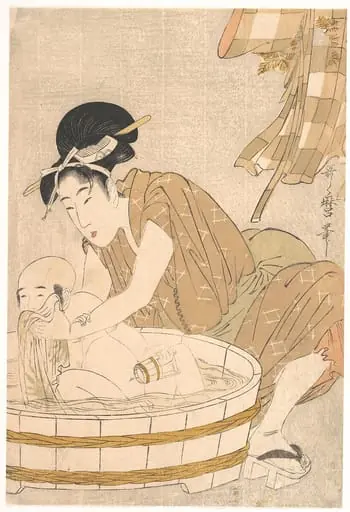 行水|Bathtime (Gyōzui)
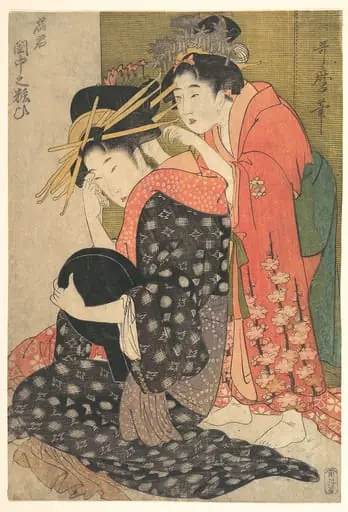 名君 閨中の粧ひ|The Oiran Yoso-oi Seated at Her Toilet
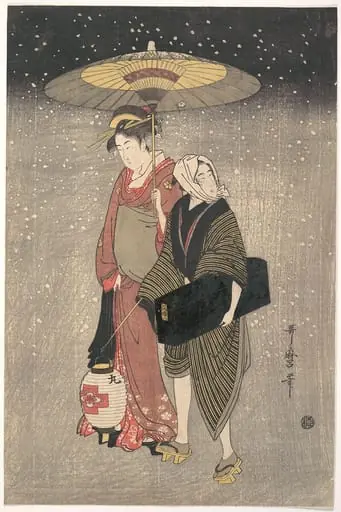 Untitled
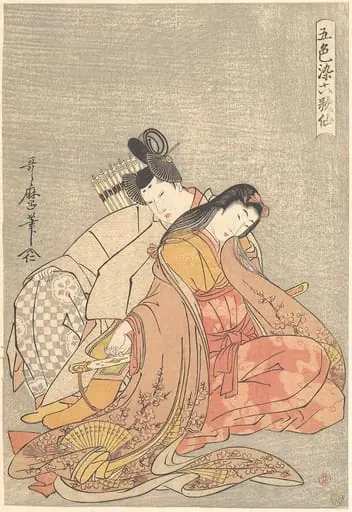 『五色染六歌仙』 在原業平と小野小町|“The Poet Ariwara no Narihira (825–880) and Ono no Komachi,” from the series Five Colors of Love for the Six Poetic Immortals (Goshiki-zome rokkasen)
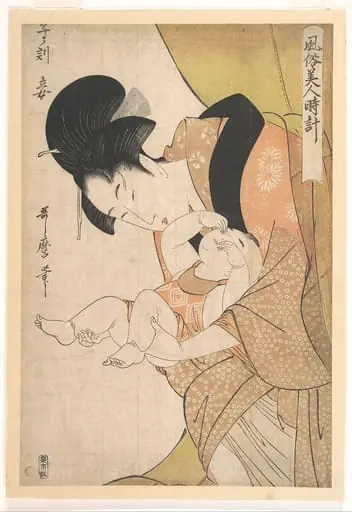 風俗美人時計 子ノ刻 妾|Midnight: Mother and Sleepy Child
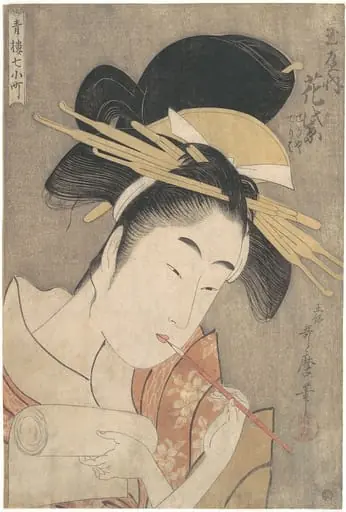 『青楼七小町』 「玉屋内花紫」|“Hanamurasaki of the Tamaya,” from the series Seven Komachi of the Pleasure Quarters (Seirō Nana Komachi)
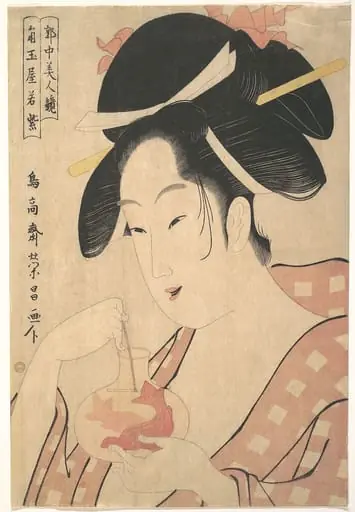 Untitled
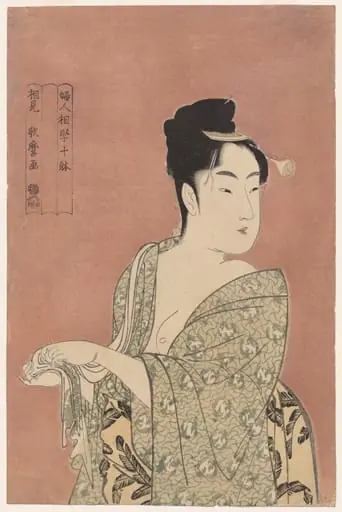 The Flirtatious Type, from Ten Types in the Physiognomy of Women
 Untitled
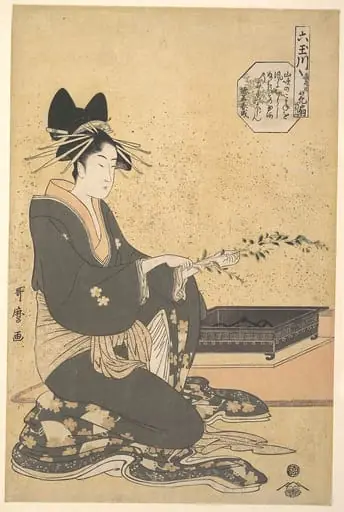 喜多川歌麿画 六玉川 扇屋内 花扇 扇屋内花扇|The Oiran Hanaogi of Ogiya, from the series “Six Jewel Rivers” (Mutamagawa)
 Untitled
 Untitled