Artwork
Untitled
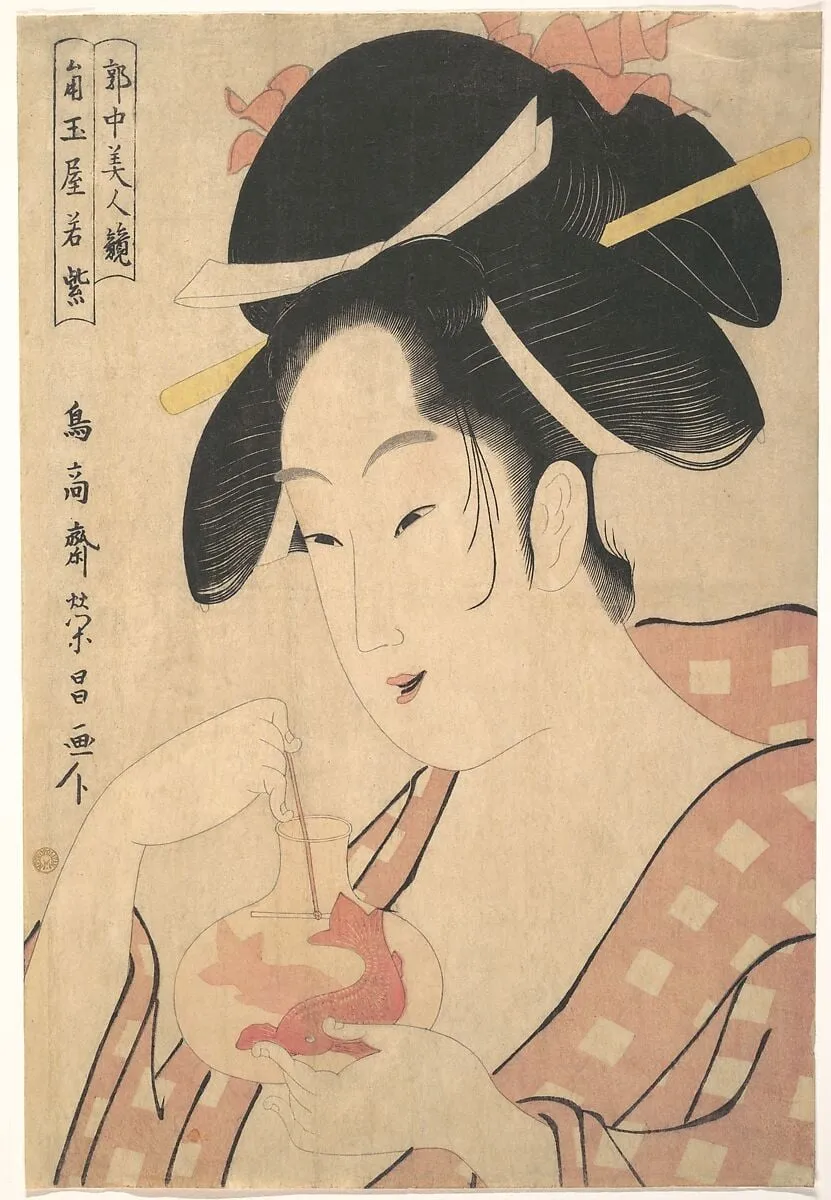
Untitled is an ink print by the Romanticist artist Chōkōsai Eishō. It dates from 1800 and is held in the collection of the Metropolitan Museum of Art.
About this work
Overview
Eishō, a pupil of the renowned Eishi, produced nearly 200 known works, many published by Yamaguchiya Chūsuke, indicating a sustained and professional practice.
This woodblock print, dated around 1800, is attributed to Chōkōsai Eishō, an artist active in the late 18th century. Executed in ink and color on paper, it belongs to the ukiyo-e tradition, which captured scenes of everyday life in Edo-period Japan. Eishō, a pupil of the renowned Eishi, produced nearly 200 known works, many published by Yamaguchiya Chūsuke, indicating a sustained and professional practice.
Subject & Meaning
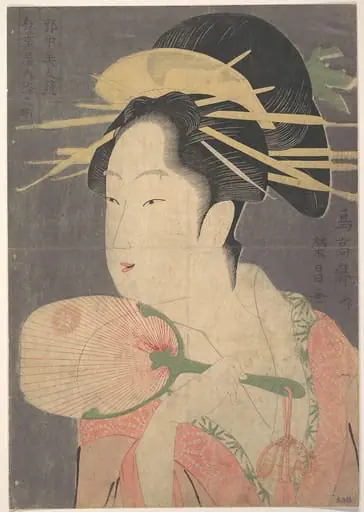
The print depicts a woman in profile, holding a small fish in one hand. Her elaborate updo, adorned with a black fan, and the patterned sleeve suggest she is a figure of refined taste, possibly a courtesan or entertainer. The fish, rendered with unusual vividness, may symbolize transience or the fleeting nature of pleasure—common themes in ukiyo-e. The plain background focuses attention on her poised demeanor and the quiet intimacy of the moment.
Technique & Style
Eishō employed bold, precise black outlines to define the contours of the woman’s face and hair, creating a sketch-like clarity. Delicate color washes in pink and gold subtly highlight her garment, while the fish stands out with heightened saturation against her pale skin. The composition avoids elaborate detail, favoring restraint and elegance—hallmarks of the late Eishi school’s aesthetic, which prioritized subtlety over spectacle.
History & Provenance
The print was likely produced during Eishō’s most active period, around 1800, and published by Yamaguchiya Chūsuke, a known printer of ukiyo-e works. While specific ownership history is undocumented, its survival among nearly 200 attributed prints suggests it was part of a broader commercial output. Its condition and style align with other prints from this publisher, indicating standard production practices of the era.
Context
Created during the final decades of the 18th century, this work emerged in a time when ukiyo-e was increasingly focused on individual portraiture and quiet, intimate moments. Eishō’s style reflects the transition from the theatricality of earlier ukiyo-e to a more subdued, refined sensibility. His training under Eishi positioned him within a lineage that valued elegance and psychological nuance over overt narrative.
Legacy
Chōkōsai Eishō’s body of work, though less widely known than that of his master, contributes to the understanding of late Edo-period printmaking. His restrained compositions and attention to detail influenced a generation of artists who moved away from dramatic scenes toward introspective portrayals. Surviving prints like this one help document the evolution of ukiyo-e’s visual language in the years before its 19th-century transformations.
Artist & collection
Artist
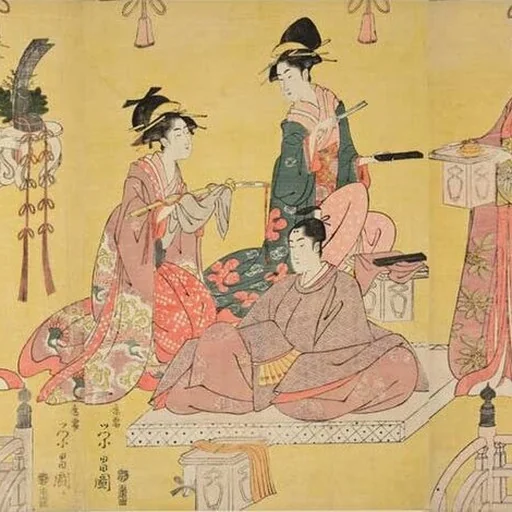
Chōkōsai Eishō (鳥高斎 栄昌, fl. 1790s) was a Japanese ukiyo-e artist. He also used the name Shōeidō (昌栄堂). Eishō's personal details are unknown. His works that remain show a practised skill, so it is likely that they…

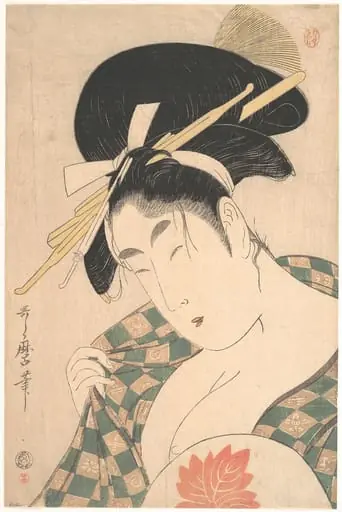 Untitled
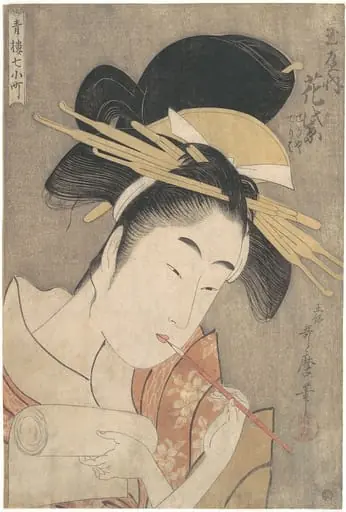 『青楼七小町』 「玉屋内花紫」|“Hanamurasaki of the Tamaya,” from the series Seven Komachi of the Pleasure Quarters (Seirō Nana Komachi)
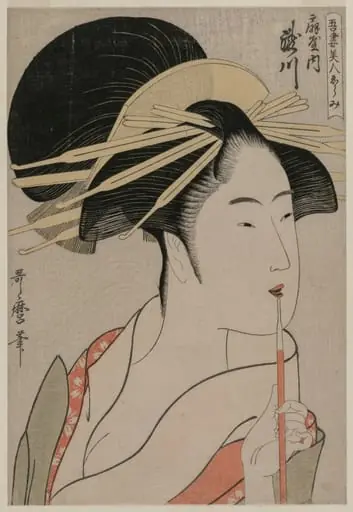 Takigawa of the Ōgiya from the series A Selection of Eastern Beauties
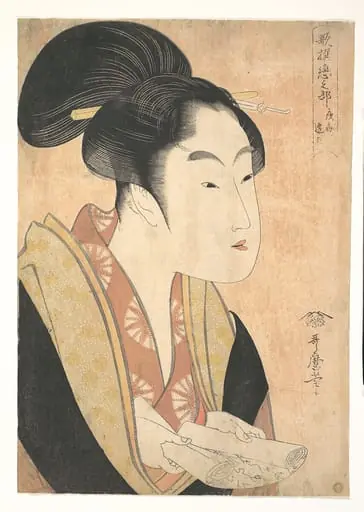 歌撰恋之部 夜毎に逢恋|A Young Woman Reading A Letter
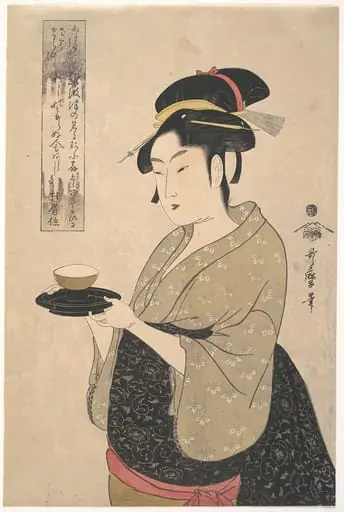 難波屋おきた|Okita of the Naniwa-ya Tea-house
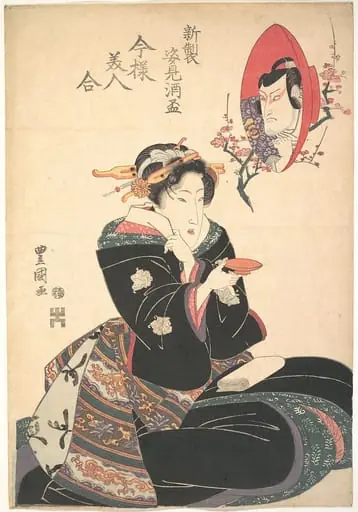 Untitled
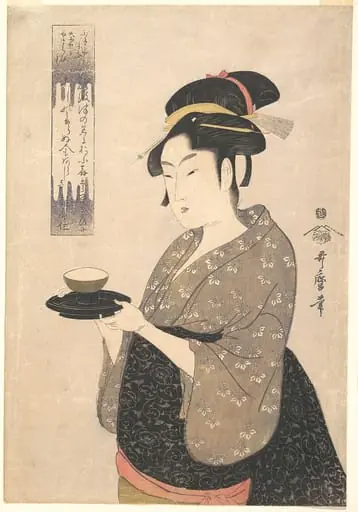 Naniwaya Okita|喜多川歌麿画 難波屋おきた|Okita of the Naniwaya Teahouse
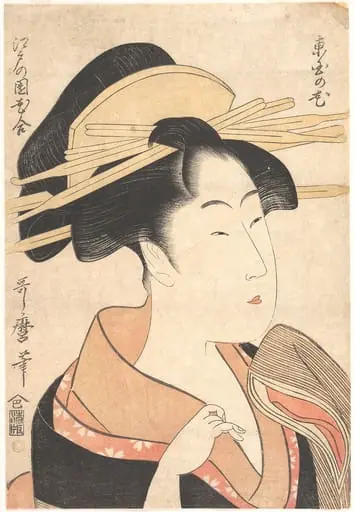 江戸の園花合 東屋の花|Azumaya no Hana
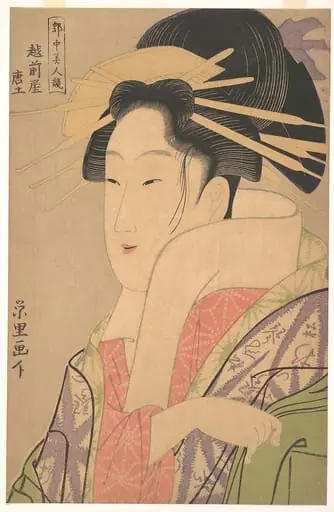 Untitled
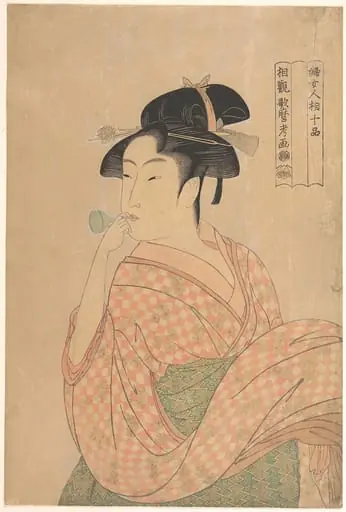 喜多川歌麿画 「婦女人相十品」 ポペンを吹く娘|Young Woman Blowing a Popen (glass noisemaker), from the series “Ten Classes of Women’s Physiognomy” (Fujo ninsō juppen)
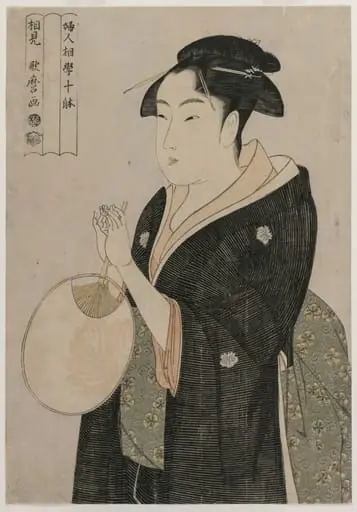 Woman Holding a Fan (from the series Ten Aspects of the Physiognomy of Women)
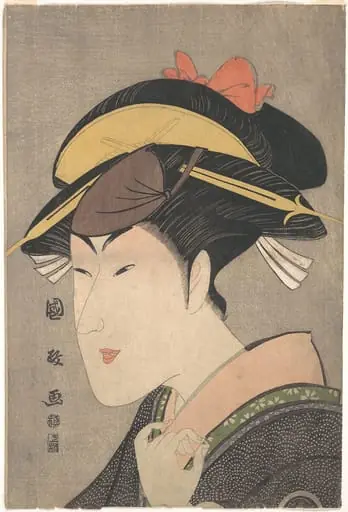 Untitled