Artwork
Yamashiro Province from the series Fashionable Six Jewel Rivers (Furyu Mu Tamagawa)
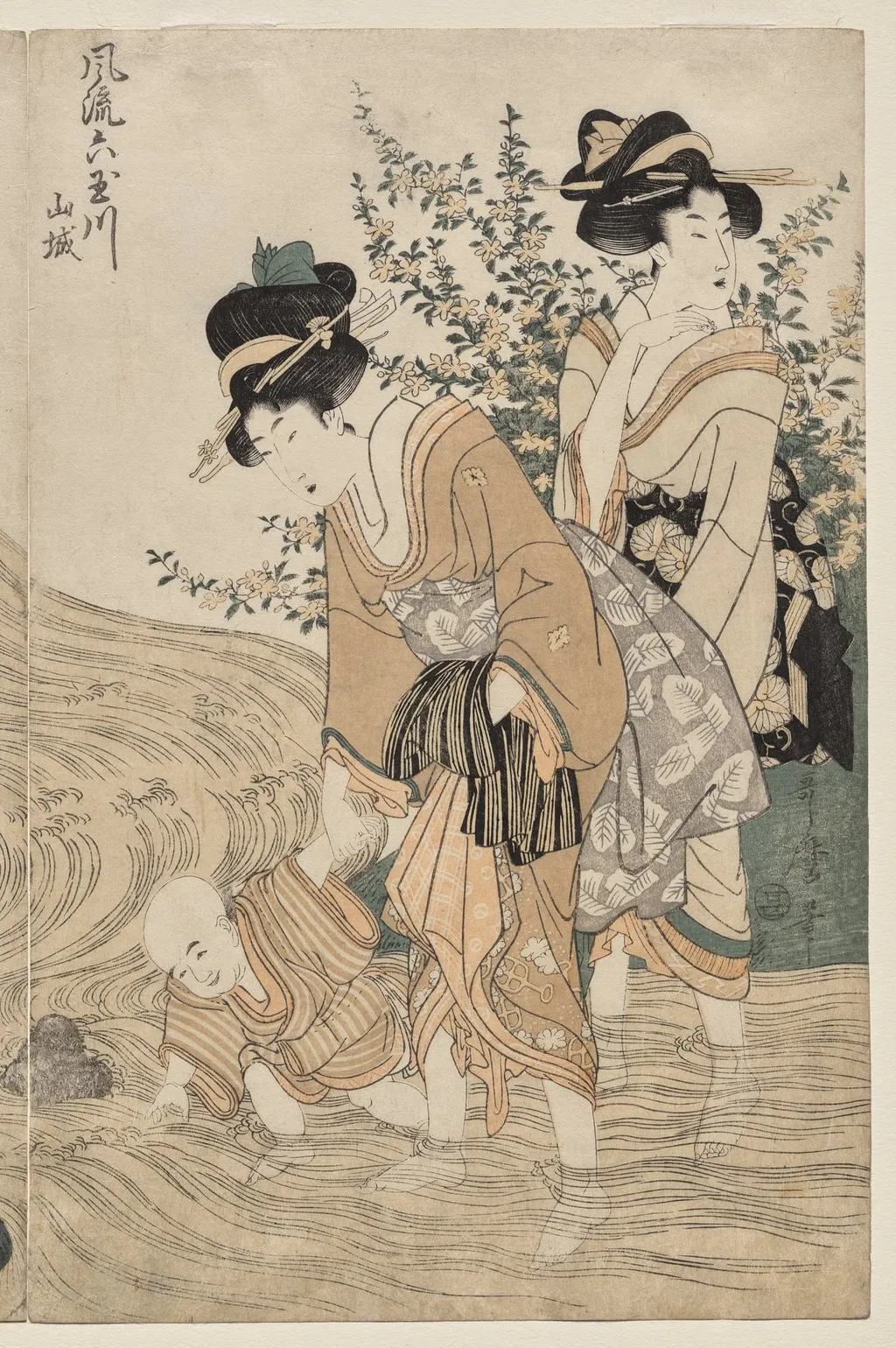
Yamashiro Province from the series Fashionable Six Jewel Rivers (Furyu Mu Tamagawa) is a print by the Romanticist artist Kitagawa Utamaro. It dates from 1804 and is held in the collection of the Cleveland Museum of Art.
About this work
Overview
The print is part of the collection at The Cleveland Museum of Art, where it exemplifies Utamaro’s mastery of intimate, atmospheric scenes.
This ukiyo-e print is one of six in Kitagawa Utamaro’s series Fashionable Six Jewel Rivers, produced around 1804. It depicts a scene from Yamashiro Province, a region historically associated with cultural refinement. The composition centers on two women in a riverside garden, rendered with subtle tonal gradations and restrained color. The print is part of the collection at The Cleveland Museum of Art, where it exemplifies Utamaro’s mastery of intimate, atmospheric scenes.
Subject & Meaning
The two figures engage in a quiet, unspoken interaction—one standing with a fan, the other kneeling and reaching toward her. Their gestures suggest a moment of personal connection, possibly ritual or daily routine, set against the tranquil riverbank. The scene evokes the seasonal beauty of Yamashiro, a place celebrated in poetry and travel literature. The absence of overt narrative invites contemplation rather than storytelling, aligning with the aesthetic of refined understatement.
Technique & Style
Utamaro employs fine, flowing lines to define the figures’ robes and the rippling water, creating a sense of motion that unites the human forms with the landscape. Soft, muted pigments—pale pinks, grays, and greens—enhance the delicate atmosphere. The white blossoms and wavy water lines are rendered with minimal detail, relying on suggestion rather than precision. This restrained technique emphasizes harmony and grace over decorative excess.
History & Provenance
Created during the late Edo period, the print belongs to a series that reimagined traditional river landscapes through contemporary fashion and female figures. Though the original publisher and early owners are undocumented, the print entered The Cleveland Museum of Art’s collection through established channels of Japanese print acquisition in the 20th century. Its preservation reflects growing Western interest in ukiyo-e as fine art rather than ephemeral media.
Context
The series Fashionable Six Jewel Rivers responds to the Edo-period fascination with travel, poetry, and regional identity. While earlier artists depicted these rivers in classical landscapes, Utamaro replaced monks and pilgrims with stylish women, shifting focus to urban aesthetics and feminine grace. This reflects broader cultural trends: the rise of the merchant class, the popularity of illustrated guidebooks, and the blending of nature with modern life in popular print culture.
Legacy
Utamaro’s approach in this series influenced later ukiyo-e artists by prioritizing emotional nuance and compositional balance over spectacle. The quiet dignity of the figures and the integration of figure and environment became touchstones for 19th-century printmakers. Today, the work is studied for its subtle treatment of space and gender, offering insight into how everyday moments were elevated in Japanese visual culture.
Artist & collection


 Untitled
 Untitled
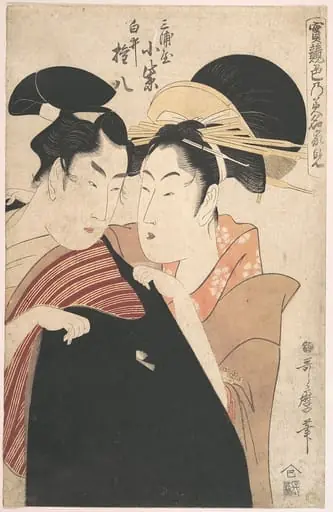 実競色乃美名家見 三浦屋小紫 白井権八|The Lovers Miura-ya Komurasaki and Shirai Gonpachi.
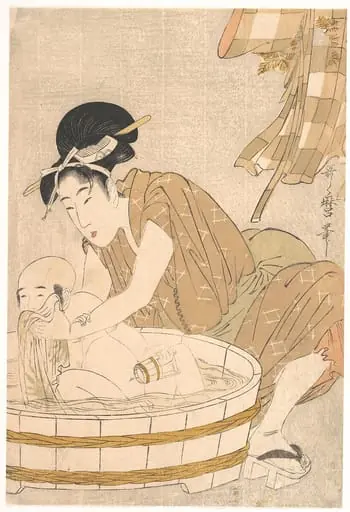 行水|Bathtime (Gyōzui)
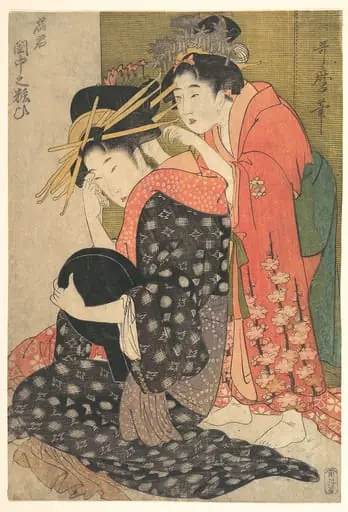 名君 閨中の粧ひ|The Oiran Yoso-oi Seated at Her Toilet
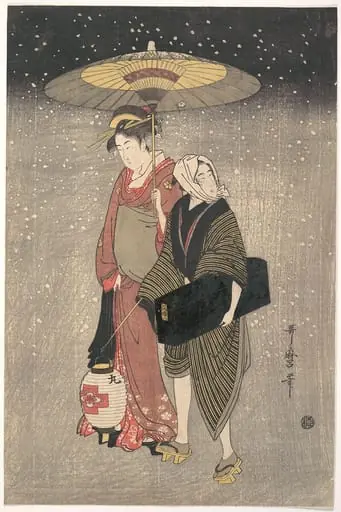 Untitled
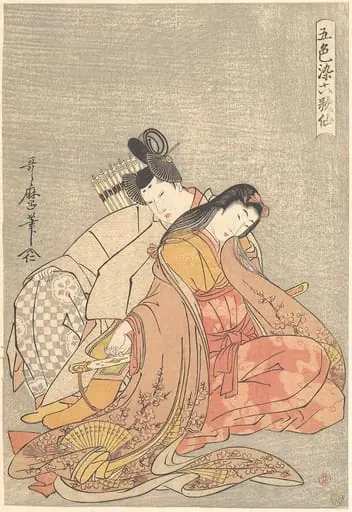 『五色染六歌仙』 在原業平と小野小町|“The Poet Ariwara no Narihira (825–880) and Ono no Komachi,” from the series Five Colors of Love for the Six Poetic Immortals (Goshiki-zome rokkasen)
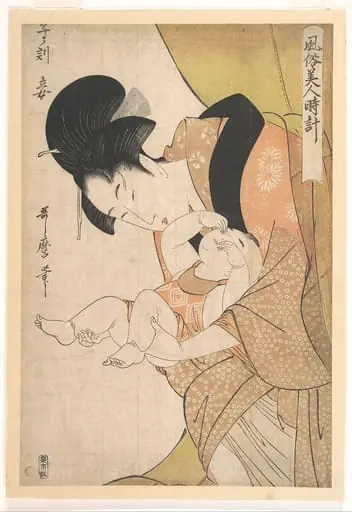 風俗美人時計 子ノ刻 妾|Midnight: Mother and Sleepy Child
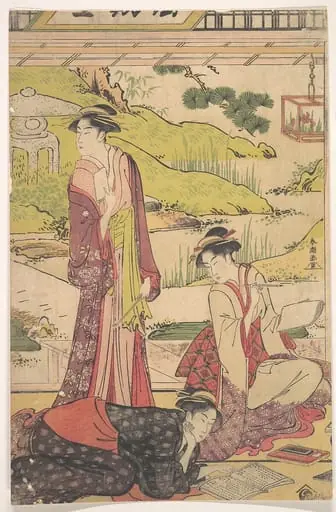 あやめ燈籠図|Three Women Enjoying Literary Pursuits
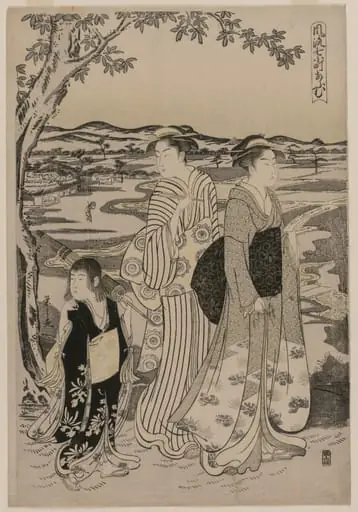 Omu the Parrot (from the series Seven Elegant Episodes from the Life of the Poetess Ono no Komachi)
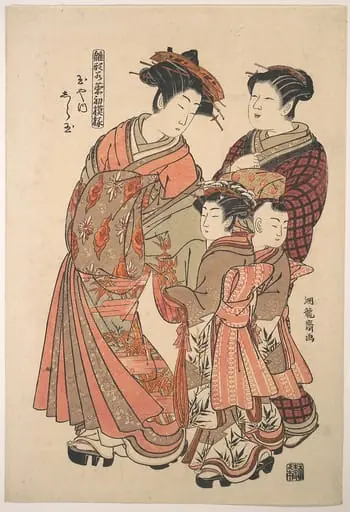 『雛形若菜初模様 玉や内 しら玉』|The Courtesan Shiratama of the Tamaya Brothel, from the series “A Pat-tern Book of the Year’s First Designs, Fresh as Spring Herbs” (“Hinagata wakana hatsu moyō”)
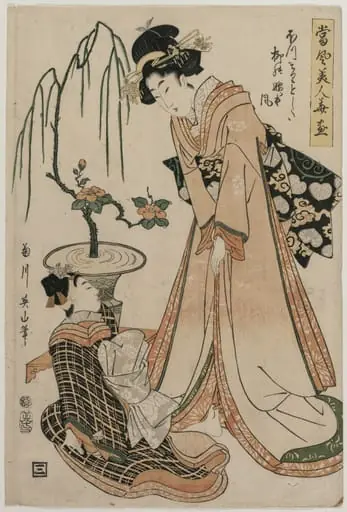 A Lady-in-Waiting with Waist as Slender as a Willow from the series Flowers and Modern Beauties
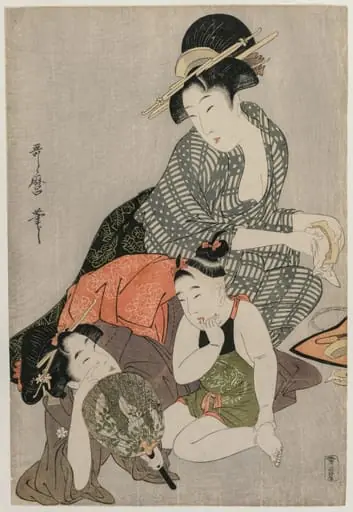 Cleaning Combs
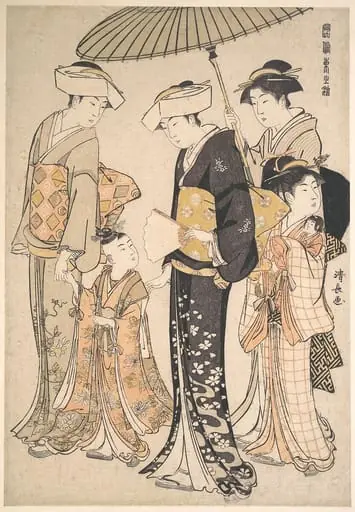 「風俗東之錦」 姫君と侍女四人|High-Ranking Samurai Girl with Four Attendants, from the series A Brocade of Eastern Manners (Fūzoku Azuma no nishiki)
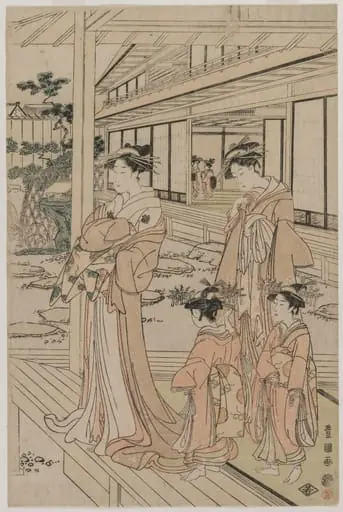 Courtesan Standing on a Veranda