Artwork
Landslide (Bergsturz)
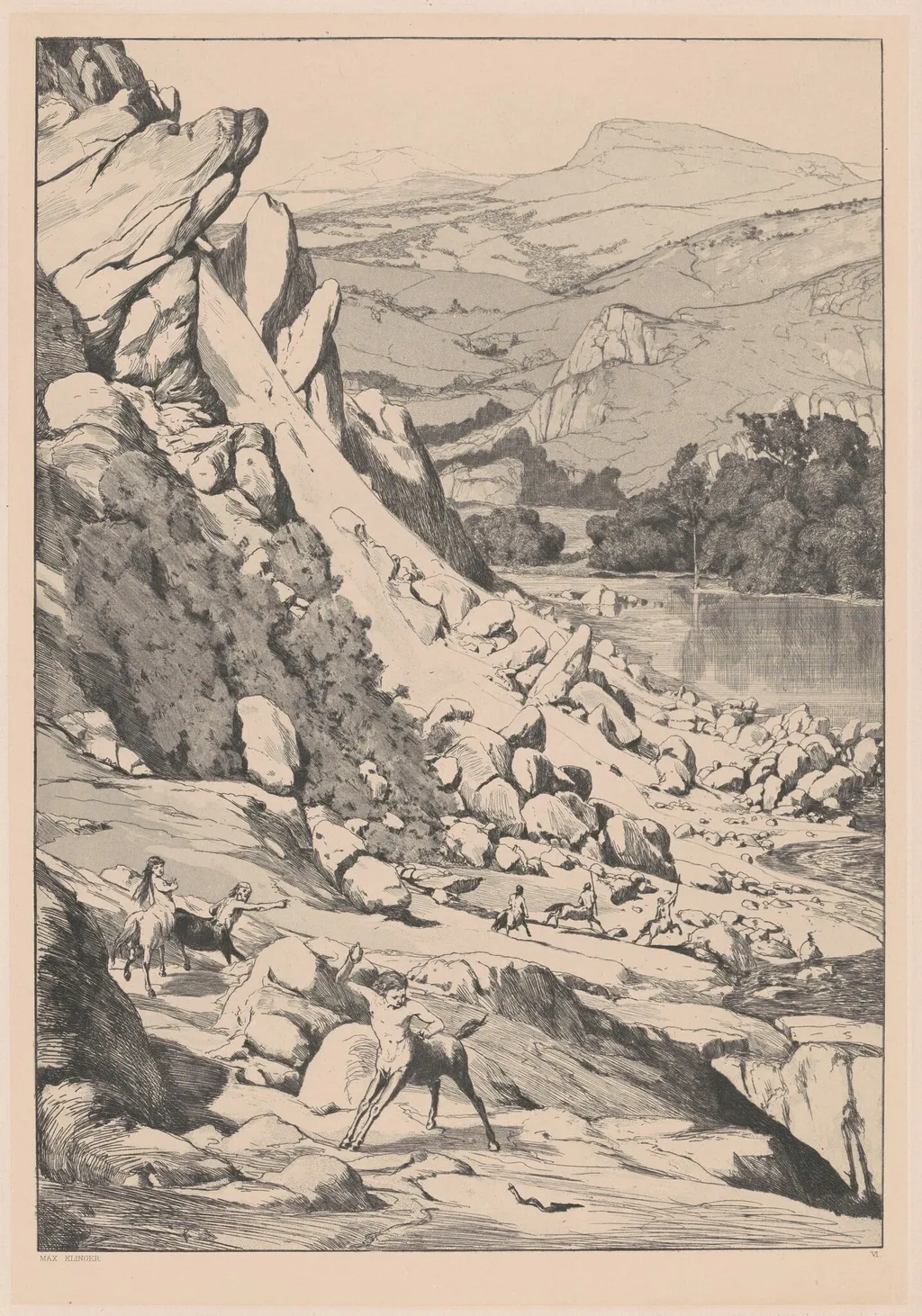
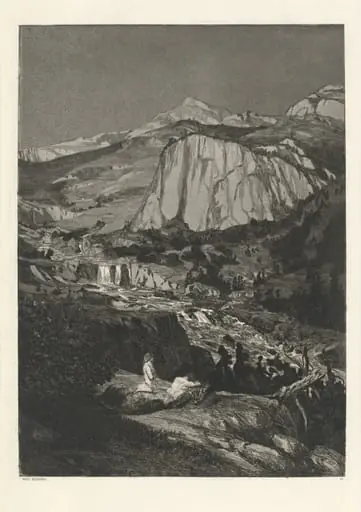
Landslide (Bergsturz) is an ink print by the Impressionist artist Max Klinger. It dates from 1881 and is held in the collection of the National Gallery of Art.
About this work
Overview
Created in 1881, *Landslide (Bergsturz)* is a black‑and‑white print by German artist Max Klinger. Executed with etching and aquatint, the work captures a sudden mountain collapse, portraying tumbling rocks, a buried stream and fleeing figures amid a chaotic terrain.
Subject & Meaning
The image presents a violent landslide on a steep slope, where jagged boulders cascade over a narrow watercourse. In the foreground, a handful of people and animals scramble to escape the onrush of debris, emphasizing human vulnerability within a hostile natural environment.
Technique & Style
Klinger combined traditional etching lines with aquatint’s tonal washes to render the scene’s dramatic contrasts. The interplay of deep shadows and lighter areas models the rugged rock faces and water, while the textured surfaces convey the dust and turbulence of the falling material.
Context
Working at the intersection of Symbolism, the Vienna Secession and Jugendstil, Klinger treated printmaking as an autonomous artistic discipline. *Landslide* reflects his interest in narrative drama and psychological tension, themes common among late‑19th‑century Symbolist artists.
History & Provenance
The print was first issued in 1881 as part of Klinger’s series of graphic works exploring catastrophe and myth. It has since been held in several European museum collections, illustrating the artist’s reputation as a leading figure in the development of modern printmaking.
Own this work as a print
Artist & collection

Artist
Max Klinger (18 February 1857 – 5 July 1920) was a German artist who produced significant work in painting, sculpture, prints and graphics, as well as writing a treatise articulating his ideas on art and the role of…