Artwork
Χωρίς τίτλο
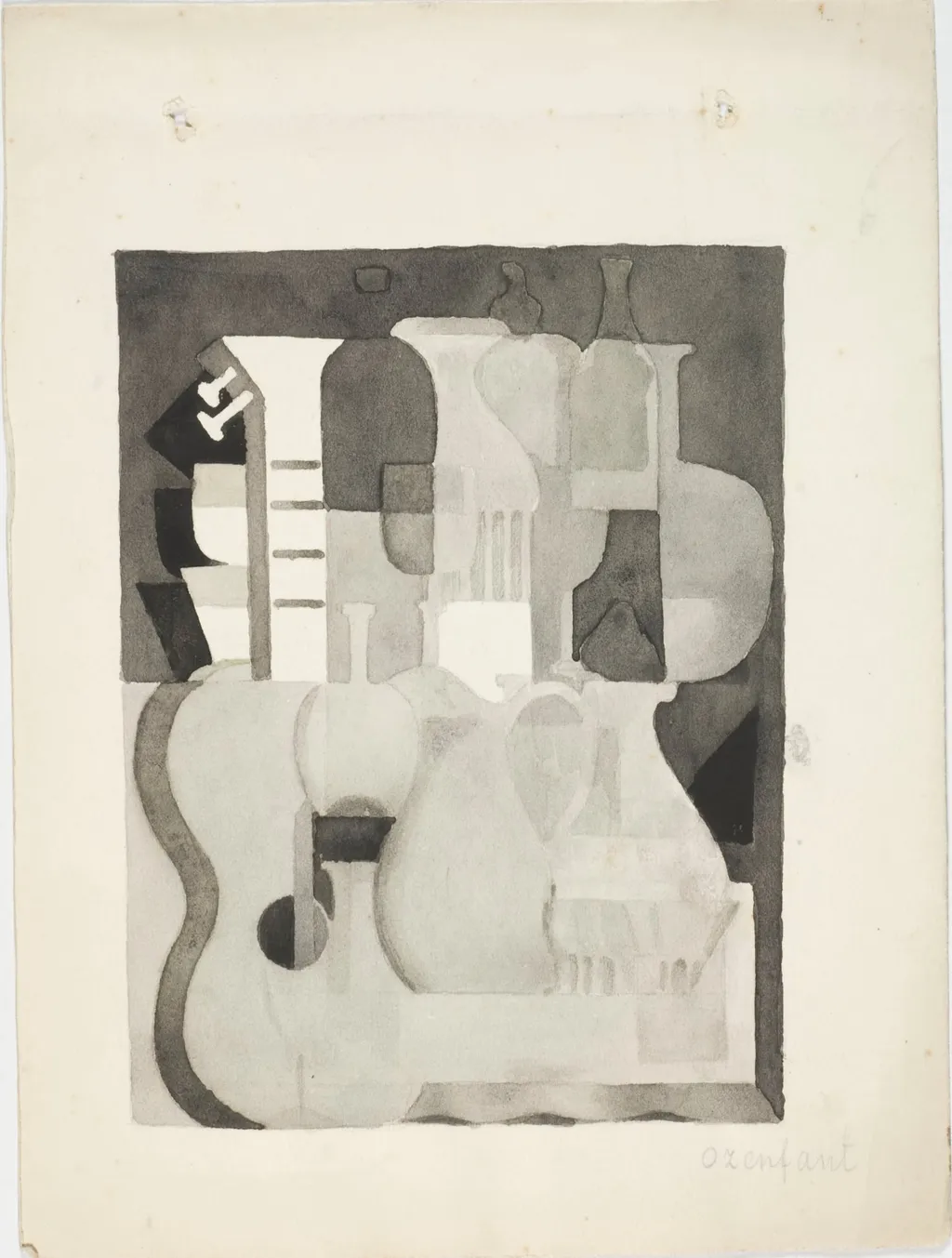
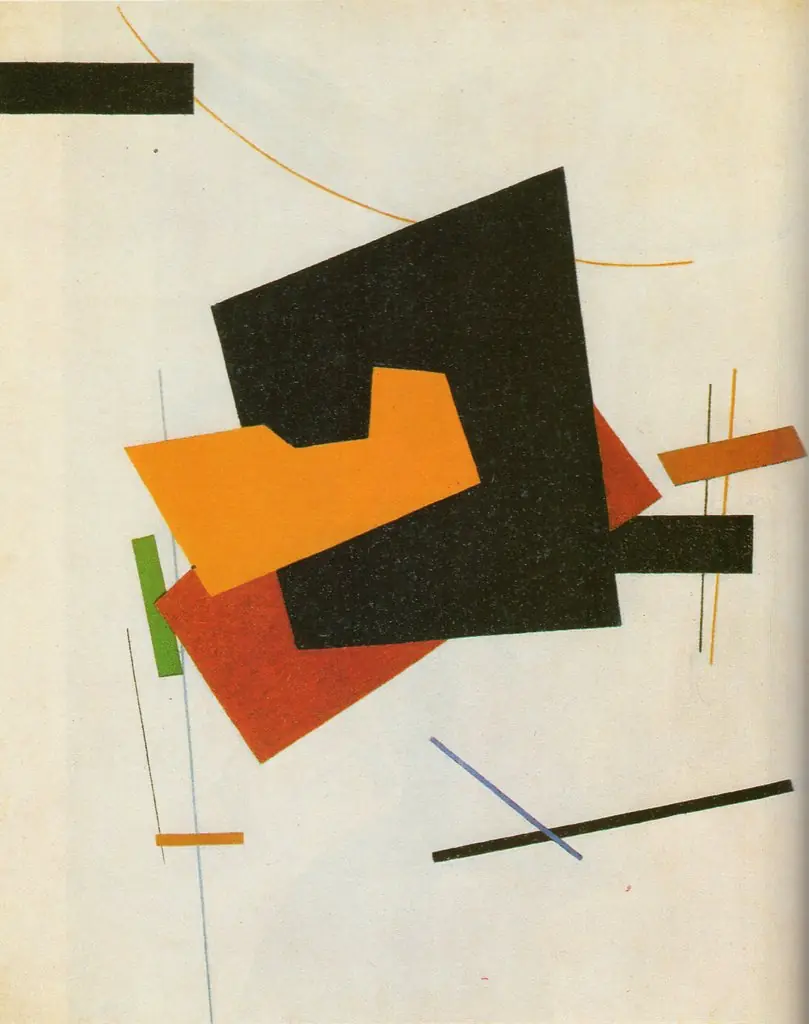
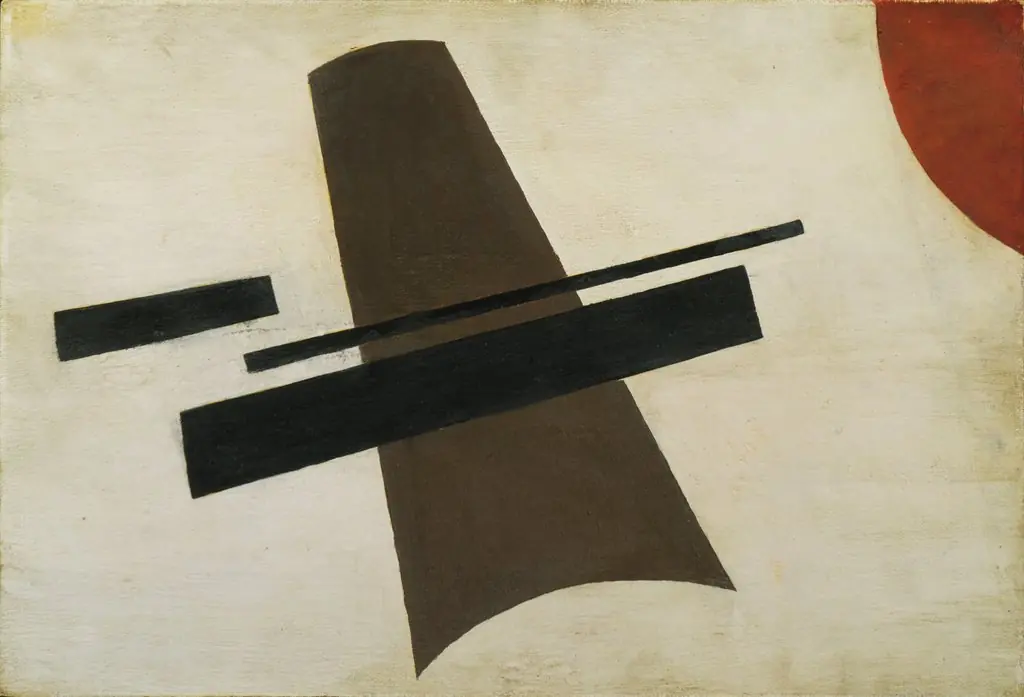
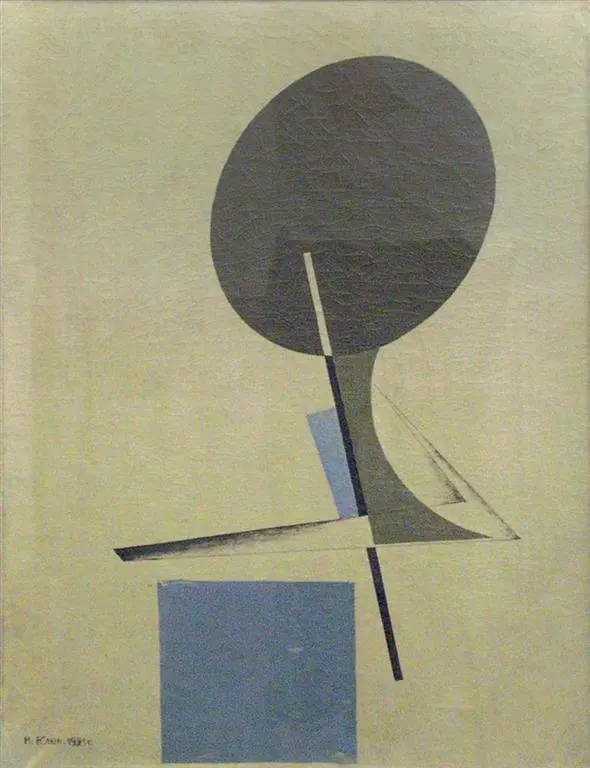
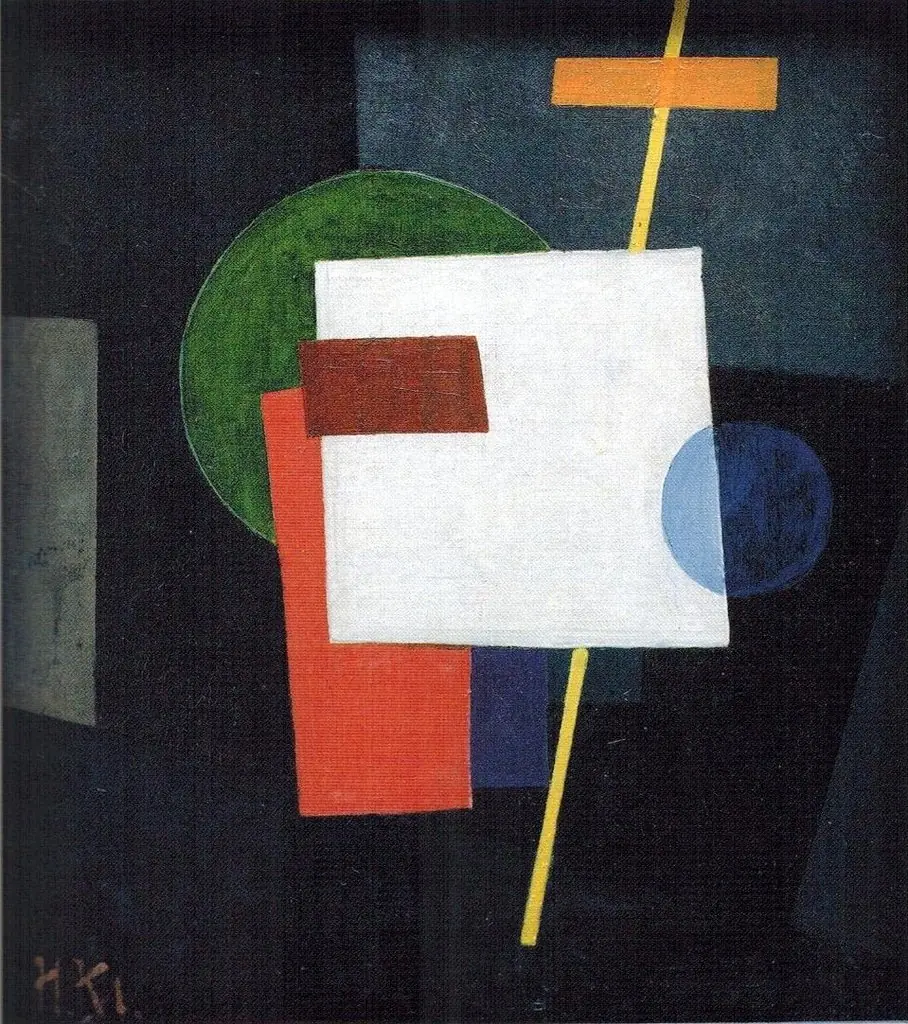
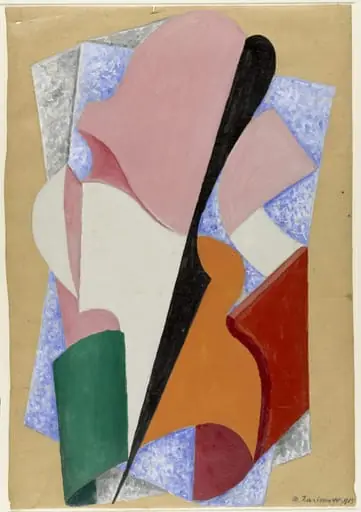
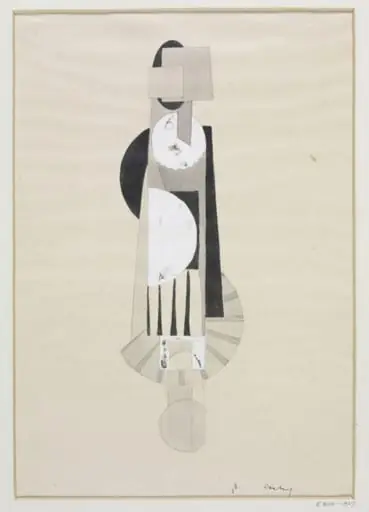
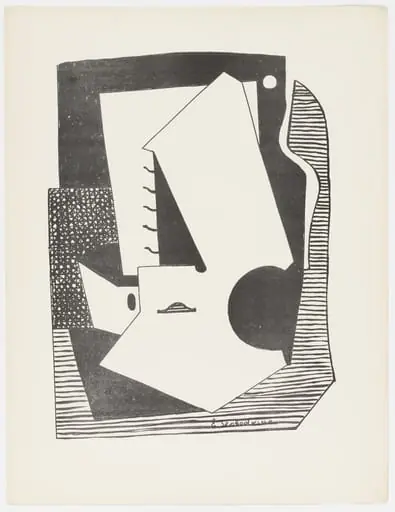
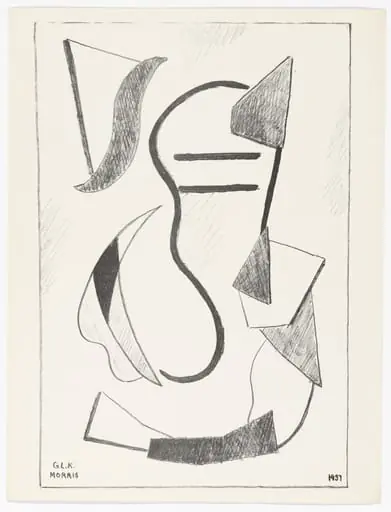
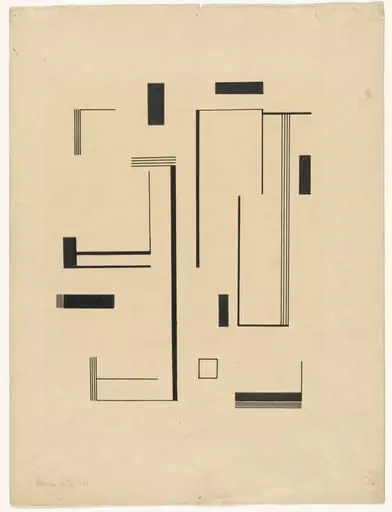
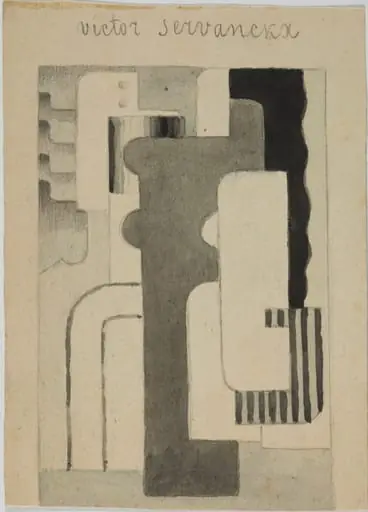
Χωρίς τίτλο is a drawing by Ivan Kliun. It dates from 1918 and is held in the collection of the Metropolitan Organisation of Museums of Visual Arts of Thessaloniki – MOMus.
About this work
They form geometric shapes that almost look like buildings or machines.
This drawing shows sharp black lines on white paper. They form geometric shapes that almost look like buildings or machines.
The lines are crisp and precise. They copy a style from a 1918 art manifesto called Purism. Purism wanted art to be clean and orderly, not messy or emotional.
See how the artist uses cross-hatching to build shadows. It’s a trick where parallel lines make dark areas.
Look up Kliun, Ivan (1873–1943).
Overview
This drawing is a faithful reproduction of a work by Amédée Ozenfant, reflecting the principles of Purism as articulated in the 1918 manifesto 'After Cubism.' Executed in ink on paper, it employs precise black lines and controlled cross-hatching to construct abstract, architectural forms. The composition avoids expressive brushwork, instead favoring clarity and structural order, aligning with Purism’s rejection of Cubism’s decorative tendencies.
Subject & Meaning
The forms depicted suggest mechanical or architectural elements—angular, stacked volumes that evoke industrial design rather than natural objects. Purism sought to elevate art by aligning it with the rationality of modern technology and functionalism. Here, the absence of human figures or emotional cues reinforces a vision of art as a disciplined, impersonal expression of order, mirroring the efficiency of the machine age.
Technique & Style
The drawing uses sharp, unbroken lines to define geometric planes, with shadows rendered through tightly spaced parallel hatching. This method creates tonal depth without texture or spontaneity. The composition is strictly horizontal and vertical, avoiding diagonal dynamism. The precision of the lines and the absence of smudging or variation reflect Purism’s insistence on clarity, control, and the elimination of subjective gesture.
History & Provenance
The work copies Ozenfant’s early Purist style, developed alongside Le Corbusier during their collaboration on the journal L'Esprit Nouveau. Though Ozenfant’s original drawings from this period are rare, reproductions circulated to disseminate Purist ideals. This version likely dates from the early 1920s, when the movement’s visual language was being codified and replicated in educational and critical contexts.
Context
Purism emerged in post-war Paris as a reaction against what its proponents saw as the fragmentation and sentimentality of late Cubism. Influenced by industrial design and classical order, it aligned with broader interwar movements seeking structure and rationality. The movement’s emphasis on clean lines and functional aesthetics resonated with contemporary architecture and design, positioning art as an extension of modern engineering.
Legacy
Though Purism as a movement faded after 1925, its formal language influenced later modernist design and minimalist art. The discipline of line, the rejection of ornament, and the elevation of structure over emotion became foundational to 20th-century abstraction. This drawing, as a reproduction, preserves a moment when art sought to embody the logic of its time rather than its sentiment.
Own this work as a print
Artist & collection
Artist
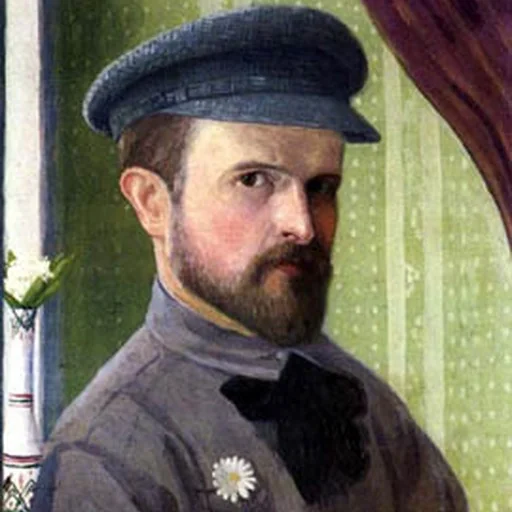
Ivan Vasilievich Kliun, or Klyun, born Klyunkov (Russian: Иван Васильевич Клюн; 1 September 1873, in Bolshiye Gorky, Petushinsky District – 13 December 1943, in Moscow) was a Russian Avant-Garde painter, sculptor and…
Museum
Metropolitan Organisation of Museums of Visual Arts of Thessaloniki – MOMus
Continue through works from the same source collection.