Artwork
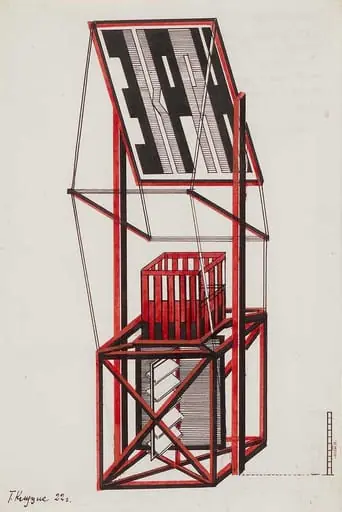
Ραδιο-ρήτορας, Βήμα ομιλητή με μεγάφωνα, αρ.1 & 2
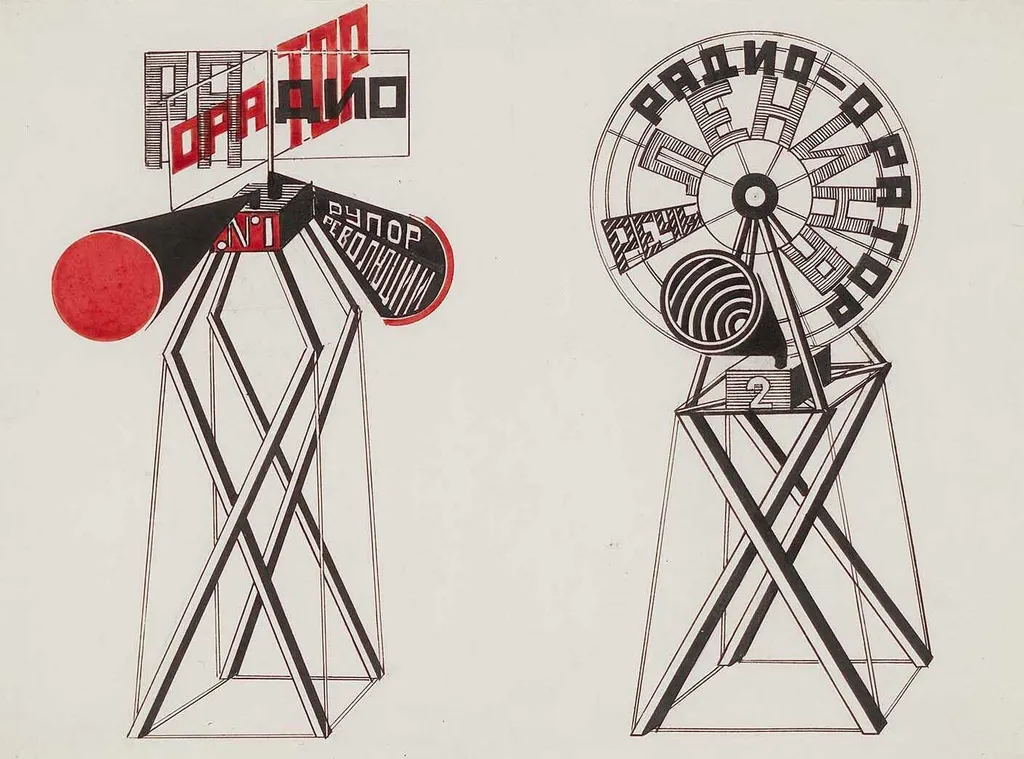
Ραδιο-ρήτορας, Βήμα ομιλητή με μεγάφωνα, αρ.1 & 2 is a drawing by Gustav Klucis. It dates from 1922 and is held in the collection of the Metropolitan Organisation of Museums of Visual Arts of Thessaloniki – MOMus.
About this work
You see two bold drawings of folding stage designs. They use sharp red, black and white shapes. One shape looks like a megaphone to spread sound far.
These designs were made fast for a big political event. Workers would fold them up and move them around. The drawings show how art served the crowd, not just the eye.
Try looking up Klucis, Gustav (1895-1938).
Overview
Gustav Klucis's 'Ραδιο-ρήτορας, Βήμα ομιλητή με μεγάφωνα, αρ.1 & 2' (1922) consists of two drawings for portable, foldable pavilions designed for the Fourth Comintern Congress and the fifth anniversary of the Russian Revolution. These structures were conceived for temporary, functional use in public spaces.
Subject & Meaning
The pavilions were designed for 'immediate social utility', focusing on propaganda and communication. They incorporated elements like loudspeakers, speaker platforms, and display surfaces to disseminate the party's message through a multi-sensory experience.
Technique & Style
The drawings feature bold, geometric shapes in red, white, and black. The use of natural building materials and emphasis on functionality reflect a pragmatic approach, while the vibrant color scheme and angular forms align with early 20th-century avant-garde aesthetics.
History & Provenance
Submitted to the Kremlin for approval, these designs were part of a larger series for the specified events in 1922. The artist's intent was for rapid construction and easy mobility to serve the events' needs.
Context
Created amidst the early Soviet era, these designs embody the period's emphasis on art serving the masses and promoting revolutionary ideals through accessible, interactive public installations.
Legacy
While the immediate legacy of these specific designs is tied to their ephemeral purpose, they contribute to the broader legacy of Gustav Klucis as an artist exploring the intersection of art, propaganda, and community engagement in early Soviet art.
Artist & collection
Museum
Metropolitan Organisation of Museums of Visual Arts of Thessaloniki – MOMus
Continue through works from the same source collection.