Artwork
Untitled
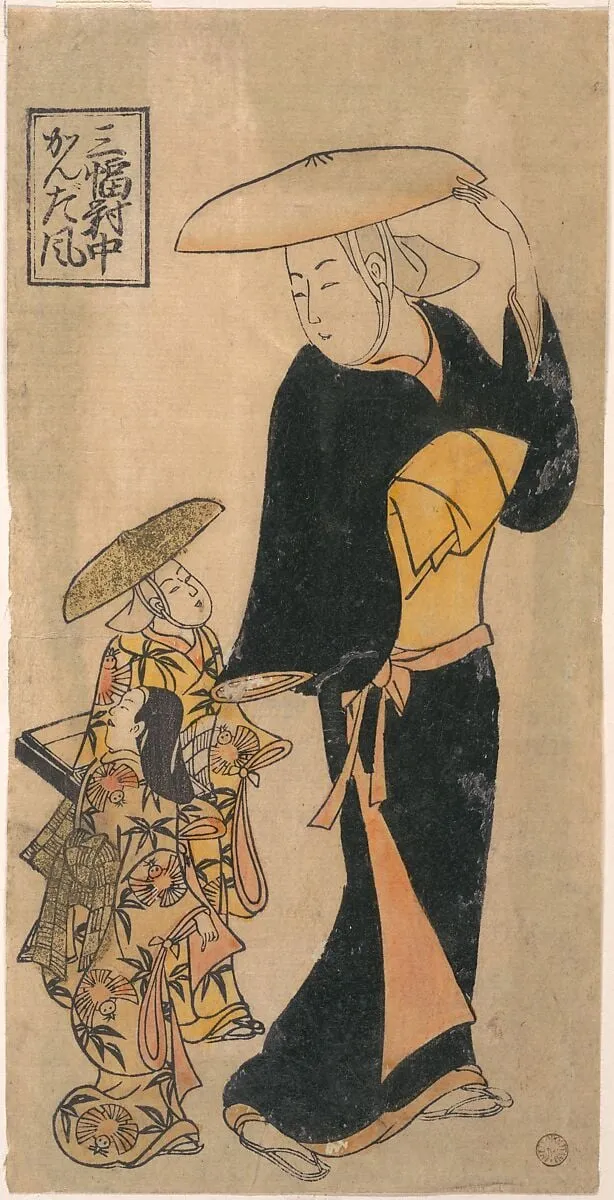
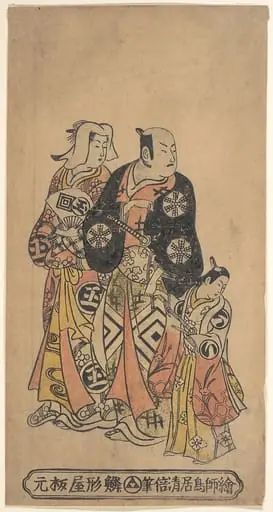
Untitled is an ink print by the Baroque artist Kondo Katsunobu. It dates from 1730 and is held in the collection of the Metropolitan Museum of Art.
About this work
If you're interested in learning more about this style, you might want to check out the work of artist Kondo Katsunobu.
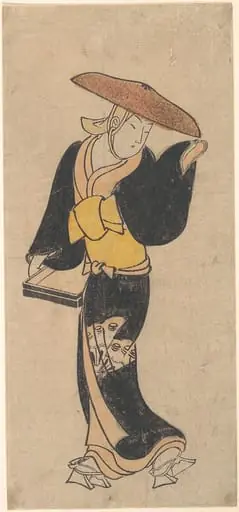
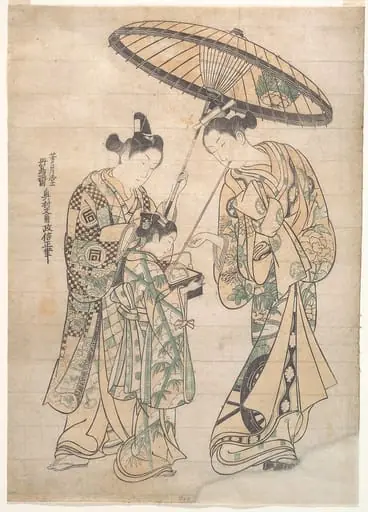
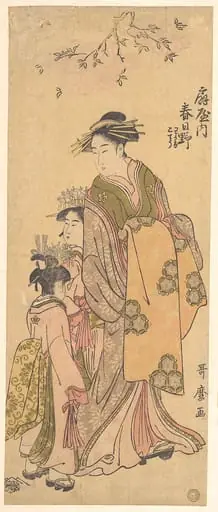
This painting shows a woman in a black kimono with a yellow undergarment, holding a parasol above her head. She is walking alongside a child in a yellow kimono with a floral pattern, who is looking up at her. The background is a light brown color.
The woman's kimono is tied with a yellow sash, and she is wearing sandals on her feet. The child is also wearing sandals and has a hat on their head. The parasol is a light brown color with a curved shape.
The painting is done in a style that is reminiscent of Japanese art from the 18th century. If you're interested in learning more about this style, you might want to check out the work of artist Kondo Katsunobu.
Overview
Untitled is a woodblock print (urushi-e) by Japanese artist Kondo Katsunobu, dating to circa 1730. The work is part of The Metropolitan Museum of Art's collection.
Subject & Meaning
The print depicts a serene scene of a woman in a black kimono with a yellow undergarment and sash, accompanied by a child in a yellow, floral-patterned kimono. The woman shelters the child with a curved, light brown parasol as they walk together, conveying a sense of protection and daily life.
Technique & Style
Executed in ink and color on paper, the print showcases characteristics of 18th-century Japanese woodblock printing. The composition's simplicity, the use of a limited color palette, and the emphasis on silhouettes against a muted background are hallmarks of the style prevalent during this period.
History & Provenance
Created around 1730, the print's history prior to its acquisition by The Metropolitan Museum of Art is not detailed here. It is currently held in the museum's collection, suggesting its recognition as a significant example of early 18th-century Japanese printmaking.
Context
This work reflects the aesthetic tastes of the Edo period (1603-1867), where woodblock prints often captured scenes of everyday life and nature. The use of urushi-e (lacquer print) technique, though less common, adds a unique texture to the traditional subject matter.
Artist & collection