Artwork
Untitled
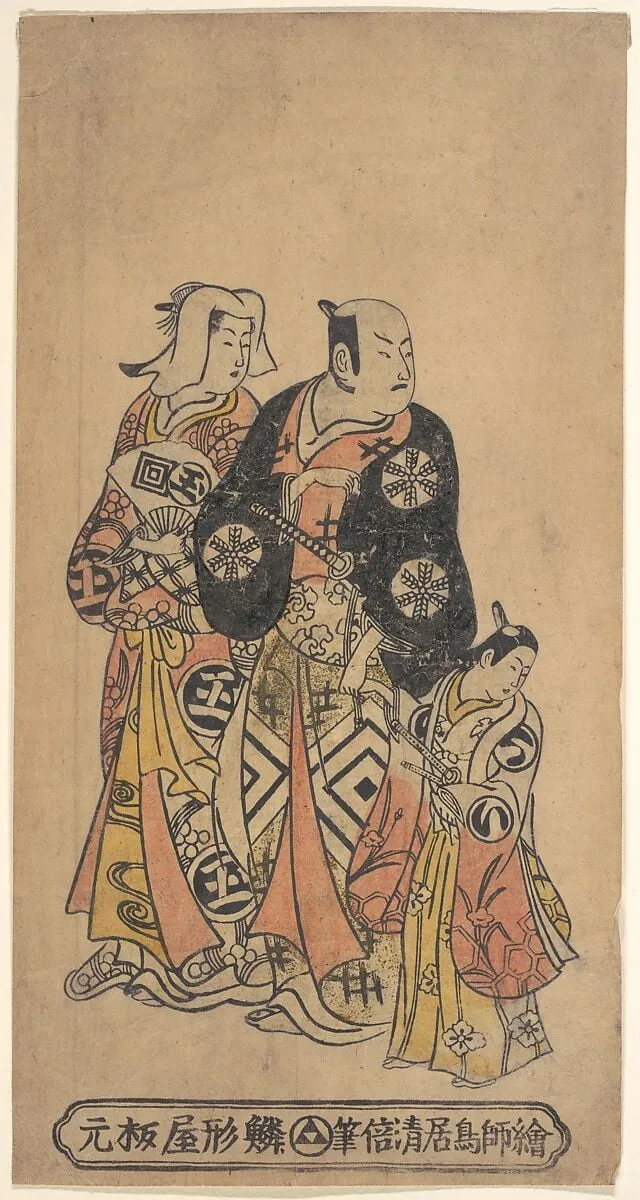
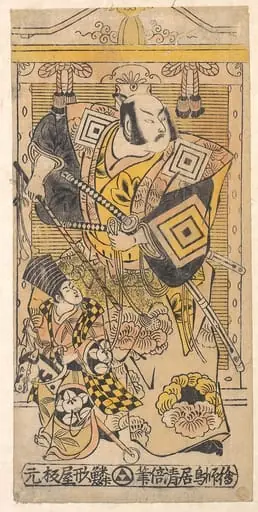
Untitled is an ink print by the Baroque artist Torii Kiyomasu II. It dates from 1734 and is held in the collection of the Metropolitan Museum of Art.
About this work
Overview
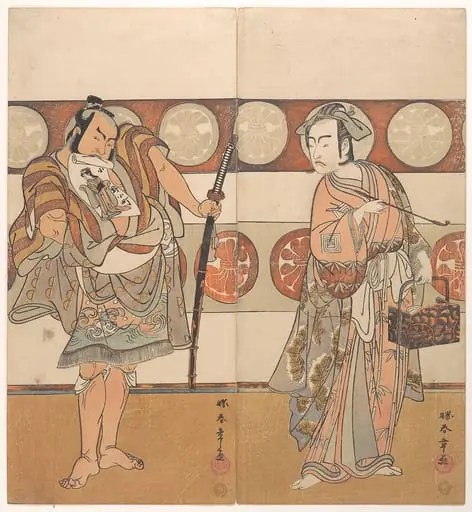
This monochrome woodblock print, likely hand-colored, dates to 1734 and is attributed to Torii Kiyomasu II. Executed in ink and color on paper, it belongs to the ukiyo-e tradition of Japanese printmaking. The work is part of the collection at The Metropolitan Museum of Art, where it represents early 18th-century Edo-period commercial art produced for a broad urban audience.
Subject & Meaning
The composition implies narrative tension, typical of Torii school depictions of kabuki actors or courtesans in moments of quiet anticipation.
Three figures in traditional attire are depicted, their gazes directed outward, suggesting engagement with an unseen event or performance. Their elaborate robes—black with snowflake motifs, yellow with floral patterns, and red with leaf designs—signal status and seasonal symbolism common in theatrical or festival contexts. The composition implies narrative tension, typical of Torii school depictions of kabuki actors or courtesans in moments of quiet anticipation.
Technique & Style
The print employs bold, clean outlines and flat areas of vivid color, characteristic of early ukiyo-e woodblock methods. Hand-coloring enhances the textile patterns, adding subtle detail beyond the inked lines. The light brown paper ground provides a warm tonal base, contrasting with the saturated hues of the garments. The style reflects the Torii school’s focus on dynamic figures and theatrical presence, distinct from later, more naturalistic approaches.
History & Provenance
Created during the early Edo period, the print emerged from a thriving print culture centered in Edo (modern Tokyo). Torii Kiyomasu II, active in the 1720s–1740s, was part of a lineage of artists specializing in actor portraits and kabuki-related imagery. The work entered The Metropolitan Museum of Art’s collection through documented acquisitions, though its exact early ownership remains unrecorded.
Context
This print belongs to a period when ukiyo-e flourished alongside urban entertainment, particularly kabuki theater. The Torii school dominated actor prints, often commissioned by theaters or publishers. Unlike Western Baroque art, which emphasized dramatic lighting and movement, Japanese prints relied on stylized form and symbolic color to convey emotion and social roles within a confined visual language.
Legacy
As an early example of Torii school output, the print illustrates the evolution of ukiyo-e from painterly designs to mass-produced woodblocks. It influenced later artists who refined the genre’s formal economy. While not widely known outside specialist circles, it remains a key reference for understanding the transition from hand-painted imagery to printed popular art in 18th-century Japan.
Artist & collection

Artist
Torii Kiyomasu II spent his life making bold, eye-catching prints to draw crowds to kabuki shows in Tokyo.

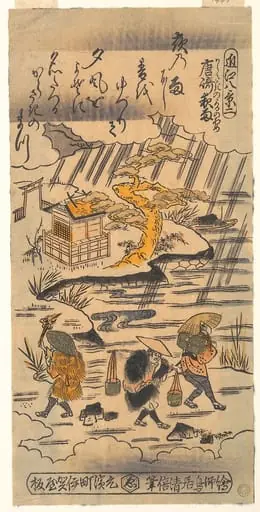
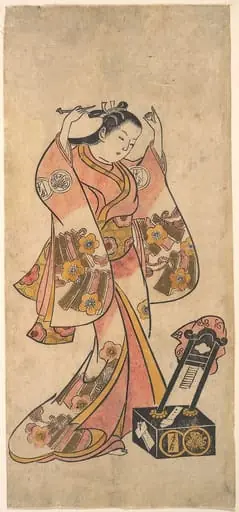
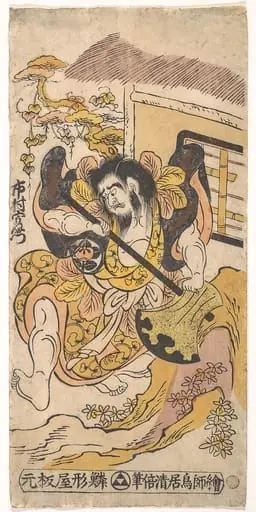
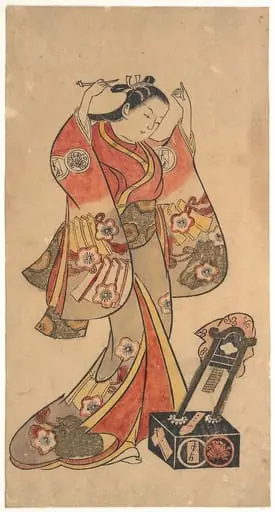
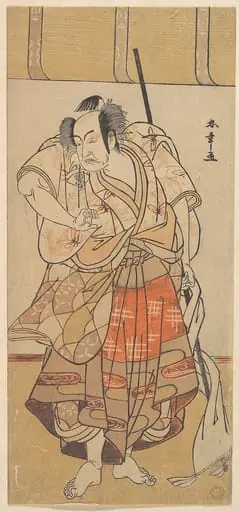 Untitled
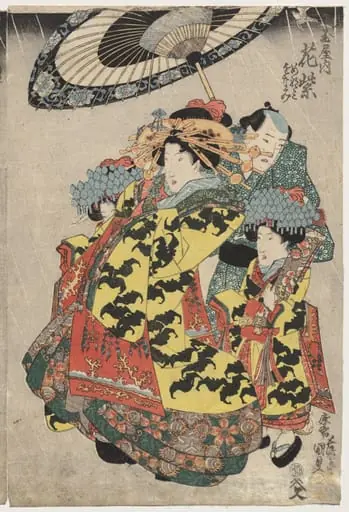 The Courtesans Hanamurasaki and Koshikibu of the Tamaya Promenading in the Rain
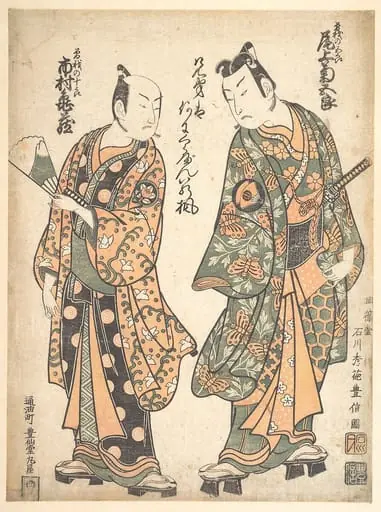 Untitled
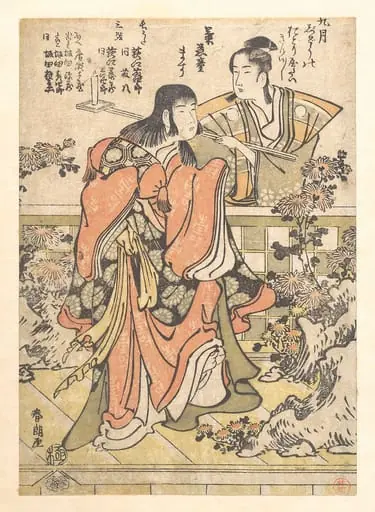 Untitled
 Untitled
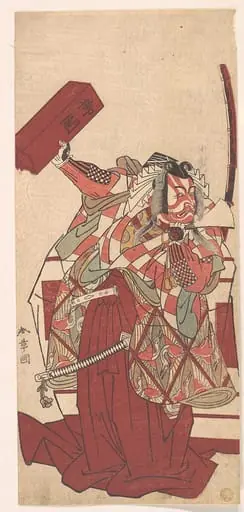 三代目市川海老蔵の篠塚伊賀守定綱|The Actor Ichikawa Ebizō III as Shinozuka Iga no kami Sadatsuna in a Shibaraku Scene
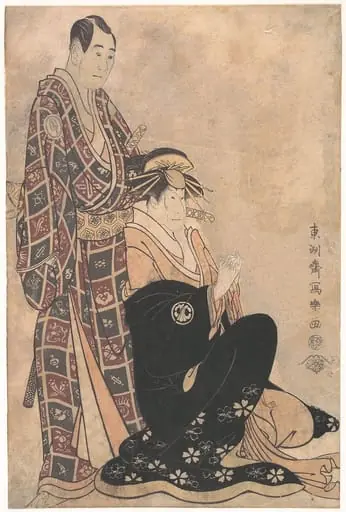 Untitled
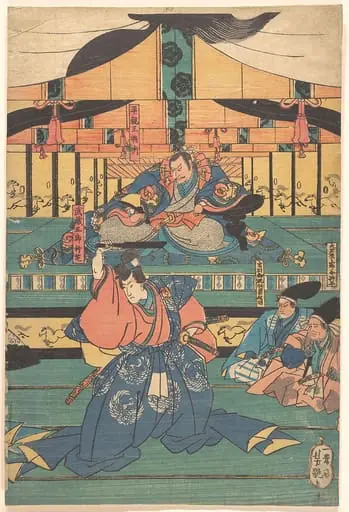 Untitled
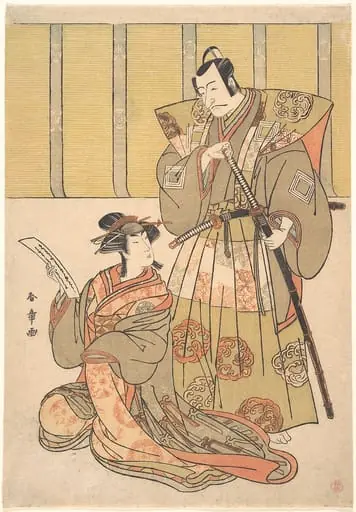 Untitled
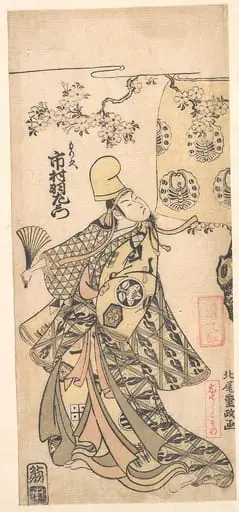 Untitled
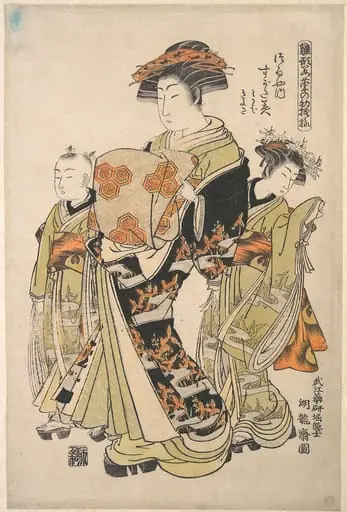 『雛形若菜の初模様 つるや内 すがたみ』|The Courtesan Sugatami of the Tsuruya Brothel, from the series “A Pat-tern Book of the Year’s First Designs, Fresh as Spring Herbs” (“Hinagata wakana no hatsu moyō”)
 Untitled