Artwork
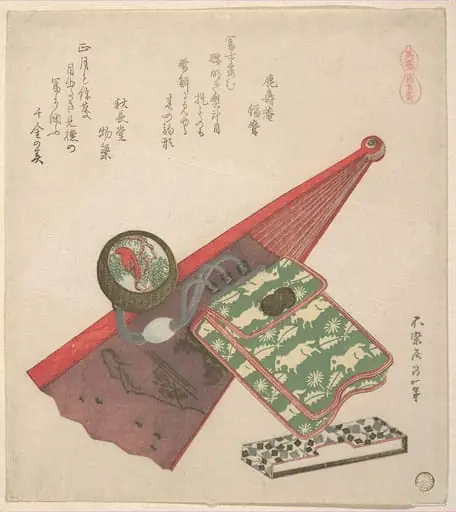
「松風台七番之内柄」|“Hilt of a Sword,” from the series of Seven Prints for the Shōfudai Poetry Circle
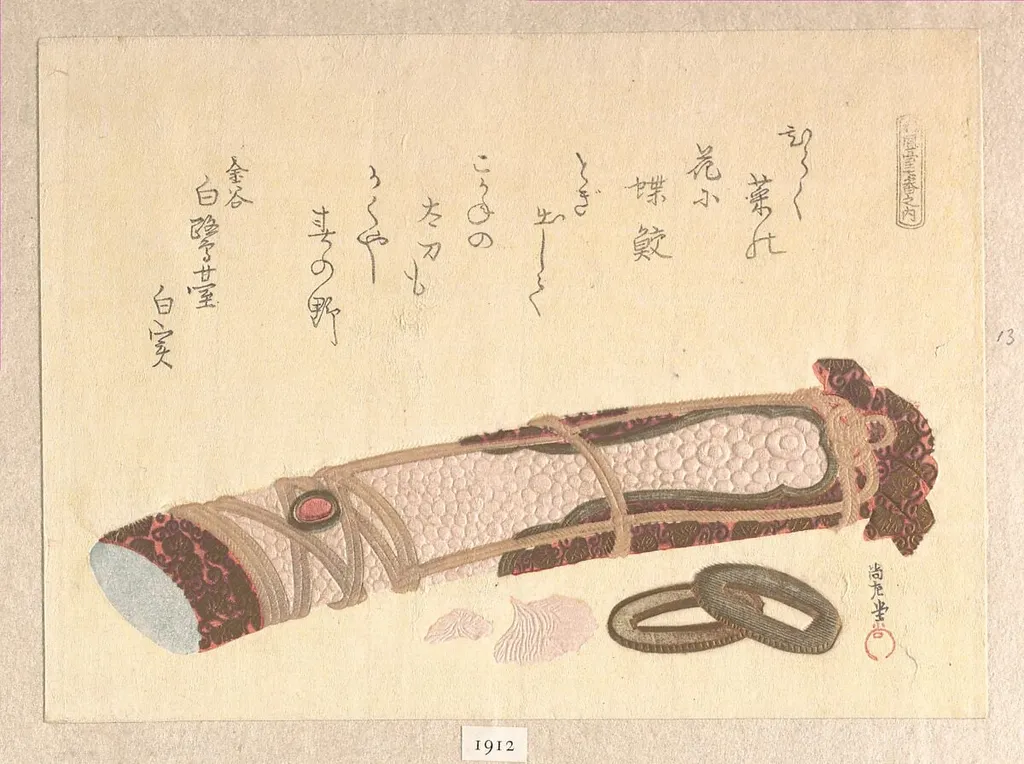
「松風台七番之内柄」|“Hilt of a Sword,” from the series of Seven Prints for the Shōfudai Poetry Circle is an ink print by the Romanticist artist Kubo Shunman. It dates from 1814 and is held in the collection of the Metropolitan Museum of Art.
About this work
Overview
The work combines visual artistry with poetic inscription, reflecting the intimate, refined culture of Edo-period literary circles.
Created around 1814 by Kubo Shunman, this woodblock print is one of seven produced for the Shōfudai Poetry Circle, a group of literati who exchanged privately commissioned prints. Known as a surimono, it was not mass-produced but made in small editions for connoisseurs. The work combines visual artistry with poetic inscription, reflecting the intimate, refined culture of Edo-period literary circles.
Subject & Meaning
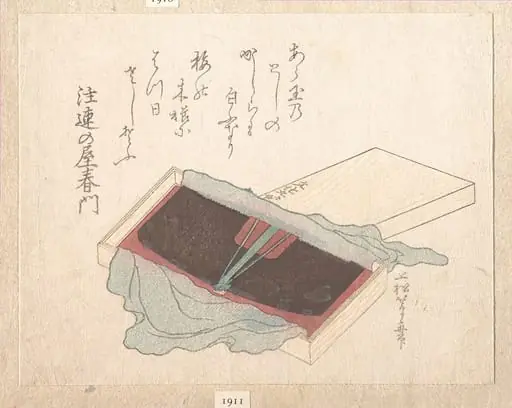
The print centers on a sword hilt, rendered with meticulous detail: braided cloth, a metal ferrule, and a red stone accent. Adjacent to it, a circular object may reference a ceremonial ring or grip ornament. The imagery evokes the sword as an object of both utility and symbolic weight, tied to samurai ideals. The accompanying Japanese text, likely a poetic verse, deepens its resonance, linking material form to literary contemplation.
Technique & Style
Executed in woodblock printing with ink and color on paper, the print employs fine lines and subtle tonal gradations to capture texture—especially in the wrapped cord and metallic surfaces. The restrained palette, dominated by beige and black, enhances the elegance of the composition. Surimono prints like this one often used embossing and metallic pigments, though this example emphasizes delicate line work and spatial clarity over ornamentation.
History & Provenance
The print was commissioned by the Shōfudai Poetry Circle, a group of Edo intellectuals who favored private, high-quality prints over commercial publications. It entered the collection of The Metropolitan Museum of Art through established channels of early 20th-century Japanese art acquisition. Its survival in good condition reflects its status as a cherished object among collectors, not a disposable commodity.
Context
Surimono emerged in the late 18th century as luxury prints for elite circles, often celebrating seasonal themes, poetry, or personal milestones. Unlike popular ukiyo-e, they were not sold publicly but exchanged among poets, artists, and patrons. This print exemplifies the fusion of visual art and literary culture in Edo, where even an object like a sword hilt could become a vessel for aesthetic and intellectual expression.
Legacy
As a representative of surimono, this print illustrates the quiet sophistication of Edo-period private art. It influenced later collectors and scholars who valued the interplay between image and text in Japanese printmaking. Though not widely known outside specialist circles, it remains a key example of how art served personal and literary communities beyond the commercial marketplace.
Artist & collection


 娘道成寺図の錦絵|Print of a Kabuki Dancer from the Maiden of the Dōjōji Temple (Musume Dōjōji)
 Untitled
 Untitled
 蒔絵櫛|Box with a Lacquer Comb
 Untitled
 Untitled
 Untitled
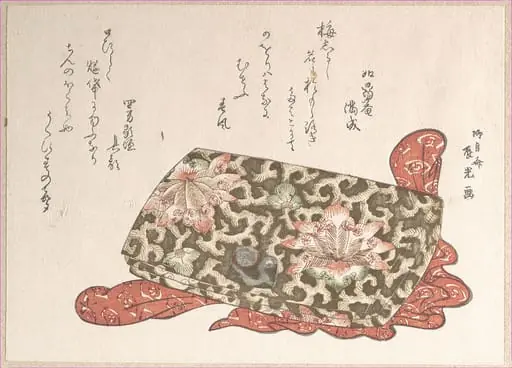 Untitled
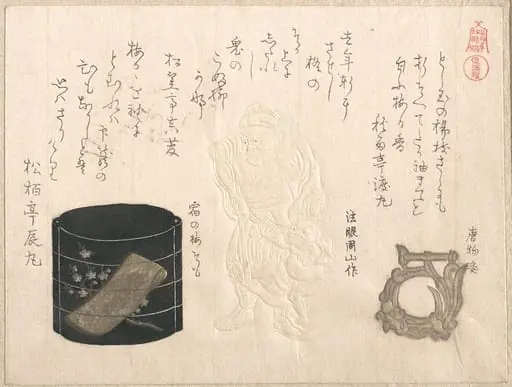 『名物革仝印籠仝根付』 印籠根付『春雨集』 摺物帖|“Inrō and Netsuke,” from the series Famous Leathers, Inrō, and Netsuke (Meibutsu kawa, inrō, netsuke)From the Spring Rain Collection (Harusame shū), vol. 2
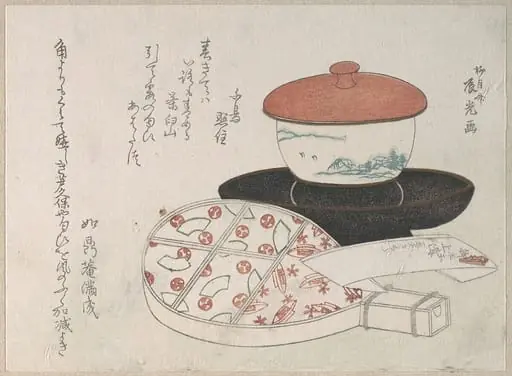 Untitled
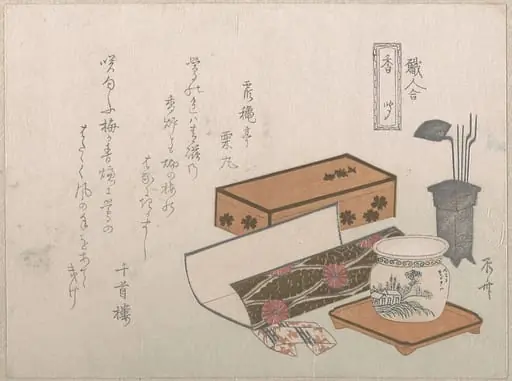 「職人合香聞 」|Utensils for the Incense Ceremony, “Incense Master” (Kōgiki), from the series An Array of Artisans
 Untitled